Jonathan Jones played Paul in Julian Richards’ film Summer Scars. I interviewed Jonathan on set in South Wales in August 2006.
What can you tell me about Paul?
“Paul’s the leader of the group. He’s the biggest one and the head dog, as you might say. He’s got a bit of a mystery to him because of what happened to his brother with the car accident where he lost the use of his legs. So he’s sad but he still keeps a straight face. Above that, he’s quite a violent person!”
How did you get this role?
“I auditioned for it through my agent in a group audition. Then I got called back for a recall for three different roles in this film. Then I got a recall a couple of weeks later, saying I’d got this part. Then a couple of weeks later I got the script sent to me.”
For the auditions, were you just reading sides?
“The first audition, it was totally improvised, everything was improvised. The second audition was reading from script.”
How old are you and how old is the character?
“The character’s fourteen but I’m seventeen in two weeks so there’s a big difference. He’s an oldish-looking fourteen-year-old boy.”
What have you done before this?
“I’ve done mainly extra work. Quite a lot of extra work, actually. It’s experience anyway, isn’t it? And I’ve done Screen Gems which is ten-minute films and half-hour films and that. I’ve done three series of Treflan [? - MJS] but that was extra work as well.”
So you’re used to being on a set?
“Oh yes, I’ve been doing it about six or seven years.”
Is this something you want to make a career out of?
“It’s more of a hobby of mine. I enjoy it. I would make it as a career but it’s hard. You’ve got to know people. I’m certainly getting there but it’s going to take a couple of years.”
How are you finding the experience of a lead role?
“It’s all right. It’s stressful at times but it’s okay. I’m in every day of the shoot so it’s tiring as well, but apart from that it’s a laugh. Everyone’s really fun round here.”
Are you going to do some of the riding on the moped?
“Yes, we’re doing that now. I’m the only one who can actually ride a moped properly, out of the whole cast! I ride motorbikes now and again so I’m sort of in charge of it at the moment.”
How are the actors getting on? Do any of you know each other?
“Well, me and Ben, which is my brother in the film - his real name’s Chris Conway - we go to school together and so does his brother Ryan. Everyone else in the cast we’ve met in the last three weeks and we’ve all just really got along. Ryan’s the only boisterous one. He’s loud and he has his times but apart from that, he’s all right.”
Do you have other work lined up?
“It’s just this at the moment. Apart from that, I don’t know. I just finished Young Dracula, doing extra work in that. I might go up to London for a couple of weeks and just try my luck up there.”
Sunday, 29 December 2013

interview: Andrew Jones (2012)
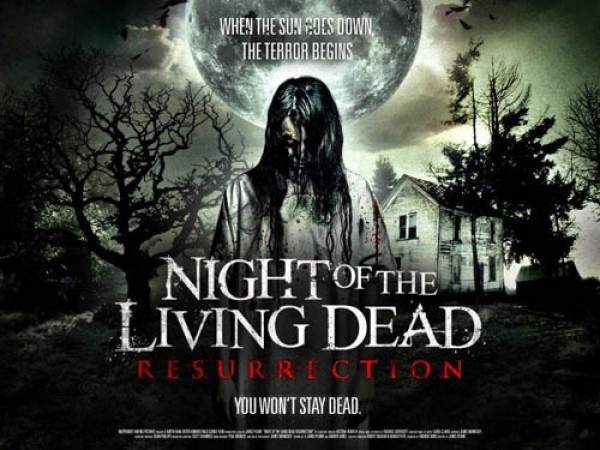
What is the legal/copyright situation with regard to calling a film Night of the Living Dead?
“The original 1968 film fell into the public domain after the original distributors failed to put a copyright notice on the original prints of the movie. This has resulted in various distributors around the world being able to release the film without a licensing fee and for producers to be able to remake it. Obviously this isn't particularly pleasing to the filmmakers behind the original film and there are many fans of the original who have criticised filmmakers and distributors who take advantage of the public domain status. I understand the criticism but all of the filmmakers behind the original film have gone on to have successful careers and are now multi-millionaires as a result of success they've achieved with their subsequent films. So it's not like by using that title we're pissing on people who are in poverty.
“Getting a film financed is a difficult process and the current climate dictates that something with a known title has a far greater chance of investment than something original. That may sadden some people but that's just the way it is. Film-making is a business and a hard-nosed one at that, so you have to try and play the game if you want to get a foot on the ladder. Ultimately once you make money for someone else you will get the opportunity to do a wider variety of projects.
“Some fanboys have accused us of exploitation but that's what the film business is! Every film made happens because the producers or studios feel they can make money out of exploiting a concept that appeals to a particular demographic. But where we differ from the studio remakes is we have the independent freedom to do something unique and different with the Night of the Living Dead concept. Just because we have a known title that's no excuse to make a shit film. We've worked hard to make sure we make a good movie that will please horror film fans, because ultimately we are horror fans ourselves.”
To what extent, if any, does Night of the Living Dead: Resurrection tie into the existing continuity of the original NOTLD or any of the various sequels/remakes?
“There are some familiar characters from the 1968 film and there are some elements of the story that play on the audience's knowledge of the original. But we use that knowledge of the original to surprise the audience with plot twists as we take the characters and story in a new direction. The best thing about having a concept that's been done to death is people are familiar with it. So we've had great fun using that to mess with people's expectations. Anyone who goes into this film expecting a retread of the original film is going to be very surprised.”
In an age when video shelves are awash with zombie films, what makes NOTLDR different?
“I guess the most obvious difference is our setting! I don't remember a zombie movie set in West Wales with Welsh characters before. But beyond that, our characters have emotional substance and there is genuine suspense and atmosphere throughout the film. There is also an underlying social conscience as the story touches on very topical issues such as how the younger and older generations react so differently in times of crisis, as well as universally relatable family dynamics. So I believe we have a lot more going on beneath the intestine ripping than other low budget zombie movies.
“I wish I could be more specific about the elements of the plot that make this different but that would involve giving away major spoilers! In this age of technology when plot details for movies are often revealed by someone on the internet before filming has even been completed, we are happy that so far we've managed to keep our big plot twists secret. The less you know going in the more impact the twists will have.
“Although we will no doubt be measured against Romero's movie, comparing the two films is pointless. The original is a classic and no matter how good a film we make we will never match the cultural and cinematic impact of that film. Bottom line is we're not looking to make The Godfather Part II. This is not high art. We've made a gritty low budget horror film that has all of the elements genre fans will love; suspense, intensity, gore etc. When those things are done well, you have an enjoyable horror film and that's what we have here.
“What I've found interesting about some of the criticism on message boards is that people point out that this film is low budget like that's a bad thing. It's amusing to hear that because those same fans complain about how studios remake the horror classics with big budgets and as a result the remakes have none of the gritty charm or soul of the original films. Every great horror film I've ever loved, without exception, has been a low budget affair. The original Night of the Living Dead, Last House on the Left, Halloween, Friday the 13th, The Hills Have Eyes. There's something about the stripped down, gritty quality of low budget horror that makes it a far more visceral and frightening experience than the glossy studio movies. As a horror fan I long for the return of the quality low budget horror that we saw in the '70s and '80s, so as a producer I want to make horror films that try to recapture the vibe of that wonderful era.”
How did you and director James Plumb come to work together?
“We originally met a few years back and talked about working together then. But at that point I had a lot of different balls in the air so it didn't happen. But I've long admired James' short films and I noticed how creative he was able to be with a shoestring budget. I've often thought that low budget separates the men from the boys. A great director will be able to use the budgetary limitations to his advantage and come up with unique ways to shoot. James has always been able to do that. So when I envisaged a low budget British re-imagining of Night of the Living Dead I knew James would be the right director because he is a great visual storyteller. He doesn't see a limitation, he sees a challenge.
“I had an opening scene I had written for a previous unfinished script called ASBO of the Living Dead. We took that as the opening scene for this project and discussed ideas for a new approach to the original story. It was clear we were on the same page creatively as we loved the same horror movies. I wrote a bare bones first draft in five days and then I turned it over to James and told him to make the subsequent drafts his own. After two months the script was complete and then we secured our financing from Independent Moving Pictures to begin production.
“I believe a producer should always allow a director to make the film his own. Otherwise what's the point in hiring someone else to direct? Although I've directed before I never had any desire to muscle in on James' territory during the filming. That's because he is a remarkably assured director with a clear vision. Having someone like that in charge of the creative direction of the project makes my job as producer so much easier. I can concentrate on the business side of the film knowing that the creative side is in the right hands.
“I always think projects run into trouble when you have producers and backers trying to have too big a say in the creative process, you end up with a script or film without a distinct authorship and inevitably the working process becomes a strained one. I think it works best when the producer concentrates on the business and administration aspects of the project, and the director focuses on the creative. That's how the working relationship between James and I has developed and hopefully it'll carry through as successfully on many other projects in the future.”
 Apart from producing NOTLDR, what have you been up to since The Feral Generation?
“The Feral Generation was a satisfying creative experience but after filming it turned into a bit of a nightmare. We had four producers who all had something good to offer, but they all had different ideas for the direction of the project and even though the film had DVD distribution offers it wasn't commercially released because of disputes between the producers. I don't think one particular individual was at fault, I just think too many cooks spoil the broth. I didn't exactly cover myself in glory either, I was clueless about the business side of film-making and I acted like a total prick back then. Now I would have handled that project a lot differently. But ultimately the experience set me in good stead and since then I've had other interesting experiences that I also learnt a great deal from.
“After Feral I tried to get a project off the ground called The Beautiful Outsiders, which was a Bonnie and Clyde style movie set in Wales. We initially had great fortune with it, managing to get a lot of ‘name’ actors involved in supporting roles and securing Michael Douglas' son Cameron in the lead role. Cameron became an associate producer on the project and was set to bring in his father as Executive Producer. We were well on course to have the whole project financed at that stage and then Cameron got busted in America for being a crystal meth dealer.
“Of course that was a great surprise to me because he had been nothing but professional in my dealings with him. It was a strange time, I had People Magazine, gossip website TMZ and British newspapers contacting me to dish the dirt on Cameron, asking if he had used drugs during the development of our project and stuff like that. So we ultimately had to distance ourselves from Cameron and we released a statement to the press confirming we had terminated our agreement. Unfortunately in doing so we lost out on financing the film with Michael Douglas' involvement.
“We tried to rescue the project by quickly replacing Cameron with Lost Boys actor Corey Feldman but what we found out is that Corey is not seen by certain people in the industry as a financially viable leading actor. The amount of agents and investors who told me that because of his reality TV work he was not someone they wanted to be associated with was extraordinary. It's a pity, because I think Corey is a really good actor who still has a lot to offer. At that stage the project was becoming more trouble than I felt it was worth so I sold the script to a US production company and moved on.
“Around the same time I was also attached to write and direct a remake of The Driller Killer and that looked promising, but ultimately it became clear that the two individuals who held the rights to the original (one of whom was Abel Ferrara) were never going to reach an agreement on financial terms. So after a year or so of wrangling and negotiation it didn't happen. That's just the way it goes sometimes.
“After that I did quite a few writing jobs. One of the commissions I had was from Ovidio Assonitis, the producer who gave James Cameron one of his first directing gigs on Piranha II: The Spawning. I wrote a remake of the 1974 Exorcist rip off Beyond the Door for his company KOA Entertainment. That was a pretty fun script to write, but after turning in the second draft Ovidio wanted to take the story in a direction that I wasn't interested in going, so I bowed out at that point. I don't think they've made the movie yet, although I'm sure they plan to at some stage.
“In the last couple of years I've done associate producing on other people's projects and ended up becoming more interested in producing than directing. Moving into producing was also influenced by my experience on The Feral Generation. I was powerless on that project because I didn't have my own production company involved and I wasn't a producer. Now on everything I do my company North Bank Entertainment has a controlling interest because I don't want to be in a situation where the production and sale of my movie is at the mercy of other people.
“Creatively, I've also moved away from wanting to make dramas. From a business perspective, gritty dramas have a limited commercial potential. Thinking about the wider UK indie scene, I'm sick of so many British films being kitchen sink dramas or mockney gangster films. I think we should be concentrating on making a wider variety of genre pictures and it's nice to see that many independent producers in the UK feel the same way. From a personal viewpoint, I feel horror movies are my true calling. I grew up watching little else. I had Freddy Krueger's image on my birthday cake when I was six years old! Kind of twisted when you think about it because the character is a child killer, but I loved those movies from a very young age. So it feels natural to now be making horror films.
“My school of thought on film producing is very much the same as Roger Corman's approach. Find a concept that makes sense creatively and financially, then produce the film economically and utilise new talent. Hopefully, North Bank Entertainment will help shine a light on undiscovered British talent and launch a lot of careers. I've no interest in moving to London or LA so we're trying to create our own little indie film factory here in South Wales.”
 Finally, what is your own favourite zombie film?
“Obviously the original Night of the Living Dead and Dawn of the Dead are classics but my favourite zombie movie has always been Day of the Dead. I enjoyed the more thoughtful approach to the material that film had. It tackled the philosophical questions of a scientific approach versus a military approach, plus it had the best special effects of any Romero zombie film. The characters were also great in that film: Logan, Bub and Rhodes. I could watch Joe Pilato as Rhodes all day long, it's such an enjoyable performance. ‘Choke on 'em!’”
website: www.northbankentertainment.com
interview originally posted 5th January 2012
interview: Andrew Jones (2007)
Andrew Jones, director of The Feral Generation, kindly agreed to an e-mail mini-interview in June 2007 and sent me these terrifically detailed answers.
What were your original intentions for The Feral Generation and how close is the finished film to what you originally intended?
“I started researching the script back in 2005. I basically just wanted to do a love story in an unconventional setting. I came across an article in a British newspaper which talked about how the Home Office had released statistics which showed that there were up to 60 people aged between 16 and 24 in every inner city in the UK living lives similar to those depicted in the film. The press had dubbed this group 'the feral generation'. I knew when I read that article that it was definitely the perfect backdrop - and title - for my unconventional love story.
“So I did some meticulous research, speaking with homeless people and drug addicts as well as people who had been sexually abused and raped. In fact, pretty much all of the experiences spoken about by the characters in the 'interview' sections of the film are very close to the stories told to me by the people I spoke to during my research. When I first wrote the script I envisaged making it along similar lines to my first feature film Teenage Wasteland, ie. self-financed for a few grand and starring unknowns. But of course, the opportunity came to make it at a higher level than that so needless to say the finished film is everything I wanted it to be and much more.”
How did you get two well-known TV actors aboard and how did that benefit the production?
“I'd always been a fan of Brooke Kinsella and Ray Panthaki. I had thought of Brooke for the film when I first finished the script. I had seen her many years earlier in a film by Peter Kosminsky called No Child of Mine. I think she was only about 13 at the time and she played a young girl who was abused and it was an incredible performance. I'd followed her career with interest since then so when I finished writing the character of Nikki I knew there was only one actress who I wanted to play it.
“So I tracked down Brooke's e-mail (through means probably more in keeping with a stalker than a film director!) and e-mailed her, telling her all about the script and the character of Nikki. She got straight back to me and was really enthused and interested in the role. So I sent her a script and she read it straight away and loved it. What I didn't realise at the time was that she was, and still is, a couple with Ray Panthaki in real life. Ray had just come off co-producing Kidulthood which was a gritty urban drama. At the time he'd been reading a shitload of similar scripts, looking for his next project. Brooke passed him The Feral Generation and it was right up his street. So Ray indicated his interest in playing Vincent and I basically bit his hand off, having been a fan of his work for many years.
“I remember when I first met them both in a Covent Garden hotel in London. The minute they walked in I just knew I'd found my leads. Then spending a lot of time with them I noticed a real natural affection between the two of them and realised that with such a genuine chemistry they were gonna make my job a lot easier! It's strange really but from the first time I met them I had no doubts in my mind whatsoever about whether they could carry the film.
“A lot of people knew them from the soap EastEnders but I was more interested in them because of some of their great independent film work and TV dramas. But EastEnders did give them a pretty high profile and with Ray coming on board as a producer on the flick I think their profiles were a big help when it came to raising the budget. I don't think our investor would have been so keen to put so much money in if we had cast two inexperienced unknowns in the lead roles.
“But at the time none of that occurred to me. I cast them because I think they're two of the most underrated actors in Britain and I couldn't picture any other actors as Vincent and Nikki. I now feel very proud that they not only agreed to do the flick but gave such passion and commitment to the roles. If they don't win awards for their performances next year I pledge to run through Swansea city centre wearing nothing but a cheeky smile!”
What did you learn on Teenage Wasteland that you were able to apply to making The Feral Generation?
“I learnt how to be a director making Teenage Wasteland and certainly learnt by my mistakes. I never went to Film School or had any education on how to be a director so that film was my learning curve. I can't really go back and watch Teenage Wasteland now because I'd just be critical, knowing so much more now than I did then. But I think it's important as a film-maker to make mistakes on your first production because you become a better director for it. I think you're in trouble if you make a perfect flick first time out because you don't learn anything. In hindsight Teenage Wasteland allowed me the perfect opportunity to test drive some of the things I did in Feral, such as counterpointing music and trying to present potentially contentious issues in a non-judgemental way. I learnt so much on that first film that by the time it came to directing The Feral Generation I knew exactly what I wanted and how to get it.”
Is the film intended to make a political/social point or is it just an exploration of character and situation?
“I was certainly interested in bringing the lifestyle of the so called 'feral generation' to an audience and giving them a glimpse into a world very unlike their own. But I didn't set out to direct from the top of my soapbox and make an overtly political movie; I'm a film-maker, not a politician. I hate the fact that people like Bono from U2 try to be so political. That guy is a musician, not Jesus; he should know his place and shut the fuck up about saving the world!
“So I'm not trying to be any sort of spokesman for social issues. I just took a socially relevant issue and made it the backdrop for what I felt were two interesting characters. I wanted to do an unconventional love story between two characters that audiences don't usually see as the protagonists in a movie. In Hollywood now their lead characters aren't even allowed to smoke! I think the notion that protagonists in movies have to be totally ‘pure’ to be relatable is bullshit. Every person has their good points and bad points so as a film-maker why not embrace the flaws in your characters? I think audiences are not given enough credit and are sick of seeing these cookie-cutter, mainstream movies where characters are morally black or white. I know I am. I hope every movie I make will have lead characters who are a little fucked up. It's just more interesting to me.”
How has the film been received so far and what are your distribution plans for it?
“The film has only been seen by a test audience consisting of regular filmgoers and at an industry screening but it's been highly praised by all who have seen it so far. What I've actually found interesting is the conflicting perceptions of the lead characters by people of different ages. I've found that people in their twenties, for instance, really care for the characters and seem to even relate to elements of the relationship between Vincent and Nikki. However people in their thirties and forties find the characters pretty scummy and dislikable. I think that says a lot about the different generations and their perception of the world. Either way, it seems to be unanimously acknowledged that the two central performances are brilliant, even by people who found the subject matter depressing as hell!
“Regarding distribution we've had tremendous interest as a result of an industry screening and are currently in talks with a number of distribution companies. I don't want to say too much but I'm really excited about some of the high profile companies we're talking with and we could potentially have some very exciting news about the distribution of the film very soon. What I can say with confidence is that the film will definitely see a modest theatrical release in the UK by the end of the year. Personally I'm pushing for the film to be marketed like one of Richard Curtis' cheesefest love stories. Then an audience going in, expecting a story about some floppy haired posh twat getting the girl in the end, will have the shock of their lives when that rape scene comes along!”
How did you get attached to the remake of The Driller Killer and what are your plans for that film?
“My production company Masterplan Film Productions got together with Ray Panthaki's production company Urban Way Productions and approached the US-based rights holder of the original film, who had actually been interested in doing a remake of it for a couple of years. So we basically combined our plans and are currently just a few formalities away from finalising the financing. Contrary to previous reports on the net we won't actually begin shooting until early 2008.
“There's a real fashion for remaking cult classic horror films now and there is a frustration amongst horror fans because the remakes are usually needless and inferior. In fact I visited a lot of horror film forums to talk with horror fans when the news of the remake spread all over the internet. It was funny because people would start threads and flame the shit out of me for doing it but then when I got involved in the chats people suddenly became a lot nicer about it!
“But no matter how much some horror fans might dislike the idea, I'm still very excited about remaking The Driller Killer. Although the first film had a great concept I think even Abel Ferrara would admit the execution could be a lot better with a bigger budget and name actors. I know we're gonna create a horror film that does what a lot of modern horror films fail to do - which is give an audience characters they actually give a shit about and a story that actually delivers the scares.
“Because we're not shooting The Driller Killer until 2008 I've been offered the chance to shoot another project on a similar six figure budget to The Feral Generation this year. When it came to deciding what that project would be, I realised that I wasn't finished with the characters of Vincent and Nikki just yet. So the script is complete, known actors are attached and a budget is in place for The Beautiful Outsiders, a sequel to The Feral Generation which follows the lives of Vincent and Nikki six years on from the original. Shooting begins later this year.”
What were your original intentions for The Feral Generation and how close is the finished film to what you originally intended?
“I started researching the script back in 2005. I basically just wanted to do a love story in an unconventional setting. I came across an article in a British newspaper which talked about how the Home Office had released statistics which showed that there were up to 60 people aged between 16 and 24 in every inner city in the UK living lives similar to those depicted in the film. The press had dubbed this group 'the feral generation'. I knew when I read that article that it was definitely the perfect backdrop - and title - for my unconventional love story.
“So I did some meticulous research, speaking with homeless people and drug addicts as well as people who had been sexually abused and raped. In fact, pretty much all of the experiences spoken about by the characters in the 'interview' sections of the film are very close to the stories told to me by the people I spoke to during my research. When I first wrote the script I envisaged making it along similar lines to my first feature film Teenage Wasteland, ie. self-financed for a few grand and starring unknowns. But of course, the opportunity came to make it at a higher level than that so needless to say the finished film is everything I wanted it to be and much more.”
How did you get two well-known TV actors aboard and how did that benefit the production?
“I'd always been a fan of Brooke Kinsella and Ray Panthaki. I had thought of Brooke for the film when I first finished the script. I had seen her many years earlier in a film by Peter Kosminsky called No Child of Mine. I think she was only about 13 at the time and she played a young girl who was abused and it was an incredible performance. I'd followed her career with interest since then so when I finished writing the character of Nikki I knew there was only one actress who I wanted to play it.
“So I tracked down Brooke's e-mail (through means probably more in keeping with a stalker than a film director!) and e-mailed her, telling her all about the script and the character of Nikki. She got straight back to me and was really enthused and interested in the role. So I sent her a script and she read it straight away and loved it. What I didn't realise at the time was that she was, and still is, a couple with Ray Panthaki in real life. Ray had just come off co-producing Kidulthood which was a gritty urban drama. At the time he'd been reading a shitload of similar scripts, looking for his next project. Brooke passed him The Feral Generation and it was right up his street. So Ray indicated his interest in playing Vincent and I basically bit his hand off, having been a fan of his work for many years.
“I remember when I first met them both in a Covent Garden hotel in London. The minute they walked in I just knew I'd found my leads. Then spending a lot of time with them I noticed a real natural affection between the two of them and realised that with such a genuine chemistry they were gonna make my job a lot easier! It's strange really but from the first time I met them I had no doubts in my mind whatsoever about whether they could carry the film.
“A lot of people knew them from the soap EastEnders but I was more interested in them because of some of their great independent film work and TV dramas. But EastEnders did give them a pretty high profile and with Ray coming on board as a producer on the flick I think their profiles were a big help when it came to raising the budget. I don't think our investor would have been so keen to put so much money in if we had cast two inexperienced unknowns in the lead roles.
“But at the time none of that occurred to me. I cast them because I think they're two of the most underrated actors in Britain and I couldn't picture any other actors as Vincent and Nikki. I now feel very proud that they not only agreed to do the flick but gave such passion and commitment to the roles. If they don't win awards for their performances next year I pledge to run through Swansea city centre wearing nothing but a cheeky smile!”
What did you learn on Teenage Wasteland that you were able to apply to making The Feral Generation?
“I learnt how to be a director making Teenage Wasteland and certainly learnt by my mistakes. I never went to Film School or had any education on how to be a director so that film was my learning curve. I can't really go back and watch Teenage Wasteland now because I'd just be critical, knowing so much more now than I did then. But I think it's important as a film-maker to make mistakes on your first production because you become a better director for it. I think you're in trouble if you make a perfect flick first time out because you don't learn anything. In hindsight Teenage Wasteland allowed me the perfect opportunity to test drive some of the things I did in Feral, such as counterpointing music and trying to present potentially contentious issues in a non-judgemental way. I learnt so much on that first film that by the time it came to directing The Feral Generation I knew exactly what I wanted and how to get it.”
Is the film intended to make a political/social point or is it just an exploration of character and situation?
“I was certainly interested in bringing the lifestyle of the so called 'feral generation' to an audience and giving them a glimpse into a world very unlike their own. But I didn't set out to direct from the top of my soapbox and make an overtly political movie; I'm a film-maker, not a politician. I hate the fact that people like Bono from U2 try to be so political. That guy is a musician, not Jesus; he should know his place and shut the fuck up about saving the world!
“So I'm not trying to be any sort of spokesman for social issues. I just took a socially relevant issue and made it the backdrop for what I felt were two interesting characters. I wanted to do an unconventional love story between two characters that audiences don't usually see as the protagonists in a movie. In Hollywood now their lead characters aren't even allowed to smoke! I think the notion that protagonists in movies have to be totally ‘pure’ to be relatable is bullshit. Every person has their good points and bad points so as a film-maker why not embrace the flaws in your characters? I think audiences are not given enough credit and are sick of seeing these cookie-cutter, mainstream movies where characters are morally black or white. I know I am. I hope every movie I make will have lead characters who are a little fucked up. It's just more interesting to me.”
How has the film been received so far and what are your distribution plans for it?
“The film has only been seen by a test audience consisting of regular filmgoers and at an industry screening but it's been highly praised by all who have seen it so far. What I've actually found interesting is the conflicting perceptions of the lead characters by people of different ages. I've found that people in their twenties, for instance, really care for the characters and seem to even relate to elements of the relationship between Vincent and Nikki. However people in their thirties and forties find the characters pretty scummy and dislikable. I think that says a lot about the different generations and their perception of the world. Either way, it seems to be unanimously acknowledged that the two central performances are brilliant, even by people who found the subject matter depressing as hell!
“Regarding distribution we've had tremendous interest as a result of an industry screening and are currently in talks with a number of distribution companies. I don't want to say too much but I'm really excited about some of the high profile companies we're talking with and we could potentially have some very exciting news about the distribution of the film very soon. What I can say with confidence is that the film will definitely see a modest theatrical release in the UK by the end of the year. Personally I'm pushing for the film to be marketed like one of Richard Curtis' cheesefest love stories. Then an audience going in, expecting a story about some floppy haired posh twat getting the girl in the end, will have the shock of their lives when that rape scene comes along!”
How did you get attached to the remake of The Driller Killer and what are your plans for that film?
“My production company Masterplan Film Productions got together with Ray Panthaki's production company Urban Way Productions and approached the US-based rights holder of the original film, who had actually been interested in doing a remake of it for a couple of years. So we basically combined our plans and are currently just a few formalities away from finalising the financing. Contrary to previous reports on the net we won't actually begin shooting until early 2008.
“There's a real fashion for remaking cult classic horror films now and there is a frustration amongst horror fans because the remakes are usually needless and inferior. In fact I visited a lot of horror film forums to talk with horror fans when the news of the remake spread all over the internet. It was funny because people would start threads and flame the shit out of me for doing it but then when I got involved in the chats people suddenly became a lot nicer about it!
“But no matter how much some horror fans might dislike the idea, I'm still very excited about remaking The Driller Killer. Although the first film had a great concept I think even Abel Ferrara would admit the execution could be a lot better with a bigger budget and name actors. I know we're gonna create a horror film that does what a lot of modern horror films fail to do - which is give an audience characters they actually give a shit about and a story that actually delivers the scares.
“Because we're not shooting The Driller Killer until 2008 I've been offered the chance to shoot another project on a similar six figure budget to The Feral Generation this year. When it came to deciding what that project would be, I realised that I wasn't finished with the characters of Vincent and Nikki just yet. So the script is complete, known actors are attached and a budget is in place for The Beautiful Outsiders, a sequel to The Feral Generation which follows the lives of Vincent and Nikki six years on from the original. Shooting begins later this year.”
website: www.northbankentertainment.com
interview originally posted 12th June 2007
Saturday, 28 December 2013
interview: Kenneth Johnson
To what extent were V and Alien Nation intended as socio-political allegories, and to what extent were they intended as SF?
“Back in the early 1980s I read a book called It Can't Happen Here, written by Sinclair Lewis. It was written in the '30s, about the rise of fascism in Italy and Germany and how it could happen here, and how it did happen here in the course of his story. Suddenly America was a fascist regime. I was very intrigued by the notion because I felt that there was a great complacency among the American people that no real sea-change would ever take place in their life. They'd have their small personal triumphs and tragedies, but no great societal shift in their daily life. I thought: 'Gee, suppose there were a right-wing shift in the United States, and suddenly we found ourselves living under a police state.'
“I wrote what I considered was a very powerful script called Storm Warnings about just that occurrence taking place. My friend Brandon Tartikoff at NBC read it, and was very intrigued by the notion of America living under a totalitarian regime, and a resistance force growing to fight against it. But he was concerned about the notion of fascism and suggested to me that perhaps it was a Soviet or Chinese invasion which prompted the situation. I told him I didn't believe that the Soviets or the Chinese could sustain a protracted occupation of the United States, and somehow the idea came up - it may have been from Jeff Sagansky, who was Brandon's assistant at the time and now is the head of Sony pictures.
“Anyway, the suggestion came up that perhaps it was an alien force that caused the change-over in our lives. I was at first very against it, because I was tired of doing that kind of thing, having done The Six Million Dollar Man, The Bionic Woman, The Incredible Hulk. I wanted to stay a little closer to reality. But the more I thought about it, the more I felt I could do a really interesting, stirring allegory about the rise of the Third Reich and about how ultimate power can either corrupt someone or turn them into a hero.
"That's what V is certainly about, is power. The power of the alien force; the power that certain humans got by allying themselves with the alien force, much like the Vichy French with the Germans in World War II; the unexpected power that one finds in oneself when one is pushed to exploits of heroism, which is what happens to the character of Fay Grant, playing Julie. The heroes, incidentally, are named for Julie and Michael, two of my children. My oldest son, David having given his name to David Banner on The Incredible Hulk a few years earlier.
“So this is a long-winded way, I suppose, of saying that indeed V was particularly intended as a socio-political allegory, right from the very beginning. And it also commented on the people like the George Morfogen character, who wanted to just keep his hands over his eyes and pretend nothing was going on, even while his son was becoming part of the Hitler Youth. And the corruption of youth, played by David Packer in V as Morfogen's son, who was seduced by 'the power of the dark side', shall we say?
“The whole sci-fi aspect of it was sort of by happenstance. And all of the spacecraft and weaponry and such, which you will notice was designed after the World War II Germanic fashion: our guns look a lot like the German Lugers, the symbol of the alien force, the visitors, has a resonance of the swastika. You're probably saying, 'Well, duh?' at this point. What we were trying to do was keep those resonances going, and fortunately the American public, as well as the worldwide public, seemed to understand it.
“I think one of the most rewarding things I heard about V was after the government of South Africa had put it on the state-operated television as "an example of black people and white people working together happily". This was back in the days of apartheid, remember. But the day after it aired, there were big red 'V's spray-painted all over the walls in Soweto and Johannesburg. It was very interesting.
“Alien Nation was a movie that Fox had made, which I looked at, which I thought had a fascinating premise about the world's newest minority. But very quickly the movie turned into Miami Vice with Coneheads and got totally uninteresting. I told Fox that if they wanted me to make a series out of it, which they were pressing me to do, I wanted to take a different tack and explore what it was like for the two cultures to be clashing. What it was like for these people to be the newest people off the bus. The most interesting moment in the feature for me was one in which Jimmy Caan picked up Mandy Patinkin at his alien house and Mandy - that's George Francisco - his family was standing on the front porch, waving to him. And I remember sitting in the screening and coming out of my chair and saying, 'Wait a minute - who are they? I want to know what their life is like and how it interrelates with human life and such. And forget all this cop stuff.'
“So Fox gave me a leeway to do that and that's what I did. And throughout the whole series and all of the subsequent TV movies, one of the things that we've enjoyed doing the most is presenting a situation and seeing how the two different cultures respond and react to it, and how it resonates through each of our characters. We never start out by saying, 'What's the plot going to be of this script?' We start out by saying, 'What do we want to write about? Is it about greed? Is it about “the enemy within”? Is it about lust? What is it about?' And then go from there to play it and see how that theme resonates through all of the characters. Andy Schneider and Diane Frolov, my old dear friends who were producers on the series with me, were masters of that sort of writing, and we had a wonderful time doing it.
“When you're writing in an allegorical genre, such as we are, it offers us a wonderful opportunity to make comments and allows us to see the human world through the lens, if you will, of the alien consciousness. So it was always a lot of fun to do. And speaking of fun, Diane Frolov was one of the writers who helped me to create the sequel to the original four hours of V. Diane helped me write the story and then wrote one of the two-hour instalments of The Final Battle. The script that we wrote was extraordinarily good. It was much better than my first four hours had been, by the time we were finished. It was much more intricate, it was more sophisticated in many ways, partly because I had some very strong minds working on it with me.”
How much of your original idea for The Final Battle made it into the filmed script?
“I only ever saw one small piece of the completed work of The Final Battle, because I heard that the script was pretty well decimated and screwed over by Blatt and Singer and Brian Taggert, and that it was only a pale reflection of what we started out with. I heard from people who did see it that they just made all of the wrong choices, wherever there was a choice to be made: in the writing and the casting and the directing and the execution.
“The only scene I ever saw, which was by happenstance, was the one in which the priest had given Diana The Bible to read. We had written a very carefully crafted scene, in which for the first time we thought we were seeing into Diana's soul, and discovering her very troubled by the morals and values that were spoken of in The Bible. And she appears to be about to bare her soul and then turns around and blows the priest away in a startling surprise. The priest incidentally was meant to be a very young, hip, good-looking guy - like Father Karas in The Exorcist for example.
“The piece that I saw from the completed picture was Diana having her conversation with the priest, whom they had cast as an old, Irish, Barry Sullivan stock priest, who was playing against Diana doing her most leering, moustache-twirling impression of a bad guy. The whole scene just telegraphed where we were going from the beginning and was totally awful. After I saw that two-minute honk, I could never bring myself to look at any more of the movie, and to this day I never have.”
Were there any unused ideas from V which made it into the Alien Nation series?
“To the best of my recollection there were no unused ideas from V that made it into the Alien Nation series. The Tenctonese - a name invented by my daughter Juliet, incidentally, who's an NYU Film School graduate; she also invented for me the language that they use. The Tenctonese were really a separate item entirely, and there was never really any connection between the two shows.
“Alien Nation we all felt had been cancelled very prematurely. We felt that it had a lot more life in it. And indeed, Peter Chernin, the head of Fox, later apologised to the Television Critics Association for cancelling the show. He said it was the biggest mistake they ever made at Fox, and it only took me three more years to convince him that we ought to do some more.
“So returning to Alien Nation was a gift for all of us involved because the actors all really cared about each other. They all cared about their characters and about the show. The writers and the entire production was, along with myself, totally thrilled to be able to go back and do some more. And to be able to do five more was really the icing on the cake.”
 How important were the fans in the revival of Alien Nation?
“I think the fans of Alien Nation certainly were very important in keeping the show alive. I think the constant stream of letters that was received by the Fox Network, by myself and by the various actors - we always managed to send those to the studio and the network as well - really let them know that there was indeed a core audience for the show which hinted at an audience that was even larger, that the show had yet to reach because of the lack of proper marketing from the Fox Network.”
What advantages/disadvantages does the two-hour, occasional format of Alien Nation have over the one-hour, weekly format?
“The disadvantage of doing two-hour movies is that the network is looking for us to save the world every time we go out which begins to get a little tedious and predictable. It's tricky to come up with stories which involve our family of players on a strong emotional level, yet still hint at larger metropolitan - or even cosmic - issues. It's been a battle from the beginning with the studio and the network to make them understand that the personal and the emotional stories were what really drove Alien Nation and made it the darling of the critics that it has always been. Indeed I don't think we've ever got a bad review from anybody. It's extraordinary in that regard.
“The advantage of doing two-hour movies is that we're given a larger budget. A normal budget for a one-hour episode when we were doing it was about $1,250,000. A normal TV movie gets in the neighbourhood of about $3 million, which is obviously more than two one-hours would cost. And in our case, because the show had demonstrated that it had some legs, our budgets consistently exceeded $4 million. We always brought the pictures in on time and on budget, but they were always in the $4 million to $4.5 million range, which is what's necessary for the make-up and the special visual effects. For point of reference, the make-up budget on a normal TV movie is about $50,000. On Alien Nation it's $500,000.
“Each head that our aliens wear can only be worn one time. After that they're thrown away because they tear and they can't be put back on. Each one is carefully crafted, hand-painted by our little cottage industry out in the San Fernando valley. And it takes an enormous amount of time and effort and supervision on the part of Rick Stratton, our make-up supervisor.”
What is the likelihood of further Alien Nation telefilms, or even a new series?
“The likelihood of more Alien Nation films rests solely on how well the last movie performs. It has yet to air. It is called The Udara Legacy and Fox still has yet to schedule it, although I anticipate that it will be shown sometime during the Spring or early Summer on Fox. If it does well, then they may order some more and we may see them in late 1997 or early 1998. If it doesn't do well, then we all will feel very pleased that we got to make at least five more TV movies when we thought the show was dead and gone. We all really counted our blessings over that one.”
How well is the production of Steel coming along?
“The production of Steel is going very well. I'm dictating these as I drive back and forth to Pasadena where we have our first audience preview tonight. So it will be the first time an audience has seen the movie. I'm very proud of it. It looks very good. It's a friendly action-adventure about a real guy who becomes a sort of blue-collar Batman. He's played wonderfully by basketball star Shaquille O'Neal who was completely charming and captivating as a hero. Everybody who has seen the movie so far has had good things to say about it, and I'm certainly hopeful that tonight's audience on Pasadena will not throw tomatoes at us.”
What can we expect from Steel that will set it apart from the current crop of comic-book-based superhero movies?
“I think the main thing that sets Steel apart from the current crop of comic book heroes: first of all, I've avoided those ever since The Incredible Hulk. I've had dozens of offers to turn some comic book or other into a movie or a television show or a TV movie or something. And I've always turned them down because I can't deal with people in funny costumes. When they first approached me about Steel, my first question was: 'Does he wear a funny costume?' And once I convinced them to take the cape off and just leave it as a high-tech suit of Kevlar - a suit of armour to protect him from the bad guys - then it became more palatable for me.
“I think the key difference between it and... well, there are several key differences. One is the budget. The Batman budget is about $100 million and mine was about twenty. But that's really in keeping with the organic nature of the show. Instead of operating from a sort of Bruce Wayne financial base with Wayne Manor and the Batcave and all of that, my guy operates from a junkyard in the ghetto area of Los Angeles and is a very real guy that has to piece together stuff himself. At the same time, he believes earnestly in what he's doing and that makes him a real hero. The key for me throughout has been to keep him absolutely as real and all the effects as realistic as they could possibly be so that an audience seeing the movie will say, 'Yeah, this is really happening.'
“I'm also excited about the fact that the female lead in the picture, her character is written as a paraplegic and she's in a wheelchair through most all of the movie. And the Hasbro toy company I understand, as they fashion their dolls to go into toy stores, they're actually making a doll in a wheelchair, which I'm very excited about. I think it'll probably be the first mass-marketed handicapped doll. I think that's terrific mentally for handicapped youngsters to be able to play with, but also for able-bodied kids to be able to think about what it's like to be in a wheelchair and to see that just because you're in a wheelchair you don't have to be handicapped. Which is one of the lessons that my heroine learns in the course of the story.
“If everything goes on schedule, the movie should be released in late Summer on '97, and I certainly hope that you guys over there enjoy it as much as we've enjoyed making it.”
website: www.kennethjohnson.us
interview originally posted 14th January 2007
interview: Neil Jenkins
I met production designer Neil Jenkins at the UK premiere of Evil Aliens and subsequently interviewed him by e-mail in October 2005.
How did you first come to work with Jake West?
“Jake and I have been friends since we were sixteen. We both grew up around Tunbridge Wells where a good chunk of Razor Blade Smile was shot and we share a lot of similar attitudes toward music, film and philosophy of life in general. We happened to do our degrees - his in film, mine in fine art - at the same college and he asked me to design his degree film, Club Death, which was this extremely ambitious and elaborate death fantasy about the battle for a man's soul between Death and a nightmarish corporate 'Devil'. He must have liked what I did because he asked me back to do his first feature.
“Club Death was the blueprint for Razor Blade Smile in many ways. It starred Chris Adamson as the Corporation Magus and Louise Edwards as Death, both of whom returned for RBS. The crew was pretty much the same and it definitely had the same 'lack of budget is no obstacle to entertainment value' attitude, which has become a theme of Jake's work.”
When Jake approached you about doing Evil Aliens, what sort of brief were you given?
“I had read the original pitch for Evil Aliens. It was amongst a few other ideas Jake had been asked to come up with after RBS 2: The Devil’s Vendetta stalled but it was rejected because of its frivolous tone. Somewhere along the line, Jake must have warmed to this little slapstick Night-of-the-Living-Dead/Evil-Dead-with-aliens. It cropped up more and more in conversation and he began seriously considering it as a possible second feature. He wrote the treatment - pretty much exactly the movie you see today - and commissioned some concept art from me of the aliens and their UFOs to illustrate the package for potential investors.
“The brief for the look of the aliens was quite simple, I think it just said 'DEMONIC' in capital letters! Jake's quite a prolific writer and has a number of scripts that remain unmade and he's fond of plundering them for interesting characters and set-pieces. Evil Aliens has a few elements from a script that Jake wrote - even before RBS I recall - about an occult group that raises a vengeful demon named Lirion. Jake really liked the design I did for Lirion so I dug it out and alien-ed it up a bit and that became the basis for the aliens. Jake was initially very keen to emphasise the aliens’ physiological differences, with jutting bone structure and elongated limbs coupled with a very heavy fetish aesthetic regarding the costumes - lots of moulded rubber.
“From the treatment it was clear that Evil Aliens would be homaging every sci-fi/horror/splatter/slasher film we loved and that was reflected in the initial concepts. Giger's Alien set the bar pretty fucking high, a nightmarish creation both utterly demonic and seductive, so it would have been rude not to have referenced such a design classic. Our aliens were more like primitive warriors than animals though, so they became a sort of tribal S&M version of the Predator, covered with ritualistic tattoos and wearing black rubber.”
How did you first come to work with Jake West?
“Jake and I have been friends since we were sixteen. We both grew up around Tunbridge Wells where a good chunk of Razor Blade Smile was shot and we share a lot of similar attitudes toward music, film and philosophy of life in general. We happened to do our degrees - his in film, mine in fine art - at the same college and he asked me to design his degree film, Club Death, which was this extremely ambitious and elaborate death fantasy about the battle for a man's soul between Death and a nightmarish corporate 'Devil'. He must have liked what I did because he asked me back to do his first feature.
“Club Death was the blueprint for Razor Blade Smile in many ways. It starred Chris Adamson as the Corporation Magus and Louise Edwards as Death, both of whom returned for RBS. The crew was pretty much the same and it definitely had the same 'lack of budget is no obstacle to entertainment value' attitude, which has become a theme of Jake's work.”
When Jake approached you about doing Evil Aliens, what sort of brief were you given?
“I had read the original pitch for Evil Aliens. It was amongst a few other ideas Jake had been asked to come up with after RBS 2: The Devil’s Vendetta stalled but it was rejected because of its frivolous tone. Somewhere along the line, Jake must have warmed to this little slapstick Night-of-the-Living-Dead/Evil-Dead-with-aliens. It cropped up more and more in conversation and he began seriously considering it as a possible second feature. He wrote the treatment - pretty much exactly the movie you see today - and commissioned some concept art from me of the aliens and their UFOs to illustrate the package for potential investors.
“The brief for the look of the aliens was quite simple, I think it just said 'DEMONIC' in capital letters! Jake's quite a prolific writer and has a number of scripts that remain unmade and he's fond of plundering them for interesting characters and set-pieces. Evil Aliens has a few elements from a script that Jake wrote - even before RBS I recall - about an occult group that raises a vengeful demon named Lirion. Jake really liked the design I did for Lirion so I dug it out and alien-ed it up a bit and that became the basis for the aliens. Jake was initially very keen to emphasise the aliens’ physiological differences, with jutting bone structure and elongated limbs coupled with a very heavy fetish aesthetic regarding the costumes - lots of moulded rubber.
“From the treatment it was clear that Evil Aliens would be homaging every sci-fi/horror/splatter/slasher film we loved and that was reflected in the initial concepts. Giger's Alien set the bar pretty fucking high, a nightmarish creation both utterly demonic and seductive, so it would have been rude not to have referenced such a design classic. Our aliens were more like primitive warriors than animals though, so they became a sort of tribal S&M version of the Predator, covered with ritualistic tattoos and wearing black rubber.”
From your point of view as production designer, what are the biggest differences between Razor Blade Smile and Evil Aliens?
“The 'production designer' credit on RBS was really just a tidy way of saying 'the entire art department for the movie shoot'. It was the same for all the departments: Jim Solan was the camera department etc. We covered the whole shoot pretty much with something like eight crew. As far as design in the traditional sense, there really wasn't much at all. Jake had been ruthlessly practical during the scriptwriting to make the film achievable on next-to-no money.
“Props-wise, if it didn't exist already and we couldn't borrow it, steal it or make it for nothing, it got cut from the script. It was the same with the interiors and locations - they were all places we either lived at or knew someone who did and was foolish enough to let us film there. I used a large amount of my and Jake’s personal property for dressing and re-vamped (if you'll pardon...) some of the props from Club Death. The only thing I hired for the whole film were a pair of flintlocks for the duel. It still amazes me that we achieved so much with so little, and shot on film too. Razor Blade Smile should be required viewing for aspiring filmmakers.
“The biggest difference between the two films is the CG. People think the dreams in RBS are CG but they aren't. Aside from the razor blades in the title sequence there is no computer generated imagery in RBS, it's all actual footage composited together. Evil Aliens has 150 CG shots including gore, fully CG aliens, the UFOs, digital mattes etc. That lets you take the design to entirely new worlds. We also had sets constructed for the mothership interior and the farmhouse interiors, designed by Jon Bentley, who was on exactly the same page as Jake and I regarding the film's tone. In short, the scope of Evil Aliens was much larger than RBS but the attitude and approach were exactly the same: take what you have and put it all up on the screen.”
What was the most difficult part of your work on Evil Aliens?
“I'd say the hardest part of Evil Aliens was realising the schedule. Although we had a lot more money than we'd had for RBS we were certainly in no position to squander any. Principal photography was five weeks: three weeks on location in Cambridge at the farm, mostly night shoots; one week on the coast in Dorset; one week on set in Halifax. There was no money to go over schedule at all and some optimistic planning on my part left the art department a little understaffed, so at times the shoot was quite arduous. But even during the low times it was a ridiculous amount of fun. Hopefully you can tell from watching the movie that, as horror fans, we were having an absolute bloody riot.
“Letting things go was hard too. In the beginning I had dreams of utterly amazing alien costumes but the cold reality of the budget meant we couldn't take the design beyond the 'man in a suit' solution - to be worn all day, every day, for five weeks by actors doing action, fights and stunt work. For practicality it had to be a simple costume - trousers and a top plus alien hat with latex arms. It's all about turning limitations to your advantage though, so we used the low rent nature of the aliens to add to the film's High Camp Index.”
...And what was the most satisfying part?
“The most satisfying part of the whole thing is definitely seeing the film do well. Jake's not the sort of British film-maker that gets a lot of support from the industry (though hopefully that will change) and so hearing the buzz that's generating and reading the responses, particularly from the US screenings, for a film that has had virtually no coverage in the press is really exciting. There is a genuine affection for the genre among the people who made Evil Aliens and it's a real pleasure to have contributed to the splatter canon.
“On a design level, one of the things I was most looking forward to was the alien mothership coming over the headland. It was a very complex design that Jake and I had worked on for some time, basically a giant flying magick circle carved out of stone, and was from the beginning going to be entirely CG. I asked Llyr Williams, the 3D animator, not to send me key-frames of the mothership model because I wanted to be sitting in the cinema when I saw it first fly over. He did an amazing job.
“I wrote one of the scenes in the film too and hearing people laugh at the gags is nice. In fact, every time I think about the film I remember something that makes me laugh. We packed as much as we possibly could into a frantic 85 minutes. There are so many things to be proud of.”
What have you been working on since Evil Aliens?
“The most relevant thing to you guys that I have worked on since Evil Aliens is probably Adam Mason's new movie, Broken (the trailer for which was shown before the screening of Evil Aliens at this years Frightfest, curiously enough). It's a straight-out horror about a guy who kidnaps women and keeps them as slave wives in the middle of a desolate forest wilderness. The make-up effects for it were done by Tris Versluis, formerly of Life Creations who handled the gore and effects for Evil Aliens. It was great to work with him again. As for the future, I am looking forward to the follow up to Evil Aliens, a twisted haunted house shocker...”
website: http://lazythirdeye.com
interview originally posted 4th August 2008
“The 'production designer' credit on RBS was really just a tidy way of saying 'the entire art department for the movie shoot'. It was the same for all the departments: Jim Solan was the camera department etc. We covered the whole shoot pretty much with something like eight crew. As far as design in the traditional sense, there really wasn't much at all. Jake had been ruthlessly practical during the scriptwriting to make the film achievable on next-to-no money.
“Props-wise, if it didn't exist already and we couldn't borrow it, steal it or make it for nothing, it got cut from the script. It was the same with the interiors and locations - they were all places we either lived at or knew someone who did and was foolish enough to let us film there. I used a large amount of my and Jake’s personal property for dressing and re-vamped (if you'll pardon...) some of the props from Club Death. The only thing I hired for the whole film were a pair of flintlocks for the duel. It still amazes me that we achieved so much with so little, and shot on film too. Razor Blade Smile should be required viewing for aspiring filmmakers.
“The biggest difference between the two films is the CG. People think the dreams in RBS are CG but they aren't. Aside from the razor blades in the title sequence there is no computer generated imagery in RBS, it's all actual footage composited together. Evil Aliens has 150 CG shots including gore, fully CG aliens, the UFOs, digital mattes etc. That lets you take the design to entirely new worlds. We also had sets constructed for the mothership interior and the farmhouse interiors, designed by Jon Bentley, who was on exactly the same page as Jake and I regarding the film's tone. In short, the scope of Evil Aliens was much larger than RBS but the attitude and approach were exactly the same: take what you have and put it all up on the screen.”
What was the most difficult part of your work on Evil Aliens?
“I'd say the hardest part of Evil Aliens was realising the schedule. Although we had a lot more money than we'd had for RBS we were certainly in no position to squander any. Principal photography was five weeks: three weeks on location in Cambridge at the farm, mostly night shoots; one week on the coast in Dorset; one week on set in Halifax. There was no money to go over schedule at all and some optimistic planning on my part left the art department a little understaffed, so at times the shoot was quite arduous. But even during the low times it was a ridiculous amount of fun. Hopefully you can tell from watching the movie that, as horror fans, we were having an absolute bloody riot.
“Letting things go was hard too. In the beginning I had dreams of utterly amazing alien costumes but the cold reality of the budget meant we couldn't take the design beyond the 'man in a suit' solution - to be worn all day, every day, for five weeks by actors doing action, fights and stunt work. For practicality it had to be a simple costume - trousers and a top plus alien hat with latex arms. It's all about turning limitations to your advantage though, so we used the low rent nature of the aliens to add to the film's High Camp Index.”
...And what was the most satisfying part?
“The most satisfying part of the whole thing is definitely seeing the film do well. Jake's not the sort of British film-maker that gets a lot of support from the industry (though hopefully that will change) and so hearing the buzz that's generating and reading the responses, particularly from the US screenings, for a film that has had virtually no coverage in the press is really exciting. There is a genuine affection for the genre among the people who made Evil Aliens and it's a real pleasure to have contributed to the splatter canon.
“On a design level, one of the things I was most looking forward to was the alien mothership coming over the headland. It was a very complex design that Jake and I had worked on for some time, basically a giant flying magick circle carved out of stone, and was from the beginning going to be entirely CG. I asked Llyr Williams, the 3D animator, not to send me key-frames of the mothership model because I wanted to be sitting in the cinema when I saw it first fly over. He did an amazing job.
“I wrote one of the scenes in the film too and hearing people laugh at the gags is nice. In fact, every time I think about the film I remember something that makes me laugh. We packed as much as we possibly could into a frantic 85 minutes. There are so many things to be proud of.”
What have you been working on since Evil Aliens?
“The most relevant thing to you guys that I have worked on since Evil Aliens is probably Adam Mason's new movie, Broken (the trailer for which was shown before the screening of Evil Aliens at this years Frightfest, curiously enough). It's a straight-out horror about a guy who kidnaps women and keeps them as slave wives in the middle of a desolate forest wilderness. The make-up effects for it were done by Tris Versluis, formerly of Life Creations who handled the gore and effects for Evil Aliens. It was great to work with him again. As for the future, I am looking forward to the follow up to Evil Aliens, a twisted haunted house shocker...”
website: http://lazythirdeye.com
interview originally posted 4th August 2008
Subscribe to:
Posts (Atom)