Showing posts with label martial arts. Show all posts

Thursday, 25 August 2016

Sister Street Fighter

Director: Kazuhiko Yamaguchi
Writers: Manfred Kakefuda, Norifumi Suzuki
Producers: Kineo Yoshimine, Kenji Takamura
Cast: Sue Shiomi, Sonny Chiba, Harry Kondo, May Hayakawa
Year of release: 1974
Country: Japan
Reviewed from: UK VHS (Stablecane Video)

Sister Street Fighter is one of the most brilliant, most bonkers, most hugely entertaining martial arts films ever made. It is sort of a spin-off from the Sonny Chiba Street Fighter movies, in that it co-stars ‘Sonny Chiba, the Street Fighter’ but his character is different in this film.

The actual star is the phenomenally cute Etsuko ‘Sue’ Shiomi who made several other films with Chiba including The Street Fighter’s Last Revenge, The Bodyguard, Message from Space and Dragon Princess. Only eighteen when this picture was made, and dressed in either a grey and red Chinese collar-less suit or white pyjamas, she kicks and punches her way across the screen with yells and squeals and a cheeky smile. She is great, displaying the same sort of evident delight in what she (or her character) is doing that distinguishes the great martial arts stars. You always get the impression that Bruce Lee and Jackie Chan love their jobs; you never get that impression with Steven Segal or Don ‘His movies drag on and on’ Wilson.

Shiomi plays Tina Long, sister of a missing Chinese undercover cop named Lee Long, star pupil of the Shorinji School of Martial Arts. Lee has disappeared, Tina is told by a balding Hong Kong police chief, while investigating a drug-smuggling operation. It is up to his sister to save him, initially by making contact with another undercover operative, working at the Club Mandarin and named, um, Fanny Singer.

Tina flies to Yokohama where her attempt to have a quiet meal is interrupted by a bunch of young Japanese men who would like to show the Chinese cutie a good time. She demonstrates why they should not mess with her by spearing flies in flight with a toothpick, then kicks their arses anyway, joined halfway through by her cousins, Jerry and Randy. The three later join Tina’s uncle for lunch; Jerry says Tina is well-known in Japan now, “a real celebrity” although no-one at the cafe in the previous scene recognises her, nor in the next scene at the Club Mandarin.

At the club, which features topless dancers behind the bar, Fanny Singer is identified by a red rose on her thigh. Trying to leave, she is accosted by gangsters but runs out the back when Tina throws a fork into a hood’s hand. Fanny is caught in an alleyway and although Tina beats up some of the gang, others bundle the dancer into a car and drive off - only to be halted by a mysterious stranger (Chiba) who beats them up, takes the car (with Ms Singer in it) and drives off.

At Central Trading Co., the front for the drug smugglers, the guys who failed to kidnap Fanny successfully are berated by their boss's second-in-command, a beaky guy in a sharp suit who looks like he should be second from the left in the Flying Pickets. Suddenly, in bursts Hammerhead, a gang leader who dresses like an ancient swordsman and leads a squad of goons with odd, bucket-like helmets on their heads.

Meanwhile, Tina visits the Shorinji School where pupils are taught about love and zen and peace and karma and a whole load of other tree-hugging hippy crap: “Harmony between yourself and others is the basic condition of the karate fighter.” Wise old master Shorinji pledges the assistance of himself and all his pupils in tracking down and rescuing Lee Long. The odd bit of this is that the logo of the school is a reversed swastika, clearly displayed on everyone’s tunic and on the wall (in fact, the camera focusses in on it). Presumably it is being used in its ancient Sanskrit, pre-Nazi concept, but still...

Tina is introduced to star pupil Emmy Kawasaki and also recognises young Mr Chiba who is, it transpires, martial arts teacher Sonny Hibachi. He has Fanny safely hidden away at a dance school, where young ladies are practising ballet to the strains of Ponchielli’s 'Dance of the Hours' (or ‘Hello Muddah, Hello Faddah’ if you’re an Allan Sherman fan). Fanny tells Tina that her brother was captured breaking into the headquarters of chief bad guy Koki. She gives Tina a lock of Lee Long’s hair, then has a fit and starts screaming that she needs heroin.

At this point, Hammerhead’s bucket-headed goons barge into the dance school looking for Fanny (as it were) but discover that the dance teacher is none other than ‘Shinobu Kojo - karate of the Ryukyu School’. We discover this too, through the first of several similar freeze-frame captions. Miss Kojo successfully fights the bucketheads with the assistance of Miss Long, but when Tina returns to Fanny she is just in time to see her shot by a poison dart. This emanates from a guy on a rooftop opposite who has a Mohican haircut, a billowing cloak and a large African shield - ‘Tettoso - blowgun of the Takasago School’. Before making his escape, he takes a potshot at Tina but succeeds only in killing a canary in a birdcage.

By now, the film has established itself as something much more than just another chop-socky flick, oh yes.

At Koki’s bayside mansion, complete with Olympic-sized swimming pool, we see some more of his killers training”

  • Tessin - the sickle user
  • Neray - ancient Chinese martial arts
  • Eva Parrish - karate champion of Australia
  • Amazons 7 - Thailand kickboxing
  • Hachigen Ma - Japanese cudgel play

Of these, Amazon 7 are the most memorable, being a septet of oriental lovelies in carefully ragged mini-dresses apparently made from the same fabric as Fred Flintstone’s suit. “I don’t like race horses so I keep killers,” explains Koki to Hammerhead. “It’s like a private zoo. It amuses me. It’s as much fun as a carload of gorillas.” He then shows his visitor close-circuit footage of a cell where Lee Long (played by Kamen Rider V3 himself, Hiroshi Miyauchi) is being held and forced to take hard drugs. Another camera shows Tina approaching the perimeter fence, which she leaps in a single bound. She fights Hammerhead atop a high cliff and onto a narrow footbridge from which he hurls her after informing her that her brother is still alive “because you’ll die soon anyway.”

Koki then shows Hammerhead how he manages to smuggle heroin without the authorities spotting it. In a laboratory deep in the bowels of the Koki mansion, scientists are hard at work saturating wigs in A-class drugs! That’s right - wigs. It may sound bonkers, but - well, no, it just is bonkers. Emmy Kawasaki is onto him and finds, on the dockside, crates of wigs being exported from Japan to Hong Kong. She fights Koki’s goons with the surprise help of Tina, who survived the fall from the bridge. As the Koki gang’s truck catches fire, one of them yells the immortal line, “Save the wigs!”

Tina’s uncle turns up at Koki’s place, trying to pass a message to Lee Long, but is forced by the rascally Koki - who makes him watch his daughter being raped - to call Tina and tell her to meet him. Of course, when she turns up it proves to be a trap and she is forced to fight first Hachigen Ma and his pole of death, then Neray and his lethal clubs.

Things are getting complicated now. Uncle Wotsit arrives back home with Randy; Jerry is already there, as is Emmy, and the four of them suddenly face Amazon 7 who are all wearing odd papier-mâché masks. Having defeated the crap girly kickboxers - with the aid of Tina, who turns up in time for a good fight as usual - Uncle is then felled by a poison dart.

Tina manages to smuggle her way into Koki’s lair by hiding in the back of a truck, but Oki has a new pet killer - Reverend Star. This fellow is a former preacher who comes equipped with dog-collar, wide-brimmed hat and that essential ecumenical accessory, an armour-piercing spear-gun. Reverend Star kills Lee Long in front of his sister, then perishes by his own spear-gun...

...whereupon Tina falls through a trapdoor and regains consciousness hanging upside-down surrounded by Koki and his chums. Koki’s mistress, previously seen being thrown into the swimming pool by Hammerhead, gives Tina a good Ilsa-style whipping and Flying Picket-man gives her another lash for good measure. Then a flame is applied to the rope which holds her and we eventually see, just before it breaks, that she is suspended over a pit of steel spikes. Fortunately, she is athletic enough to somersault out of trouble just as the rope snaps, and pushes Ilsa on to the spikes for good measure.

Finally, we get a full-scale fight between the bad guys (including Tessin the sickle user) and the heroic team of Tina, Sonny, Emmy and Randy (and possibly Jerry - the editing is a little confusing at this point). Sonny kills Hammerhead by smashing his face into a mirror while Tina chases Koki through an escape tunnel full of rubber bats to the clifftop, where the final showdown takes place.

Phew.

What a movie. The fights are mostly terrific. Sonny Chiba is always great value, but so is Miss Shiomi and the inclusion of all these oddball specialists just makes a good film great. Though one has to wonder whatever happened to Eva Parrish, karate champion of Australia, who never reappears. The whole film is populated by eccentrics and the plot makes just enough sense to follow whilst making just enough nonsense to take the film to a level rarely attained by such pictures.

Some martial arts films are worth a watch, some are unwatchable, but Sister Street Fighter (Onna Hissatsu Ken) is one that I can watch again and again. This VHS tape was released in 1986 and has a cover painting of Shiomi based on a photograph of her (seen on the back of the sleeve) in a completely different film. the back-cover blurb reckons that the story is set in Tokyo although an on-screen caption clearly identifies it as Yokohama (and it certainly looks more like the latter). More amusingly, the film apparently features Sonny Chiba as ‘a super karate master and Ninja - a fighter who can become invisible.’ Well, if Chiba’s character ever becomes invisible in this story, he only does so whilst off-screen. (Or maybe not, actually...)

Director Yamaguchi (Karate Bear Fighter, Moon Angel) lifts the film above run-of-the-mill mid-1970s Oriental action flicks, possibly because this is, to all intents and purposes, a Hong Kong film made in Japan by Japanese film-makers. The English dubbing, written and directed by the ubiquitous Peter Fernandez, is very good indeed - understandable dialogue that closely matches lip movements, spoken by well-cast actors with real talent - and it is easy to forget that one is watching a Japanese film. Two sequels followed within the next couple of years, also starring Shiomi and directed by Yamaguchi, but I haven’t yet seen either of them. (NB. Most places list the title as three words but this version makes it two words - Sister Streetfighter - both on the sleeve and on-screen.)

Just remember: save the wigs!

MJS rating: A
Review originally posted 1st March 2005

Wednesday, 17 June 2015

The Silencer

Directors: Steve Lawson, Simon Wyndham
Writer: Steve Lawson
Producers: Steve Lawson, Simon Wyndham
Cast: Glenn Salvage, Maye Choo, Clive Ward
Year of release: 2006
Country: UK
Reviewed from: DVD screener

The latest feature from Steve Lawson (Insiders) is a taut, exciting, polished piece of action film-making with engrossing characters, a cohesive storyline and well-edited, kick-arse fights. I’m not sure you can ask for much more than that.

Glenn Salvage (Left for Dead, Underground, Ten Dead Men) stars as Michael Eastman, one third of an anti-narcotics team which aims to catch local gangster Sirrus Rooke (Clive Ward: Insiders) in the act of dealing drugs. The bust must be timed to the second - so where are Eastman’s colleagues Chris (Chris Jones: Soul Searcher) and Richard (writer-director-producer Steve Lawson) when the moment comes?

Well, it transpires that they’re both as crooked as a nine-bob note and hoping that Rooke’s goons will dispose of the honest 33 per cent of their team before he finds out what is going on. However, though thoroughly shot up and left for dead, Eastman survives - sort of. A doctor (Vimal Stephens: Animals) explains the situation to him, when he is ready to leave hospital some time later. He cannot speak - vocal chords shot to hell; he cannot feel pain - which is handy in a fight but means he can’t tell if he is seriously injured; and although he can walk, one solid thump to his lower back will leave him paralysed.

Returning home, Eastman finds that his wife Lily (Maye Choo: Silent Witness, Blood Ties) has now shacked up with Richard. His boss Ginty (Jim Clossick) finds him a grotty bedsit and provides a phone which he can use to text people. Ginty and Richard both do their best to make Eastman feel guilty, assuring him that it was his timing that was off and he was responsible for screwing up their only chance of nailing Rooke.

But Eastman is determined to get to the bottom of all this, to find out who set him up and why. He pulls on his leathers and his helmet, gets on his motorbike and before you know it he’s a subway vigilante. Small-time dealer Danny (Kevin Gash) and his thugs are getting ready to rape a Chinese girl (Christine Yung) when a mysterious, silent figure turns up and kicks seven shades of shit out of them. With its symmetrical framing and helmet-wearing vengeance dealer, this scene is basically what The Wraith would have looked like if Stanley Kubrick had directed it.

Writing and editing keep the film tight and to the point (75 minutes). It’s a clever and well-crafted take on the mysterious vigilante subgenre which could so easily have descended into sub-Batman exaggeration but instead stays rooted in the real world of thugs, dealers and bent coppers. Great fight direction (mostly by Simon Wyndham, one scene by Chris Jones) and remarkably accomplished cinematography (also by Wyndham) combine to make the film look much, much better than its budget suggests it should.

The downside is that some of the acting is, frankly, no great shakes (you might think I’m one to talk if you’ve seen my brief role in Insiders). There’s a lot of aggression and threat in the dialogue which is diluted by performances that often don’t seem aggressive or threatening enough. Perhaps the unavailable luxury of rehearsal time or even workshopping would have helped. A notable exception is Salvage who turns in a terrific performance despite - or perhaps because of - his lack of dialogue, and Choo is remarkably good too.

That said, the fights go some way towards making up for the talkie bits. Low-budget martial arts pictures can often look like, at best, home-made training videos but the action sequences in The Silencer are extraordinarily professional in both choreography and camera-work.

This is a distinct step-up from Insiders in almost every department. It’s an excellent low-budget martial arts picture, completely independent and 100 per cent British. Well done to all concerned.

MJS rating: A-
Review originally posted 31st July 2006.

Tuesday, 11 November 2014

Underground

Director: Chee Keong Cheung
Writers: Chee Keong Cheung, Oliver Morran
Producers: Chee Keong Cheung, Oliver Morran, Mark Strange
Cast: Mark Strange, Nathan Lewis, Fidel Nanton
Country: UK
Year of release: 2007
Reviewed from: UK DVD

Underground is probably the most professional-looking British martial arts picture I have seen. It is slickly directed with no punches pulled on the production values. Camera-work and editing are top-notch, there is an excellent original score and the fight direction is seamless, with very realistic make-up effects used to depict the results.

None of the above, however, prevents Underground from being the most mind-numbingly boring martial arts film I have ever sat through.

There is no plot, there are no characters. There is just a series of fights between people we neither know nor care about, interspersed with brief, narrated infodumps about these fighters and other people we neither know nor care about. The one and only thing that kept my interest was waiting to see how they would resolve the problem of starting with twelve fighters since any knockout tournament needs a number of contestants that is a power of two. (The film was eventually retitled 12.)

The set-up is that a high-stakes underground no-holds-barred fight tournament has been arranged by ... someone. We’re never told the guy’s name (or anything at all about him - he doesn’t even get his own infodump) but he is credited as ‘Fidel’ and played by Fidel Nanton. He has gathered twelve fighters who are referred to by simplistic monickers that reflect the shallowness of the ‘characterisation’. One is called ‘The Soldier’ because he’s a soldier; another is ‘The Homeless’ because he’s homeless; another is ‘The Kid’ because he’s young. You get the picture.

Also assembled are six rich-but-bored people who each put up £200,000 to ‘back’ two fighters. The £1.2m pot will be split between half a million for the winning fighter, half a million for their backer and the balance to Fidel who introduces each bout personally. These backers are given proper names but otherwise have no more depth to them than the fighters.

There is some nonsense near the start about how all this is being filmed through CCTV cameras and broadcast over the web to selected audiences but the only acknowledgement of this is the occasional black and white shot with a date, time and [rec] in the corner. However, such shots are randomly distributed throughout the film and none of them bear any relation to actual CCTV footage in terms of framing or angle - in fact most of them seem to be handheld.

The dozen contestants supposedly live together for the duration of the tournament - like some ultraviolent version of Fame Academy - but we are shown virtually nothing of this. In fact, we’re shown virtually nothing of anything.

Here’s how it goes for the first round: the backers decide on two fighters, each of whom is then introduced with a brief, clumsy, narrated infodump flashback which nevertheless fails to tell us anything about them. Then you get the fight itself, which lasts no more than a minute or two. Each fight takes place in a different location with a small circle of twenty or so friends and associates standing dangerously close (and no sign of any cameras, but then nobody mentions the ‘reality TV’ angle after the first five minutes). And we only know that these people cheering around the edge are friends and associates because in the Soldier’s first fight, half of them wear camo gear.

After one fighter has smashed the other’s face in, usually with a flying kick, Fidel declares them the winner and we cut back to the rich bastards around their table.

This takes us through the first six monotonous fights, the mechanical ‘story’ interrupted occasionally for a brief, clumsy, narrated infodump about one of the backers - which nevertheless fails to tell us anything about them.

Then, before the second round, we’re treated to a montage of shots from the first six fights. Because they were so good we must want to see them again.

The second round improves on the first but only because it involves fewer fights and is therefore shorter. Actually, there is a hint of a storyline when ‘The Foreigner’ (because he’s Chinese) and ‘The Delinquent’ (because he’s young and a bad’un) face each other as those two have shared a couple of very short atypical scenes that weren’t either fights or infodump flashbacks. But nothing - precisely nothing - is made of the conflicted loyalties which such a situation could present.

With only three fighters left, each is given a solo gig, facing off against two unnamed fighters, using weapons. This isn’t terribly fair as ‘The Homeless’ has to use a sword against two blokes with swords, ‘The Ex-Convict’ has to use two short poles against a brace of fighters each armed with two short poles (there’s probably a poncy Chinese name for two short poles but I don’t know what it is) and ‘The Foreigner’ has a sword but is facing a couple of fellas armed with some sort of long, bamboo quarterstaffs. So it’s not very equal - although by a stroke of good fortune each fighter is adept at the particular weapon they’re given.

The idea is that whichever two fighters “complete the task” quickest will go through to the final. It’s not stated precisely what constitutes ‘completion of the task’ (probably because the film-makers didn’t think it through) but that becomes moot as one of the contestants dies. Ho hum.

As the clock ticked down on this will-sapping ninety-minute movie, my hopes of some sort of storyline appearing gradually faded. Eventually there were only two fighters left and they had a big fight and one of them won. The end. Who cares?

There’s just nothing here. Yes, there’s production values and some short sequences of well-choreographed screen-fighting but what the film-makers have forgotten is that a fight is only interesting if we care who wins. And we don’t. In not one of the thirteen fights crammed into this hour and a half do the audience have any incentive to root for one person over another. What the film-makers have also forgotten is that calling somebody ‘The Something’ and having a narrator describe their background in a couple of sentences isn’t the same as giving them a character. And that a knockout tournament cannot constitute a plot on its own.

It’s also worth observing that despite the notional concept of a ‘no holds barred’ freestyle tournament all twelve fighters use exactly the same sort of flashy kickboxing techniques. None of them display any kind of distinctive combat style which might at least have served to distinguish one identikit fight scene from the rest and there is no sign of the eye-gouging, balls-kicking or other unfair play which one would expect in a notionally illegal, unregulated underground prize fight.

This is - if I may coin a phrase - martial arts porn. It’s kickboxing for kickboxing’s sake with no more similarity to a real action movie than a collection of cum-shots has to an erotic thriller. I’m sure there are people out there who want to see this sort of thing but there aren’t any in this house. I sat through it all dutifully though my finger hovered over the fast-forward button and I probably would have skipped through the fights if they hadn’t been so brief that I was sure to overshoot and have to waste time rewinding to find the start of the next dull, narrated infodump.

There are two ironies here. One is the matter of production values. This looks great: really, really professional and slick. Can’t fault the look, but why couldn’t that sort of effort have been put into something with a plot? The other irony is that there is in fact a story here to be had if someone had bothered to write it. If all the tedious scenes of the backers glowering at each other, all the tedious (occasionally repetitive) infodumps about who has a score to settle, who has a family etc, and all the well-choreographed but pointless fights had been either heavily truncated or ditched entirely, there would have been room for us to get to know the fighters. We could have learned who they were, what motivated them, what they cared about, how they related to each other and, crucially, what they thought of the rich bastards encouraging them to fight. Then we might have cared which ones had the shit kicked out of them.

More pertinently, the rich, bored bastard backers could have provided an effective contrast to the gritty reality of the fighters: Caesar’s court to the gladiators. Yet apparently the folk who made this film failed to realise that when rich, powerful people meet all the interesting stuff happens outside the boardroom as they try to forge alliances and/or stab each other in the back. People sitting at a table with fixed smiles is dull the first time you see it and gets no more interesting after an hour and a half.

Despite its undoubted technical quality (some dodgy acting aside - but then fortunately no scene lasts longer than about 45 seconds and nobody is ever called on to say more than about two lines in one go) Underground/12 is an empty, soulless waste of everyone’s time. If you enjoy this sort of thing (and somebody must) then good luck to you but it behoves me to point out that there are training videos with just as much plot but longer and more interesting fights.

A bunch of DVD extras include no fewer then twelve ‘deleted scenes’ which offered some hope that there might be a story after all but in fact these add up to only ten and a half minutes between them and are either too brief or too boring to add anything to the film. These include an unbelievably tedious scene of the twelve fighters arriving one by one and lining up plus, bizarrely, three complete fights filmed in entirely different locations to the equivalent ones in the finished movie.

The dirty dozen ‘actors’ here include Mark Strange (who had bit parts in The Medallion and The Twins Effect), Joey Ansah (The Bourne Ultimatum, Left for Dead), relentlessly publicised ‘UK’s powerful princess’ Zara Phythian and The Silencer himself Glenn Salvage. The backers include EastEnders’ Leonard Fenton (also in The Zombie Diaries), Red Dwarf’s Danny John-Jules (the only regular presenter on CBeebies who also appeared in Blade II), Family Affairs’ Gary Webster (who was in an episode of Urban Gothic) and Intergalactic Combat’s ‘Alexander the Great’ Gordon Alexander. Many of the cast subsequently appeared in British director Chee Keong Cheung’s second feature, the Hong Kong-shot actioner Bodyguard: A New Beginning.

Jake Corbett and Simon Dennis share cinematography and can walk away from this with their heads held high, as can editor Mark Towns (Gnaw). Jenny Cochrane provided the cuts and bruises make-up, Sarah Littlemore handled art direction and the effective score was courtesy of Stuart Hancock who also provided some of the music for Creature Comforts! The fights were arranged by Dave Forman (Batman Begins, Phoo Action, assorted Doctor Who episodes) and Matt Routledge (director of Mersey Cop).

Copyrighted 2006, Underground played festivals for a year or two before a UK DVD release in mid-2009; it has also been released in the USA, Poland, Argentina and Japan. But honestly this is the least satisfying, most tedious, most plotless thing I have seen since Breathe Safely (though mercifully it’s not quite that bad and at least had a budget in excess of £4.50). Nevertheless, I find it hard to think of this as a film. It’s more of a filmoid: something which has the approximate shape of a film but is missing essential characteristics such as characters and plot.

MJS rating: D+

Thursday, 16 October 2014

Twister Kicker

Director: Hon Bo Chang
Writer: Mo Hung Ki
Producer: Ku Che Chin
Cast: Yang Oi Hwa, Ding Hwa Sun, Yee Hung
Country: Hong Kong
Year of release: 1984
Reviewed from: UK VHS

'Cover photo/image may not be from this film' says the small print on the back of the video sleeve and they're dead right on this occasion as the photo is from some historical chop-socky feature and this movie is very definitely set in the present day. However the photo on the back is from the film and the synopsis is, unusually for this sort of movie, spot on.

A guy called Chao Ming discovers that he has cancer and only has a month or so to live. At the same time, the orphanage where his girlfriend, Su-An Fang, works needs money for some reason and his godfather, Mr Ho (whom we never see) is in trouble with the law, accused of drug-smuggling. Actually, the Mr Ho subplot is never really followed up and seems completely pointless.

Su-An takes an evening job at a nightclub while Chao starts teaching martial arts at a local gym. Wanting to maximise his income while he can, he takes on a job for a local gangster which involves threatening another local gangster and telling him to clear out of town.

And, um, that's about it. Chao orders his own coffin and funeral clothes and oversees the digging of his own grave as a sort of comic subplot. There are a few lacklustre fights and eventually it transpires, to no-one's surprise, that the doctor was wrong and Chao doesn't have cancer after all. There's some sort of subplot involving another woman named Anna, and Chao lives with a comic relief friend, but that's all incidental to the fighting.

Sadly, the fighting isn't anything to write home about. There's a brief bit of interest when Chao is fighting the gangster's goons around the guy's villa after delivering his initial threat. Some nice overhead shots and creative use of a balcony mark this fight out as vaguely interesting but the other punch-ups, including one in an undertaker's shop and a final one involving students from the gym, are frankly soporific.

Despite the title there is no distinctive fighting style on display here involving either twisting or kicking. Nevertheless this is the original title, seen in a lengthy credit sequence which plays out over completely unrelated polarised footage of a guy doing gymnastics.

Not one of the cast or crew names turns up a single hit on Google, but for what it's worth the film 'stars' Yang Oi Hwa, Ding Hwa Sun, Lam Ying and Wang Hoi with Yee Hung credited as 'guest star'. the other actors listed are Sun Yat, Wang Lan, Chan Kuen and Ng Tung Chiu, the last of whom may or may not be the same as the Ng Tung Chue who is credited as 'martial arts director'.

Other credited crew are: supervisor Wu Se Yee, assistant director Chung Fok Man, cameraman Tao Tung Sang, lighting technician Ng Lung Chin and production manager Sung Yee Hung. Yang Che Kin is credited with 'planning', Hon Hoi Lee was the make-up artist and the continuty (sic) clerk was Chu Qua Fat. The movie was produced by the Dachin Film Co Ltd and distributed by L&T Film Corporation Ltd.

MJS rating: C-

Wednesday, 30 April 2014

The Witches Hammer

Director: James Eaves
Writer: James Eaves
Producers: James Eaves, Laura Tennant
Cast: Claudia Caulter, Jonathan Sidgwick, Stephanie Beacham
Country: UK
Year of release: 2006
Reviewed from: screener DVD
Official website: www.amberpictures.co.uk

It’s always a thrill and an honour to be the first reviewer of a film but it’s also a worry. What if I’m completely out-of-step with everyone else? How honest should I be about stuff that I don’t like? How do I write a review which will be as relevant when it is first read - by people who, naturally, know nothing about the film - as it is when it is read later by people who have read other reviews or seen marketing material? It’s a responsibility, that’s for sure.

In the case of this thoroughly enjoyable British indie horror movie, my natural reaction is to pre-empt what other critics are going to say: Blah blah blah Blade blah blah blah Underworld blah blah blah low budget blah blah blah. The main character is a vampire who hunts other vampires, a sexy woman in a tight, leather costume who uses martial arts in an ongoing supernatural conflict. It’s impossible not to make such comparisons, however lazy they may be, so let’s get them out of the way now.

I should also get out of the way any concerns about the apparently ungrammatical title by directing you to my interview with writer/director/producer James Eaves (Sanitarium, Hellbreeder). And now, on with the review...

Claudia Caulter (who was in a sci-fi short called Frozen and also in an Oasis video) stars as Rebecca, a ‘genetically created vampire’ who is resurrected by the shady ‘Project 571’, injected with blue goop and then trained as an assassin. This early part of the movie is terrific, helped by suitably poker-faced performances from Andrew Cullem and Liza Keast as the project’s overseers and a powerful (and decidedly icky) scene where Rebecca, still unaware of what is happening, is forced to choose between a glass of water and a glass of blood.

Trained up by the project’s martial arts instructor (Adrian Johnson, who is female despite her name), Rebecca learns to use her increased strength and agility but she also learns that she cannot go back to her husband and young son. Eaves was also editor on the film and really uses the edit suite as a creative tool. There are lots of flash-cuts, especially in these early scenes, sometimes jumping around in time and space in a way that could be disorienting but isn’t. I found the sequence where Rebecca is told she can see her family briefly particularly moving because of the editing which only allows us to understand quite what is happening and what the words we hear really mean right at the end.

Having established Rebecca’s situation and prowess, partially through a hostage situation which goes awry, the story moves on when the staff of Project 571 are murdered and Rebecca finds herself ambushed by a bunch of vampires. The fights in this film were choreographed by Kris Tanaka (fifth degree black belt, who also appears as a vampire later on) and they’re very good. All the protagonists clearly know their stuff and, while the fights are naturally slightly stylised, they don’t come across as artificial or posed. The martial arts moves are complemented by appropriate direction and editing, something which many big budget films forget when it comes to action sequences.

Rebecca finds herself roped into Project 572, which seems to have even fewer staff than 571. To wit: Madeline (Stephanie Beacham) and Edward (Jonathan Sidgwick: Man Who Sold the World). Madeline is a high-ranking witch and Beacham (whose surprisingly long list of genre credits includes Dracula AD1972, The Nightcomers, Tam Lin, And Now the Screaming Starts, Schizo, House of Mortal Sin, Inseminoid, The Wolves of Willoughby Chase, the first season of seaQuest DSV and episodes of UFO, Star Trek TNG and Hammer House of Mystery and Suspense) plays her splendidly with a debonair superiority and a supercilious insouciance which puts one in mind at times of a supernatural Ann Robinson. Edward on the other hand is an occult scholar, played with an ambiguous mixture of nervousness and confidence.

We are introduced at this point to the movie’s McGuffin, an ancient book called Mallues Maleficarum or The Witches Hammer which contains the spells required to defeat the great vampire Hugo Renoir (Tom Dover), who is plotting world domination with the help of his chief assassin Victor (Miguel Ruz). (Hmmm... ‘Victor Hugo’? I don’t think it means anything.) Although the A-plot is Rebecca and Edward’s quest to defeat Hugo, the movie’s greatest strength lies, to be honest, in its subplot about two vampires who are on the trail of the book.

Jason Tompkins, who plays Oscar (and was apparently in a game show called Beat the Cyborgs), is not the first short actor to play a vampire but Sally Reeve (“a voluptuous comedy blonde” - Time Out), as Charlotte Apone, is certainly the fattest actress in the history of cinematic bloodsuckers. We meet the tiny man and the huge woman at a circus where we establish not only their sanguinary tastes but also their arch and mannered passion for each other. Every single line of dialogue between them ends with ‘sweetheart’ or ‘honeybun’ or ‘angel’ or some similar affectation of affection, even as they calmly discuss the violence and bloody gore which they leave in their wake.

These two are a terrific double act, Apone raising the interesting question of how do you kill a vampire so rotund that no stake could get anywhere near her heart? Actually, the film does take the trouble early on to explain to us - by explaining to Rebecca - the ground rules for the vampires in this film: severing the head kills them, puncturing the heart kills them, sunlight burns them (Rebecca keeps her motorcycle leathers on during the day and makes a lengthy train journey in a coffin).

Eaves has a penchant for flashbacks and we get four during the course of the film. Madeline explains how the Mallues Maleficarum came to be written by Kitanya (Magda Rodriguez: Castell de Ferro), a peasant girl in Medieval Russia who was ‘the first witch’ (and who is seen despatching the priest who wronged her using a bloody great hammer). Edward explains how he was recruited by Madeline, how arch assassin Victor became a vampire and how Apone was turned. This last flashback takes place in the late 19th century and is presented as a black and white, silent film with intertitles. Like all the Apone/Oscar scenes it’s laugh-out-loud funny, although The Witches Hammer, while it’s directed with a light touch, is certainly not a comedy. Rare indeed is the comic relief which manages to not only be genuinely comic but also provide effective relief from the main story without detracting or undermining it, but this film proves that it can be done.

The finale, which takes place in a suitably gothic castle (God knows where that is - this was filmed in Southampton!) has some plot twists, some revelations, the resurrection of Kitanya and some more fighting, including a casual beheading of a deliberately irritating character which should have audiences grinning and quite possibly cheering. The whole thing ties in somehow to three Grim Reaper-style ‘souls of the damned’ whom Hugo is attempting to control for his own ends.

Overall, The Witches Hammer is enormous fun. It doesn’t try to be any more than it is. By not being overly ambitious, the film works wonderfully on its own level and constantly impresses; anyone who loves independent horror movies will get a kick out of this one. The acting varies somewhat and there are some sequences which don’t really make complete sense but get away with it by being stylish and clever, notably a fight in a (swiftly emptied) pub between Rebecca and some sort of supernatural ninja. There’s not a whole lot of plot but there’s some nicely drawn characters, some kick-ass fights and some surprising laughs including a Carrie reference and an audaciously silly Citizen Kane gag. The film also looks great thanks to top-notch cinematography by John Raggett (Forest of the Damned, Nature Morte, Nightmares) using 35mm stock; I don’t care how good digital video gets, there’s still a sense of cinema that you get from 35mm footage which you just can’t get any other way.

Dark Raven Digital (Kingdom, Warrior Sisters) provided the visual effects, including vampire deaths which are surprisingly similar to those in Kaew Kon Lek. Nemesis CGI, React Films (With Evil Intent) and Poppy Effects are also credited for specific sequences. The Demon Within director Harold Gasnier, who gets a ‘special thanks’ credit rather than ‘executive producer’ as listed in some places, has several small roles, all of which end unpleasantly and one of which is a gag reference to his role in Hellbreeder. An all-girl band called the Lillettes play a number in the pub before it empties for the Rebecca-vs-ninja fight.

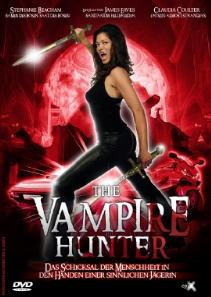
The Witches Hammer (which was retitled The Vampire Hunter for its German release and Dark Evolution in Japan) is a corking horror/action movie which oozes professionalism. Deftly directed and carefully paced to balance action sequences with slower, character-based scenes, this is a highly commendable addition to the continuing British horror boom of the early 21st century.

MJS rating: A-

Review originally posted 14th April 2006

Thursday, 20 March 2014

Ninja Wars

Director: Mitsumasa Saito
Writer: Ei Ogawa
Producers: Masao Sato, Izumi Toyoshima
Cast: Henry Sanada, Sonny Chiba, Noriko Watanabe
Year of release: 1982
Country: Japan
Reviewed from: UK VHS (VTC)

I had heard bad things about Ninja Wars (aka Black Magic Wars aka Iga Ninpo-cho), but surely they were mistaken. While the word ‘ninja’ in a title doesn’t in and of itself signify an enjoyable film - and can in fact sometimes indicate absolute crap - this was a supernatural fantasy starring Sonny Chiba. Sonny Chiba! The man’s a legend!

But you know what? The word on the street was right. Ninja Wars is toss of the highest order. The plot is hopelessly confused and I’m buggered if I could follow what was happening, a situation not helped by two women who look very similar (may even have been twin sisters) having their heads cut off and then magically restored to each other’s shoulders. So is that Woman A with Woman B’s head, or Woman B with Woman A’s body? More to the point, who cares?

There’s some sort of magical aphrodisiac which the bad guy wants to create so that he can administer it to his enemy’s wife and turn her into a nymphomaniac, thus shaming her husband. Or something. And for this aphrodisiac to work it must be made from the tears of a raped virgin. Or something.

And there is a thing called ‘the Frog Kettle’ which is essential to the preparation of this aphrodisiac - a metal pot basically - though this seems to be a completely arbitrary McGuffin.

One thing I did spot is that Sonny Chiba is barely in this movie at all, and when he does turn up (as a mysterious ninja on horseback) he has a scarf over his face. He doesn’t even merit a mention in the cast list although he does receive a credit as ‘Action Co-ordinator’ - or at least, someone called Sony Chiba does! (This makes the movie's DVD release as part of 'The Sonny Chiba Collection' particularly misleading.)

I couldn’t follow who was who, what they were doing or why. And worse than that, I was bored. There’s not much action, not much magic and no tension. There’s a big set-piece halfway through when an army of monks from one temple attacks another temple mid-ceremony, burning it to the ground. I have no idea why; I couldn’t follow the reasons for this or the consequences of it and I had no idea which bunch of monks I should be cheering for during the hopelessly ill-directed fight scenes.

The dubbing is technically accurate - it matches the lip movements - which means that it is painful to listen to. Japanese is spoken in short sentences with pauses between, while English tends to be long sentences flowing into one another (unless it’s spoken by William Shatner). So the only. Way that the dialogue can. Match is. To be broken up like. This and for. Occasional. Meaningless pro. Nouncements like. But Still.

Director Mitsumasa Saito (credited as Kosei Saito on the sleeve) also directed the 1979 WW2/samurai epic Time Wars/Time Slip/GI Samurai which is high on my want-to-see list [And which I have subsequently seen - MJS], although after sitting through Ninja Wars it has slipped down a few places. Screenwriter Ei Ogawa also wrote Toho’s three western-influenced vampire films, Legacy of Dracula, Evil of Dracula and Lake of Dracula.

Among the cast are Hiroyuki Sanada - credited as Henry Sanada on screen and Duke Sanada on the sleeve - who was in Message from Space and Time Wars but is best known as Ryuji in Ring, Ring 2 and Rasen. Akira Nakao, who plays the villainous Lord Danjo, also has some genre credits: Legacy of Dracula and four Godzilla movies. Despite what the Inaccurate Movie Database claims, Jackie Chan is not in this film (or if he is, his role is even briefer and more hidden than Sonny Chiba’s...). Special effects are by Hideo Suzuki.

MJS rating: D

Saturday, 1 March 2014

Merantau Warrior

Director: GH Evans
Writer: GH Evans
Producer: Ario Sagantoro
Cast: Iko Uwais, Mads Koudal, Christine Hakim
Country: Indonesia
Year of release: 2009
Reviewed from: UK disc
Website:
www.merantau-movie.com

The British martial arts film is not, in all honesty, a healthy cinematic genre. A few films get made each year, at the lower end of the indie scale, often combined with a gangster storyline. A few just about overcome their limitations and can be viewed, by sympathetic audiences, as fun little movies. But no-one would ever claim that this is a genre where we excel. Even the very best British martial arts picture doesn’t approach the level of a distinctly average Hong Kong flick.

The night before I watched Merantau Warrior, I tried to sit through a typically ultra-low budget British action film and only made it halfway (I won’t mention the title or film-maker, and no, I won’t be reviewing it). It had everything that is wrong with the genre in this country, principally an almost total absence of story and character. It was just a succession of lacklustre fights with atrocious camera-work and sound, plus a level of acting for which there are simply no words.

So it was a huge joy to be able to watch Merantau Warrior, the second feature by GH (Gareth) Evans, a good Cardiff boy who previously helmed the magnificent Footsteps. I would love to be able to proclaim this as far and away the finest example of a martial arts action picture ever made in Britain. Except I can’t. Because it was made in Indonesia.

It’s not even a British film shot in Indonesia. This is a Indonesian as Pangkal Pinang Bus Station. But it was directed by a Welshman and features, as its chief villains, a Frenchman from China and a Dane. Truly, it’s a modern world.

Despite its unlikely lineage, Merantau (the original title, used onscreen) is an absolutely terrific film. This is real, top-notch martial arts cinema, combining dazzling displays of controlled combat with a powerful story, superb camera-work and remarkable achievements in all technical and artistic aspects. If you enjoy martial arts cinema, by which I mean real martial arts cinema that combines the artistry of combat with the artistry of film to create something greater than the sum of its parts, then you do not want to miss this film.

The story is simple and tells of Yuda (Iko Uwais), a young man who lives with his mother and elder brother on a tomato farm in Sumatra. Theirs is a peaceful, rural existence. But there is a tradition in that region that for a youth to truly become a man, he must leave his family and, well, it’s not entirely clear but I think the European equivalent would be ‘setting off to seek his fortune’. So, just like Dick Whittington journeying to London (but without the cat) Yuda takes the bus to Jakarta where he hopes to earn a living teaching silat.

Silat (or pencak silat) is an Indonesian martial art. And I don’t know enough about the technicalities of these things to be able to say precisely how this differs from karate or kung fu or muay thai or other forms of martial art. But it’s a stylish, fast-moving form of combat which seems to mainly consist of blocking, grabbing and twisting, pulling or otherwise disabling an opponent. Rather than, say, repeatedly kicking him.

Inbetween Footsteps and Merantau, Gareth shot a documentary on silat for a production company owned by highly respected actress Christine Hakim, who plays the mother in this film. Although various versions or approximations of silat have appeared in films over the years, mostly during the exploitation boom of the 1970s and 1980, this is the first movie to actually concentrate on the subject and, allegedly, the first martial arts actioner shot in Indonesia for about 15 years. I guess there just weren’t enough Welshmen in the country.

In the city, Yuda finds that the address he has been given doesn’t exist and so takes up temporary residence in some concrete pipes on a construction site while he tries to figure out what to do. When his wallet is stolen by a young urchin named Adit, Yuda gives chase and catches the boy in an alley just in time to see his sister, Astri, being abused by her boss, Johni.

Johni runs a gentleman’s establishment called the Gogo Club where Astri works as a pole dancer, but she doesn’t want to give him the tips she has earned. Yuda, being a well-brought-up lad, steps in to defend the young lady but receives no gratitude; Astri is furious that his roughing up of Johni has cost her her job.

Johni, it turns out, has a sideline providing girls to a European people-trafficker named Ratzger, faultlessly played by Mads Koudal. I’ve never seen Mads be anything less than great (he was an equally nasty slimeball in Footsteps) but here he’s absolutely terrific, a superb study in efficient psychosis. “I’m a man who does business but not a businessman,” he points out in one of his early scenes, intimidating Johni. “If I was a businessman, I would just sue you...”

Ratzger is assisted by Luc (who may be his brother?) played by Laurent Buson who was born in Paris but raised in China and is one of the few Europeans to have been allowed to train in the Shaolin Temple. They have a shipment of girls waiting to leave the country but need one more: Johni promised them five but, with Astri gone, he can only offer them four. So Johni tracks down Astri and takes her to Ratzger but Yuda, quite by chance, sees them and knows he has to rescue her again.

Initially beaten up by Johni’s goons, Yuda picks himself up and enters the club, dishing out silat action left, right and centre in an amazing long, single shot which was, according to the Making Of, the very first shot of production and took more than 50 takes! As Yuda rescues Astri from Ratzger, the white guy gets a face full of broken glass, one piece of which he actually removes and uses to threaten an underling. From then on, Ratzger carries a series of parallel scars on his face that just make him look like the meanest motherfucker you ever saw, excuse my language. I mean, honestly. You would not want to mess with this guy. At all.

Now all of Johni’s goons are on the lookout for Yuda, Astri and Adit, knowing that Ratzger will severely punish them if they don’t come up with the goods. The pace of the film becomes non-stop as fight follows chase follows fight. Astri hides her brother but is recaptured and the final showdown comes at a depot amid a city of shipping containers, one of which houses a dozen petrified young women. It’s time for full-on, no-holds-barred silat kick-assery culminating in a truly shocking encounter between Yuda, who is still essentially a good farm boy, and the sociopathic, batshit insane Ratzger.

This is the real stuff, no doubt about it. Merantau is everything that a really good martial arts film should be. It has characters we care about, fighting for moral reasons against bad guys that we hate - rather than the standard British model of one bunch of shaven-headed thuggish crooks fighting another bunch of shaven-headed, thuggish crooks for no reason that we know or care about.

There’s a story to Merantau and, if the above makes it sounds simplistic - well, I suppose it is, but not overly simplistic. It’s not a dodgy 1930s serial cliffhanger plot of guy rescues girl, girl gets captured again, guy rescues girl again etc. It’s coherent and well-structured. Granted there are a couple of slightly weak moments, not least that the whole thing hinges on the coincidence of Yuda phoning his mum across the street from, and at the same time as, Johni unloading a semi-conscious Astri from the boot of his car. There is also a later scene where Astri and Adit are pursued by thugs who are mere yards behind them, then they turn a corner and there’s time for brother and sister to have quite a long, emotionally wrought conversation before the villains eventually reappear. But these are moments - few and far between and entirely failing to spoil in any way the films’ achievement or the viewer’s enjoyment.

There is also a nice subplot about a guy named Eric who initially gets chatting to Yuda on the bus and later turns out to be one of Johni’s men, leading to a terrific fight inside a lift which culminates in one of the most emotionally powerful scenes you’ll ever see in a martial arts flick.

Technically the film is flawless. Gareth brought over his Footsteps cinematographer Matt Flannery who does a magnificent job, both on location and in the studio. The make-up effects are impressive without ever being over-the-top and sometimes shocking in their realism: check out the glass-of-scotch-to-the-head scene. Gareth did his own editing. The very effective score was composed by Fajar Yuskemal (who scored the award-winning horror short Dara) and Aria Prayogi.

Producer Ario Sagantoro’s experience has mostly been in TV commercials while line producer Daiwanne Ralie (who also translated Gareth’s script) has worked extensively in Indonesian television after studying in the US at Northeastern University. Executive producer Rangga Maya Barack-Evans has worked with Gareth since his short film Samurai Monogatari.

While the executive producer may have a brilliantly long and complex name, it pales beside that of fight choreographer Edwel Datuk Rajo Gampo Alam who was assisted by three of his students under the name of Team Silat Harimau.

But for all the many contributions in front of and behind the camera, this film stands or falls on the central performance by Iko Uwais, a young man with no previous acting experience but a phenomenal skill at silat. It was very important to the director that he cast people who were good martial artists. It is evidently easier to teach an expert fighter to act than to teach an actor to fight like an expert. Fortunately, Uwais exhibits just the right amount of screen presence: a simple, humble, honest morality that makes us sympathise with him and gives him a (literally) fighting chance of facing down the unpleasantness upon which he accidentally stumbles.

Sisca Jessica who plays Astrid and (not unexpectedly) young Yusuk Aulia as Adit are also first-timers - although the former has some TV experience - and really it was a tremendous risk to have three feature film debutantes but they all acquit themselves well. What is more they are balanced by some real experience.

Mads Koudal has more than fifty credits including features, shorts and TV work in a bewildering variety of countries. As well as Footsteps, he was in Andrew JonesThe Feral Generation, Jeff Brookshire’s Awaken the Dead, David Noel Bourke’s No Right Turn, Emil Ishii’s Rovdrift, Swedish horror flick Die Zombiejaeger, the Campagna Brothers’ post-apocalyptic western Six Reasons Why, unreleased vampire feature Pool of Darkness and, most recently, Paul Sampson’s Night of the Templar. Mads is always tremendous value in whatever he does, especially when he’s playing the villain (which seems to be most of the time).

Laurent ‘Lohan’ Buson I wasn’t familiar with before this although I had seen Michelle Yeoh/Luke Goss starrer Silver Hawk in which he plays a hitman. Born in Paris, he travelled to China as a young man and was granted the rare honour of actually training in the Shaolin Temple under Shi Yong Xu. In recent years he has founded the Z-team, the only action/stunt team of westerners working in China, with his younger brother and a couple of friends.

Then there’s Christine Hakim. You might not know the name or the face and you certainly won’t have heard of any of her previous features, but Hakim is a huge star in Indonesia and has won the local equivalent of the Oscar no fewer than six times. She was on the Cannes Festival Jury in 2002 and recently made her first US film, acting opposite Julia Roberts in Eat Pray Love.

The uniformly excellent cast is rounded out by Alex Abbad as Johni, Yayan Ruhian as Eric, Doni Alamsyah as Yuda’s brother Yayan and Ratna Galih as Ayi, a character I don’t even remember. According to the website she’s a dancer who is a friend of Astri’s but it looks like much of her part might have been cut because there’s no significant character like that.

Speaking of cut things, the DVD includes two ‘deleted scenes’, one of which is actually an existing scene of Ratzger and Luc with a few more lines of dialogue. It’s wrily amusing and may have been trimmed because the humour upset the scene. The other, wholly excised scene, is an early sequence centred on Adit which is beautifully shot and quite charming and which actually pays off at the end of the film. But I can also see why this has gone: it would put too much emphasis on Adit early on at the expense of his sister (and Yuda). It is much better to have our introduction to the boy in a scene of petty theft.

However, there is another entire scene missing, footage of which can be seen in the hour of excellent Making Of featurettes included on the disc. It’s a ‘thug recruitment’ sequence of Jakarta lowlifes lining up to try out for Johni’s gang and features what looks like a cracking demonstration of silat combat by the character of Eric. Again, there is undoubtedly a good reason to leave this out of the finished film (which is quite long enough already) but I’m puzzled why that’s not included with the other deleted scenes. Maybe it’s an Easter egg or something.

The Making Ofs are top-notch with just the right amount of behind-the-scenes footage and talking heads. Like the movie itself, the Indonesians are subtitled while the Europeans aren’t (in the film Ratzger and Luc speak English while Johni speaks both languages, depending on who he’s talking to). There is also a self-contained 20-minute Making Of done for TV which, to my surprise, has no significant overlap with the rest of the featurettes. Plus a trailer.

Merantau is a very, very fine piece of work indeed. While I don’t think it’s going to have the international impact that Ong Bak did - and which the marketing explicitly suggests it might - I do think it has already raised the awareness of Indonesian cinema and Indonesian martial arts among the faithful fans of this genre. It’s also an absolutely amazing sophomore feature for Gareth Evans.

I mean, Footsteps was great but only played a few festivals, had no domestic distribution and was released in the States on just a very small DVD label. This has been a smash hit at festivals worldwide and had impressive theatrical distribution not only domestically but in other Pacific Asian territories too.

And in terms of subject matter Gareth’s first feature was very grim, very bleak, very Welsh and very small, displaying more in common with the British horror revival than the flash-bangery geezerness of modern British thrillers or dramas. To go from that to a slick, well-budgeted Indonesian martial arts action feature is surely the biggest leap that any director has ever made with their second film.

I think Merantau is a triumph for Gareth Evans, a triumph for Iko Uwais and a triumph for Indonesian cinema in general. Evans and Uwais are now working on a prison drama called Berandal (there’s a teaser trailer on the web) which could be the film that combines Footsteps’ gritty, bleak attitude with Merantau’s stylish, powerful action. [In fact, Gareth's next feature was the amazing, and amazingly successful, The Raid. His Berandal script was then adapted into The Raid 2. - MJS]

Incidentally, all the combat in Merantau is unarmed, apart from various metal pipes and crowbars which the bad guys swing around. The small knife featured in publicity images is only ever seen in a solo routine that Uwais/Yuda performs under the opening titles.

MJS rating: A-
review originally posted 17th September 2010

Sunday, 9 February 2014

Lethal Force

Director: Alvin Ecarma
Writer: Alvin Ecarma
Producer: Alvin Ecarma
Cast: ‘Cash Flagg Jr’, Frank Prather, Andrew Hewitt
Country: USA
Year of release: 2002
Reviewed from: US DVD (Unearthed Films)
Website:
www.divergentthinking.net

I approached Lethal Force with a completely open mind and before it was halfway through I was almost falling out of my chair with laughter. What I expected to be a low-budget martial arts actioner turns out to be one of the funniest action comedies I have watched for, ooh, ages.

Low budget comedy is very, very difficult to do and most of those who attempt it, especially when mixing it up with action and/or horror (there are copious quantities of fake blood on display here) go for the over-the-top route. But Lethal Force derives its humour from action, dialogue, characters and situations - in other words it’s a funny script, well directed.

The plot is wafer-thin. Writer/director/producer Alvin Ecarma stars as hitman Savitch (which I assumed was spelled ‘Savage’ until the end credits) under the screen name Cash Flagg Jr, an obvious homage to Ray Dennis Steckler. A rather amusing IMDB biography for ‘Cash Flagg Jr’ claims that his real name is Cassius Flagarsky and that his heritage is a mixture of Dutch, Nigerian, Hawaiian, Latvian and Scottish. He certainly has an international look to him which is impossible to put one’s finger on. If there is ever a big budget remake of Lethal Force, I expect Savitch to be played by Keanu Reeves.

Savitch had previously taken out local crime lord Mal Locke (Andrew Hewitt; John Malkovich would play him in the remake) but in fact Locke was only paralysed and now, confined to a wheelchair and surrounded by black-clad goons in white face-masks, he seeks revenge on Savitch. (No explanation is given for the goons all wearing masks but of course from a film-making point of view it means all you need are a few stuntmen who can be killed off time and time again.)

So Mal Locke blackmails Savitch’s friend Jack Carter (Frank Prather; Ben Stiller in the remake) into helping him catch Savitch by kidnapping Jack’s wife (Lori Boyd) and son (J Patrick Collins Jr). After seeing his wife murdered, Jack agrees to help trap Savitch in order to save his son. Assisting him in this deception is nightclub-owning lesbian gangster Big Bertha (Allison Jacobson; Rosie O’Donnell in the remake) who wears a suit and tie and the largest fez I have ever seen. Meanwhile Patrick is befriended and defended by Mal Locke’s moll, a tall black woman with long blonde hair named Rita (Patricia Williams; Angela Bassett in the remake).

There are a few other peripheral characters including the obligatory tall, black dude with an enormous afro and a balding, shades-wearing character named Psycho Bowtie (Eric Thornett), dressed all in black apart from his red dickie-bow. I don’t know whose side he’s on but he’s involved in a couple of cool fights and it’s very much like watching a kung fu Elvis Costello. Mention must also be made of Jen Dunkelberger as Suzy, an aspiring lapdancer at Bertha’s club whose method of fighting is to pause every so often to remove another item of clothing. She will be played in the remake by Jen Dunkelberger.

The fights are actually really well choreographed and shot, much better than most British martial arts indies, it must be said. There’s a touch of humour to them which you find in the best Hong Kong fights but is usually missing from the oh-so-serious kickboxing features that this country produces.

Ecarma cleverly picks some remarkable locations for his talkier scenes including an extraordinary statue of a giant buried under the ground. And Danny Fielding provides some excellent special effects involving knives through hands and power drills through heads. Possibly the funniest thing of all, in a movie which is packed with laugh-out-loud comedy, is the homoerotic relationship between Savitch and Jack which manages to be both subtle and desperately unsubtle at the same time. There’s a wonderful flashback to the two of them in 'Nam (or wherever), blasting away at stock footage of people being blown up.

I had an absolute ball watching Lethal Force, and then even more fun with the extras. There’s no Making Of but there is a hefty gallery of behind-the-scenes photos and a hilarious gallery of fake action figures, plus a selection of the director’s short films. The downside, if there was one, was that the whole movie was post-synched and this gave it an air of unreality sometimes - but after I realised quite how silly it was all meant to be and how carefully crafted it was (including colour-drenched cinematography courtesy of Declan McManus lookalike Eric Thornett), I stopped worrying and just enjoyed a terrific film.

(The DVD includes three very short (less than five minutes each) films by Ecarma. Me! (2K3 Remix) is Ecarma miming to the narration on an OTT trailer for blaxploitation hoopla Ghetto Freaks; A Conversation is an interesting contrast between a peacenik busker and a superhero on the rights and wrongs of violence; and My Dog has a Cyst wouldn't play on my copy.)

MJS rating: A-
3rd June 2007

Thursday, 6 February 2014

Left for Dead

Director: Ross Boyask
Writer: Adrian Foiadelli
Producer: Phil Hobden
Cast: Glenn Salvage, Andy Prior, Adam Chapman
Country: UK
Year of release: 2005
Reviewed from: screener

The main problem with the otherwise generally terrific Left for Dead lies at the start of the film. Consequently I shall deal with this problem first, up front, before explaining in the rest of the review why this is very probably the best British martial arts film ever made.

We kick off with two gangs of, well, gangsters fighting each other on a patch of inner city wasteland (and in some adjacent building). Like all the fights in Left for Dead, this is brilliantly done: excellent choreography matched with peerless editing makes the many individual combats, which together make up the overall fight, some of the very best you’ll see in a modern low-budget action film.

But - and it’s a big but - that’s all we have for several minutes: fighting. Starting an action movie with a big action scene has rarely worked in any motion picture and it doesn’t work here. For a sequence like this to have any meaning beyond simply movement and sound, we have to care what happens. And that means we have to be bothered who wins. And that, in turn, means that we need to know who is doing the fighting.

Because we lurch right into this without any preamble, there is no way to know who we should be rooting for in any given scrap. Because everyone dresses the same we can’t tell who is in which gang or even how many people are involved. Whenever we see somebody killed or seriously injured, is that a good thing because it reduces the number of our heroes’ opponents or is it a bad thing because it reduces the number of his allies?

Sorry, but watching people I don’t know beat up, shoot and stab people I don’t know for some reason that I’ve not been told is simply tedious and boring, however well photographed. Jumping straight into this without explanation or introduction reduces what should be a major dramatic sequence to the level of a training video.

This drags on for a full ten minutes (including, for no apparent reason, a flashback to a different fight in which one of the protagonists is Insiders director Steve Lawson) and it is only after everyone else has been killed that we discover who are central characters are: round-faced Dylan (Kevin Akehurst, who was also ‘lighting director’), gaunt Taylor (Adrian Foiadelli, who wrote the script) and ponytailed Williams (Glenn Salvage: The Silencer), who are all working for a crime boss named Kincaid (Adam Chapman: The Penalty King).

A flashback reveals that Williams is planning to go straight after this one last job but Kincaid isn’t keen on the idea so he has asked Taylor and Dylan to take him out afterwards. However, a distraction allows Williams to escape just as his comrades pull their guns on him and, despite a massive chase by a bunch of motorcyclists who appear from nowhere, Williams gets away.

At this point it becomes apparent that the massive fight between Kincaid’s trio and the goon squad of a rival boss named Murphy, which we have just patiently sat through, has no bearing on the plot at all. Which is annoying and poor repayment for our patience. Realistically, the opening fight should have been condensed into two minutes and played under the opening titles (perhaps after a very short scene of the three men to establish them as characters in their own right, disposing of anonymous grunts). Instead, the opening titles introduce us by name to a whole bunch of similar-looking characters, some of whom we won’t meet for quite some time, long after we have forgotten what they look like.

So: grumble over. Except to note that following the above plan would have shaved ten minutes off the film’s rather extravagant 115-minute running time.

But let’s get down to business because once we get to the meat of the story, Left for Dead is, frankly, astounding. Which is to say that the plot is coherent and credible (for the genre), the characters are rounded and empathetic (for the genre) and the action is fast, tough and exciting (for a British film). I don’t want that to sound like I’m damning with feint praise. We’re all adults here, we’ve all seen action films and we all know that the genre is almost universally populated by simplistic films in which one-dimensional characters go through the motions in plots that are either childishly linear and simplistic or insanely complex and nonsensical. But the good films within this genre either manage to overcome these stereotypical failings somehow or, at least, acknowledge them and then cheerfully plough into some crazy-shit action which kicks arse both literally and metaphorically.

Sadly, most low-budget British martial arts pictures - which is to say: British martial arts pictures, for there is no other kind round these parts - can’t even manage that and although some may be enjoyable to those of us who appreciate this sort of thing, it is almost unheard of to find a British actioner which could be genuinely recommended to those who do not specifically love the genre. But - here it is.

So anyway, Williams goes on the run and ends up in the flat of a woman named Sonya (Vicki Vilas) whom he thinks he can trust - but she drugs him and calls in Kincaid’s goons. Williams then makes an extraordinarily daring, clever and entertaining escape, kicking the film up a notch.

Meanwhile, in the B-plot, Kincaid controls the local kickboxing scene - and the gambling which surrounds it - and instructs trainer Billy Rourke (producer Phil Hobden credited as ‘PL Hobden’) to tell hotly-tipped rising star Danny Kelso (Andy Prior) to throw his next fight. When Kelso wins the fight, Taylor has the job of breaking all ten of his fingers before banishing him from Hope City.

Setting the film in this fictional metropolis is a master-stroke on the parts of the film-makers because it allows them the freedom to step just outside reality, which is of course where all the best martial arts films exist. We don’t need to question why competitive kickboxing is so central to the criminal underworld. We don’t need to question how this many people could be killed without any law enforcement sniffing around (there is only one passing mention of the police in the entire not-quite-two-hours). We can just accept that this is the way things are in Hope City.

Kelso and Williams’ paths briefly cross when they both seek help from a dodgy back-street surgeon and they then journey separately to Metro City (shown using a neat little computer animation). Kelso’s fingers recover and he becomes the main attraction at a ‘pit’ run by the apparently relatively honest Markus (Jeremy Bailey). Another of Markus’ employees is Loader (Adam Hawkins), a ‘gentle giant’ who is kept out of the ring because if he is allowed to fight he never loses (not good for betting scams) and rarely lets his opponent leave the ring alive (not good generally).

Eventually, Williams and Kelso team up (somewhat warily) and head back to Hope City. Williams wants to take out Kincaid and his whole empire, Kelso just wants revenge on Taylor. Other than that, they have little in common. Loader tags along for the ride too. And the last twenty minutes or so is pretty much non-stop action as they kick, punch, throw and slap their way through Kincaid’s army of goons - including Taylor and Dylan.

It’s a simple story but it makes sense in terms of character motivation. The characters themselves, both major and minor, have personalities and the acting is generally good. None of it is outstandingly brilliant but none of it is embarrassingly awful either - which is unusual in itself. To be honest, none of the actors are ever expected to go outside of the emotions of ‘angry’ or ‘sarcastic’ but there is some choice dialogue and it is nicely delivered.

Still, it’s the fights we’re here to see and they really are something special. They strike the right balance between gritty and over-the-top. People get hurt, people get bloodied, in fact this is so gory in places it almost qualifies as a horror movie. But people also manage to stay alive and kicking (literally) long after any normal human would have been reduced to a quivering pulp on the verge of death. Which is what we look for in a good actioner. It’s what separates an ‘action movie’ from a violent drama.

The fight choreography is good, the acting and movement is good, the foley work is good and the editing is absolutely world class. Because it’s all in the editing. It’s the editor that makes a good fight sequence. You can have the best stuntmen in the world giving it their all but if the editor gets it wrong (or the director’s instructions to the editor are misjudged) you can end up with a mess. Actually, it’s amazing how often Hollywood gets this wrong; Quantum of Solace is a fine recent example. We have to clearly see what people are doing. We have to see sequences of two or three consecutive moves in a single shot. Yes, fast editing - cut-cut-cut! - can make a sequence exciting but in a fast-paced fight it has the opposite effect.

Anyone making low-budget action films - or, for that matter, big budget ones - should watch Left for Dead as an example of How It’s Done. It doesn’t take money (this whole movie was shot for about £8,000) and it doesn’t take the world’s greatest stuntmen. It just takes a director who knows what he’s doing, properly trained actors/stuntmen who know what they doing and an editor who understands the difference between a good actioner and a bad one.

Ironically, the weakest fights in the film are in that redundant opening sequence where far too many moments require somebody who is in a perfect position to shoot, stab or punch someone to stand still for a moment so that the intended victim can shoot, stab or punch them first. By the time that we reach the climactic showdown, that is long forgotten (together with the rather silly motorbike sequence). Kincaid’s goons are really, genuinely trying their damnedest to kill Williams, Kelso and Loader, who are doing their damnedest to incapacitate every human being in the building until they reach the boss-man himself.

Left for Dead is certainly too long but that’s about the only major criticism one can lay against it and opposed to that must be the fact that it is better written, better directed, better edited, better sound-mixed, better photographed and all-round just better than any other British martial arts films that I’ve ever seen. It raises the bar enormously. Yes, there have been some decent little movies and it’s true that the really bad shit like Intergalactic Combat is, fortunately, the exception. But Left for Dead just shows what can be done. The subgenre that is the British actioner is not limited, it’s not restricted, it can work.

Many of the cast and crew have worked with director Ross Boyask and producer Phil Hobden previously on films such as Fixing to Blow, Lone Wolf 1 and 2, fIXers (sic) and Pure Vengeance. Salvage and Hobden worked together as far back as Project: Assassin. John Rackham, director of Bloodmyth, has a small role as another mob boss and also provides narration which is so infrequently deployed as to be rendered not just ineffective but actually slightly annoying.

Cecily Fay appears briefly for one fight scene at the end in a bright blonde bob wig and is worth a paragraph to herself. A former international ballet star, her fascinatingly diverse CV includes motion capture work for a Narnia computer game, stunt-doubling characters in Charlie and the Chocolate Factory and wearing a big foam costume in the title role of pre-school kids show JimJam and Sunny, together with three of the worst pieces of science fiction ever filmed in this country. That’s Ray Brady’s hilariously bad Intergalactic Combat, The Hitchhiker’s Guide to the Galaxy (which had a budget about 10,000 times that of Brady’s film but was only marginally better) and non-broadcast wannabe-sitcom embarrassment Star Hyke. Anyone who is as big a Hitchhiker’s nerd as I used to be will be interested to learn that it was Fay who donned the TV series’ Marvin costume for its gag cameo in the Disney movie. Finally, and somewhat bizarrely, she was the 1996 European champion in the Indonesian martial art of Pencak Silat (the one that Gareth Evans is now making a film about).

Meanwhile, back at the film review:

Other cast members include Joey Ansah (The Bourne Ultimatum, Underground), Dean Alexandrou (who was in a terrific-looking Thai flick called Hanuman Klook Foon), Andy Taylor (Soul Searcher), Brendan Carr (who was in something called Jesus the Curry King!), Nic Main (who played a Roman soldier in both big budget epic Gladiator and low-budget distaff spoof Gladiatress), Thomas Rooke (RocknRolla) and Silencer/Insiders co-director Simon Wyndham. Steve Hayes created the title sequence and visual effects, make-up effects are credited to Mondo FX, and Pinda Dhanoya provided the original music. ‘First Strike Action Team’ are credited with the fight choreography. But the bulk of the credit for the film’s success must rest with director/cinematographer/editor Boyask whose judgement of both action and plot is spot on.

Left for Dead’ is one of those generic titles, like ‘Broken’, which has proved remarkably popular in recent years. The Inaccurate Movie Database lists seven films of this title since 2002 including a western directed by Albert Pyun, a Canadian horror feature starring Halloween’s Danielle Harris, a short, serious drama from 2005, a thriller from 2006, a biopic of an American Civil War soldier and an in-production indie horror.

The two-year odyssey that was the production of Left for Dead was documented in the feature-length Making Of 10,000 Cigarettes. Boyask, Hobden and many of the others involved went on to make Ten Dead Men, which I shall review shortly...

MJS rating: A
review originally posted 1st January 2009