Showing posts with label Canadian. Show all posts

Monday, 14 December 2015

interview: Garrick Hagon

I interviewed husband and wife Garrick Hagon and Liza Ross in September 1998 at the recording of The Gemini Apes, an original sci-fi radio drama by Dirk Maggs. Of course, we mostly talked about Star Wars.


How did you get involved with this?
“I’ve been involved with Dirk right from the very beginning, right from the very first pilot of Superman, when I played the voice of… what was his name? Something like K-Tel or K-Mart! Anyway, I did that and then I did Clark Kent. We did Superman and then I did Batman’s twin in a very early radio show of Batman, and then later it was Spider-Man. So I’ve been with Dirk since the first one.”

Do you do a lot of radio?
“Oh yes. My whole, budding career started in radio, when I was about six. I do a lot of radio; I do a lot of readings of books and stories. I just did a drama recently, I did Let Us Now Praise Famous Men. An awful lot.”

I think to most people you’re Biggs.
“Yes, people are still harking back to Biggs.”

Does that role haunt you, or was it useful?
“It doesn’t haunt me. It’s become much more prevalent since the reissue and I’ve started going to a few conventions. I went to one a few weeks ago at the hotel in Russell Square. Then I was at one a while ago on the Isle of Wight. So yes, there are more requests for photographs and all of that. A doll has come out.”

Famously, your scene with Mark Hamill was cut. Was it actually filmed?
“Oh yes, the scene was filmed. It’s all there. In fact, they showed it at a convention not so long ago. Somebody actually mentioned that they’d seen it and actually had a copy. Not a very good copy, but there are contraband copies being sent around, I believe.”


Not that we endorse that sort of thing at all.

“Not at all, not at all!”

That must have radically reduced your screen time.
“My screen time was virtually non-existent. That scene, the whole segment on Tattooine was about six minutes, I understand. All my information comes from fans who write and tell me. I had no idea what the length was or why it was cut. I’ve never understood. I’ve never really had an official letter as to why.”

So you filmed it but then it wasn’t there on the screen at the preview.
“I knew it had been binned, but only from another actor as well; Anthony Daniels. It wasn’t there. Subsequently George has talked about it in various interviews and indicated it didn’t fit, it was slowing us down, it made Luke look weak. In fact, it just changed the pace of the first part of the film. It’s a very talky scene, it’s a kind of grown-up scene. A very nice, warm, friendly, human scene that just takes a different tone from the early part of the picture.”

Do you think he was right to cut it?
“Well, I don’t know. Mark said at the party for the opening: ‘I’ve always wanted it to be put in, because it gave him a background, it gave him a bit more past life.’ I guess that would have added something and a lot of people still would like it put back in. Get a bit of life on the planet, you know. Because there were other people: Koo Stark and Anthony Forrest and so on. We had a nice little scene in the power station there that kind of gave a community to it.”


Did you film that in Tunisia?
“Yes.”

I heard that was fairly rough.
“Oh, it wasn’t rough for me. I sat around the hotel for a week and then did it on my second last day there. It was hot, but I’d worked in the desert on Mohammed or The Message for a year. It was nice to get back and talk a little bit of Arabic. So it was fun; I really enjoyed it. We had nice horse rides on the beach.”

Most of your remaining footage is flying the X-Wings.
“There’s a little bit of me in the hanger, meeting Mark. Which is nice to see because it’s a very nice, warm, friendly scene as well. Kind of a happy scene. It was near the end of the picture, I think we were just pretty bubbly that day. But it was nice to see it back. And who knows - one day I may actually see the whole scene. Who knows? There might be a good copy in this country, I don’t know. It might come from the office eventually.”

The cockpit scenes: was that just a close-up camera on a tiny cockpit set?
“I don’t know how close it was. It was just outside the cockpit, a light going round on a track around it. I can’t remember whether we did the whole thing in sequence. I found that I knew the whole scene, so I may have just shot it and gone right the way through it. I believe I did. But anyway, that was all one day, one very short hour or two.”

When you were making Star Wars, how much idea did you have that it might be so huge?
“Some of them must have felt that, but I don’t think any of us on the floor did. I don’t think anybody had any idea at all. We knew it was fun, we knew it was ingenious, a lot of good people in it, and so on. Especially with Alec Guinness being in the midst, you knew there was something of quality here. And George kept his cards fairly close to the chest. Gil Taylor didn’t seem too bemused by it all, but he was doing a lot of good work on the cameras so the sets and everything looked pretty good. So you knew there was something, but you didn’t have any idea what.”

You mentioned Mohammed, Messenger of God. Now there is a controversial film.
“It was controversial but on the other hand it got a very big wide audience - and still does - among the Muslim nations. Of both versions: we did two versions, Arabic and English. So it’s still very much there. I get people coming up to me occasionally who have seen it. Mainly Muslims of course. That was a great experience for a whole year.”

As I understand it, you can’t show the Prophet or any of his wives or…
“No, it’s absolutely forbidden to show the Prophet or any image of the Prophet. We all played to the red light on the side of the camera. Anthony Quinn, when he finally got fed up with the red light, used to call for me if I was around to get in there beside the camera and do the lines behind the camera, but nobody knew that. But he just couldn’t work to a red light. There was actually a lot of wonderful horse stuff and nitty gritty in the desert, and I enjoyed that. It was a great time and I loved the Arabic cast, and I learned an awful lot about another culture on that film.”

People must have realised that there was going to be controversy.
“Yes, but they had advisors from the council of Islam - I’m not sure what they were called - in Cairo. They were always there and they vetted the script endlessly of course. So it was only the fundamentalists. Nowadays I think they’d find it even harder to make the film because the fundamentalists are much more in evidence. It was finally Saudia Arabia, King Faisal, that put the pressure on King Hussain of Morocco, and we had to leave Morocco with half of the film done. Then Gadaffi took us under his wing and we did the rest of the film in Libya with a lot of help from Gadaffi and Zalut, his second-in-command.”

When it opened, I understand a lot of people who hadn’t seen it, condemned it.
“That’s right. There were a lot of protests in New York. In fact, people were afraid to show it. I think it was eventually withdrawn from New York and Toronto. It played here and then it went. It played in the Muslim countries of course.”


You and Liza were both in Tim Burton’s Batman.
“Yes, we started Batman. We opened the picture. That was a wonderful set and an incredible night. We continued the scene on another night, but that whole Gotham City set was one of the most exciting sets I’ve ever been on. Wonderful. Tim Burton was a great director; he didn’t say very much but he was a very nice person to work for. It was a good experience.”

You were in a Doctor Who story.
“Yes, I was. Somebody came up to me at a conference with my picture from ‘The Mutants’. I played a character called Kai in ‘The Mutants’ who starts as this very rough and ready rebel character in a cave and ends up a butterfly. A very sweet transformation. I had a lot of fun and it’s a good episode, and it still seems to be about today. People come up to me at the conferences and mention Doctor Who.”

Which Doctor was that?
“It was Jon Pertwee, with Katy Manning. They were very good together and we had a lot of fun in that.”


You were in Moonbase 3.

“Yes, I was. That was more intellectual, more scientifically based. I was playing an Italian scientist in that who was quite an angry young man too. But it didn’t go very far. I don’t know how many we did: six, or something like that. But it was a pretty worthwhile little series.”

The Spy Who Loved Me.
“Oh well, I did everything I could not to be seen in that. I just ran around as a member of the crew and thought ‘I really shouldn’t be doing this, but it’s good money for Christmas.’ I just thought I should be doing something better. I’d played very good parts in films, and I just thought, ‘Well, I’ll do this for the money but I don’t want to be seen.’ And indeed, I don’t think you can see me. I think you have to really work hard to see me in that picture! Whenever there was a line-up of American troops, I was always at the end - I thought, ‘They’ll have cut by this time’! But I made nice money, except we practically got burned. A lot of the fellas got injured in one sequence; that was a bit scary. But aside from that, that was a good time. A lot of the American guys in town were in that.”

Fatherland.
“I just saw that. That was a picture with Rutger Hauer and I played an American journalist. That was in Prague. It was a scary story about: what if the Nazis had won the war? Nice, good, solid TV film.”

Were you in Mission: Impossible?
“I was, but I did a reporter and it didn’t mean much. It was just a day.”


A Bridge Too Far.
“That was an early picture I did in the midst of Star Wars. I played a military policeman who wants to arrest James Caan. In fact he does, he says, ‘Arrest him’. So I arrest him for a count of ten. He’s arrested for ten seconds then he can operate on the guy. He’s rescuing this young, wounded soldier and Arthur Hill operates on him then and saves his life, or something. Anyway, I memorably count to ten. But that was awful because I had to cut my hair for that and I thought George Lucas wouldn’t let me back on Star Wars. Because I did it inbetween Tunisia and the London locations. But George, when I got back, said, ‘Ah, don’t worry about it. You got your hair cut at the academy!’ Because I wasn’t wearing a helmet in Tunisia. I had nice, long hair and a beautiful, long cape and a great costume. So if they’d kept Tunisia, it would have been a complete transformation from me in Tunisia to me back in the London sequences. As it was, they never showed Tunisia, so there was no problem!”

Have a lot of your film roles been odd days?
“Well, except for the one I spent a year on. And I starred in a film way back called Some Kind of Hero. That was my first and only leading role, but it was a lovely story about an American deserter who escapes from Vietnam and comes to London. It’s actually a bit of a love story. My leading lady was Mary Larkin. That’s a long time ago. But that was a film in which I go all the way through, which has subsequently been lost to history. That was my first one; I did that along with Anthony and Cleopatra with Charlton Heston. I was Charlton Heston’s faithful servant Eros. I have a lovely picture of me helping Chuck down the stairs.

"It was a great, nice experience because Eros is a very moving part. Chuck was always very supportive and it was a good way to start filming. He always felt badly about it because it wasn’t the big success he wanted as a director and as an actor. But it was a very fine English cast - some were Spaniards too - and it should have done well. I think the photography was not great, it was done not as well as it could have been shot. It was well acted but not as well shot as it could have been. For one reason or another, it was not a success.”


Do you do a lot of film work?
“Over the years yes, I have. I’ve done a lot of telly and a lot of film. I’ve done other series in Europe, like The Nightmare Years, and a lot of films and television in Canada, and American things over here too. I did a series called Openheimer, again with my wife. A lot of stage work too. I did Arthur Miller’s All My Sons with Colin Blakely and Rosemary Harrison; After the Fall at the National Theatre; and I’ve just done Macbeth with Pete Postlethwaite; and a play at the Royal Court called I am Yours. I do a lot of voice work as well, so I’ve managed to do quite a wide variety of stuff.”

Do you do many cartoons?
“Liza does. I do some. I heard her talking about Star Fleet, and I did that. Somebody came up the other day and said, ‘Oh, you did Captain Carter in Star Fleet.’ Somebody remembers it. It’s amazing. Somebody came up with a full treatment that he wanted to direct, a live-action series. I thought: ‘Well, good on you.’ Of course, I’ve had another chap write a whole book really, then a treatment, then a radio script of Biggs Darklighter’s life. I’ve had a number of those actually, but one very, very well constructed one from somebody in England, but of course you can’t get the rights to do anything like that.”

Have you thought of getting a role in the new film?
“That hasn’t even come up. Kenny Baker was saying he’s in it, but they weren’t throwing them about to a lot of the old members. And there was no reason to because we’re dead or not born or whatever. I don’t know who else is in it from the old ones. Tony, I know, is in it.”


Ian McDiarmid is in it.

“Oh, that’s great. The guy’s wonderful. Tony I think only has the droid’s voice off-screen or something like that. Everyone would like to be in it, I suppose, but they’re not handing them out like candy, these roles.”

What else are you working on?
“Mostly books, I suppose. For the next month, I seem to be doing two or three books, and I’m doing another radio show. But I have no films lined up at all.”

website: www.garrickhagon.com

Wednesday, 30 April 2014

interview: David Winning

I interviewed director David Winning by e-mail in September 2000 about his work on what was then a brand new, unaired show - Andromeda. David has also directed a stack of other TV shows, including Earth: Final Conflict, Friday the 13th, Goosebumps and Are You Afraid of the Dark? plus the second Power Rangers movie.


How well are the cast and crew of Andromeda gelling at this stage in the production?
"This is the same production team that I worked with in Vancouver on three episodes of the NightMan series in 1998. Headed by executive producer Allan Eastman, it was as much fun then as it is now. This is certainly a bit different though; the stakes are higher and we're all aware of the legacy and the tradition - not to mention the fanbase that no one wants to let down. Director of Photography Gordon Verhuel is giving the series an amazing visual look. My second episode (‘The Pearls That Were His Eyes’ with John de Lancie) brought them to the halfway mark of the first season. This is a group that works very well together and is very talented and respectful of the material."

What problems are presented in working on a series which hasn't aired yet and so has no audience feedback?
"At last count there are already 94 websites in existence for Andromeda. How's that for pressure? Robert Hewitt Wolfe (DS9) who developed the series from Roddenberry's notes has an excellent feel for the genre and has created a very exciting group of characters and storylines for the first season. I think fans will be pleasantly surprised. It is tough with a new series but it's a whole new universe!"


To what extent is the legacy of Gene Roddenberry felt on the show?
"Star Trek (the original series) had an indelible impact on me as a teenager. And I didn't discover it until reruns started in the early seventies - on a black-and-white TV no less! I've said many times that it taught me how to make films. Even in the days of corny melodrama, Roddenberry certainly tapped into something special in 1966. The entire production team has an enormous amount of respect for the Creator - and hope we created something equally special with Andromeda. And yes, he's there on the bridge of the Andromeda Ascendant even today."

On the basis of what you've seen, which character, device or other aspect of Andromeda is likely to be the one that everyone latches onto and identifies with the show?
"Too many to name. Seven exciting and vibrantly different main characters to start - and some incredible new alien visitors that should keep fans tuning in. I really think there will be something for everyone. Stories filled with action, drama, humour and intelligence."


How well is Kevin Sorbo exorcising the ghost of Hercules and establishing his new character?
"Kevin is an incredible actor and person. He's bringing a real warmth and humanity to Dylan Hunt that I think audiences will respond to. He did seven seasons of Hercules and wasn't ready to jump back into television this soon. I don't think he could resist this part when it came along. To start with, Kevin is a huge Roddenberry fan. He's a very powerful presence on that bridge."

How does John de Lancie's character Uncle Sid compare with Q, and is he likely to return in future episodes?
"First of all - does he return? Well, that would be giving away the plotline of ‘Pearls’ - due to air in January 2001. John is kind of a hypnotic performer. He brought so much likability to the character of Uncle Sid in a portrayal that I'm hoping will entertain many fans when it airs next year. On a personal level, he's a quiet, soft-spoken, very intelligent man who is extremely busy juggling many projects at once. It was a fun experience."

website: www.davidwinning.com

Sunday, 9 March 2014

interview: Jim Makichuk

It was back in Janury 2006 that I posted a review of Ghostkeeper, a VHS tape that I bought some time in the early 1990s. A little while after, I was delighted to receive an e-mail from the director Jim Makichuk who kindly agreed to an interview. Unfortunately my computer exploded shortly thereafter and one of the e-mail addresses that I lost was Jim’s. In June 2008 we finally re-established contact - and this is the result.


I’m really glad to get back in contact with you because I’ve wanted to find out more about Ghostkeeper for a long time now.

"Thanks a lot for the review that you did on the movie. You sort of got what we were going for - because there’s a lot of people who didn’t. I found out from some kids who were working at that hotel we shot at in Lake Louise, they all had copies of the movie and I said, “Where did you get it?’ They said, ‘There’s somebody from England who’s uploaded it. Everybody’s doing it.’ I said, ‘Well, I’m flattered.’"

That certainly wasn’t me. I have no idea how to upload a movie onto the internet!
"Me neither!"

Let’s talk a little bit about your background before Ghostkeeper. You did TV news and stuff like that.
"I started by majoring in psychology and English, and I got a job at a TV station in Ontario. I was a 21-year-old kid and I walked in there, in the mail-room, and I looked at the studio and I said this is it, this is my life. And that’s all I’ve ever done."

Was working in TV a means to an end?
"The jobs I had, I was just totally excited. I’ll tell you actually. For me it started at the age of eight, or actually even earlier. I think I was four or five and I lived in a small town with my parents and they took me to the movies. This one time I saw something on the screen and I just started screaming and crying. I was three or four and my mother, she took me up to the fellow in the booth, the projectionist. You know, a small town, everybody knows everybody. I sat there excited and I still have this image in my mind. The film was going through the projector and it was warm, it was like being on a train, it’s got that sound. And that was it. As I got older - five or six or seven and eight - I would go to see every movie that played town. So since I was eight years old, all I wanted to do is make movies and be in Hollywood."

Did you want to write or direct or what?
"Just ‘make movies’ I guess. I always wanted to do everything. I worked in TV, I worked as a cameraman, I worked as a writer for news, then I got into writing and directing commercials and documentaries and so on. I was always a film-maker. Even now, I’m still doing some documentaries on my own, just to go inbetween the movie stuff. Basically, I can do almost every job on a movie set. For me, I just wanted everything. I just wanted to learn about every sort of job that was on a movie set. Except make-up, I was never interested in make-up! I didn’t care about make-up but for shooting and editing and all that stuff, I just loved it - and I still do."

So how did Ghostkeeper come together? Why was that the right film to make as your debut feature?
"I was working in commercials in the western part of Canada. I was doing it for three years and I just got tired, as I used to say, of selling toilet paper. Metaphorically speaking. I said that’s it, I’m quitting the commercials business and going to make a feature. I was one of the highest-paid guys in the western part of Canada and in three weeks I got a job as a PA on a movie. I was hauling out the empties for all the teachers. I wanted to learn. I would copy every piece of paper that I got my hands on: the scripts, the budgets, everything. And I just learned. A friend of mine in Calgary said let’s make a movie and his friend had a father who owned the hotel."

So the location came first?
"Well, yes. It was the location because we thought, ‘Boy, that’s a perfect place. It’s a spooky place. Right by the Chateau Lake Louise.' It’s an old hotel and it’s a really spooky hotel. It’s on its own. So we went out there and we thought about a story and it came sort of together. At that time there was a tax shelter going on in Canada. Alberta, being the centre of the oil industry for Canada, there was a lot of guys who had a lot of money. So we had six guys who wrote us cheques for about a hundred thousand each. The tax shelter meant that if it made no money, they had the write-off. It was common in Canada from ‘75 to ‘85 and we call those the tax shelter movies. Scanners, The Grey Fox, Porky’s: those were all made under that. Basically, it was commercially driven, whereas in Canada now it’s the government who drives film and the emphasis is more on culture than it is on commercialism."


So was the Canadian film industry very healthy at the time? Were there good prospects for Canadian movies to break out internationally?

"Eventually the thing that happened to the tax shelter, as with everything, is there were some lawyers and accountants who got a little greedy. So the government said right. You know, they raise a five million dollar movie and two million would be going to the accountants and lawyers. So the government said okay, that’s enough of this - and they closed it off. I don’t think it’s ever fully recovered because from ‘85 to now they just make these obscure movies about - well, the joke is the lesbian hunchback eskimo. Because it’s government now and it’s a bureaucracy. They’ve never made good movies since the tax shelter. Yes, there’s a handful and everybody points to Cronenberg. That last one he did with Viggo Mortensen, it’s not really a Canadian movie. He’s Canadian but it was shot in England and financed in England. Canadians say ‘Well, there’s a great Canadian movie,’ and I say, ‘It’s not a Canadian movie. It’s a British movie.’ But English Canada, they’re still trying to figure out whether they’re British or American. When it comes to French Canada, French Canada makes terrific movies, but that’s because they have a culture, they have a strong identity. For us, there’s French Canadians and English Canadians - and they can be Ukrainians or Chinese.

"But it was a time of tax shelters. There were guys on street corners with fliers for movies to invest in. People were investing, it was like a gold rush, so it was the perfect time. We got the money for it and we went and shot it. The biggest problem we had is halfway through, the producer that I had, he screwed up and we ran out of money. In the original script there was a lot more in the second half. We actually shot it in sequence. just because of coincidence it was all shot in sequence. All of a sudden, halfway through the creature, the producer came in and said, ‘You’ve got him for half a day.’ I said, ‘Half a day? What do you mean?’ Because he figured a lot more in the script but that’s all we got him for. So we took the poor guy, stuck him in the costume and we shot a whole bunch of angles with him - and that was about all we could do."

So that’s why you’ve got a monster movie with almost no monster in it.
"Exactly. They told us that the money is almost all gone. We had a choice of stopping the movie, pulling the plug and I said, ‘No way, we’ve gotten over half of it shot.’ So every day I made up the scene as we’re going along, which is not the way to make a movie. That’s what made it so uneven and without a terrific ending that we had hoped for. But the thing I wanted with Johnny Holbrook, who is a great cameraman, is to have a mood. A dark sort of mood, an ominous thing going on - and I think for the most part it works. The prints that got finished were so dark but the distributors, those guys, they don’t care at all."

When you were shooting it, were there any practical problems with the isolated location and all the deep snow?
"There wasn’t actually because it’s Lake Louise. In Alberta, that’s a ski town. So the highways were perfect, there was lots of hotels and motels and lots of snow. Anything we shot of the snow was actually about ten feet off the highway. We’d stop on the road and there’d be some snow and we’d tell the actor to walk in it. He’d walk back and forth and then we’d just move on. The hotel that we shot in was empty because it was never open in the winter time. There was no heat in it actually. We had these massive heaters about the size of torpedoes. Everybody had ski outfits on - ski pants and ski jackets - and everybody had burn holes in their ski pants and ski jackets from the heaters. Because you’d stand beside a heater and the outfit is nylon and the heaters were so hot they would melt the nylon as you had it on. That hurt! The actors were not the greatest, they were basically some people we knew from Calgary. And the story got kind of screwed up because of the money. So it’s an interesting failed attempt for me. It got me started in some ways. I got the feeling and the mood I wanted and it works in a theatre especially with a terrific print. It just gives you this sort of feeling that there’s nowhere to go. Actually all the snow that you see in the movie is real, even if it’s falling. That was all real. It was amazing because every time we had to shoot outside, it snowed."

How was Ghostkeeper distributed?
"We had a guy called Alex Nassis who was at that time what they called a sales agent and he sold it pretty much everywhere. I’ve got a poster from Mexico that’s really interesting. It has got il Diablo or something. The poster from England, I saw that. I got a copy of the movie on PAL and I looked at the poster and said, ‘Who thought of this?’ There’s palm trees and there’s some kind of creature that looks like a bird..."

That company, Apex Video, I think they just had a stock of weird paintings that had probably been done for paperbacks and they just picked one at random.
"I guess so. It was just amazing. But the American one from New World was actually pretty nice. It played nearly everywhere and we made a bit of money on it. It was shot on 35mm with an IA crew. The hardest part was for the guy who did the focus because those hallways were so dark and we shot so dark. At some points we were shooting 1.4 which means that the depth of field was half an inch. And then you have actors who are moving. The focus puller guy, we used to call him the Prince of Darkness. He would do it but it was by instinct because it was impossible for him to focus so he just calculated it in his mind."

Where did Ghostkeeper take you to professionally?
"Into the feature league, the feature business. Of course, by ‘85 the thing that happened is that the shelter stopped and the industry basically collapsed, which didn’t help me at all. Because all of a sudden there was nothing in Canada. There was nothing for about five years and then these American TV shows like Friday the 13th and The Twilight Zone - I always call them third-rate American shows, they go into syndication - they started up and that started the business once more. But by that time I was out of it and had moved to Toronto and then was a starving artist for a couple of years, and then just decided to come to Los Angeles."

When you got to LA, did you find there were writing gigs for you?
"There’s a script that I wrote in ‘89 called Emperor of Mars and we’re hoping to shoot it in the next couple of years if not next year. It got me into meetings with everybody. It’s kind of like Bridge to Terabithia. I had an agent in LA before I came to LA so it was pretty easy. Then I did a bunch of movies for Paramount and some Highlander shows and then of course they hired me in Canada. It’s the old: if he’s working in LA, he’s got to be good. But if he’s from Canada, he can’t be great. It’s this Canadian thing we have of making sure that we don’t get too much of an ego."

Did you find that anyone you were dealing with had seen Ghostkeeper?
"No really, no. It was pretty much off the radar at that point."


Why did you concentrate on writing? Did you want to do that more than directing?

"I got tired of working for 14 hours a day for a while and it just came easier to me. People talk to me about talent and things and I say, ‘Well, I don’t think I have talent, I just think I’m stubborn.’ It took me a long time to learn how to write something that’s good. In Canada I’m sort of known as a director but by the time I got to the States it was a more of a writer. So I was always holding off this Emperor of Mars. This is the seventh time it’s been up."

So on your seventh attempt, twenty years after you wrote it, why are you confident you’re going to get it made now?
"I’m not that confident! At this point I have some producers in Canada who have made about 38 movies. It sort of fell through from this American who was supposed to finance it. I guess that you just have to be confident. It seems like the right combination of people. It seems like the right timing and everything else. It’s intuition but at the same time I’m not excited. My friend said, ‘Are you excited?' I said, ‘I’ll be excited when there’s a cheque that clears.’ Because I’ve been in the business for thirty years. It seems like this is the best scenario I’ve had. At this point I’m beginning to be apprehensive about this happening in October but these two guys from Alberta, they have done this in the past. There’s a trick to financing movies in Canada; I guess maybe it’s a bit like England. Because there’s all these government agencies you have to go through and broadcasting agencies and things. It’s a paper maze, you get lots of paper - and they know how to do it, probably better than a whole bunch of people up there. So I’m not sure. I’m not buying any kind of a house on the possibility of an income from it but I think it’s the right combination of people.

"Also, I’m working on a whole lot of stuff. The secret for me is always to have at least four or five things in the air at the same time. It’s one thing that I learned from working as a writer. There are people who write A Script and they hang on to it. They wait and they wait and they send it out and they wait and they wait. I’m always working on about four or five things. Right now I’ve got a movie that might be going with the people at Nu Image. It’s called Deadhead. It’s about an old aeroplane that’s returning and all of a sudden it’s taken off course and starts heading towards the northern part of the Pacific. There’s an alien virus on board. It was inspired by this movie, I don’t remember the name, this movie was made in I think Yugoslavia with Telly Savalas on a train."


Horror Express.

"Yes, I saw that and I thought, ‘This is a great idea.’ Except that I put it on an aeroplane. I’ll be honest - I stole the idea!"

Do you like making and watching horror and fantasy stuff?
"Yes, I like both. There’s a lot of reading I do. This movie I did on Roswell, it’s kind of a Roswell movie. The people from Paramount, they changed it a whole lot, but I went out to Roswell and I hung out there for a week. I just spoke to people. And I’m a sceptic, you know. I don’t think there’s aliens. If there’s one that shows up on CNN, I’ll believe it. But at the same time, a sceptic is probably the person who will write a story that’s good. Ever since I was a kid, I was always interested in sci-fi because of all the potential for all the worlds that you can create. There’s a movie I’ve been trying to get off the ground for years called Anyone Else That’s Like Me. The author Walter Miller wrote a classic book..."

A Canticle for Leibowitz.
"Phil Borsos and I were friends until he passed away. He actually bought the book and was planning on making it just before he died. And there’s another story from Miller, this one, that I’ve had for twenty years. I’m just arguing with this agent in New York who’s very old now and I hope he goes soon because he’s so stubborn. So I’ve got that story and there’s a director called David Winning who I’m going to see tomorrow. He was actually my protégé in Calgary. He was this kid who would hang around my office all the time. He’d bring me stories all the time: ‘No, that’s no good... That’s no good...’ Him and I are still friends, we’re going for lunch tomorrow and he has bought a script of mine. I squeezed some money out of him. I said, ‘I can give this to you as a friend but I think that you should pay money. It’s more of a commitment.’

"So he said okay. It’s called Beneath, about a Russian submarine that sinks in the Pacific. It’s based on a true story. I don’t know if you remember, in the ‘70s, there was a story about this Russian sub that sank. The Americans they disguised a freighter, hollowed out the inside, they went over to where the Russian sub was and inside was a huge crane. Their intent was to hook it up and pull it up. So I took that story and added an experiment on humans to turn them into aquanauts. And of course the experiment goes wrong so there’s the Americans that go into the ocean and they go down to the submarine, they enter it but they realise they’re not alone. So I seem to like those kind of stories."

What is the state of play of Ghostkeeper in terms of rights? How likely are we to see a special edition DVD?
"Actually, somebody told me that what I’ve got to do is get it out again and then do the sequel. I said, ‘I don’t have a sequel,’ and they said, ‘Who cares?”"

Well, then do a remake.
"I would like to do the movie it should have been, with my experience now. I talked with the investors in Calgary. Because the thing I’m trying to do is release it to people over here like Netflix and give them a print that’s good, as opposed to that horrible print that they have now. Even the one that somebody from England has uploaded, it’s like magenta. It’s really awful. I don’t mind that somebody’s taken it, I just wish it was a good print. So there’s a strong chance that something is going to happen again, just because it’s there. I’ve still got the original script somewhere. That’s one of the projects that’s on the board."

It could have a whole new lease of life if you can get a decent print onto DVD.
"I think so too. It’s not that hard. I’ve got a print on 3/4” and they took it into one of the labs here. They stuck it on one of their machines and played with their little scopes and things - and it looked beautiful. It looked amazing and this is just off a 3/4”. I have a print in 35mm and a print in 16mm so it certainly is possible. It’s something we’ve been talking about for a couple of months. I’ve just spoken to some people from Netflix so I’ll see what they say. If they show an interest then I will certainly go to the guys at the lab there, see what kind of deal I can make. The problem is that very few people among the investors have contracts any more so there’ll be some arguments, as there always is.


"One thing that I don’t think you mentioned in your review was the guy who actually edited Ghostkeeper, who was Stan Cole. And Stan Cole was arguably one of the best editors in Canada. He did all the movies for Bob Clark; Murder by Decree he cut and the famous Christmas one with Darren McGavin. He was probably the most experienced one on the crew and he was hard as hell to work with but he taught me a lot. For Emperor of Mars, he’s the editor I’d like to use. He’s in his seventies now but I told the producers, ‘For an editor, I want somebody who’s under thirty or somebody who’s over seventy.’ Those are the two most interesting people around. Somebody in their forties - I don’t want to see them any more. Some hot kid who’s got some crazy ideas or somebody who’s seventy who’s so smooth that they can make it just look like silk."

website: http://myfilmproject09.blogspot.co.uk
interview originally posted 5th September 2008

Sunday, 23 February 2014

interview: David A Lloyd

One of the eponymous relatives in Canadian indie outfit The Cousin Company, David A Lloyd kindly answered a few questions about the cousins’ first feature, The Legend of Viper’s Hill, in October 2006.


What was the initial inspiration for The Legend of Viper’s Hill and how close does the finished film come to what you originally conceived?
“The initial inspiration for The Legend of Viper’s Hill was just to do a good, old-fashioned ghost story. With it being our first real feature we weren’t planning on reinventing the wheel. That’ll come later. I think we achieved mixed results. Some things turned out better than I hoped while some things got lost in the translation. The cast was amazing and any faults with it are mine.”

How did you find that making a feature differed from making shorts?
“Not a big difference. We pretty much approached it the same as we would a short. The only real change, I’d have to say, was that The Legend of Viper’s Hill had the largest cast of anything we’ve ever done. So there was a little more sitting and waiting for your scene.”

With your cast and crew, what balance did you have between a regular Cousin Company team and people who were cast/selected specifically for this film?
“Because we work fast and cheap and fly pretty much under the radar we work with a lot of the same people, but we try to inject some new blood with each project. David Rusk has been with us pretty much since the beginning. He’s our go-to guy. If we need someone to play a creepy neighbour we call Dave. Corrupt cop, Dave. Sleazy lawyer, Dave again. However I think he has figured out we’re typecasting him.

"Donna Henry went to college with my partner and cousin Norm Scanlon and I. Initially Donna was only going to play the ghost of Rosie. We had someone else in mind for Meredith. But that sort of fell through. Then it hit me. Here we have Donna, who was great in our short A Fine Murder, and we put her in a role with no dialogue. After we kicked ourselves for a while we called Donna and said, ‘Hey, you’re playing Meredith too.’ Donna’s a trooper and after giving 110 per cent on an exhausting first day she came back for more. She’s a good one in my book.


The Legend of Viper’s Hill was our second go-around with Tina Michaud. Her first appearance was in the Cousin Company production The Last Heartbeat where she played a psycho who stabs a sleazy wannabe - played by David Rusk, of course - in the chest and pulls out his heart. Tina’s a very high energy performer who gives it her all. By the way, Dave lived to tell about it. I warned Donna before we started shooting: ‘If the script calls for Tina to drag you down the hall, be prepared to be dragged down the hall.’

“Our new face this time was Tom Griffin. He was a discovery of Norm’s and in all honesty I was a little unsure at first. But he proved me wrong. Tom was right there putting it all out and he was a major boost behind the scenes as well. Tom will be back.”

What problems of time, equipment, budget etc did you face and how did you overcome them?
“We own all of our equipment so that was never an issue. The biggest chore was getting everybody together. Big chunks of the movie were shot over three non-consecutive weekends with everybody. Then bits and pieces as needed. A day here, a day or two there. We started shooting Friday May 13, 2005. Friday the 13th. How’s that for an omen? Then finished shooting almost a year to the day later. Everybody was in for the long haul and I love them all for it.”


How has The Legend of Viper’s Hill been received so far and what plans do you have for distribution?

The Legend of Viper’s Hill has been received pretty well. We’re not expecting to get rich with it. Right now it’s available at Indieflix.com. It’s a non-exclusive agreement so we’re hoping for a couple of other distributors. Right now I’m just getting the word out.”

What is next for the Cousin Company?
“Next for the Cousin Company? Take what we’ve learned and improve upon it. Norm and I are tossing around a couple of ideas about what to tackle next. You never know, sooner or later we just might do that wheel thing.”

website:
www.thecousincompany.ca
interview originally posted 22nd October 2006

Saturday, 11 January 2014

interview: Brett Kelly

I interviewed Brett Kelly by e-mail in August 2008 about his monster movie Prey for the Beast.


How did you hook up with screenwriter Jeff O'Brien and how did the two of you work together on this film?

“I met Jeff (if you can call the internet ‘meeting’) through the messageboards at Fred Olen Ray’s Retromedia site. I had been looking for writers who were willing to write scripts based on my concepts. I had written the scripts to most of my previous films and was hoping to find someone who was better at it than me. Jeff is a really good writer with a great sense of humour.”

How important was the design of the monster and how pleased are you with the monster suit?
“I'm thrilled with the monster in the flick. I didn't have any part in the design - I asked Matt Ficner to come up with something scary and he surely did. Funny thing - I actually knew Matt back in kindergarten and we went to school together for a few years. I didn't realise he'd grown up to be a puppeteer until I reconnected with him via my make-up FX artist friend Ralph Gethings.”

Where did you find your cast and crew?
“Most of my crew has been with me for years. My AD is a fellow film maker for whom I acted several years ago. My DOP I met through a friend and we hit it off. You never know where they’re going to come from. My key grip Jodi Pittman has been my pal since we were 14 years old.”

What sort of restrictions of time, money, equipment etc. did you have when making the film?
“It's always tough - you have to really love making movies in order to make as many as I have. We're often limited by availability of actors and particularly cash. My trick is to involve people who really love the process - it’s really the only way to do it on time and with no time.”

How has Prey for the Beast been received by audiences and critics who have seen it?
“The reception has been really good. Folks seem to dig that its a fun ‘man-in-a-suit’ monster flick. It's not Citizen Kane by any stretch. The laughter seems to be in the right places at the screenings as well as the screams.”


What is the current situation with your remake of Attack of the Giant Leeches?
“That's a slow process at the moment. The flick is wrapped and we're in post-production. Last summer was a busy time for me as I shot not only Leeches, but a pirate film right before that (Pirates: Quest for Snake Island). On my limited budgets, it’s a slow road to get so many flicks posted at the same time. Rapid distributor interest in the film I'm currently shooting (Iron Soldier) is also slowing down the post a little. I'm hoping to hand it off to an editor so I don't have to do so much work myself. It’s always busy in the world of little old me.”

website: www.BrettKelly.net
interview originally posted 1st October 2008

Saturday, 10 August 2013

interview: Al and Jean Guest

Al and Jean Guest, the animation producers behind such popular shows as The Undersea Adventures of Captain Nemo and Rocket Robin Hood, contacted me in June 2006 after I reviewed Brer Rabbit’s Christmas Carol. They very kindly agreed to answer some questions by e-mail about just a few of their many projects.

How on earth did you come up with the idea to combine the Uncle Remus characters with Charles Dickens?
“We know this seems weird. We had just come off years of writing and producing adaptations of a number of classic books including three Dickens novels and one on the original Joel Chandler Harris' 'Brer Rabbit' stories. For every classic we produced we had to read many more which weren't produced (including War and Peace!). They all still careen around in our heads.”

How and where was Brer Rabbit's Christmas Carol broadcast/distributed? What sort of response did it get?
“The broadcast history was quite convoluted. It was broadcast in most of Europe and Latin America before we were aware of it. It has subsequently found new life as a DVD.”

There are a lot of 50-minute animated adaptations of public domain stories out there. What was the market for this sort of thing like at the time, and what is it like now?
“When we produced the bulk (10 shows) of our ‘classic’ specials (1985-1989) the market was already waning. We produced them in partnership with Don Taffner who had produced 16 others, some years earlier, and had actually created the market. As an aside: interestingly enough, Don had at one time had an inquiry from a US network which was considering producing a version of The Hitchhiker’s Guide to the Galaxy as an American TV series. We advised him on the necessary special effects needed.”

What would you consider to be the distinguishing traits of a Guest/Mathieson animation?
“We have always insisted the physical settings be meticulously researched and artistically reproduced, but beyond a doubt, the writing is our main contribution to the genre. Animation production is a group effort and as with all groups, some are better than others. Money is also a factor. More money, better people, better shows.”

What was the special that you made for/about the band Klaatu?
“The Klaatu special grew out of one of the first music videos ever produced. We made this for their record label about 1975. When Canada opened the tax door to investment, we were able to raise enough money to add to it to make the final half-hour film.”

How did The Hilarious House of Frightenstein come about and what was Vincent Price like?
“The Frightenstein we talk about was animated. This was a commissioned series and we lost track of it. We did some writing for it (particularly the Librarian segments), produced the titles, credits and animated inserts for the live action series. We put the producer in touch with Forry Ackerman, his agent, but we never met Vincent Price. He came in for several days, shot his stuff and left.”

Wikipedia mentions a couple of things of which I can find no mention elsewhere: an animation called Mighty Bigfoot and a live-action horror film called House of Darkness. What are/were these?
Mighty Bigfoot was commissioned by PM Productions as a follow up to their live action feature, Bigfoot: The Unforgettable Encounter. We delivered it several years ago, but have heard nothing of it since. House of Darkness has been retitled The Vessel and is stuck in post until the producer can raise some additional funds.”

How much of your vast output of shows, commercials, specials etc do you have copies of? Do you maintain records on everything that you have done?
“We have copies of some stuff, less than half of what we produced. Although we've kept a record of the shows we produced, we have few records and few copies of our commercials, other than a number of awards on our wall.”

What projects are you currently working on?
“We have an updated Captain Nemo series, titled Nemo 3000, in presentation form making the rounds, and in development a pre-school television series for which we have a pilot commitment. Al is writing a supernatural-themed book, and Jean, in addition to working on our productions, is working as the Controller for a video games company in which our daughter is partnered.”

Is there a dream project that you have never got round to doing?
“Our dream project is any one that has enough money and time to give it our best shot. This has never happened in our careers. Maybe, one day...”

interview originally posted 6th July 2006

Wednesday, 3 July 2013

interview: Debbie Rochon

After years of watching and reviewing Debbie Rochon movies, I finally got around to asking Debbie for an interview after watching Ivan Zuccon's Wrath of the Crows. Debbie kindly answered these questions by email in July 2013.


How did you come to first work with Ivan Zuccon on Colour from the Dark?

"Ivan had contacted me to play Lucia in Colour. At the time I hadn't heard of him so I watched his previous films and was really impressed with his style and vision. It was pretty easy to say yes to working with Ivan after seeing his work. He has the understanding that film is a visual medium and tells his stories with such a unique style. Sounds pretty obvious but many film makers do not tell a story with visuals and don't have such a deep understanding of cinema as Ivan does. Plus the script was really amazing. This was a character that I was so excited to play. I am forever grateful I had the opportunity. I'm very proud of the final outcome."

What were your expectations when you flew out to Italy to make Colour, and how closely did they match what you found?
"I had very high expectations, because, as I said, I knew I was walking into a situation where I would be working with a very talented director and crew. The cast was extraordinary as well. But working one on one with Ivan I have to say it surpassed my expectations. His only concern while making the movie was the movie itself. There is no ego on his sets. There is no worrying about how he will go about selling it. While shooting he is only functioning as a pure artist and he enjoys every part of it. This makes for a perfect situation for any actor. He knows what he wants and knows what is best and loves collaborating. It was one of the highlights of my acting career."


As an actor, what are the contrasting challenges and opportunities of something serious and quite powerful like Ivan's films vs the broad comedy of, say, Troma films?

"I have made a lot of serious films but often they are not as widely seen as they should be. That being said, I do enjoy comedy quite a bit. Comedy allows you to make very big choices and really have fun with them. Like absurdist theatre. I have always loved working with Lloyd Kaufman because he also allows for a lot of collaboration. Not only is it fun working with Lloyd but some of my lifelong friendships are because of Troma. Tiffany Shepis, Trent Haaga, Doug Sakmann, Gabe Friedman, Jamie Greco and more including Lloyd himself. Ivan and his family, crew and Italian cast are much the same in the sense that they become family. You admire them, trust them and sincerely love them. The seriousness of Ivan's films is just as engaging. His sets are perfectly run so that you have the ability to really do your work and the work is what's respected and nurtured. I love working on the subject matter that he chooses. Very demanding in a great way and very gratifying when it all comes together."


What is your take on the allegorical/metaphysical nature of
Wrath of the Crows, and what ideas were you able to bring to the character of Debbie?
"You could describe Wrath as a combination of Anagogic and Topological interpretations of the story Ivan is telling. Set in a visceral, violent, horror-friendly setting it has a pretty powerful punch and is equally beautiful as it is brutal to watch. In my opinion it gives a wider variety of people the ability to enjoy a film like this. It completely delivers in a visual capacity as it does in a 'film that has something to say' capacity. This is exactly the type of film I enjoy as a viewer. I hope it finds the great audience and distribution it really deserves. I also think with these qualities going for it, it will be the type of film that will stand the test of time as the subject matter is timeless itself. The role was written for me, and that's a pretty big compliment in itself. After reading the script I felt that, for my role to forward the film and to represent a female very different from the others, I needed to focus on the anger that comes from betrayal, which is where my character first turns the corner that leads her down the path where we find her."

How has Ivan progressed as a film-maker in the five years between Colour and Wrath?
"He has always had the most incredible eye for film. I think he is growing into a film maker that can't be denied. You can look at his first films and see incredible talent, this is very rare. But with time and certainly his most recent film he is tackling not just subject matter but creative visual story telling to a true masters level. To me his is a true master of cinema. One of the greats of this time."


You worked with several of your Wrath co-stars on your directorial debut
Model Hunger: what can you tell me about this - and when will we get to see it?
"Model Hunger was written and produced by James Morgart. We completed principle photography and the film is almost hitting the picture lock stage of post-production. It's a great tale of what becomes of a woman who was rejected many years ago by the modeling and acting business because of her body shape - she is not a size zero (Twiggy-like). Lynn Lowry plays the lead Ginny to perfection, a vengeful woman who has taken to 'evening the playing ground' by torturing and devouring young women who idolise and attempt to personify this unattainable idea of beauty. Tiffany Shepis plays her new neighbour who has a lot of psychological problems of her own but is convinced something evil is happening next door at Ginny's. Tiffany is really incredible in her role. Wrath star Brian Fortune, who plays Colin in the film, is also brilliant. I couldn't be happier with the entire cast - every character is played perfectly in my opinion. I am so proud of this cast. I can't wait for people to see all of them in this movie."

website: www.DebbieRochon.com (also: www.ModelHunger.com)

Wednesday, 6 February 2013

interview: Timothy Bond

I interviewed director Timothy Bond in February 1998 for SFX magazine when his superior SF B-movie The Shadow Men was released on UK rental video. We talked at length about his movies, his TV episodes, and his apparent predilection for directing the second episode of each series.

The Shadow Men uses an idea also used in Men in Black. Was it made in an opportune way to capitalise on the publicity?
"Actually no, that's not the case. I don't know whether you have in the UK the urban legend that we have here about the Men in Black. Stories have been going round for 40 years that there are these people called the Men in Black who look very like the people in my film, who will show up at your door if you ever start talking to the authorities about having seen a UFO or having had a UFO encounter. And they will do anything to silence you. So that was the genesis of the project, long before we even knew that the other studio was working on a picture called Men in Black which is not about that really at all. It sort of piggybacks on the urban legends."

So The Shadow Men was already in development before the other film was announced?
"Yes. We were, I guess, financed and starting to look for actors before we first saw the press release about the Men in Black movie. Then the next thing we saw of course was a nice little lawyer's letter! This film was originally called The Men in Black."

Wasn't it called Encounter at one point?
"It was, yes. It's had a few names. It was called Encounter after the lawyer's letter arrived because the producers decided - I think, with considerable justification - that it was not something that was worth fighting."

It can't have hurt your sales to have a film that fits in with a current vogue.
"Oh, without a doubt. I think that we were in many ways very lucky that there was this coincidence. But it actually was a coincidence, and of course, nobody will ever believe that."

How long has this been in development and what was the initial inspiration?
"I wish I could tell you. I came onto it fairly late in the procreedings. I can tell you what I divined but Promark would be a better source. I believe it had been in development for about two years, which for them is a remarkably short time. Although it seemed like an extremely long time."

So did they approach you and say, 'We've got this script. Do you want to direct it?'
"Exactly."

What attracted you to this project?
"I love doing science fiction material, material with strong visuals, and I'm also always attracted to stories about ordinary people placed into extraordinary circumstances. So all of the elements were there for me."

Were any of the cast attached at that point?
"When I was first approached, no they were not. We went through a slightly anxious period, as I'm sure you can imagine. Actually casting is not an easy thing to do these days. The picture was of course never really a go until we had Eric Roberts and Sherilyn Fenn involved. Then suddenly it was: 'Okay, how quickly can you do it? Hurry up! It's got to be ready next week!'"

It's a strong cast.
"Wasn't it a wonderful cast? Not just names either, but good actors. They don't always go together, I've discovered."

What sort of size of film is this?
"It was a comparitively small film, comparitively for Hollywood. We shot it here in Los Angeles, which was a difficult choice for the producers because it can be quite expensive here. But it worked out very well for us in that regard. I think it cost less than it looks. It was a 24-day shooting schedule. That gives you an idea. So it was made pretty quickly. My background is initially in television, so I've developed systems over the years for efficient shooting."

The finale, with anonymous MIBs laying siege to the compound, reminded me of Night of the Living Dead.
"Absolutely. That was my model. Just the idea of these lemmings or something, these horrendous people and there's always more of them. There's an abundant supply; they keep coming through the door and coming through the door. Trying to make a nightmare feeling to the climax of the picture."

It is quite scary by that point.
"Good, I'm glad to hear it."

Over here they're expecting a 15 certificate.
"There was some concern obviously that we not cut our audience way down by getting some kind of rating for violence. And I think the thing that allowed it to do that was that we decided fairly early on that we could off as many of these guys as we wanted to in as violent a way as we wanted to, as long as we proved they weren't human. So that's where the white blood comes. Because that instantly says to you: well, they're some kind of pus-filled, hideous organism that we don't care about."

Did you do a lot of research into UFO conspiracy books?
"Oh, I did, yes. I became a momentary expert."

Do you yourself think there's anything in these legends?
"Well, there is enough literature that makes you think that it's certainly possible. I approached the research with considerable scepticism. I thought, 'We'll be riding the coat-tails of an urban myth here that I know is very powerful, and won't this be fun?' Then I got into the books and met a few people who told me about UFO encounters that they had had, although not MIB encounters. I began to think, 'Ay ay ay, there is something here, but I don't know what.'"

How did you start directing?
"It's a funny story. In high school - that's when you're about 12, 13 - there were a group of us ended up in this school in Ottawa, Canada, which is where I was born, who all desperately wanted to put on plays. There had been a drama society in our school - our school was about 150 years old so it had a long tradition - but the drama society was moribund. So we revived it and announced a production, then realised, 'Oh hell, somebody's going to have to direct this thing.' We all wanted to be on stage! So we literally drew straws, and I got the short straw, and I've been directing ever since."

How did you move into television?
"It was a long process. I spent a considerable amount of time in the theatre, which I think was an excellent foundation for me, and I would recommend it to any fledgling directors or wannabe directors. Just to go and spend some time in the theatre and learn about actors and about telling stories. Because if you just jump yourself behind a movie camera, all you learn about is work. Then I went through a slightly anxious transition period when I went behind the camera, just because all the film schools said, 'You're a theatre director, you don't know anything.' Of course, I was sure they were wrong! I eventually made my way."


So what was your first TV job?

"A kiddies' show called The Edison Twins, which I think still plays around the world, a science show."

I don't think we get that over here.
"It's probably on some obscure cable channel. Here it plays on the Disney Channel, so it haunts me. Every week there would be a scientific principle that would be explored during the course of the story. I'm trying to think of a cogent example. Say, for instance, we have to open up a crack in something in order to get something out, so what they do is they pour water in it and let it freeze. It was shot in Canada, so it was always cold. The water would expand, so the crack opened, and: 'Wow, we've used science to get the thing out of the crack.' It was aimed at young teens."

How many episodes of that did you do?
"A dozen."

Was that a good place to start learning your trade?
"It was good. It was just such a treat to have somebody paying for the film. Before that I'd been making my own films, having to shell out my own money. So I would go to work and think, 'I can't believe it - they're paying for me to put all this through the camera. How nice!'"

Were these 8mm films?
"No, I think always 16mm stuff. Unfortunately, my interest in film predated the invention of the home video camera, so I was stuck having to pay for film."

What sort of films were you making?
"Some that were just attempts to make money. There was a wonderful program at CBC in Canada at the time for young film-makers, where they had this one department that would buy very short films, two to three minutes long, which they then put into a library. And if their programmes ran short one day, they would just look up: 'We've got one minute, eleven seconds. Oh here, this film of Bond's is one minute, eleven seconds.' It was actually a very nice introduction to the realities of the world, which is: you've got to sell the damn stuff after you've made it. So that's how I started. Then, with my own money, I decided to make some longer films. The most effective one was: I decided to make a horror film once to explore just how horrific you could be on camera. All I can tell you is that it was booked out of a catalogue a year later into a film festival and caused a riot! It was called Into the Heart of the Wild Wood."

Pretty gruesome?
"Oh yes! It was about a man who falls in love with this girl who's walking through the woods and he follows her. She tries to get away from him, and he chases her, knocks her down and disembowels her."

Oh, a love story!
"It was actually presented as a love story. That was his way of expressing his love. So I got to know intimately what the insides of a pig are like - which are actually quite beautiful."

Where did you move on from The Edison Twins?
"I was in Canada, and I really benefitted heavily from the fact that the Canadian dollar plummetted to an all-time low, which caused all kinds of American companies to come and shoot - particularly television - in Canada, because it was cheaper. The other thing I benefitted from was a very clever program on the part of the Canadian government, which required television channels to ensure that a percentage of their prime-time programming had to be certified Canadian content. It turned out that the definition of that came from having a points system, and there was one point if the director was Canadian. Almost always, what would happen would be a slightly marginal American project needed one more point, and they'd say, 'Oh hell, get a Canadian director. What harm can he possibly do?' So I benefitted because it was a nice body of work when I was trying to break my way into the industry. A number of my friends did the same thing and a number of them managed to build international careers from that wonderful launching pad."

What sort of stuff were you directing?
"CBC had a whole number of one-hour series that they ran late-night, at about 11.30 at night. Cop shows, basically. There was one of them called Adderly, which is what I started. It ended up being a bit of a success for a while; turned out to be a flash in the pan, but for a while it was a real success and got moved to primetime. The problem is, the moment it got moved to primetime, all of our principles went out the window because we had the money, and we wrecked the show! In the early days of Adderly, because we had no money, we had to come up with clever ways of telling our story without spending anything.

"To give you an example, I had a scene once where Adderly, who's this cop with one hand, goes to the place of work of somebody he's trying to investigate, in order to find out more about the guy. What he finds out is that the guy died of cancer, and that was it. I forget how it was written, but it was something we couldn't afford. So what I did is this. It was the depths of winter in Canada, it was freezing cold, I didn't want to go outside. So we had a corridor in the production office that was unused, and I put labels on the doors. One said 'lynx', one said 'wolverine' and one said 'grizzly bear'.

"The actor who was the other employee was a guy in a raincoat and rubber boots with a wheelbarrow full of animal parts. The interview was conducted in this corridor, and it was interrupted every now and then because the guy would disappear into one of these rooms with a bucketful of meat. And you'd just hear growling and snapping and snarling, then the guy would come out looking a little bit disheveled and go on with the interview. The third time he went into a door, which was the end of the scene, actually he just never came out. And Adderly waited and waited and finally just gave up and went. Well, once we had money we didn't do stuff like that. We had helicopters landing on the top of transport trailers on the freeway at 70 miles an hour. It lost all of its charm and oddness and stopped working. But I did a whole bunch of those. There was one called Night Heat that I did a lot of and another one called Sweating Bullets."

These sort of things turn up here at three o'clock in the morning sometimes.
"Exactly. So from there I began to get into the primetime network series and worked my way down here to Los Angeles. Got to gradually know some people down here, got onto shows like Touched By an Angel and some of the slightly bigger network shows, and from there into television movies and cable movies, and that's where I am now."

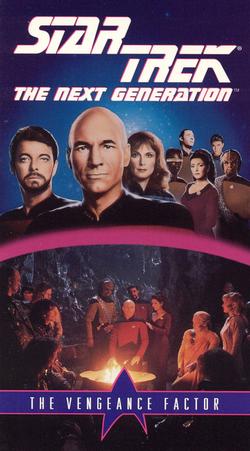
You did a couple of episodes of Star Trek: The Next Generation.
"I did. That was one of the first jobs I had in Los Angeles, actually. It was really a treat, mainly because of Patrick Stewart."

The impression one gets of Star Trek is that it's this massive, controlled thing. What did it feel like to come on board for an episode?
"It was huge, awe-inspiring. And very closely controlled. I'll give you an example from the first episode that I did. Oh by the way, I'd cut through a lot of special effects stuff by then because I'd also done the Friday the 13th televison series with lots and lots of optical effects. I'd learned a lot about opticals and trick shots and things like that. I had a phaser fight in my first show; I was called to a meeting, and they wanted to know how I was going to shoot it. They wanted to know specifically: how many set-ups I would make; how many times somebody would pull the trigger in each set-up; and how many times I would cut to each set-up. I said, 'Well, I can certainly figure this out, but tell me how this works. Why do you want to know all this, because I've never run into that before?' They said, 'Well, it's $10,000 a shot, it's $200 every time you pull the trigger, and it's another $1,000 for each time you cut back to the shot. So if you plan this out, we'll know exactly how much it's going to cost.' And I did, and they did.

"Then I got a memo, which also went to my assistant director, who was of course employed by the studio, confirming our conversation: 'This is what you will do on set.' And it is what I did. Interestingly enough, when they saw the phaser fight, the producers liked it so much they said, 'Oh, we want to make this longer!' So they used all the out-takes. But yes, Star Trek did amaze me. I believe there were 28 copies of dailies that were made every day, circulated through the vast Paramount studios to people who all had the right to comment and send notes back to you."

They always seem to have eight or nine co-producers and you think: what do all these people do?
"Yes, I often wonder that. On Star Trek, it was actually very well run. I'm sure it still is; I haven't been there in a long time. And they all actually did do things. But I've done some series where, I swear to God... I did a series with 15 producers once! A series which shall be nameless, with 15 producers, and I swear I only met four of them. Knock off three more for post-production; I don't know where the others were! It's kind of a Hollywood disease: multiplying producers. It's like a social disease."


I understand there was a problem on your second Trek episode. Wasn't David Rappaport supposed to be in it?

"Oh yes. Boy, have you ever done your research! It was actually very sad, because David Rappaport was engaged as a guest star. For people who don't know him, he was a very short man who had had a very nice career, basically playing the short guy. Including a very nice stint on LA Law as a lawyer who, whenever he approached the bench, had to stand on his briefcase in order to talk to the judge. He had a great sense of humour. Anyway, we started off shooting with him, and I shot for three days with him, and then there was a weekend. And on the weekend, he tried to kill himself. Which was horrific. Of course, none of us knew him that well really, but we never knew why he attempted suicide. People often don't know why. He didn't kill himself, fortunately, but I had to recast. And subsequently, five weeks later, he went back and tried again and succeeded.

"After the fact, you think, 'Did I say something? Did I do something?' It was tough going at the studios. We found out midnight Sunday night. My AD phoned me and said, 'Okay, I know you were deep in REM,' - I'll never forget the line, it was such a good line - 'but you're not shooting what you think you're shooting tomorrow.' We had to go on shooting of course, because it's $150,000 a day or something hideous, a huge number. So I had to put together with my AD a day's work that did not have that character, while we recast. Which was tough. The hair and make-up people were all in tears. They'd spent a lot of time with him because he had an elaborate rubber make-up. They'd spent an awful lot of time with him in moulds and big make-up sessions, so they knew him better than I did at that point."

After Trek, what did you move onto?
"I did a thing called Hard Time on Planet Earth."

Oh my God, I remember that. It was shown over here once on Sunday lunchtime. They buried it away in the hope that nobody would notice it.
"Understandably so. I had my first Hollywood awakening on that. I did the second episode, so of course all the attention went to the first episode. All the producers were clustered down around the camera and I just quietly put mine together, but the day before I was due to start shooting, they suddenly realised, 'Oh God, there's another one of these!' And there were another eleven or twelve after me as well.

"One of the producers took me aside one day and said something that I thought was tremendously helpful. He said, 'I know this is early days for the series, and I know there are going to be times on set when you are basically alone, and you're going to wonder: which way should I play this part? Should I play this for comedy, or should I play this seriously, or what should I do? I just want you to remember: bottom line, this is fundamentally a comedy.' I said, 'Oh thank you. That's so helpful.' Perfect. I'm thinking, 'A Hollywood producer. Great - these guys know.' An hour later, his partner took me aside and said the same thing, only he said it's fundamentally a drama! The next day there were two more partners there. One of them said it was an action show, the other one said it was a relationship show! So I just thought, 'Well, I'll just go down to the floor and shoot whatever the hell I feel like!'"

Disney had a stake in that, didn't they?
"Yes, that was when Disney was first trying to get into cranking out network television. So there was, I guess, a lot riding on it at the time. Disney was trying to break into this thing and of course they've broken into it in spades."

You did some Outer Limits.
"I only did one Outer Limits. I did the one that was the first of the one-hour shows to air. Does that play in England?"

On and off. We've had a lot of episodes.
"Oh good. The one I did was called 'Valerie 23' and it's one of the films I'm most proud of. It's about a wheelchair-bound scientist who works in a robotics laboratory. It was a really inspired idea, I think. This guy gets roped into being the beta-tester of this girl, Valerie 23, who is of course to-die-for gorgeous, but just a little mechanical! He falls in love with her, then realises that he's being a fool and resists. There's a whole back and forth thing that happens between them. Meanwhile, a relationship that he's been pining for, with a real woman, ends up working out. So he throws over Valerie 23, who's living in his house anyway, doing his dishes, and he starts dating this other woman. And Valerie gets jealous. And Valerie is programmed to make the relationship work - no matter what. So then she becomes a homicidal robot. It was a lot of fun."


What sort of brief were you given about making this different from, or similar to, the 1960s series?
"We were encouraged not to look at the original series. And we were basically told, which was wonderful and very liberating: 'Make movies. Don't make television.' You don't often get to hear that. Or sometimes you do but it's not actually sincere! It's a little bit tough to follow up on that brief though when you don't actually have a decent amount of time to do the work. It's all very well to say it, but how about another six days of shooting time to do that? But that of course wasn't forthcoming.

"I guess your mag is interested a lot in special effects, because I made a really cool special effects shot in that show, which I can talk about if you're interested. It was my first motion-control shot, back in the days before computers could really help you a lot. 'Back in the days' - it was three years ago! We now have computer programs that will track motion within a shot, but in the days when I was doing this thing, we still had to use a motion-control camera, which is still the prefered way to do it. I guess you know what that is and how that works. So we had a little portable motion-control rig, believe it or not, that was brought into the studio. Because usually you have to go to the camera, build your set around the camera. But it was a sweet little rig, and it really worked well.

"What we did is a shot where Valerie, the robot, is sitting in a chair, and the guy comes into the lab in his wheelchair. And she says hi and has a chat with him. They haven't dated yet, but she says, 'I understand we're going to be dating, and I'm really looking forward to it. Do you like opera? I really like opera. I think La Boheme...' And on and on. While this is going on, one of the technicians in the room takes her hair off and opens up the back of her head. We dollied around her while she was doing this, from the point of view of the guy in the wheelchair, wheeling around her, looking at the back of her head. Inside was this sort of organic goop. You could see her chatting away on the side angle, while this tool went into the back of her head and adjusted something inside her head! And it worked beautifully well. It took a lot of time."

Again, that was the second episode, after the pilot. The same on Touched By an Angel too.
"I used to be Mr Second Episode."

Is it: 'We've done the pilot. Right, get Bond in to do the next one'?
"I think that may be the case. I think also part of that is because some producers know that I can manage on my own a little bit, that I'm very organised. If you work in the special effects area of film-making you've got to be very organised. And I hope that's why I've ended up with them. I'll tell you quite frankly, I also seek them out. Because sometimes you can make a better film if you don't have everybody 'helping' you. One of the curses of television is that sometimes you get a little more help than you can actually handle. We have a saying here that a camel is a horse designed by a committee. I guess you guys have those too."

You did the the third TekWar telemovie, TekLab. When those debuted over here on video, everyone in the office said, 'You must see the third one.'
"Oh, how wonderful."

Well, what everyone wondered was: have you ever actually been to England? Because everyone looked at it and said, 'This is supposed to be in England?!'
"Did it look like it at all?"

Well, it was things like: Excalibur isn't part of the Crown Jewels!
"Does Excalibur actually exist?"

No, it's all a legend. Also there was this one double decker bus in the background of every shot. It was a pure American view of England.
"Yes. I'll tell you exactly what happened there. It's shot in Toronto, but they decided it had to be set in England. Of course, they weren't going to send me to shoot it. But what they did do was, they sent me to England for - get this - a day and a half. That was a nice trip. What I did do while I was there was look around at locations and make mental notes of things that reminded me of specific places in Toronto, to try to at least get the right feel for the location. The other thing that I did was I met up with a cameraman, a wonderful man named Paul Bisson, sort of the dean of British cameramen, someone I'd worked with before. We went around and looked at shots that he could make for me after the fact, that I could matte into my film. To at least fool an American audience, but never a British audience, that we were in London."

So he shot landmarks and things that you could matte into the background?
"Yes. Then I went back to Toronto and booked the only double decker bus and found the only two London taxi cabs, one of which was actually left-hand drive. And I nailed down locations that reminded me of places I had seen in England to get it as close as I could. I shot the film, edited the film, then sent Paul Bisson back a shot list, which was totally detailed. Focal length: I actually got ordinance maps of London. 'There's a traffic island here, in front of the National Gallery. Go to this island and orient your camera at 27 degrees from North magnetic. Put this lens on it, put this on the bottom of the frame. You'll make the shot I need.' As a result, I was able to make a rather short sequence of a car chase through London in the fog, where the cars were shot in Toronto and London was shot in London. It was a nice little technical exercise that I knew wouldn't fool you guys. You must have had a lot of laughs watching that."

It was about as English as Dick Van Dyke's accent.
"There's all the poor Canadian actors doing their best as well."

How much control did William Shatner have over the Tekwar series?
"A lot. It's his baby. He wrote the books."


It is alledged...

"He was executive producer. He wasn't there all the time; he was in Los Angeles and again we were in Toronto, because this was still during my Toronto days. But he was very much a hands-on producer, and really good. What he did was he prevented the stories from just sinking into the mire of being futuristic: let's show the world what it it's going be like however many years in the future, whenever it was set, and do a kind of college thesis on it. There was a certain kind of impetus behind this that they didn't want to do that, which is one of the things that actually made it look good. Shatner would always say 'Don't forget this is entertaining. No no no, we don't want that here. We want a car chase.'

"I really enjoyed it for that, because when you put the film together it really helped if it was entertaining. It's an area actually where Canadians are weakest. We're very earnest film-makers, I think. Bill, although he's Canadian, has spent a long time here and knows you've got to entertain the troops. Keep this moving, keep this exciting. So he was a joy to work with. I shot with him for two days only, but he was a treat. There was a great story on that. We had a huge budget cut in half the week before I was due to start shooting. A decision had been made to prepare all of our optical efffects shots - there were a hundred - to film resolution instead of video resolution. This is done after the film has started shooting, after the film has been financed, so they had to come up with I don't know how many million more dollars. So they start combing through the remaining film to try to find as much money as they could. So we had a sort of bloodletting one day and some things were cut.

"One of the things that the studio cut out of the film were the motorcycles. The kids who all thought they were Lancelot and Guinevere and Arthur, their steeds were motorcycles. They were riding around on these things with banners on the back of them. The studio said, 'Ah, you don't need the motorcycles. They can just ride around in old cars. It was a considerable saving because of using stunt drivers for the wide-shots, and instead of one car you had to have four motorcycles, also how many days of shooting. All that stuff goes on. I called Bill and I said, 'I think they're going to ruin our film if they do this. What do you think?' He said, 'Oh absolutely. This is stupid.' So he called the producer, and the producer said, 'There's nothing we can do about it, Bill. The studio's made their pronouncement: the motorcycles are cut. We tried. We went and fought. We agree with you, they should be in the film. but they said no.' Bill said, 'They won't say no to me.' And you know, they didn't! Now there's an executive producer!"

A useful guy to have on your side.
"He was a treat that way. I said, 'How did you do it?' He said, 'Oh hell, I live higher up the hill than they do'! Which is a line I've never forgotten, it's a good one. I'm sure he does live way up in the Hollywood hills."


You also did an episode of Sliders, the one where brains are valued more than sport.

"That's correct, yes. Boy, did you ever do your research."

That was a bizarre idea. How did you approach it?
"It was weird, wasn't it? I didn't invent it, of course. It was dumped in my lap. And there was a kind of an idea for a game, but no rules. So I actually spent a considerable amont of my prep-time inventing the game. I actually got the staff from the office out into the parking lot several times, playing the game, while we got workable rules. the first few times the rules were no good, the game was no fun. Eventually we came up with a set of rules which I then had to teach to all those actors. I went and got a lot of people with a sports background and we taught them the game, along with the leading actors on their lunch breaks. Then we had to construct this huge scoreboard. The producers were adamant that it look like a network sporting event, like a real thing. Which was great. So they went out and they hired real sports commentators. All those guys who were commenting on it were well-known."

Not over here of course.
"No, but in America they're really well known. I'm not much of a sports fans so [whispers] I didn't actually know who they were. But all the guys on the crew were going, 'Oh my God, that's...' 'Oh yes, that's him. That's what he said his name was.' But they were great guys, and I was amazed. You give them a subject and they just talk until you say stop. So they adlibbed a lot of their stuff, the commentary. And we came up with this scoreboard that was so big that the first time we turned it on, which was the first time we were about to make a shot, it killed the generator! It drew too much power; there had been a little miscalculation somewhere: 'What? You mean the red and the green lights are on at the same time?' So it was a very exciting time; we were down for half a day.

"It was a memorable shoot for me because I actually had one day when I had seven cameras, which was frightening. Trying to give each one of those guys a shot is a tall order, especially when your mind is screaming along, trying to keep shooting on a television schedule. Three film cameras and four video cameras. The video cameras had to be fed through a switcher to monitors on the floor, with a live cut, and also slaved off so that we could eventually change the cut and cut things into the show. But it was so the sports commenators had things to look at and so the audience could catch the action on their monitors in the background of shot."

You've also done some Hercules.
"They're fun."

That's really caught on over here.
"Has it? Oh good. Hercules is so much fun to do for a director. Partly because the executive producer Sam Raimi is a director, and you really know you're working for a company that's owned by a director because the doors are open for you: here you go. If you have an idea and it looks good, they go out and they find the money for it. If it sounds like it'll be fun, they'll really go and find the money to do any crazy idea. If there's no budget, they'll take it from somewhere else or whatever. They're very supportive of their directors. I think it shows up in the material becuse it's funny and it's light and it feels like it must have been fun to shoot, don't you think?"

The impression you always get is that it's a bunch of guys having a great time.
"We do. All day long. You have to crank it out, God knows, but it is fun all day long. That actor Kevin Sorbo is a real treat. He's everybody's favourite television star because he loves it. He realises, I think, that he came to stardom a little late in life. Most guys are about 12, but he came to it when he was in his late 20s or early 30s. So he didn't have any illusions. He knows that he's really lucky, so he shouldn't get bored or throw his weight around. So as a result he's always prepared, he's thought about things. He's very good at re-writing lines to make them funnier. He's always on time, he always knows what he's doing. He's a real treat. I look forward to doing them and I still try to do them when I can."

How many have you done so far?
"Three, I think."

It must be nice going to New Zealand.
"Well, it's a long flight. But the New Zealand film industry is a real pleasure. I guess Hercules must be by far the biggest thing in the country, because they have both Hercules and Xena. They told me at one point that between the two shows they had 750 people on the pay-roll. So they're a big employer. But it is fun, and New Zealand is great, especially in the summer."

Have you done any Xenas yet?
"No, I haven't. I would like to. I think Kevin Sorbo and I got on, and so they tended always to route me towards the Hercules for that reason, because we always enjoyed working with one another. There's a tendency to give me the really effects-intensive shows. I did one where Hercules' mother is getting married to Jason - of Argonauts fame - and at the wedding a sea-monster shows up and swallows Jason. And without blinking his eye, Hercules dives into the mouth of the sea-monster to save Jason, goes down the gullet of the sea-monster while it disappears into the ocean. Then we spent about ten minutes inside the monster while it was engaged in a battle with some other hideous creature in the depths of the ocean. So everything's sloshing around while they find their way through the guts of the monster. It was fun! Eventually, they get to the spinal column, Hercules hotwires the nervous system of the monster and causes it to lose its battle with this other thing! It gets killed and floats to the surface and they chop their way out while it's washing up on the beach, then go back to the wedding. What an opportunity for a director to do that. That was such a treat to do."

You've also done some Goosebumps episodes. How tricky is it to appeal to the bloodlust of eight-year-olds but not offend their parents?
"Well, firstly the director doesn't have to worry about that too much. I think we're all children at heart. I just go in there and make it gory and goopy and scary as I can. But they have people who are watching, particularly at the script stage. They actually have child psychologists who go over the script - and more power to them - to make sure that we don't create a generation of monsters. They look a lot for what they refer to as 'replicable behaviour'. This is not an example from one of the scripts, but if somebody goes into the post office and pulls a gun and kills everybody, that would not be in Goosebumps."

But a vampire going in and biting everybody on the neck would be okay?
"Yes, because that's fanciful and it could never happen. So they watch for that. I'm really proud of Goosebumps because I did the pilot for it, which is I think one of the highest selling children's videos around. It was called 'The Haunted Mask' and I know in America it sold something like four million copies of the tape. So I'm rather pleased that a hell of a lot of kiddies liked it. I actually had to delist my phone number because children started calling me. Actually, what they were calling for was they wanted the phone numbers of the girls!"

That must have been a big responsibility, because the Goosebumps books are an enormous franchise."
Yes, there was a lot riding on it, and this is an example of not doing episode two. So there was a lot of extremely helpful help. It was a wonderful experience because the people who were hovering and watching were very, very positive and very helpful. RL Stine, who writes the books, was there for a while and was also extremely helpful. So it was a good experience and I then went on and did a few more specials for them. It's fun material. Stine has an interesting imagination. He'll find something primal, like some primal fear.

"'The Haunted Mask' is about a girl who wants to scare her friends at Halloween, so she goes to this weird store and buys a really scary mask from this odd guy. She goes out on Halloween and does truly frighten all her friends. Then when she comes home with the mask, it won't come off. Then there's all the hocus pocus she has to go through to get it off. But it's all about wishing you were somebody you're not and how that can get you into trouble. How you can wish it in a fanciful way, but you'd better mean it because... what if you get your wish? All of his stories have some sort of underlying, powerful thing like that. They're not just scary; there's a moral there. He understands the teen and sub-teen psyche - the things that obsess them and worry them - so he taps into that in a very clever way. His material is fun to work on."

Have we covered everything now?
"Night of the Twisters."

That was on last week, and the listings mag said, 'It's okay, but it wouldn't have been made if somebody hadn't been making Twister at the same time.'
"Oh, that was definitely the case. I've done a couple of things where the cynical calculation was made, and that was definitely the case. The network involved was called The Family Channel, who are a small cable channel here that is growing very quickly because they're very shrewd about things like this. They knew that Jan de Bont was making Twister, so we made Night of the Twisters to play on television two months or three months before Twister was in the theatres. Now that is so smart. They did our advertising for us. To give them their due though, they were advertising the hell out of it. There were billboards on Sunset Boulevard. They really went at it hammer and tongs. And it was the highest-rated movie on cable television in America that year. It kept on playing and playing and playing. I'm really proud of that one too."

That was done with Atlantis, who do a lot of SF and fantasy.
"They do that Gene Roddenberry thing that people refer to as Gene Roddenberry's Trunk Show - although maybe they shouldn't. They're very active in science fiction. They have a very clever producer/production designer there who designed Tekwar, who produces an amazing look and really understands computer-generated effects."

What have you got lined up?
"I don't want to jinx this, but I've just had some enquiries about doing a pool of science fiction movies which would shoot in Europe. I don't know too much about them except that the budgets are halfway decent for television movies, and I'm to read some scripts today for the first time."

Is this the batch of stuff that UPN were thinking of doing? Variety said that they wanted a regular science fiction movie slot.
"Exactly. That has the potential to be really fun stuff so I have high hopes for it. I'm actually going to go and see them today. They're probably seeing a hundred other directors and maybe I'll never end up doing any of it. Who knows, but it does sound exciting."

Interview originally posted 9th March 2005