Christopher Douglas-Olen Ray, son of Fred Olen Ray, gave me this e-mail interview in February 2007 after I reviewed his short film Time of My Life.
What circumstances led to the production of Time of My Life?
“Well, it actually was the most affordable short I could come up with. For a first time director I just wanted to see if I was able, ‘cause I am willing.”
What did you set out to achieve with this film and how well do you think you managed it?
“Wanted to show others what I could do. For a budget of 3K I feel like I accomplished exactly what I set out to do.”
What have you learned over the years from your dad and/or from working on his films?
“Patience. Lots of it. The willingness to adapt and overcome problems as they arise. But the key thing is to try and keep the cast and crew as happy as possible.”
What are the advantages and disadvantages of the ‘Olen Ray’ name, and any perceptions that might go with it, in trying to make it in the film business?
“Well that’s a good one. I have been asked recently if there was any relation. I guess the person I was meeting with was a fan of my dad’s. So I spent the next half hour talking about him. When I sit down and think about it there really isn’t any downside to it. He has been doing this for so long that people assume I have picked up something along the way.”
Why is now the right time for you to start making your own films?
“Well I have been trying to do something for the last two years. Just wasn’t happening. As a family, myself and my wife Robyn, we decided I needed some sort of reel to show. It wasn’t a matter of why now but why didn’t I do this sooner. I work for the government as an editor/photographer, so I travel a lot. That still is an issue but I am working it out.”
Now you’ve got my money, what are you going to do with it?
“We are working on a script now called Shadow of a Doubt. Don’t want to talk too much about it. As it stands right now we have raised a little over 2K. We are hoping to have raised enough money some time by this summer to start pre. We will see...”
website: http://deinstitutionalizedfilms.com
Interview originally posted 4th February 2007
Showing posts with label 2012. Show all posts
Showing posts with label 2012. Show all posts
Sunday, 12 June 2016

Wednesday, 5 August 2015
Dense Fear Bloodline

Writer: Tony Gardner
Producer: Tony Gardner
Cast: Tony Gardner, Geoff Dunlavey, William Bain
Country: UK
Year of release 2012
Reviewed from: YouTube
Website: http://densefear2.webs.com
Here’s an obscure entry in the small but fascinating subgenre of British werewolf features. Dense Fear Bloodline was a labour of love, shot for peanuts over six years around Gateshead by Tony Gardner and eventually ‘released’ via YouTube. And you know what, it’s pretty damn good. I think we can all name werewolf pictures considerably worse than this.
Gardner plays (sans dialogue) Paul Johnson, a tragic lycanthrope on the run after killing his psychologist. Theatrical agent, casting director and former Byker Grove bit-parter Geoff Dunlavey is Chief Inspector Ryan of Tyneside CID, charged with tracking him down. An early scene introduces us to Detective Wendy Hale (Michelle Bayly aka Louisa Hart: Zombie Women of Satan, Mirrorvael) and there’s an absolutely wonderful chemistry between the two coppers. Ryan is bitter, weary, professional but occasionally accident-prone (a later scene with a car alarm is a corker!) and his demeanour contrasts beautifully with Hale’s joyful, teasing flirtatiousness. I was really hoping that the movie would be about these two, but sadly although Ryan has further scenes, Hale only reappears once and that’s on her own. If Dunlavey, Hart and Gardner are up for it, they should certainly consider a spin-off based around those two characters.
 I was also impressed by the ingenuity in the production design demonstrated by this scene. Dressing up a room to realistically look like the office of a busy senior CID officer is a hefty task. Other films have failed miserably at this (Deadly Pursuit notoriously used the changing room at a boxing club!). Gardner has simply tweaked his script to explain that Ryan is in a temporary office, hence its spartan appearance. Indie film-makers take note: this is how to do it.
Sadly, we have to leave the two plods and meet our principal ensemble, a bunch of squaddies hunting Johnson in the woods, hoping to catch him before nightfall when the full moon comes out. (As so often with werewolf films, the script ignores the rather basic fact that there’s only one full moon every four weeks. So if Johnson transformed last night and ripped his psychologist’s guts out, he can’t also be transforming tonight.)
Actually I say ‘squaddies’ because these are guys in camo with guns, but they’re not regular army, rather they’re mostly ‘ex-military’ (according to introductory captions). One is now a zoologist (there’s an interesting career path!), one’s a former royal bodyguard etc. Joining them is Layla Price (Shannon Grey), a feisty, no-bullshit MI5 operative with a talent for kickboxing. She says she’s 21 but, since I’m pretty sure you need a degree to join MI5, her field experience must be pretty limited. William Bain plays the squad leader, Marcel. Also under his command are grizzled Gulf War vet Jackson (Dave Newsome); paranormal expert Roberts (Michael McDermott); bolshy Scot Ford (Alan Clennell) and animal behaviour expert Dylan (Mark Salem).
 Despite the natural difficulty in distinguishing between a bunch of men all dressed in camo, there are some lovely moments of characterisation and interpersonal relationships. The combination of ‘squaddies + werewolves’ can’t help but draw comparisons with Dog Soldiers (which must have had a thousand times this film’s budget). While the script, acting and production values on show here obviously don’t approach Neil Marshall’s film, they are respectable in their own right, given the nature of the production, and bolstered by Gardner’s adroit direction and editing.
One thing that Dense Fear Bloodline has very much in its favour is the actual werewolf (characters don’t shy away from using both the W-word and the L-word). There is a transformation scene at about the halfway point which is a master class in how to handle on-screen transmogrification. There’s no CGI, no lap-dissolves, just a succession of shots of Gardner on all fours intercut with some smart physical effects and – here’s what makes the whole thing work – a great foley track of unpleasant-sounding snaps, crackles and pops as muscles, bones, sinews, tendons, flesh, nails and hair rearrange themselves in ways that nature never intended. The mightily impressive special effects were supervised by Mark Danbury whose other gigs include Bloodlust, Coulrophobia, Wire in the Blood, Zombie Women of Satan and The League of Gentlemen.
 On top of which, Johnson is played for the remainder of the film by (a succession of actors in) an absolutely awesome home-made full-body werewolf suit. Shaggy fur, fearsome (movable) jaws and sharp claws exacerbate a fantastic performance of quasi-lupine body movement. Clever lighting and editing lets us get a good view of the beast while covering up any unavoidable deficiencies in the costume (such as the non-moving eyes). Pumpkinhead-style stilts in the legs raise the creature to a good seven feet tall. Low-budget UK werewolves have been poorly served over the years, from the glove puppet of Full Moon Massacre to the joke-shop fangs and fuzzy sideburns of Strippers vs Werewolves to the complete absence of lycanthropes in Lycanthropy. Gardner is a major-league werewolf fan and has constructed a terrific costume around which he has then crafted a very watchable micro-budget feature film.
Once transformed, Johnson becomes the hunter and the squaddies are the hunted, despatched with some gruesome gore effects. Watch out for the brilliantly clever but actually very simple ‘snapping the neck’ shot. In a possibly unique take on lycanthropy, victims who are severely injured but not actually killed swiftly return as second-level werewolves (with fuzzy-face’n’fangs make-up that is sensibly kept largely obscured). This requires characters to cold-bloodedly shoot injured colleagues, just as they would if the threat was zombies. Also worth noting is that Tony Gardner (who pulled additional duty as cinematographer) shot all these night-time scenes actually at night. Major kudos for that – it makes a helluva difference.

The feature had a local premiere at a club in Gateshead a few days before Halloween 2012 (‘optional fancy dress’!), followed by live streaming the following night, complete with an online chatroom. Gardner then posted the whole movie onto YouTube in November. And, although I described this film at the top of the review as ‘obscure’, in less than three years that YouTube version has had more than 300,000 views (and 300+ comments). Okay, those viewers may not all have watched the entire movie from soup to nuts, but nevertheless that’s way more people than would ever see a low-budget British film in even a well-publicised theatrical release. And probably more than most micro-budget horror films manage in DVD sales. Distribution is a different world from what it was 15 years ago (ironically about the time Gardner started making the original Dense Fear).
That said, this undoubtedly is obscure because who the hell has ever heard of it? I first came across Dense Fear Bloodline when I was checking cast credits for my review of Legacy of Thorn. So far as I can tell there is not a single review anywhere online, apart from a couple of typically effusive customer reviews on the IMDB. In April 2015 Gardner updated the film’s website with a promise of “information about the DVD release very soon” so a more formal release is indeed on the way, to include a Making Of, bloopers, deleted scenes and all manner of delights. The version on YouTube, while eminently watchable, is certainly a very long way from HD, although one has to wonder to what extent that reflects (a) the budget and (b) how long ago the fellow actually shot this thing.

I take my hat off to Tony Gardner. On a budget that wouldn’t buy a crate of Newkie Brown, he has created a genuinely enjoyable and exciting feature-length werewolf movie that stands as a significant title within the British Horror Revival. It just goes to show what gems are out there when you look.
MJS rating: A-
Monday, 13 October 2014
Elfie Hopkins

Writers: Ryan Andrews, Riyad Barmania
Producers: Jonathan Sothcott, Michael Wiggs
Cast: Jaime Winstone, Aneurin Barnard, Ray Winstone
Year of release: 2012
Country: UK
Reviewed from: Horror Channel broadcast
Elfie Hopkins is not your regular Jonathan Sothcott production. For a start, there’s no sign of his regular stock company, apart from co-producer credits for Simon Phillips and Billy Murray. Also, where most Sothcott movies are distinctly urban (Stalker aside, which was a remake), this is a rural tale, set in the sort of slightly surreal, insular, middle class village community that wouldn’t be out of place in The Avengers.
A co-production between JS’s company (as was) Black and Blue Films and Michael Wiggs’ Size 9 Productions, this is a definite highpoint in the Sothcott filmography, marketed at the time as being the first on-screen pairing of Ray and Jaime Winston. Truth be told, Ray Winstone’s role is little more than a stunt cameo but he and his daughter are actually on screen together. A few years earlier, Winstone Snr starred in a rather good (non-musical) version of Sweeney Todd for the BBC, on which Michael Wiggs, also Ray’s agent, was a producer.
Originally announced as Elfie Hopkins and the Gammons – a more intriguing title which better sums up the film’s quirky approach – this was at one stage going to be filmed in 3D, a decision which I am delighted to know was rescinded. Jaime Winstone, who already had horror previous with interesting misfire Daddy’s Girl and top-notch zombie mini-series Dead Set, was 26 at the time but still capable of playing a teenager. Elfie is a loner, a rebel, an individualist, stuck in the sort of charming commuter-belt village that grown-ups (and little kids) love but which is of no interest to adolescents. Her only friend is Dylan, played by a pre-White Queen Aneurin Barnard, also in his mid-20s at the time.

The story kicks off with the arrival of new neighbours, the Gammons. Mr Gammon (Rupert Evans: Fleming, Lucan) and Mrs Gammon (EastEnders’ Kate Magowan, also in A Lonely Place to Die, and the voice of Xenia Onatopp in a James Bond game!) are suave, confident, self-assured professionals who make their living by arranging expensive, bespoke international trips for just the sort of wealthy upper-middle class types who inhabit villages like this one. Their grown-up twin children Elliot (Will Payne: Fright Night 2) and kooky Ruby (Gwyneth Keyworth, who was in two episodes of The Sarah Jane Adventures) are a little less conventional but in a slightly disturbing way, respectively obsessed with guns and samurai swords.
Elfie and Dylan are convinced that the Gammons are up to no good and somehow connected with a series of mysterious murders/disappearances. And indeed they are – because it turns out that the family are cannibals. Something which works best if one approaches the film as a mystery but which was rather given away by the US distributor who put the film out as Elfie Hopkins: Cannibal Hunter. As for Jaime’s dad, he plays the local butcher whom Elfie and Dylan visit with a query about knives. But there may be a little more to his character than that…

Elfie Hopkins is to some extent targeted at a teenage audience of geeks, misfits, emos and outsiders, but despite that (perhaps because of that) it’s actually a delightfully quirky and thoroughly British piece of oddball cinema. It would be a mistake to market it too much as ‘horror’ - though that is certainly what it is - simply because it’s not obviously appealing to regular horror-fans and gore-hounds. There is an indie sensibility to the film and its characters; Andrews cites Tim Burton, Terry Gilliam and Twin Peaks as influences and while not overt, there is a correlation there which bears inspection.

Editor Peter Hollywood (no, really) stitched together such fascinating pictures as The Adventures of Baron Munchausen, a 1979 adaptation of The Riddle of the Sands and a 1981 version of Sredni Vashtar which was nominated for a ‘Best Short Film’ Oscar. He also cut a version of Gallowwalkers but I don’t know if that’s the one that got released.

A teaser trailer of Jaime Winstone in character was shot and released to the web in Summer 2009 (you can still find it on Daily Motion) when the plan was still to shoot in 3D and Vertigo Films were attached to the project, with principal photography scheduled for that winter. The film was eventually shot in March 2011 around Ryan Andrews’ childhood haunts in Wales, Elfie Hopkins was given a comparatively swish premiere in April 2012 – not many BHR films are featured in Tatler! - just ahead of a brief theatrical jaunt. The DVD was released in August and the US disc in March 2013. Since then the film has built up something of a cult following, and deservedly so.
We await Ryan Andrews’ second feature, but in the meantime his shorts are on his website. Fangula is two and a half minutes of pretentious art student bollocks with Andrews himself as a vampire. Beast Hunters is a self-consciously wacky seven-minute short about three young people who hunt monsters, with Robert Llewellyn as their mentor and James Corden (Lesbian Vampire Killers) as some sort of small, blue genie or something.

More recently Andrews has been shooting music videos for Charlie XCX, but one can only hope that he will before too long give us another film as wonderfully individualistic and entertaining as Little Munchkin or Elfie Hopkins.
MJS rating: A-
Tuesday, 29 April 2014
Red Kingdom Rising

Writer: Navin Dev
Producer: Navin Dev
Cast: Emily Stride, David Caron, Silvana Maimone
Country: UK
Year of release: 2012
Reviewed from: screener
Website: www.redkingdomrising.com
The two dominant strands of British horror cinema - gothic and social realism - collide in Navin Dev’s extraordinary, fascinating Red Kingdom Rising. Our protagonist is Mary Ann (Emily Stride: The Worst Witch), a young woman with a troubled past who has a work placement at a nursery school. It’s curious how many films start out at schools before launching into the main, largely unrelated plot, from horrors like Eden Lake to comedies like Meet the Parents. A teacher (or in this case, nursery assistant) is a solid, responsible position that will instantly mark out our main character as ‘good’ and someone whom we can trust. School-set openers relax the audience, reassuring us that all is well before things start escalating, whether in a horrific or crazy way.
In Red Kingdom Rising, Mary Ann returns to her childhood home for the first time since her father died. It’s an imposing Victorian villa, all dado rails and unexpected steps up and down, often tactfully shot from low angles that emphasise the high ceilings. But Mary Ann’s evangelical Christian mother (Silvana Maimone, who was in a 2008 alien abduction short) barely acknowledges her presence, pausing briefly in her prayers when her daughter knocks on the bedroom door before restarting without a word of greeting.
Her late father (David Caron) was a horologist, forever tinkering with clock mechanisms in his cellar workshop, and Mary Ann remembers the pair of them seeking sanctuary down there from her strident mother. Sometimes her father would read to her from the works of Lewis Carroll. This is a very Carrollian film.

A slightly splash panel prologue is one of Mary Ann’s nightmares about being restrained by, then disembowelled by, an oleaginous, red-robed figure with claw-like hands - the Red King. Once ensconced back home, she has flashback memories of good times and bad in what she recalls as a matriarchal household. Somewhere along the line these blend into a dreamlike series of encounters with Alice herself (12-year-old Etalia Turnbull, who was in The Inbetweeners Movie!) - whom we may assume to be a younger version of Mary Ann - wearing a yellow pinafore dress and a Cheshire Cat mask. (Kudos to Dev for going with the original yellow dress rather than the now traditional, frankly clichéed, blue.)
Three objects are crucial to the story: the yellow dress itself, discovered buried in nearby woodland; her father’s original copy of Through the Looking Glass (with its Tenniel illustration of the sleeping Red King); and, most importantly, a small door. The back garden sweeps down sharply from the house and this half-size wooden door, small enough for a child but requiring an adult to crouch, is the sort of fairy-tale accessory that sometimes exists in real life. It leads into the cellar but has obvious connotations of Alice’s size-changing encounters with doors. Furthermore one can instantly see how magical this miniature doorway - betwixt the cluttered clockmaker’s workshop of the cellar and the vast, flower-bedecked playground of the garden - would appear to a child. In this film, the small door acts as a portal between reality and the dreamworld, or between different dreams (a melting clock pendulum clues Mary Ann in at one point to the fact that she is still dreaming, or at least in the dream world).

Though the story itself is gothic, the opening is social realist (the subtext could be either, depending on how you approach it) and Mary Ann’s Ripley-esque vest and jeans identify her throughout as an intrusion of practical, bitter reality into the dreamworld. Wendy Battersbee has a crucial, but underused, role in the prologue as Esther, Mary Ann’s social worker and she recurs briefly as a phone voice shortly after Mary Ann arrives at the house. I would have liked more of that, to be honest (there’s certainly scope for more running time!) because the potential was there for Esther, a guiding voice on the phone in the real world, to balance the younger-self/Alice dream guide. But that’s the film I would have written, this is the one Navin Dev made.
And it’s a hugely impressive feature debut, a visual poem reminiscent of the masters of dreamlike cinema. It’s Gilliam-esque (in a scary way, not a comic one), it’s, well, I suppose the adjective would be del Toroid. (Yes, I like that. I’ll use that again.) Full credit to production designer Anna Mould (who was art director on a short called Job Interview with a Vampire!), to ever-reliable special effects make-up designer Mike Peel (Zombie Diaries, Three’s a Shroud, The Zombie King) and to DP Jamie Havill, who between them create an amazing, immersive visual experience.

Red Kingdom Rising is a fascinating film: narratively intriguing and visually amazing (pretty horrific in places too). This is the sort of movie that you come away from really glad that you’ve seen it because it has added something to your experience of the world.
MJS rating: A
Review originally posted 8th February 2012
Saturday, 22 February 2014
Nazi Zombie Death Tales
 Directors: James Eaves, Alan Ronald, Pat Higgins
Writers: James Eaves, Alan Ronald, Pat Higgins
Producers: James Eaves, Alan Ronald, Pat Higgins, Laura Tennant, Debbie Attwell
Cast: Tina Barnes, Lara Lemon, Jess-Luisa Flynn
Country: UK
Year of release: 2012
Reviewed from: unfinished screener (Safecracker Pictures)
[I have been asked by one of the film-makers to point out that this is (as usual) a detailed review which may contain spoilers. - MJS]
As I write this review, the web is full of negative comments about Ridley Scott’s Prometheus, released just a few days ago. Not because it’s bad, but because it doesn’t (and could never) live up to the ridiculously high expectations that people have built up for it.
My cinematic tastes and interests are, as you may have gathered if you’re a regular reader, somewhat different to most people’s. So although I’ll probably go and see Prometheus, I’m not really too arsed about it. On the other hand, I can sympathise with these people because I feel very much the same way about the motion picture formerly known as Battlefield Death Tales. If you were to stop me at random any time in the past few years and ask which films I was most looking forward to, high on my list would be (a) the next Jim Eaves movie, (b) the next Pat Higgins film, and (c) whatever the next thing is that escapes from inside Al Ronald’s mind.
These three gentlemen previously collaborated on Bordello Death Tales, one of the first in the current vogue for horror anthologies and a corking trilogy of tales which was even better than the sum of its parts. Separately, Jim made The Witches Hammer and Bane; Pat made TrashHouse, KillerKiller, HellBride and The Devil’s Music; and Al made Jesus vs the Messiah. Having enjoyed their initial collaboration, they decided to switch from the horrors of sex to the horrors of war and set to making three new half-hour shorts that could be bolted together. Unlike Bordello DT, there is no framing story, although there is a very brief narrative cross-over between Al’s tale and Pat’s. I like a framing story in an anthology personally, and one of the previous film’s strengths was that Madam Raven was actually relevant to all three tales rather than being just a detached narrator. But for Battlefield DT, each story is separate and complete and the only connection is a Second World War setting.
 We kick off with Jim’s Medal of Horror, which starts with British Captain George (David Wayman: Death, The Dead Inside) in a bar watching burlesque fan-dancer Daisy (Jeanie Wishes). Clever editing moves the story forward through his seduction of the young woman and her receipt of a letter confirming Captain George’s death. Starting the film with a full five minutes of dialogue-free narrative is a brave move, rendered even braver by the subsequent scene of Captain George, very much alive, reporting to a US Army Major (Paul Kelleher: Spirits of the Fall, The Demon Within, Simon and Emily). What follows is ten minutes of two men in a room, one sitting, one standing, just talking. Some casual viewers might turn off after a while, wondering when we’ll get to any Nazi zombies, and I’m not sure that Medal of Horror wouldn’t be better as the middle segment.
The major does introduce the Z-word in an apparently unrelated anecdote about a dead US soldier who returned to base and took a great deal of effort to subdue. But mainly he is castigating George for being a shit by sending a fake condolence letter to Daisy, who turns out to be the Major’s daughter. And who has been captured, for no obvious reason, by the Germans. Specifically by “Hitler’s high priestess of the occult” Jezebel (Tina Barnes: A Day of Violence, Bane, F).
George sets off on what is effectively a suicide mission to rescue Daisy and on the way has some rather random encounters including a German soldier in a dark blue greatcoat who exemplifies one of the films’ main problems: costumes. With a big budget, a film can afford to hire lots of historically accurate WW2 uniforms and create/adapt any additional ones required. But when shooting on a shoestring, you take what you can get. I’m no military historian but none of the uniforms on show in any of the segments really convinced me. George’s greatcoat for example has no Captain’s pips. Jezebel, when we meet her, is wearing black leggings below her smart, black SS jacket. Some of the background British soldiers seem to be wearing outfits that are distinctly post-WW2. And this particular German soldier has a coat that might pass for a French uniform in World War 1 but doesn’t look like anything warn by any German troops ever.
This sort of historical inaccuracy takes one out of the film, as do a number of very obviously modern locations. But it really is all down to budget. At this level of film-making, beggars can’t be choosers and if you know someone with a military-looking outfit that might pass muster if the viewers don’t look to closely and have never seen Where Eagles Dare, or a hall big enough to film in that’s empty for a few days, you say thanks very much. Those of us who love B-movies have to rely on the energy, originality, enthusiasm, excitement and generally daft scary fun of the movie to gloss over such things, as they assuredly do. But it would be remiss of me not to note their existence.
Anyway, George’s most random encounter is with the zombified Red Baron. He comes across a crashed scarlet triplane in the woods; a frankly dodgy model shot to which, honestly, my initial reaction was: “What is a radio-controlled model aircraft doing in a 1940s-set story?” Once again we must asume/hope that the viewers have not even rudimentary knowledge of military history, because of course Manfred von Richtofen was not shot down in a wood, and both his plane and his body were recovered. However, in this alternate history, the bright red Fokker Dr.1 has somehow remained undiscovered, and in extremely good condition, for more than 20 years.
As George stares at this, the Red Baron himself (Eaves regular Sam Smith) leaps up from the ground, although it’s not clear whether he has just been hiding there or whether he too has lain undisturbed since the last war. Clad in a red flying outfit that matches his plane, even down to a red eye-patch, and bearing absolutely no resemblance whatsoever to the real von Richtofen (or indeed any German pilot!), this is very much a cartoon character. We must regard him as a character called ‘the Red Baron’, inspired extremely loosely by the legend, rather than the actual Red Baron himself.
 But because a cartoon zombie WW1 flying ace isn’t weird enough, a karate-kicking Japanese zombie then appears and fights the German zombie, with both seeking to attack George if the other will let them. Quite what a Japanese soldier, living or dead, is doing in Northern Europe defeats me. Although it is worth noting that if this zombie is also meant to be a WW1 veteran then his fight against the Kraut is valid because the Japanese were on the Allied side during the 1914-18 war. On the other hand, his headband suggests he perhaps is supposed to be a kamikaze pilot, which would make him a WW2 airman and hence part of the Axis forces. While the two colourful undead tussle among the ferns, George makes his getaway through the woods and this utterly random weirdness is left behind.
In a bunker, he finally locates Jezebel and a single extraordinary German robot soldier, plus Daisy herself. Tina Barnes hams it up in her SS uniform and clearly had an absolute blast filming her extended death scene, although I can’t honestly say that I was convinced by her accent, whch at times seemed closer to Melbourne than Munich.
Medal of Horror runs about 35 minutes and, like the two stories which follow it, seems somewhat constrained by the format. I don’t know if there’s a feature here but it just doesn’t seem to fit the half-hour(-ish) restriction, especially given how slow most of the first half is. It seems a curiously disjointed tale. Fun, undeniably, but not totally satisfying.
Alan Ronald has the ‘golfing story’ slot with his tongue-in-cheek Harriet’s War which is completely different to the announced story. When the three plot synopses were revealed in January 2012, Al’s tale was called Monsters of the 4th Reich and went like this:
“Harriet Price tracks down monsters for the British Government. Armed with an array of inventions and contraptions she deals with everything from ghosts, demons, werewolves, vampires and once, she claims, even Churchill's Black Dog. But, along with her newly assigned partner; the cross dressing gunslinger 'Trixie Antoinette', this latest investigation will bring her face to face with the greatest monster of all... Hitler himself.”
 The title may have been changed to avoid confusion with forthcoming British Nazi-zombie film The 4th Reich, but that’s just cosmetic. In fact, all that remains of this synopsis is Harriet Price herself, beautifully played by Lara Lemon in a costume to die for. She was in Al’s as-yet unreleased second feature Chinese Burns, which was written by and stars Julian Lamoral-Roberts - who was in Al’s Bordello DT story Stitchgirl and here plays the local vicar. Cy Henty turns up as the befuddled local copper, wearing an extraordinary policeman’s helmet and an even more extraordinary moustache.
Harriet Price is some sort of Government operative who visits the cosy little village of Chapelton to investigate a mysterious death, reporting to her superiors via a glorious sort of steampunk dictaphone. A young man has been found, dead and with multiple swastikas carved into his skin, while his girlfriend has disappeared (but later turns up in a similar condition). We saw in a prologue that they were killed by an apparently supernatural, German soldier with similar scars and a swastika blindfold
This is probably the simplest and most coherent of the three tales, let down only by the revelation of what is really going on, when Harriet suddenly proclaims to the plod and the priest, on the basis of no evidence whatsoever, the name of the only other significant character. Nevertheless, I think this is my favourite and it has that mannered surrealism that we have come to expect from Al’s work. Still, one can’t help wondering whatever happened to cross dressing gunslinger Trixie Antoinette...
Finally we have Pat’s tale Devils of the Blitz. This is the least comprehensible of the three stories and, truth be told, without having read the synopsis I don’t think I would have had a clue what was going on. Jess-Luisa Flynn (Adele in The Devil’s Music) plays the sister of a serving soldier with Liza Keast (The Witches Hammer) as her concerned mother and Geoffrey Sleight (also in The Devil’s Music) as her intolerant, rationalist grandfather. There are some sort of monsters in their house, grandly portrayed by rubbery puppet things instead of that modern CGI nonsense, and there is a subplot about the brother/son (Paul Cousins) being seriously injured which must have some connection to the main story but I couldn’t work out what.
As with Medal of Horror, this feels like it has been compressed to fit the format at the expense of explanation. It also suffers from being set during the Second World War’s quitest, gentlest air raid. Although we are told that the bombs are dropping outside, little can be heard and the house never shakes; a curious repetition of the silent off-screen gun-battle in HellBride.
 Battlefield Death Tales is a fun little film but it’s not, in my opinion, as good as its predecessor. However, I’m in two minds about whether I’m being objective in this assessment (in a subjective way) or whether my disappointment is coloured by my high expectations. In one sense, I got exactly what I expected, because once again the segments are individualistic and identifiable. With a Jim Eaves film I expect action and startling imagery. In a Pat Higgins picture I expect strong characters and relationships. And when Al Ronald sits in the director’s chair I expect off-beat ideas and that thing I have mentioned before: mannered surrealism. And hey, I got all this from Battlefield DT. Never, in the field of indie horror movies, has so much scary fun been created by so few.
What I didn’t get was neat little vignettes of horror - and that’s what people expect in an anthology like this. Each of the tales in Bordello DT was ‘high concept’ but the stories here are more complex and none of them really succeed completely in what they set out to do.
There is also the question of the title. When the film was picked up for UK distribution by Safecracker, who had recently released Bordello DT, it was renamed Zombie Death Tales, with Amazon and other etailers mistaking promotional artwork for a finished DVD sleeve and listing it as The Red Baron in Zombie Death Tales. I can see that ‘zombie’ in a title has more marketing cachet than ‘battlefield’, and this matches the similar retitlng of US B-movie Horrors of War as Zombies of War by UK distributor Point Blank a couple of years ago. But of course, all zombie films are ‘death tales’ so that title didn’t really work and it was swiftly amended to Nazi Zombie Death Tales, which is what was on my screener. [The film was subsequently released in the USA as Angry Nazi Zombies and in Germany(!) as Nazi Zombie Battleground, meaning it now has more titles than the average Jess Franco flick. - MJS]
But here’s the problem. So far as I can tell, there are no Nazi zombies in this film. There are Nazis, and there are zombies, but no actual Nazi zombies. And truth be told, both Nazis and zombies are in short supply. Nazi-wise, there’s Tina Barnes as a sort of latter day Ilsa, there’s that briefly seen soldier in the blue coat, and there’s one more character who provides the explanation for the blindfold thing in Harriet’s War. There are no zombies at all in Al’s and Pat’s stories and although there is one zombie bite that sets up the climax of Medal of Horror, the only other possibly undead characters are those two bizarre figures who fight in the forest.
 These two feature on Safecracker’s sleeve alongside the Nazi robot thing, and they have cheekily photoshopped a swastika badge onto the ribbon around the Red Baron’s neck. But in the film that ribbon supports an Iron Cross and the character is devoid of swastikas because of course he is a remnant from the First World War.
Nazi Zombie Death Tales isn’t really a zombie film, unless you’re ultra-completist. And while putting ‘zombie’ in the title may shift more units, I can’t help feeling it will shift them to people who will be pissed off when they find that they have bought a film with few if any zombies in it. Mind you, none of the stories are set on a battlefield either...
MJS rating: B+
review originally posted 7th August 2012
Postscript. I did go and see Prometheus. It was shit.
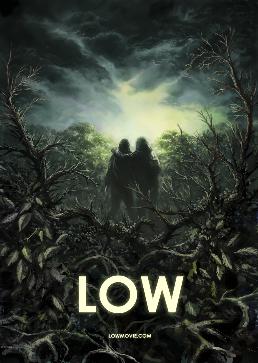
Low
Writer: Jamie Tighe
Producers: Jamie Tighe, Ross Shepherd
Cast: Amy Comper, David Keyes, Darran Cockrill
Country: UK
Year of release: 2012
Reviewed from: screener
Website: www.lowmovie.com
Trailers can be very deceptive. For example, the trailer for Prometheus suggested that it was an intelligent, serious, thought-provoking science fiction film. The trailer for The Dark Knight Rises suggested it was going to be about Batman (and not basically two-hours of Commissioner Gordon: The Movie). The trailer for The Blair Witch Project suggested it was going to be scary. You get the picture. Trailers hype, trailers disappoint.
Occasionally trailers deceive in the opposite direction. Case in point: Low, the second feature from Ross Shepherd (Heathen, The Kingdom of Shadows). Both the teasers and the main trailer give the impression that this is basically a film about a psycho who kidnaps and abuses a young woman in the leafy countryside. Let’s face it, that’s a ‘plot’ we’ve all seen a hundred times - and avoided seeing even more frequently because we know it’s going to be shit and don’t even bother watching the damn thing.
Now, were Ross Shepherd to make his variant of that well-trodden path I have no doubt it would be one of the better examples of the genre. But this isn’t it. This is something altogether different . Something clever, original, disturbing and genuinely horrific. This is one of the most upsetting, shocking, bleak, depressing, grim and downright horrible films you’ll see all year. I loved it.
What I can’t do in any detail is tell you why it’s so good, because although it does start with a young woman, Alice (Amy Comper: Death) alone in the leafy countryside, and although she meets an odd-looking, oddly behaved bloke, Edward (David Keyes: 102 Dalmatians, Theatre of Souls), and although he forces her to come with him, nevertheless this is not standard psycho territory by any means.
 Through clever use of flashbacks - some momentary, some extended - to both their lives, we learn more about both characters. These flashbacks are not presented chronologically and some of them change their significance later in the film. And on a purely technical level, they are all clearly identifiable as flashbacks because they have been photographed differently to the main story. It’s amazing how many aspiring directors miss out that obvious, crucial step. I watched a British indie recently (no names, no pack drill - I didn’t review it) which was packed with flashbacks or flash-forwards or hallucinations or alternative timelines or I don’t know what. And they were all photographed the same as each other and the same as the main story - rendering the film a massive hodgepodge of unconnected scenes that was literally completely impossible to follow. Anyway, back to Low...
Two-handers like this (there are a couple of other minor, albeit important, characters) often fail because one or both characters are essentially characterless. Some films have a bland victim attacked, some have a bland attacker, some don’t bother creating a character for either, relying solely on the artificially engineered, simplistic clash between the two. What is very noticeable about Low is that both Edward and Alice are sufficiently fascinating characters that either could have carried the film alone without the other. I mean, it would have had to have a completely different plot, obviously, but neither character is a simple cypher.
Edward has a background, an immediate past and a long-term past, which makes him who he is. But Alice also has secrets which make her who she is - and she’s not who or what we think she is at the start of the film. Jamie Tighe’s script cleverly swings our sympathies between the two, in fact he brings them together before pushing them apart again in a perfect three-act structure. The twists and turns in the script are genuinely shocking and alarming and best experienced with as little expectation as possible, which is why I’m going to tell you nothing more and I advise you to be careful about reading too many other reviews in advance. That said, I am in no doubt that a little foreknowledge will not significantly spoil the film and it is sufficiently engrossing that you will swiftly forget what you know and still be shocked when it happens.
 Shot on a tiny, tiny microbudget, the entire production crew consisted of Shepherd, shooting on a DVLR camera; soundman Tom Bartlett (The Last Dream, The Switch) who does a magnificent job, especially given that most of the film was shot in the open with birds, traffic and other noises to deal with; and Tighe, doing everything else basically. Shepherd edited, Shepherd and Tighe produced and Scott Mungin (Bystander) provided the music. That’s pretty much it.
Hugely impressive though the microbudget production is, and jaw-dropping good as the script is, the whole thing would collapse without two absolutely superb performances at the heart of the film. And Comper and Keyes (who coincidentally both had tiny roles in The Wolfman) deliver in spades. Keyes has a tough job as Edward, who starts out initially as just odd and socially awkward but later develops in both negative and positive ways, eliciting both our hatred and our pity. He could so easily have gone over-the-top but he is beautifully restrained, yet never in a clichéed or unbelievable way.
Meanwhile Comper’s Alice develops equally magnificently from a wrong-time-wrong-place innocent into a complex, multilayered character for whom we feel a mix of sympathy and scorn. There is one moment, when she could escape but goes back, that just seems to be a lazy cliché: what could possibly be worth returning to danger for when a busy road full of potential saviours is literally yards away? It is a measure of the strength of Tighe’s script and Comper’s acting (not forgetting Shepherd’s direction) that we shortly find out why Alice turned around - and the rationale is utterly believable and realistic. We would all do the same in the circumstances.
Comper, as Alice, is also called on, in one of the flashbacks, to react to something utterly horrifying and repellant. Not in a cheesy, horror-movie sense but something that can and does happen in real life but should never happen to anyone ever. That Comper is able to pull off this scene is testament to a rare acting talent.
 Darran Cockrill (also in Shepherd’s short Inside) and Jamie Tighe’s dad Stewart play the other two characters while Amber Coombs (recently seen in Steve Balderson’s Culture Shock) has a couple of lines as a doctor.
That’s almost all I’ve really got to say about Low. The tiniest of quibbles are that the introduction of a shotgun towards the end seemed slightly arbitrary and the very, very end, a montage of newspaper clippings and radio voices, was a jarring infodump which I’m not convinced was necessary, although we do learn something from the very last line which slightly changes our understanding of matters.
Watch Low if you get the chance. It’s not cheery, it’s bleak and grim and in places quite savage and heartless, but it is also a tale of hope, redemption, loss, power, weakness, compassion, horror and, above all, family.
MJS rating: A
review originally posted 22nd September 2012
Friday, 21 February 2014
Strippers vs Werewolves

Writer: This also is a contentious topic
Producers: Hmmm, not clear, to be honest
Cast: Aha! Robert Englund, Adele Silva, Billy Murray
Country: UK
Year of release: 2012
Reviewed from: DVD
At some point, I was going to have to watch and review this film. And as I seem to be on something of a werewolf kick at the moment, why not now? But this may prove a tricky piece to write because Strippers vs Werewolves was a troubled production. There was - shall we say? - tension between the film’s three prime movers: the writer, the director and the producer. Now, being well-connected in the world of dodgy low-budget British horror films, I know all three gentlemen personally and I don’t want to upset anyone by apportioning blame. I’m not trying to write some sort of exposé here, not trying to dish the dirt. This website isn’t the place for crusading journalism. If I wanted to write crusading journalism I’d write about things that actually matter, like political corruption, or the environment, or where to bury Richard III. But I write about films. And not even multi-million dollar epics but little efforts with words in the title like ‘strippers’ and ‘werewolves’ and, well, ‘vs’. Who cares?
All I ever try to do here is write entertaining and informative stuff about the fringes of the cinema industry, pointing my own tiny spotlight at the stuff that gets missed by all the fat mainstream journos on their junkets to promote that multi-million dollar crap.
So I’m not here to praise or bury SvW but to take a look at it, see what works, see what doesn’t. In a sense, that should be all that matters. If it ain’t on screen it ain’t in the scene and it ain’t been seen, as the saying goes. That said, I’m certainly interested - as you may also be - in why things are the way they are. Why this works and that doesn’t. What I’m not looking to do is appoint personal blame for ‘ruining’ or ‘destroying’ this film (that’s assuming it turns out to be a bit rubbish; we’ll get to that in a bit, but you may have got that impression from general internet scuttlebutt). Because even if one or more individuals are responsible, who cares? A silly little film that doesn’t matter turns out to be not as good as it could have been. And in other news, people are homeless, politicians are corrupt, the environment is going to shit and I’ve got a painful boil on my toe. Now here’s Andy with sports...
 The plot, such as there is, can be summed up by the title. There are some strippers, there are some werewolves. They spend an hour antagonising each other and in the final act it all kicks off. The tin, what it says thereupon, that it surely does.
The ubiquitous Billy Murray (Airborne, Stalker, Dead Cert, Just for the Record, Doghouse) - who was dozily miscredited as ‘Bill Murray’ on the US poster! - is the leader of a small group of werewolf gangsters. There’s a comedy fat one. There’s a cocky Scottish prick-weasel who really, really should be punched in the mouth every time he appears on screen. There’s a half-heartedly psychotic one who wears a black and red jumper - presumably as homage to Freddy Krueger and/or Dennis the Menace - and has a silly haircut which implies that he wants to be a punk but daren’t. And there’s one or two others without even that shallow level of characterisation.
Ursa herself, Sarah Douglas is Jeanette, the owner of a gentlemen’s establishment called Vixens where she employs various young ladies. There’s a blonde one. There’s one with long, straight hair and a thick East European accent who delivers some of her lines so woodenly that I’d swear she is reading off idiot cards. There’s a brunette with angel wings on her back. There may be another blonde one, or another brunette, or something. The only one who seems to have any clear, identifiable character is ‘Justice’ (Adele Silva: Emmerdale, Doghouse) who dresses like a ‘naughty schoolgirl’ and is sensible enough that Jeanette wants to mentor her and eventually pass on the establishment. As with the werewolves, characterisation is on scant show in the strip club. And although each of the main characters is introduced with a name caption near the start, I couldn’t actually tell you what any of them are called except Justice and Jeanette. (Incidentally, Superman films aside, Douglas has a terrific genre CV which includes the Dan Curtis Dracula, The People That Time Forgot, Beastmaster 2, The Return of Swamp Thing, Puppet Master 3, Mirror Mirror 2, Frankenstein Sings, The Stepford Husbands, Attack of the Gryphon plus episodes of Babylon 5, V, Space: 1999, Stargate SG-1... the list goes on and on.)
 One curious aspect of the whole set-up is that, the film title notwithstanding, none of the actual ‘strippers’ seem to be strippers. They wear skimpy outfits and occasionally do a bit of half-hearted pole-dancing, but there is not one shot anywhere in the film of any of them removing an item of clothing. What little nudity exists is limited to one or two background extras with their norks out in establishing shots. Also of note is that the scene which introduces Jeanette and co starts with a caption reading ‘The Strippers’ but the first two characters we meet are Jeanette herself and the barman, played by Alan Ford (who made this the same year he was in Cockneys vs Zombies). So that’s confusing.
There are two other people working at the club. A bouncer named Franklyn (Nick Nevern: Outpost II, Demons Never Die, The Tapes) and, for some reason, a female table magician played by Charlie Bond. Franklyn is actually a significant character - he provides the link which enables the werewolves to track down the strippers - but the magician has no narrative function whatsoever that I can determine and seems to be entirely extraneous.
The flashpoint for the story is Justice doing some bump and grind behind a curtain for an oleaginous businessman played by Martin Kemp (still the only actor, apart from Udo Kier and John Carradine, to have portrayed both Baron Frankenstein and Count Dracula on screen, as far as I know). He gets excited and sprouts fur and fangs so she stabs him in the eye with a silver pen. Jeanette assigns Franklyn to get rid of the body. Kemp was part of Murray’s gang so they are out to avenge whoever offed him. Slightly complicating the matter is that Justice and the Scottish twat are an item. She tells him she works nights at the local PDSA clinic; he tells her he is a nocturnal estate agent. Trouble surely lies ahead.
Everything builds, in a manner that is neither interesting nor entertaining, until the werewolves head for the club, wherein they have determined are the strippers responsible for killing their pal from Albert Square. But Jeanette has experience of dealing with werewolves, having blown up her previous club in 1984 to rid herself of an ‘infestation’ of the things. The various strippers set about preparing for the approaching danger although the only actual notable thing they do is to make some silver stiletto heels. Because obviously this is one of those clubs that has silver smelting equipment and a well-fitted heel-bar on site.
 The final battle is just awful. Utterly devoid of tension or excitement, more of the third act is taken up with people standing around talking than with actual fighting. There are four strippers at the start, two get killed and there seem to still be four at the end. The final twist makes no sense whatsoever, apparently setting the story up for a sequel from which we will be, I have no doubt, mercifully spared. (A poster for Strippers vs Vampires 'from the makers of SvW' can be found by judicious googling but it got no further than that.)
A movie with a title like Strippers vs Werewolves ought to be at least one of the following, preferably two and ideally all three: funny, scary, sexy. The actual movie entitled Strippers vs Werewolves is none of these. It is utterly devoid of any actual horror, not one of the ‘jokes’ is even slightly funny, and despite the actresses pouting and posing for publicity shots, there’s nothing sexy on show here. Not classy sexy, not sleazy sexy. SvW will not raise the hair on the back of your neck, the corners of your mouth, or indeed any other part of your body.
One of the film’s biggest problems is the absolutely awful werewolf design. The big challenge with werewolves as a monster, as I have observed elsewhere, is the complexity of the make-up. Couple of pointy teeth - that’s a vampire. Pale complexion and blood-spattered clothes - you’ve got yourself a zombie. Double exposure - hey presto, one ghost. Chainsaw - maniac, sorted. But a werewolf? That takes time and effort. Now imagine that you have to do make-up for half a dozen werewolves, who are in about half of the movie’s running time, and your entire budget is not quite enough to buy a decent Chinese meal for two. What are you gonna do?
Well, apparently you’re going to come up with a risible design which wouldn’t even be identifiable as a werewolf if that wasn’t a word on the poster. The lycanthropic transformation involves three things: (1) big hairy sideburns, (2) joke-shop vampire fangs, (3) big floppy elf-ears. Actually I say ‘transformation’ but of course we never see anyone actually change from human to werewolf or back, as that would cost more money. Despite this, there seems to be a great deal of to-ing and fro-ing between states, without any indication of cause or method.
Frankly, the whole idea of ‘werewolves’ seems to have been tossed out of the window. These transformations are not triggered by the full Moon; they happen at any time when the plot deems it convenient, to one or more of the werewolves. More problematically, there is no sense of suffering. A werewolf suffers - that’s the essence of this particular monster. Even when the werewolf is an external threat, as in Dog Soldiers or director Jonathan Glendening’s own vastly superior 13hrs, the individual in question is a victim of a curse, forced to become this vicious beast against their will. But these so-called werewolves, who look nothing like werewolves and don’t behave like werewolves (they just rip into people’s necks like vampires) also have none of the psychological/emotional baggage that comes with being a werewolf. They’re not bothered by it. So they are in effect just run-of-the-mill geezer gangsters who occasionally sprout hair and fangs for no obvious reason and to no particular effect before killing people they would probably have killed anyway.
Also not helping matters is the way the werewolves move, which largely consists of holding out their hands, crouching slightly and pulling a scary face like they’re chasing children at a family picnic. They never seem to growl and apart from one off-screen sound effect right at the start, I don’t think there’s a proper howl anywhere in the movie.
 These ‘Lycans’ (a term used once, presumably to claim some unofficial connection with the Underworld series) can only be despatched by silver bullets or other silver weaponry, which means that all other injuries have no effect whatsoever and heal almost instantaneously. Combined with the sideburns, that almost makes these guys a sort of Happy Shopper Wolverine, although the effects shots which would have established this ability in the first act never made the final edit, meaning it just pops up from nowhere towards the end. There is also a sequence with three of the strippers in werewolf make-up (I won’t spoil things by saying when/where/how/why this occurs, although a publicity still was circulated) and if anything it looks even worse on the ladies. Their fangs are clearly too big for their mouths, making three reasonably attractive women look like buck-toothed, inbred crack whores. It’s a photo which these particular actresses will hope doesn’t resurface too often during their careers.
In summary, these werewolves are - and I say this within a fortnight of having watched Wolfpeople - strong contenders for the crappiest werewolves ever shown on screen. But I suppose that, since we only know that the women are strippers because we’re told so, it makes sense that the same should be true of the werewolves.
In amongst all this crap, which just gets worse and worse the more I think about it, is one glimmer of characterisation and indeed entertainment. Simon Phillips, a man even more ubiquitous than Billy Murray (his other cinematic face-off was Jesus vs the Messiah), turns in a terrific performance as Sinclair, a jobbing vampire hunter who is dating the wooden, East European woman. At a phone call’s remove, he is her source for authoritative information on the occult which he does his best to provide, even while fending off ravenous female bloodsuckers. Phillips shows a real flare for comedy in his scenes despite - actually probably because of - not actually sharing the screen with any of the other characters until the very final shot. One can’t help feeling that the film would have been far more enjoyable - scarier, funnier, sexier - if it had concentrated on his end of the phone conversations and left the not-really-strippers and not-at-all-werewolves off-screen.
Also among the large cast are Martin Compston (Freakdog, Wild Country, When the Lights Went Out, The Disappearance of Alice Creed) as the annoying fake estate agent; The Bill’s Ali Bastian as the blonde stripper; Barbara Scrabbleboard from Hostel as the East European (she was also in The Hike, Isle of Dogs and the recent Children of the Corn prequel that no-one was waiting for); Simon Phillips’ missus Rita Ramnani (Airborne, The Last Seven, Umbrage: The First Vampire) as the stripper wearing angel wings; Joe Egan (Killer Bitch, Just for the Record, Ra.One, Deadtime) as, I think, the fat werewolf; Nick Onsloe (Dead Cert, Cut) as a prison guard; Coralie Rose (Dead Cert, The Prisoner remake, Sea of Souls) as a stripper (probably); UFO/Cut/Airborne director Dominic Burns as (I think) a fake record executive, Les Allen (The Reverend, Ten Dead Men) as a gangster; and Jazz Lintott (UFO, Devil’s Tower) as a gangster’s victim.
Plus, in various roles, Marc Baylis (Corrie, When Evil Calls), stuntmen Dean Williams (Soul Searcher, Lycanthropy, The Silencer, Stag Night of the Dead, Whatever Happened to Pete Blaggit?) and Jude Poyer (lots of Hong Kong stuff), Alex Esmail (Attack the Block), Jeremy Oliver (who was a clown zombie in a short called Fright of the Dead), Lee Asquith-Coe (Kill Keith, The Eschatrilogy, World War Z), Mo Idriss (A Fantastic Fear of Everything, Devil’s Playground, Witch) and Shaun Lucas (The Dead Inside, Evil Never Dies, The Seasoning House). So quite a treat for spotters of players from other BHR movies then.
 Ticking the box marked ‘stunt casting’ are Lysette Anthony (Talos the Mummy, Dracula: Dead and Loving It, Krull) in the epilogue; Steven Berkoff giving one of his best BHR performances in a cameo as a gangster; men’s mag bimbo Lucy Pinder as the vampire who confronts Simon Phillips (credited as ‘Carmilla’!); and horror icon Robert Englund. Making what is technically his second British frightfilm (if you count the Anglo-Spanish Killer Tongue), Freddy the K has a completely irrelevant and gratuitous role as the leader of the werewolf gang who attacked Jeanette’s previous club, now languishing in a prison cell which appears to have changed little since the late 19th century. Billy Murray goes to see him - and nothing comes of that whatsoever.
Pinder and Charlie Bond get “and introducing” in the title sequence and credit block. Anthony, Berkoff, Kemp and Englund get “Guest appearances by”. Silva, Bastian, Scrabbleboard, Pinder, Berkoff and Englund have their names on the top of the poster/DVD sleeve - which features a publicity shot of Silva, Scrabbleboard and Bastian that bears no relation whatsoever to any scene in the film (they never wear those outfits and there are neither axes nor automatic rifles anywhere).
Stylistically, SvW is a mess. Every so often it tries to turn into a comic-book on screen, with a handful of ‘Meanwhile...’ captions and some static images polarised to look like comic-book frames. There is a constant jumping around between scenes, sometimes cutting after every other line. For example Billy Murray’s meeting with Freddy Krueger, despite having no real narrative purpose, was at least originally an oppressively nasty meeting of two amoral monsters, playing on Englund’s talent for oozing evil. As it stands, the scene just cuts every ten seconds to a presumably simultaneous sequence in the club of Jeanette rallying her troops. This completely diffuses every iota of menace from the prison scene.
It’s like there’s just so much in this film that it’s falling over itself to cram everything into its 90-minute running time, to the extent of frequent split-screen shots giving us two, three or even four different images. And yet, this is not some massively complex Tarantino-esque story. It’s just a bunch of ‘werewolves’ tracking down the person who killed their pal and then attacking a night-club. Admittedly it has more of a narrative - Blondie fancies Franklyn, the Montagu/Capulet thing with Justice and the estate agent, Simon Phillips’ subplot - than the thematically similar Dead Cert. But only just. All the over-the-top cutting and jumping, often done via cut-outs of werewolf clawmarks or a silhouette of a stripper, just gets in the way of what little story and even littler characterisation is on show. It’s a distraction, albeit one could argue a welcome one.
Having considered what the film is about, what it’s like and who’s in it, that raises the question of who made it, a thorny problem not helped by contradictions among the various credit lists. For example, there are six producers: Simon Phillips, Billy Murray, brothers Gareth and Ciaran Mullaney of post-production house The Mews (also credited on Elfie Hopkins and Stalker), Patricia Rybarczyk (Jack Said, Jack Falls, Airborne, UFO) and of course stylish man about town Jonathan Sothcott, a man equally at home in the pages of Screen International and Axolotl Breeder’s Gazette. These six names are in the credit block and the opening titles, but the closing credits begin with a stand-alone card reading ‘produced by Billy Murray, Simon Phillips and Jonathan Sothcott’ before proceeding to the cast list and those six credited producers. (Rybarczyk is interesting. Despite her producer credits, her real dream is apparently to act. However to date her only credit outside of movies she herself produced was in Stuart Brennan’s 2006 micro-budget war story The Lost, which was also her only role with a name. In SvW she plays ‘greasy chav’.)
 The executive producers are equally confused about who they are. The credit block lists Spencer Pollard, Adam Sutherland, Wayne Marc Godfrey and Robert Jones. The titles replace Sutherland with Martin Kemp while the end credits list all five gentlemen (along with nine associate producers - and we all know the definition of an associate producer). Even the production companies aren’t clear. “Kaleidoscope Film Distribution presents,” say the titles, “in association with The Fyzz Facility, a Black and Blue Films production.” This follows the logos for Kaleidoscope, Black and Blue, The Mews and The Fyzz Facility. But the credit block reads “Kaleidoscope Film Distribution presents a Phillips/Sothcott Production in association with The Fyzz and The Mews,” I know none of this really matters but it provides context for the really contentious credits. Who wrote this thing? And who directed it?
(A caveat should be made here. The following is to some extent conjecture based on the available evidence. None of the principal interested parties is prepared to discuss the creation of this film in any detail, at least not on the record. And once you’ve seen it you’ll understand why.)
Our story starts with a person who isn’t credited anywhere on SvW, not even among the thank-yous, and that’s Eleanor James. Back in 2010, Ella had a small role in Dead Cert, during the shooting of which she mentioned to Jonathan Sothcott that her pal Pat Higgins (with whom she had made HellBride and The Devil’s Music) had a script knocking around called Strippers vs Werewolves. This was an idea that Pat had been cobbling together since at least 2008, and it piqued Jonathan’s interest.
Pat is a writer-director and might have been expected to helm SvW himself, but Pat and Jonathan work at slightly different levels. Though Sothcott’s films have pretty tiny budgets, they are still a good extra zero or two above what Higgins works with. Sothcott is a producer who pulls in funding from industry mates and casts name soap actors alongside his regular stock company of B-listers. Higgins funds his own work from whatever he made on the last one and has his own stock company of actors who mean something to me and thee but not to readers of the Daily Star. There have been some indirect connections between these two men - for example, Jonathan frequently works, as here, with Simon Phillips, who starred in Jesus vs the Messiah for Al Ronald, who DPs Pat’s movies - but in general JS and PH move in different worlds.
It seems that the various backers weren’t keen on letting Pat direct - but no problem because Sothcott hired Jonathan Glendening, fresh off the back of 13hrs. However, what got shot wasn’t Pat’s script, it was a rewrite by Phillip Barron. Now, I’m no fan of Barron’s work and I really don’t understand how he has built a career as some sort of go-to guy for horror films. Actually, his credits are pretty sparse. He got ‘screen story’ on Stalker (which was okay) for suggesting a way of reworking the original Exposé tale; he was ‘script editor’ on Night Junkies (which was not bad) but by his own admission he didn’t really have anything to do with writing those two films. And many years ago he was one of the guys behind the chaotic but surprisingly not-the-worst-thing-ever Troma pick-up The Evolved Part 1. Which means that before SvW the only real film he’d actually written was Just for the Record, far and away the worst British film of the 21st century not actually directed by Richard Driscoll.
 Barron also wrote staggeringly unfunny ‘comedy sketches’ for some staggeringly unfunny BBC3 ‘comedy shows’. Pat Higgins on the other hand wrote The Devil’s Music. And KillerKiller. And one third of Bordello Death Tales. I’m not saying that a Pat Higgins script could never be improved. All scripts have potential for improvement. But the idea that Phillip Barron could improve it is not something I can get my head around. I haven’t seen Pat’s original script, but even if he was having an off-day I can’t imagine it’s worse than what got made.
The frankly bizarre citation in the SvW credit block is "Written by Pat Higgins; Screenplay by Pat Higgins and Phill Barron”. How does that work? How was part of the screenplay written by somebody who didn’t write the film (but who also didn’t write the original, first draft screenplay)? How did somebody write the whole film but only part of the screenplay? The titles make things even more confusing: “Based on Strippers Versus Werewolves; Written by Pat Higgins; Screenplay by Phillip Baron” (sic). So now Pat didn’t contribute to the screenplay at all. And how on Earth is the film based on itself? I’m thinking maybe there is something in that use of ‘versus’ - absolutely everywhere else uses ‘vs’ - to distinguish Pat’s original screenplay from the actual film. In Hollywood of course the WGA would step in and arbitrate on such matters, but here it’s just a question of what it says in people’s contracts and sometimes not even that. (One of my few paying scriptwriting gigs was with an extremely famous producer, who flat out refused to honour a signed contract until I threatened to take the arrogant, bald twat to court.) The end credits of SvW seem to agree with the credit block: “Writer Pat Higgins; Screenplay Phillip Barron and Pat Higgins.” Which does at least mean that one of the three gets Phillip Barron’s name right.
Jonathan Glendening also gets shoddily treated by the accuracy elves: his name is correct in the titles but the end credits and credit block both spell it ‘Glendenning’. There’s got to be something wrong somewhere when a film can’t spell the name of its own director. And indeed there clearly was something wrong somewhere, as summed up by young Mr Sothcott in an interview with SciFi Pulse: “The whole bloody film was a living nightmare. Everyone fell out, the money was late, the creative core was pulling in completely different directions, one of the actors was incredibly badly behaved. I fired more people on that film than on all my others put together. We needed another dressing room just to contain all the egos.”
 Glendening’s original cut of the film was evidently very different to what is on my DVD. It was darker, more of a horror film, with genuine menace and threats and shocks. But it seems that the producers wanted SvW to be more of an action-comedy. Or, to be specific, a comic-book movie, almost a cinematic comic-book. Sothcott mentioned Kick-Ass in interviews; Scott Pilgrim vs the World was also released in 2010. So all these on-screen captions, the polarised faux comic-book panels, the split-screen, the fast editing, the stripper-silhouette iris wipes - in other words, all of the stuff that renders Strippers vs Werewolves shallow and disposable (or more shallow and disposable than it was to start with) - none of that is Glendening’s doing.
Jonathan Sothcott and Martin Kemp are both credited as ‘2nd unit directors’ (the former also gets ‘ADR director’). But there was no second unit so far as I can tell. If there was, there would be a 2nd unit DP and other 2nd unit crew. To my mind this suggests that Jonathan and Martin are responsible for the film as it stands, the ‘2nd unit’ credit referring to work carried out subsequent to principal photography rather than simultaneously with it. This would make sense as Sothcott and Kemp are, well, some percentage of the producers, depending on what credit list you look at. Kemp previously directed Stalker (for Sothcott), and not a bad job he made of it, although Sothcott himself has never directed anything, even second unit, outside of the odd DVD extra.
So, unless I receive evidence otherwise, this is what I surmise to be the bare bones of the creation of Strippers vs Werewolves. The film was written by Pat Higgins, re-written by Phillip Barron, directed by Jonathan Glendening, then ‘re-directed’ by Jonathan Sothcott (with a bit of a hand from Martin Kemp). This is the film as released. (Jonathan Glendening on his website refers to it as ‘The Producers Cut’.)
And that, I submit, is why it’s the messy failure that it is. Not because of any individual’s direct contribution - Pat can write, Martin and Jonathan G can both direct, Jonathan S is easily the most successful British indie producer of recent years (admittedly I have yet to see any evidence that Phillip Barron knows what a joke is) - but because of too many people pulling in too many directions. At some point, all involved (I’m including here that small army of executive producers and associate producers) must have thought this was a viable, ‘go’ project. No-one ever expected it to be a masterpiece; or if they did, they were an idiot. I mean, it’s called Strippers vs Werewolves for Christ’s sake. But it could have been better than it is.

What if we had Jonathan Glendening’s version of a Higgins script? I’d pay to see that. The evidence I have seen suggests that it would have been a dark, twisted and fascinating movie.
On the other hand, what if Jonathan Sothcott had been able to pursue his vision of the film from the start? What if Pat had simply sold Mr S the title and concept, taken the money and run off to make Squid-Slayer? And if Jonathan had asked one of his mates to direct it - Mr Kemp or Mr Phillips, perhaps? Well, yes that could have worked (as long as he got somebody decent to write the script). There’s nothing intrinsically flawed in trying to make a sub-Kick-Ass comic-book-style movie - so long as that’s what you set out to make from the start. But imposing that style on a movie which has already been written and directed as something else: that’s never, ever going to work. But, if you’re the producer, and you’ve got the film (or most of it) in the can, and you don’t think it’s workable, you have to do something with it. Which will most likely mean getting one of your mates in to re-shoot and/or re-cut it into a form which will at least minimise your losses.
I don’t know how well Strippers vs Werewolves did commercially. The Sun ran a story about how it took only £38 at the box office but, just like a more recent hoopla about Storage 24 taking only $72, that was based on a complete (and quite possibly deliberate) misrepresentation of how low-budget film distribution works. Phillip Barron has discussed this at length on his blog if you want to take a look. Jonathan Sothcott released three horror films in 2012: this in May, Airborne (which is actually mentioned in this film’s dialogue) in July and Elfie Hopkins in August. And those were his last forays to date into the horror genre. Since then he has been concentrating on the evidently more profitable (and presumably less problematic) subgenres of geezer gangsters and football thugs, untroubled by vampires, werewolves or any other denizens of the dark side.
 Since SvW, Jonathan Glendening has been developing new projects and working as an editor, mostly on TV gigs like Sports Personality of the Year. Pat Higgins directed one third of Battlefield Death Tales and now gives entertaining talks about his experiences in the world of low-budget horror (Strippers vs Werewolves notwithstanding). Martin Kemp directed gangster thriller Top Dog for Jonathan Sothcott. Phillip Barron made 78 episodes of something called Persona which is some sort of dramatised app, or something. This is all getting a bit National Lampoon’s Animal House, isn’t it?
Billy Murray starred in a sci-fi short called Drifter. Barbara Scrabbleboard had a bit part as a ‘Scream Queen’ in Anglo-American comedy-horror LA Slasher. Adele Silva chose Roald Dahl as her specialist subject on Celebrity Mastermind. Steven Berkoff was in The Borgias and a particularly poor episode of Doctor Who. Robert Englund appeared in Zombie Mutation, yet another Lake Placid sequel and a bunch of other stuff. Simon Phillips starred in and produced three White Collar Hooligan films and directed a sci-fi feature, The Last Scout. And I’m on the lookout for a proper transformer...
Now a quick run-down of some of the less confusing, less contentious credits, because everyone who works on a film does their best (with what they’re given) and deserves credit where credit is due. Dave Meadows (now shooting Top Gear) was the DP; Richard Colton (UFO, Kill Keith) was the editor; Sophie Wyatt (Devil’s Playground, Just for the Record, Cut) was the production designer (the IMDB reckons it was Felix Coles but he was actually one of three ‘art dept assistants’); Millie Sloan (Stalker, Devil’s Playground, Zombie Diaries 2) designed the costumes; Tower Block director James Nunn was 1st AD.
Kristyan Mallett was ‘special make-up and prosthetics designer’ which probably means, alas, that he must take credit for the awful werewolf make-up. Still, having also worked on various Harry Potters, Little Britain, Hogfather, The Cottage, Doomsday, Mutant Chronicles, Eden Lake, Sherlock, Misfits, Merlin and The Inbetweeners Movie, he’s probably not too bothered. Marcus Millichope was visual FX supervisor while Barry O’Brien was SFX supervisor. Neil ‘Lon’ Chaney wrote the original music; the version of ‘Hungry Like the Wolf’ which plays over the titles is credited to ‘Wild Moon’. Bob Komar, who co-directed Jack Says with Simon Phillips, is listed as ‘standby DOP (dailies)’, whatever that means.
 Strippers vs Werewolves is neither good enough to be worth watching nor bad enough to be worth watching. It’s just an unfortunate experience which left a number of the people who made it sadder and wiser (and now has a similar effect on its audience). And here’s one final twist. Despite the fact that Jonathan Sothcott is credited as producer on the sleeve, in the titles and twice in the end credits, this film isn’t on his IMDB page. Well, it is, but only for his work as ‘casting director’ (which I have no doubt he had a hand in, but for which there is ironically no actual on-screen credit). I can see why Jonathan would want to distance himself from the thing, but given how many interviews he did plugging the film when it was released, I fear he is not going to shake it off that easily.
MJS rating: D
(NB. Although I don't normally show reviews to people beforehand, I felt in this case it was only fair to let Jonathan G, Jonathan S and Pat see what I had written and give them right of reply/clarification. Only a handful of very minor factual points were changed. - MJS)
Subscribe to:
Posts (Atom)