Showing posts with label Lovecraft. Show all posts

Saturday, 3 September 2016

The Shunned House

Director: Ivan Zuccon
Writers: Ivan Zuccon, Enrico Saletti
Producer: Valerio Zuccon
Cast: Giuseppe Lorusso, Federica Quaglieri, Emanuele Cerman
Year of release: 2003
Country: Italy
Reviewed from: screener DVD

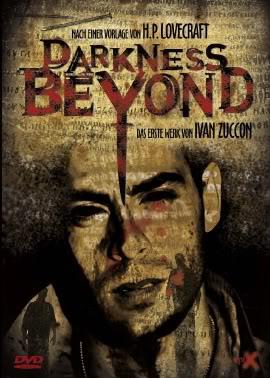
Ivan Zuccon, without a doubt the most exciting young genre director in Italy, has stuck with the works of HP Lovecraft for this, his third feature. But whereas The Darkness Beyond and Unknown Beyond were generically Lovecraftian, La Casa Sfuggita (co-scripted with Unknown Beyond writer Enrico Saletti) adapts three specific HPL short stories.

Rather than a straightforward anthology, however, Zuccon and Saletti have set all three tales in the same building, interweaving them to achieve a dreamlike sense of horror. So in the present day we have paranormal journalist Alex (Giuseppe Lorusso) and his sceptic girlfriend Rita (Federica Quaglieri) in an adaptation of ‘The Shunned House’ itself. Alex is investigating an old inn which has seen scores of mysterious, often violent deaths over the previous three centuries. Much to Rita’s displeasure, they are going to camp out in the derelict building until Alex has finished his research.

In the same building, 50-60 years earlier, Luigi Montella (Emanuele Cerman) is a young mathematician, who is investigating the non-Euclidean geometry of the inn’s plans and playing chess against his neighbour Nora (Silvia Ferreri). This part of the film is based on ‘Dreams in the Witch House.’ Finally, right back in the 1920s, a writer name Marco del Vespro (Michael Segal - not the British actor who was in I Claudius etc) becomes bewitched by the haunting violin music emanating from the next room, where lives the beautiful but mute Carlotta Zann (Cristiana Vaccaro). That’s ‘The Music of Eric Zann.’

With three stories set in different times - perhaps more: who/what/when is that mysterious masked figure? - The Shunned House is not an easy film to follow, which is entirely in keeping with the complexities of Lovecraft’s work. Zuccon (who also edited the film) doesn’t just mix smoothly between stories; the whole point of the film is that these three tales interact, as characters from one time see/hallucinate those from another. It would be pointless for me to be specific; the film must be seen as a whole.

And there’s blood. And dead people. And people get killed in awful ways. This is a horror film in the grand tradition and confirms Zuccon’s place as the natural successor to Lucio Fulci. Luigi may be a somnambulist child-killer; Rita sees dead people; there’s a mysterious girl repeatedly hitting her bleeding forehead against a wall; and when Carlotta’s last violin string breaks... Christ, it’s horrible! It all comes together in a bloody, scary conclusion.

Zuccon’s camera, often roaming around a room, brings the audience right into the world(s) of these people. There is nothing workmanlike here. Every shot is just right: the angle, the movement, the lighting, the cutting. It’s just a shame that this was shot on video and not film. Please, someone give Ivan Zuccon the budget to shoot in 35mm!

The cast all cope well with the English dialogue. Particularly notable are Cerman (also in both Beyond films, as was Segal) whose boyish good looks and sensitive-yet-unnerving performance reminded me of Brendan Fraser in The Passion of Darkly Noon, and Vaccaro, who overcomes (in fact, uses) her lack of dialogue to bring exceptional depth to her role as the troubled violinist. Massimo Storari’s make-up effects are as gruesome as ever, and kudos also to costume designer Donatella Ravagnini and set designer Roberta Romagnoli, and indeed everyone involved with this marvellous film.

Ultimately, what does it all mean? I’m not 100 per cent certain (and I’ve read the script!) but frankly the film wouldn’t be true to the Lovecraftian source material if I was. It is all (I think) connected with the mathematics of the inn’s design, thus putting The Shunned House into the tiny subgenre of mathematical fantasy horror, along with the brilliant Pi, the disappointing Solid Geometry, and a handful of other titles. I think that ultimately the building itself is ‘the monster’, much like The Fall of the House of Usher or The Shining. But I strongly suggest that you take any opportunity to see this film and decide for yourself.

MJS rating: A
(Warning: this film contains some scenes with strobe effects.)

Addendum: The Shunned House is now available on DVD in the UK from Salvation. The disc includes an ‘original trailer’ (a short teaser), an ‘international trailer’, four short deleted scenes, a stills gallery and two essays by Salvation boss Nigel Wingrove. The one about HP Lovecraft is okay but the one about Italian horror is rather a waste, saying nothing about why the genre flourished in Italy or why horror fans hold spaghetti spook-flicks in such high regard. Also, the text of the essays is small and hard to read and, on my machine at least, flickers somewhat.

The extras are rather difficult to navigate and I found myself having to go back sometimes because of the confusing and inconsistent navigation system. (I know this is picky, especially as I was given the disc for free by Ivan, but it’s irritating and would be easy to solve for future releases.)

Also on the disc are trailers for The Bunker (which was written by Clive Dawson) and The Playgirls and the Vampire (an odd pairing of films!), a Jake West-directed video for a song called ‘White Slave’ by The Nuns (all gothic lesbian fetish vampires - quelle surprise!) and Philip Ilson’s rather dull short Blood.

Review originally posted 5th December 2004

Friday, 12 December 2014

Unknown Beyond

Director: Ivan Zuccon
Writer: Enrico Saletti
Producer: Valerio Zuccon
Cast: Emanuele Cerman, Giorgia Bassano, Robert Marrelli
Year of release: 2001
Country: Italy
Reviewed from: VHS screener
Official website: www.ivanzuccon.com

Italian horror cinema has a long and proud history. In no other country has horror been such an intrinsic part of national cinema. Not fantasy (there’s plenty of that too but it’s best left alone) or science fiction (again, best avoided) but genuine, scary, bloody horror. Italian horror movies date back to the silent era but really came of age in the 1950s, just as horror was also coming to the fore in the UK and on the seedier side of Hollywood. Argento, Fulci, Bava pere et fils, Michele Soavi, even trash barons like Ruggero Deodato or good old Joe D’Amato - what other country has produced so many iconic scare merchants over the years?

I say let’s add Ivan Zuccon to that list. And let’s add him up there at the better end with Fulci, Argento (when he was good) et al. Because Unknown Beyond confirms that The Darkness Beyond was no flash in the pan. Zuccon is a major horror talent and he’s here to stay (for further proof, check out his third feature, The Shunned House).

Darkness was written by Ivan himself but this semi-sequel was scripted by Enrico Saletti so there’s something of a change in tone, though it’s still unashamedly Lovecraft-ian. It’s a more complex story, with more characters - there’s more action and more interaction. Also a whole heap of religious iconography, stirring up that whole Catholic guilt thing that underlines some of the best Italian horror. The opening sequence is amazing as a stumbling soldier comes across a crucified man and, at his feet, a pram containing a crying baby which, on inspection, turns out to be a reel-to-reel tape recorder. Blood drips from the sky, then rises back to Heaven. What the jiminy is going on?

One thing which Unknown Beyond definitely shares with its predecessor is a dreamlike structure which plays fast and loose with causality and the sequence of events, indeed with reality itself. The Old Ones-engineered supernatural apocalypse that we glimpsed in the first film has enveloped the world, but now we are a generation on and Captain Ian Hicks (the ever reliable Emanuele Cerman) leads a small band of survivors hiding out in some catacombs.

Cerman was Private Randolph Carter in The Darkness Beyond - and Hicks is having dreams in which he is called by that name. Is he the same character? Who knows? Locked up in a cell in the catacombs is a painted-face witch, Keziah (Roberta Marrelli, who was Elena in the first film), who serves the Old Ones and seeks to seduce Hicks. Meanwhile two members of the group, Valerie (Liliana Letterese) and Pickman (Alessio Pascuti - Private Walker in Darkness) have gone missing.

Walker turns up, transformed into a mad demon but roped and held by two of the soldiers. For a moment the film looks remarkably like the scene with the captive zombie in 28 Days Later but I’m sure that’s coincidental as it’s unlikely that Alex Garland or Danny Boyle would have seen Ivan’s film. Walker is locked up in another cell.

Valerie, wandering across the desert at night, is gripped by hands from under the sand and raped by something unseen. She subsequently slakes her thirst at a river of blood, from which she fills her canteen. A day or so later she is back with the main group.

Hicks has translated some surviving parchments (possibly the ones created by Al-Caleb in the first film’s prologue) and knows that the only way to defeat the Old Ones is to find the Necronomicon. He sets out with two comrades, Alan (Piergiorgio Schiona) and Boris (Francesco Malaspina - Darkness Beyond’s Sgt Clark). Back in the catacombs, the swiftly pregnant Valerie gives birth to an ultra-fast growing cocoon from which emerges, only minutes later, a full-grown man. Played by Michael Segal, the first film’s Lieutenant Salgari, this character is credited as ‘il figlio dell’Altrove’ - ‘son of the beyond.’ Indeed, the Italian title of this film is Maelstrom: Il Figlio dell’Altrove (the working English title was Call of the Beyond). He proceeds to bloodily slaughter his way through the cast.

What the film is leading up to, via some quite startling imagery, is a three-way battle between Segal’s character and the unborn children carried by sole survivor Anouk (Giorgia Bassano - that’s not a spoiler by the way as she’s not identified by name until late in the film) and Keziah. Three will be conceived, the prophecy states, but only one will survive to become heir to the Old Ones...

With an extra twenty minutes’ running time over the first film, Unknown Beyond can cram more in and that may be why it seems slightly less languorous (or more hurried, depending on how you look at it). The main characters are well-defined and we care about what happens to them - although I’m still not certain about Keziah the witch. Marrelli comes close to overacting sometimes in a role which is, I think, a difficult one for foreign audiences to grasp.

There are some amazing setpieces, including a whole field of tortured souls on cross-frames, and also more action with some well-choreographed fight sequences. This film is more obviously shot on video than Ivan’s first movie, and is almost entirely set at night: a couple of scenes about 50-60 minutes in are the only daylight exteriors in the whole film. Sometimes initially confusing, the plot does unravel well, revealing hidden motivations: “Deception has always been evil’s stock-in-trade,” says one character, observantly. Although this film shares numerous cast and crew with The Darkness Beyond the actual plot connections are tangential and watching the first film is not necessary to enjoy this one. Though I would of course heartily recommend watching both just because they’re so good! (A tip of the hat also to Nicola Morali whose music perfectly creates the spooky, unnerving mood that the film requires. Nicola kindly sent me a CD of the Unknown Beyond soundtrack a while back and it’s a truly excellent piece of work.)

There was a time when Italian horror cinema was the finest in the world. But the last spaghetti scarer to really achieve international acclaim with critics and audiences was Michele Soavi’s superb Dellamorte Dellamore and that was nine years ago. Since then, what have we had? Pupi Avati’s obscure The Arcane Sorcerer, Sergio Stivalleti subbing for the late Fulci on Wax Mask, Massimiliano Cerchi’s laughably inept Creatures from the Abyss and Satan Claus, Argento treading water with The Stendhal Syndrome, Phantom of the Opera and Nonhosonno - and let’s not even mention the justifiably derided Fatal Frames. The genre needs a shot in the arm - and here it is.

Unknown Beyond confirms the arrival of a startling new talent. Ivan Zuccon is the best thing to happen to Italian horror, arguably to horror cinema in general, in a long, long time.

MJS rating: A-

Review originally posted 5th December 2004

Sunday, 23 March 2014

Pickman's Muse

Director: Robert Cappelletto
Writer: Robert Cappelletto
Producer: Edward Morillon
Cast: Barret Walz, Maurice McNicholas, Tom Lodewyck
Country: USA
Year of release: 2009
Reviewed from: screener

Despite the title, this isn’t actually an adaptation of ‘Pickman’s Model’ (which was adapted a couple of years ago as a short by Gary Fiero). Although it borrows some elements from that story – basically an artist named Robert Pickman who paints pictures so unutterably horrible that they create revulsion and horror among those who see them – the film also lifts from the later HPL tale ‘The Haunter of the Dark’ which was likewise about a painter. The DVD sleeve acknowledges ‘Haunter’ as the source material although on-screen the source credit is a rather odd ‘Dedicated to the works of HP Lovecraft.’

Pickman (Barret Walz: Jigsaw) here is a jobbing palette-hack, living in a slightly dingy garret with dripping pipes and an eastern European landlady (Joyce Porter: The Art of Pain) who likes him because he always pays his rent on time. Pickman is depressed and on medication prescribed by Dr Ambrose Dexter (Maurice McNicholas), a minor character in the original story - although it’s not clear whether these drugs are the cause of his morose state or an attempt to cure it.

One night, Pickman is awoken by a bright sunrise above an abandoned church which he can see from his window and, breaking an artistic draught of several weeks, sets to work feverishly banging out dozens of charcoal sketches. When he tries to sell a painting of the church to a local art dealer, Pickman learns that he has somehow unconsciously copied the style and subject of Goodie Hines, a notorious local serial killer, now incarcerated, whom he would have heard of if he wasn’t such a recluse.

Drawn to visit the empty church, he finds an angular box containing a (very briefly glimpsed) glowing sphere; this is straight from the story and is referred to in Lovecraftian literature as the ‘Shining Trapezohedron’. His next canvas is a scene of unspeakable horror and depravity which terrifies his landlady, who wanted Pickman to date her niece but now threatens eviction. While further hideous paintings emerge from Pickman’s subconscious, Dexter takes an interest because he is treating Goodie Hines (Tom Lodewyck: Incest Death Squad, Carnivorous, erm, Incest Death Squad 2) in the local loony-bin. Hines also painted hideous images like Pickman’s just before he went on his killing spree but no-one outside the police and hospital authorities has seen them – so how can Pickman, who had never even heard of Hines, ape his style and subject matter?

Pickman’s Muse is an atmospheric and at times creepy film but I think it’s aimed rather too solidly at the core audience of Lovecraft obsessives who will either have a clearer idea of what precisely is going on or less concern about it. Pickman hears voices but are they in his head or is he actually being spoken to by The Old Ones? Or is that meant to be ambiguous? There also are a few really odd sequences like a scene outside the church where he spots what appears to be a small octopus nailed to a cross.

Walz gives a very impressive performance as Pickman, subtly descending into madness. Unfortunately he is acting opposite McNicholas’ almost cartoonish Dr Dexter, played with a perpetual grimace and bulging veins like the character is on the continual verge of an aneurysm.

The DVD sleeve promises ‘deleted scenes’ and ‘extended scenes’ but on the menu there’s just the former although both are right in a sense. This is a seven-minute sequence of Dexter researching the church’s closure (in 1921 after the discovery that it was being used by an arcane cult) and breaking into Pickman’s apartment, culminating in a scene of Dexter talking with his colleague (Mike Dobray) in a parked car. This last scene is in the finished film but slightly shortened to remove dialogue references to the stuff which no longer immediately precedes it.

And here’s the odd thing; something which I have never experienced before. After watching these extra scenes, I not only understood the film a great deal more, I found that I had enjoyed it more too. For example, the movie as stands has a stand-alone, inexplicable reference to ‘starry wisdom’ which will no doubt have the HPL fanboys wetting their pants but is meaningless to the rest of us; this is expanded upon in the deleted/extended scenes.

Normally deleted scenes have been deleted for a good reason but honestly, these should have been kept in. The film’s only 75 minutes long, it could take another few minutes easily and the suitably enigmatic and unspoken plot would be a bit less enigmatic and a bit more spoken. We still wouldn’t really know what is going on but we would at least have a clue. Some of our unknown unknowns would have become, if not unknown knowns, at least known unknowns.

Writer/director/editor/cinematographer Robert Cappelletto handles both actors and camera well, drenching his interiors in colours which are appropriately painterly and bleaching his exteriors almost to the point of monochrome. The spooky music is by Willy Greer, founder of online radio show Horror Holocaust, who also scored Dan Gildark’s Cthulhu a couple of years ago.

MJS rating: B

Pickman's Model

Director: Gary Fierro
Writer: Justin Tacchi
Producer: Gary Fierro, Justin Tacchi
Cast: Conor Timmis, Jesse Murphy, Derek Meinecke
Country: USA
Year of release: 2008
Reviewed from: US DVD

So I said to him, I said to Howard Philips Lovecraft, I said, “Howard,” I said, “Hey Howard... why the long face?”

Please yourselves.

Sooner or later, everyone makes an HP Lovecraft film. Although there are authors who can probably claim more film adaptations of their work - Edgar Rice Burroughs, Robert Louis Stevenson, Arthur Conan Doyle - the lasting success of those writers is based on established character franchises or a small number of significant, much-adapted stories. Lovecraft is different in that he created a loosely linked oeuvre without any popular characters or stand-out tales so the huge number of HPL-based films is spread right across the available literary sources. Lovecraft is also unusual in having a definable style so there are, in addition, plenty of movies which owe an obvious debt to the author without specifically adapting any of his work.

Much of Lovecraft’s work is simple in narrative structure, relying on atmosphere for its effect. As such, he is an eminently suitable source for a short film, which brings us to this 20-minute version of the 1927 short story ‘Pickman’s Model’. The original tale (which is included here in a series of nicely designed and very readable text screens) is basically a monologue, delivered by an artist named Thurber to a companion named Eliot, although chunks of it are actually recounted dialogue from maverick painter Richard Upton Pickman himself.

Justin Tacchi has done a sterling job of trimming back the mono/dialogue, deftly removing unnecessary verbiage and dated idioms (the film is set in the present day). Jesse Murphy plays Thurber with suitable unease while Derek Meinecke has the small but important role of Eliot, given a little dialogue here. Thurber’s visit to Pickman is framed as a flashback, with Murphy/Thurber sporting a goatee for these scenes. Pickman himself is played by my mate Conor Timmis (Kreating Karloff) who is clearly having a ball, teetering on the edge of over-acting as he channels the likes of Karloff, Lugosi and Price.

The photography by Tacchi’s cousin, director Gary Fierro (who also helped with the script) is particularly impressive during the scenes of Pickman and Thurber examining the canvasses in the former’s cellar, using just the light from a handheld lamp to create a beautiful chiaroscuro effect. Pitch black shadows hide everything but the two men and their specific subject of enquiry, the room and all the other paintings disappearing completely into a stygian – frankly Lovecraftian – darkness. There’s one particularly lovely shot of Thurber where Pickman leans in over his shoulder then steps back, effectively materialising and disappearing like ectoplasm at a seance.

Under beetle eyebrows, Timmis walks the tightrope of madness that characterises so many of Lovecraft’s protagonists. It’s just a shame that the lighting effectively conceals much of the work by make-up artist Norman Bryn (Kreating Karloff, Cloverfield, I am Legend) to make the actor look suitably stressed, strained and strange. On the other hand, the actual paintings (by Fierro) benefit from the low light which enhances their spookiness and allows the audience to imagine them even more horrific than they are.

If there’s a fault with the film it’s in the script which captures the characters, setting and atmosphere perfectly but seems to skim over the central point of Lovecraft’s tale - which is photography. I’ll spoiler protect the next couple of paragraphs for those unfamiliar with the story but I do recommend you read the source material before watching the film. Or maybe watch the film, then read the story (as I say, it’s on the DVD) and then watch the film again to see how your understanding is enhanced, especially around the ‘punchline’ which is one of Lovecraft’s most famous lines but, bizarrely, not actually spoken here.

The crux of the short story is that Thurber believes great artists paint from life whereas hacks simply paint from imagination. Any decent artist can churn out paintings of, say, a vase of flowers but a great painter will actually study a real vase with real flowers and somehow capture the essence of that reality. Pickman specialises in paintings of horrific fantasy scenes: grotesque subhumanoid creatures, often interacting with the real world. His technique marks him out as a realist but how can this be when his paintings are fantastical? Pickman admits to Thurber that he uses a camera to capture locations, thus providing realistic backgrounds and settings for his paintings. When Thurber leaves, he takes a scrap of paper from the cellar and later, on examining it, finds that it shows not just the background to a painting but also the demonic subject. The final line of the story is: "I had vacantly crumpled it into my pocket... but by God, Eliot, it was a photograph from life!” Hence the relevance of the title: Pickman uses an actual model.

This script has no mention of photography - although it does retain Thurber’s observation that Pickman is a ‘realist’ painter - and in the final scene Thurber passes Eliot a piece of paper without a word. Despite Derek Meinecke’s shocked expression, there is no way to understand the significance of the paper without that crucial final line of dialogue (or some variant thereof). Lovecraft wrote in an era when it was still possible, without seeming clicheed or trite, to build a short story towards a revelation in the last line. The whole of ‘Pickman’s Model’ builds towards that horrific climax, gradually increasing the foreboding and fear as Thurber describes the paintings and pontificates on the nature of realist art. It really is, in a true (but decidedly non-comical) sense, a punchline. Yet in Pickman’s Model the film it’s not there and we are left to surmise the revelation - which we can really only do if we already know the story. Without some discussion of Pickman’s use of photography, the film’s climax just doesn’t work. Atmosphere yes, characters yes, sense of all-powerful evil and nameless dread yes. But for some reason the actual plot point towards which Thurber’s account of his meeting with Pickman - and hence the whole story - inexorably leads has been muted past the point of comprehension.

The above caveat notwithstanding, Pickman’s Model is a terrific little film and all involved can be proud of their work. It’s suitably creepy and unnerving, it looks thoroughly professional and it’s just the right length. It has been well packaged onto a DVD that includes a 20-minute Making Of, a featurette on Bryn’s make-up, the story itself, a trailer, a slideshow and a commentary by Fierro, Tacchi and Timmis. This is an excellent example of Lovecraftian short cinema and I look forward to seeing more work from those involved on both sides of the camera. (HPL obsessives will know that ‘Pickman’s Model’ has been adapted for the screen at least four times before including a Chilean version and a 1971 episode of Night Gallery.)

MJS rating: A-

Saturday, 22 February 2014

LovecraCked! The Movie

Director: various
Writer: various
Producer: various
Cast: um, various
Country: USA/UK
Year of release: 2006
Reviewed from: screener disc
Website: www.biffjuggernaut.com/lovecrackedthemovie

LovecraCked! The Movie surprised me because it’s not what I expected. With its Gilliam-esque cover design, zany title and obligatory Lloyd Kaufman cameo (boy, he gets around!) I thought this would be some sort of Airplane-style gagfest spoofing the work of HP Lovecraft. In fact, it turns out to be an anthology of short, Lovecraft-inspired movies, most of which are actually fairly serious.

Linking these shorts is a spoof documentary of a TV reporter trying to find out the truth about Lovecraft. These segments, including one where Uncle Lloydy answers every Lovecraft question with a plug for Troma, are enjoyably silly, helped greatly by a straight-faced performance from Elias, the unimonickered director of the links who conceived and co-ordinated this project, as the reporter.

This all sounds like a weird mixture of stuff - dumb and serious in equal measure - which shouldn’t work, but somehow it does, sort of. Without the comedy linkage, the HPL shorts would all get a bit much, and a whole 90 minutes of low-budget Lovecraftian lampoonery would be, I think, more than most people could stand.

The shorts themselves vary enormously. The weakest is Justin Powers’ (Pot Zombies) History of the Lurkers which contrasts a punk guitarist and his nerdy flatmate in a nothing of a story based solely on the weak pun that ‘lurker’ could also be used to describe someone who ‘lurks’ in porno bookstores. At the other end of the spectrum is Tomas Almgren’s Bugboy (co-written with Rebecca Finley), artfully shot silent in black and white, about a young man who wraps himself in a cocoon - although this seemed to me to be more Kafka-esque than Lovecraft-ian. Also unnerving is Ashley Thorpe’s Remain, a stop-motion animation about a painter.

Probably the most professional, apart from BugBoy, is Witch’s Spring, about a young man whose date has unusual interests. This segment of the film, originally produced in 2004, is actually British (as is Remain). Actors Tom Wontner (TrashHouse) and Gillian MacGregor - who were both in a Jack the Ripper feature I hadn’t heard of: Jack, the Last Victim - are also credited as co-writers, alongside director Brian Barnes.

Re-Penetrator is, as one might expect, a porn spoof of Re-Animator written and directed by Doug Sakmann (cinematographer, FX assistant, co-producer and actor in Mulva: Zombie Ass Kicker). This version isn’t actually hardcore although it is very close so it might be an edited version of an actual XXX short. It’s well made, well-lit and certainly the goriest thing on show here.

Elsewhere we have Jane Rose’s The Statement of Randolph Carter which is suitably Lovecraftian but never really goes anywhere; Grady Granros’ Chaos of Flesh (written by Tomas Almgren) which is short and complete but with an obvious twist; Simon Ruben’s atmospheric marionette short Alecto (co-written with Robbie Simons, featuring Nancy Kwok from Dead Wood); and Brian A Bernhard’s zany Flash animation And This was on a Good Day.

The anthology format has its advantages and its disadvantages. Where a short doesn’t work, there will at least be another one along in a few minutes, but the ones that do fail bring down the average quality of the feature. There’s very little to remember about LovecraCked, beyond the jokey linking sequences, so shorts which might have stood out on their own get lost in the jumbled memory of the whole film.

Surprisingly, they also vary from obviously Lovecraft-inspired to remind-me-what-this-has-to-do-with-Lovecraft-again. On the other hand, one thing that does work, in a sense, is placing the shorts within a humorous framing story as that provides a cleaning of the cinematic palate between each tale.

Taken as a sampler of short vaguely Lovecraftian films, LovecraCked! The Movie is exactly the sort of mixed bag that one would expect. If it doesn’t completely succeed, that’s mainly because it’s not clear precisely what it was trying to achieve. Still, at least it’s something slightly different in the never-ending stream of HPL-based movies.

But I’m still waiting for an Airplane-style Lovecraft comedy.

MJS rating: B-
review originally posted 16th October 2006

Saturday, 23 March 2013

The Darkness Beyond

Director: Ivan Zuccon
Writer: Ivan Zuccon
Producer: Valerio Zuccon
Cast: Michael Segal, Emanuele Cerman, Roberta Marrelli
Year of release: 2000
Country: Italy
Reviewed from: VHS screener
Website:
www.ivanzuccon.com

I first met Ivan Zuccon at Cannes in 2000 through one of those utterly meaningless but ultimately beneficial chains of events. I was at a bar one evening when I got talking to someone (no idea who - sorry!) who asked if I wanted to meet Tiffany Shepis. Tiffany was then the hottest starlet on the block, having appeared in Tromeo and Juliet and the Spanish artflick Shampoo Horns as well as hosting some Troma stuff for TV. Plus she is way cute, so I agreed to meet this bloke at a time and place the next day and he would introduce me to Tiffany Shepis.

And indeed he did. Tiffany was at Cannes in her capacity as a producer/distributor, having set up a company called Prescription Films - and it turned out that her business partner was none other than Jennifer Kennedy, whom I had first met back at the 1998 AFM when she was working for Troma.

So that was all very nice. It was great to catch up with Jennifer, and to meet Tiffany, but the important thing (in retrospect) is that in the Prescription Films office at that time was a young Italian chap named Ivan Zuccon who was showing Tiffany and Jennifer his first feature, L’Altrove aka The Beyond. We swapped cards and stayed in touch and he sent me a copy of the film - and it just blew me away.

L’Altrove - which was swiftly retitled The Darkness Beyond in its subtitled version, to avoid confusion with Fulci’s The Beyond/L’Aldila - is simply one of the best Lovecraft movies ever made. Though merely ‘inspired by the visionary genius of HP Lovecraft’ rather than adapted from any specific story, it perfectly captures the nightmarish horror of HPL’s work.

A prologue in Baghdad in 1571 sees the philosopher Al-Caleb translating the Necronomicon for Dr John Dee - until something unseen attacks him and drags his limp body away like a child’s doll. Flash forward 500 years to Arkham, where a radio informs us that there is massive civil unrest by ‘violent and insane’ sections of the community and that some of the army units called in have mysteriously vanished. Roberta Marrelli plays Elena, a student of the occult who has somehow come by Al-Caleb’s blood-spattered fragments of translation. She performs a rite, puts on a mask - and plunges herself and us into a world of nightmare.

Running through the empty countryside, she comes across a lone soldier - Private Randolph Carter(!) played by Emanuele Cerman - in a ruined building. Behind him is a low tunnel into which the rest of his six-man patrol have vanished and in his satchel is the book which they found earlier: Dee’s original Necronomicon. Later that night, Elena is lured into the tunnel by mysterious voices and when Carter follows her, he sees her brutally killed by a mysterious figure in a white coat. Running for his life, the soldier passes over ‘the threshold’ into ‘the beyond’ where the rest of his squad are trapped, hunted by one of their number, Warren (Giuseppe Gobatto, who also played Al-Caleb in the prologue), who entered the tunnel first and now believes the ancient, unnamed ‘Old Ones’ to be God.

The plot then becomes a surreal nightmare, with the Old Ones seeking the return of the book. The CO, Lieutenant Michael Salgari (Michael Segal), suffers through terrifying hallucinations, including his former lover Sonia (Laura Coratti), and a teenage girl (Catarina Zanca) who claims to be the unborn baby that Sonia was carrying when she died 15 years ago. Throughout it all, the white-coated figure and the insane Warren stalk their prey. How much is real? How much a dream? No way to tell. What there is, however, is vast quantities of blood - from bullet wounds, from rough surgery, from hideous torture - and some truly terrifying imagery.

By any standards, The Darkness Beyond is an astounding debut from a major new name in horror cinema - as evidenced by Ivan Zuccon’s subsequent features Unknown Beyond and The Shunned House. Shot on digital video by Ivan himself, the cinematography is beautiful - coloured lights, swirling smoke, scenes lit by electric or flaming torches - and the editing (also by the director) is stunning. It is very easy, when a film is designed to be dreamlike, to be self-indulgent or to just throw random images together, but every jump-cut, every twisted angle, every cut-away is just right here.

But Ivan is not a one-man band and there is some sterling work here by others, not least the excellent cast. Cerman and Segal, who are also in both of Ivan’s other films, carry their roles superbly, and Marrelli (also in Unknown Beyond) is amazing in her depiction of genuine, uncomprehending fear. One of the ways in which the film constantly trips up the viewer is in the passing of the central role from one character to another - just as we think we know who the ‘star’ is, they’re killed. Though that doesn’t necessarily preclude them from still being in the film! An epilogue sequence, set far in the future, is reminiscent of the opening scenes in Richard Stanley’s Dust Devil.

Massimo Storari (who appears briefly as a monk) contributes some superb make-up, tearing the soldiers’ flesh and splattering them with blood. Mention must also be made of sound editor Fabrizio Vitali’s contribution. Because so little is seen - there’s neither tooth nor tentacle spotted of the old ones themselves, as it should be - the sound effects are vital and help to create a truly frightening atmosphere.

Ultimately Prescription did not pick up L’Altrove, but I was able to get both this film and its sequel screened to general acclaim at the Festival of Fantastic Films the following year. Gradually the word on Ivan Zuccon’s work has spread and I am absolutely delighted to see his films now getting the distribution that they deserve.

The Italian horror tradition is alive and well in the capable hands of Ivan Zuccon.

MJS rating: A
review originally posted before November 2004

Sunday, 24 February 2013

Colour from the Dark

Director: Ivan Zuccon
Writer: Ivo Gazzarrini
Producers: Ivan Zuccon, Roberta Marelli
Cast: Debbie Rochon, Michael Segal, Marysia Kay, Eleanor James
Country: Italy
Year of release: 2008
Reviewed from: screener
Website:
www.ivanzuccon.com

I have never made any secret of my admiration for the work of Ivan Zuccon. He’s a good friend (though we have never met in person) and it has been a pleasure to watch each of his films, fresh from the edit suite. I have been able to watch Ivan grow and develop as a director since his feature debut, The Darkness Beyond. I think he gets better with every film.

I think this may be his best yet.

The influence of HP Lovecraft permeates Ivan Zuccon’s work more than almost any other film-maker that I can think of. Possibly only Stuart Gordon comes close in his enthusiasm and admiration for Lovecraft. Here’s a thought. Imagine a two-part Lovecraft anthology: one half directed by Stuart Gordon, one half by Ivan Zuccon. A bit like what Argento and Romero did with Edgar Allan Poe on Two Evil Eyes. I would love to see that.

The Darkness Beyond and Unknown Beyond both wore their Lovecraft influence on their sleeve. The Shunned House was a an intertwining of three narrative strands through space and time, all adapted from HPL stories. Bad Brains and NyMpha both have subtler but undeniable Lovecraftian elements; NyMpha, for example, owes a certain amount to 'The Dunwich Horror'.

Colour from the Dark is the first actual, feature-length adaptation of a single Lovecraft tale which Ivan has filmed. And it’s magnificent.

‘The Colour Out of Space’ is the source material, a novella that was originally published in Amazing Stories in 1927. This has been filmed twice before: in 1965 as Die, Monster, Die! with Boris Karloff and as The Curse in 1987, starring a pre-Star Trek Wil Wheaton. But I’m not here to compare this film with the original story (beyond observing a few salient differences in plot) and certainly not to compare it to loose adaptations made twenty and forty years ago. That would serve no purpose. For the record, all that Ivan has taken from the Lovecraft tale is the most basic concept and the phrase on the poster: ‘sucks the life out’. No, I’m just here to discuss how Colour from the Dark stands up as a film in 2008, and I can tell you that it stands up very well indeed.

The story, truth be told, is pretty simple. The setting is Italy in the early 1940s (the original story was set in New England in 1882) where Pietro, a farmer with a gammy leg whose disability precludes him from war service, lives with his wife Lucia and his mute, retarded sister-in-law Alice who carries a red-headed rag doll everywhere. A fourth member of the family, Luigi, is serving in the army although I couldn’t quite determine whether he is Pietro’s brother, Lucia’s brother or possibly even Alice’s husband. Up the lane from Pietro and Alice’s farm live Giovanni and his grand-daughter Anna, who have been sheltering a young Jewish woman, named Teresa, from the Nazis. Apart from a local priest, that’s pretty much the whole cast.

Something in the farm well gradually affects, through the well water, the crops and then the family. Pietro’s leg injury heals, Alice starts to speak and the tomatoes and peppers grow big and bountiful. But very rapidly things take a turn for the worse. Lucia initially develops a libido but this rapidly descends into violent and sexual behaviour which forces her husband to lock her in the attic. The fruit rots on the vine, Alice spends her days talking to Teresa’s undiscovered corpse, gradually decomposing among trees where she was shot as she tried to escape. Nightmares and hallucinations torture the minds of all concerned as the mysterious something and its effects ‘suck the life out.’

I said that I wouldn’t compare this to the original but it is worth noting that both ‘The Colour Out of Space’ and Colour from the Dark are atypical Lovecraft. There are no Old Ones here, no indescribable horrors, no Necronomicon. What there is instead is a science fictional element, at least in the written story which concerns a meteorite, examined by geologists who discovers within the rock a sort of bubble. It is on the surface of that bubble, which swiftly disappears, that the mysterious, unnameable colour of the title is first seen, later emerging as an indescribable sheen on the plants and animals and rocks of the farm.

In the film there is no meteorite, no suggestion of where this particular form of energy may have originated. And since Ivan is, naturally, limited to the colours of the real world, he cleverly uses instead a computer-generated effect of a web-like, white light, creeping across floors, walls and people, occasionally distorting faces or other images for a moment. It’s a terrific effect and works brilliantly in what it tries to achieve.

And while this may not be typical Lovecraft, nevertheless it’s archetypal Zuccon! An isolated farmhouse, a possessed relative locked away, the breakdown of a dysfunctional family and above all a network of multiple levels of reality, skilfully interwoven so that neither the characters nor the audience can ever be sure what is or isn’t a dream. This is not just a simplistic story in which every horrific, fantastical thing is explained away when someone wakes up, this is Ivan as writer-director twisting reality this way and that with his usual confident eye for frightening images.

For example, when the priest tries to exorcise Lucia, she flings his Holy water back at him, each drop burning his skin like acid as he lies on the floor and defends himself with prayer. Then suddenly - he is back standing at the entrance to the room, untouched. Yet while Lucia straddled the prostrate man of God, burning his skin, we saw Alice and Pietro in other parts of the building, cowering with their hands over their painful ears as an ultra-high pitched sound rent the air. What happened? Did anything happen? This is so, so Ivan Zuccon.

The effects, as mentioned, are excellent. Not only the digital visual effects but also the pale, scratched skin of the possessed Lucia, a number of gore effects, plenty of blood and even a brief, contextual shot of two Luftwaffe fighters passing overhead. Massimo Storari has been working with Ivan since The Darkness Beyond and, like other members of the ‘company’ on both sides of the camera, his work has progressed with each film, especially since he moved into digital work from The Shunned House onwards. On Colour from the Dark Massimo gets two credits: for visual effects and as make-up effects assistant.

The principal make-up effects artist was Fiona Walsh who trained under Neill Gorton and has subsequently worked on Doctor Who and Torchwood as well as ambiguously titled British indie feature Lesbian Vampire Killers. ‘Molding, casting and prosthetic effects’ are credited to Mauro Fabriczky, who has a photo of Debbie Rochon’s scratched arms on his website. Whoever did what, the cumulative effects is that the effects are all excellent and support the story and the characters without overpowering them.

Other Zuccon regulars at the top of their game include costume designer Donatella Ravagnani, set designer Valerio Zuccon, sound designer Antonio Masiero and 1st AD Eugenia Serravalli. Spanish composer Marco Werba previously scored Timo Rose’s Fearmakers (which starred Debbie Rochon) and is now working with Dario Argento. Ivo Gazzarrini, who wrote Bad Brains and NyMpha, provided another very fine script. And then there is the excellent cast which, in terms of this level of film-making, could almost be considered ‘all-star’.

Debbie Rochon is a legend of course, with more than 150 films roles to her credit in the last thirty years or so. But far too many of those are cheesy, semi-sleazy, ultra-low-budget comedy-horror romps, often also featuring Trent Haaga and/or Lloyd Kaufman. It is comparatively rare that Rochon really gets the chance to stretch her serious acting muscles and remind us just what a good actress she is. Opposite Debbie’s Lucia is Michael Segal’s Pietro, a powerful portrayal of a man whose life is torn apart for reasons way beyond his comprehension. Segal has appeared in almost all of Ivan’s features, allowing those of us who have been keeping track of things to watch him develop as an actor. He has always been good but in this film he is simply excellent, establishing a naturalistic and human centre to the supernatural horror tale.

The two UK actresses in the cast have both established themselves as leading lights of the British Horror Revival. Spooky Scottish lady Marysia Kay plays Alice with exactly the brooding intensity that the mostly wordless part requires. She has an impressive CV which include Johannes Roberts’ Forest of the Damned and When Evil Calls, killer scarecrow indie The Scar Crow, vampire picture Blood + Roses and, by way of a change, spoof porno documentary Hardcore: A Poke into the Adult Film Orifice; she has recently completed Forest of the Damned 2. Neighbour Anna is played by Eleanor James who was also in Roberts’ Forest of the Damned as well as HellBride and The Devil’s Music for Pat Higgins and Stuart Brennan’s Zombies of the Night. Most recently she has filmed horror anthology Bordello Death Tales, playing the Bride of Frankenstein-esque lead character in Alan Ronald’s Universal homage segment 'Stitchgirl'.

Irish actor Gerry Shanahan adds to the international nature of the cast, playing Anna’s grandfather and there’s no denying that it takes a while to get used to the idea of a character named Giovanni who has a Dublin accent. But it is clear that Ivan, in wanting to get the best from his actors in this English-language production, has allowed them to use their own accents and trusts his audience to be intelligent enough to see past this. I think we’re all just used to seeing ‘Italian’ characters in movies and TV shows played by British and American actors whereas the Irish/Italian dichotomy stands out as something unusual.

Matteo Tosi, who was so good as Mirco in Bad Brains, is perfectly cast as Don Mario, the sincere young priest who finds himself against an (apparently demonic) entity and calls on all his faith to withstand it. One cannot help thinking of The Exorcist when watching the ghoulish Alice attempting to seduce the strong-hearted but ultimately ineffective padre. Emmett J Scanlan, another Irish actor albeit with a much less noticeable accent, plays the soldier Luigi whose appearance at the farm, bringing a touch of the outside, war-riven world with him, reminded me of Christopher Eccleston’s cameo in The Others. Scanlan is a bit of a horror fan and his other genre work includes Paddy Breathnach’s Freakdog and Renfield in a stage production of Dracula. Alessandra Guerzoni, so effective as the Mother Superior in NyMpha, appears briefly as Teresa the young Jewish woman while effects man Massimo Storari has a cameo as a German soldier.

This is a superb cast, pulling together strong actors, some from previous Zuccon films, others with their own reputation within the independent film sector. Every one of these actors gives a stirling performance so that it is difficult to single out any one performer as the best. Though Rochon and Segal’s names are above the title, this is an ensemble piece without a weak link in its acting chain.

Colour from the Dark is the sixth feature that Ivan has directed although I know he has had plans for this one for a long time so it could have been the fourth or fifth. Tiffany Shepis was going to star at one point but she made NyMpha with Ivan instead (other actors attached at various stages included Katia Winter - who was in Night Junkies and The Seer - and Federico D’Anneo from NyMpha). To be honest, I think the wait was worthwhile because the film benefits not only from year-on-year improvements in the digital effects available to a movie of this size but also from Ivan’s progress as a film-maker - and indeed from the progress in their respective skills of his numerous regular collaborators.

One person whose contribution I haven’t discussed in detail is Ivan himself who not only directs and produces but also shot the film himself (on Digibeta) and cut it. There are some extraordinary camera set-ups, as one would expect, not least excellent use of the well which is shot from above and below. Another noticeable technique is the placing of one character in extreme close-up in the foreground with another seen full-length in the background. At the risk of sounding pretentious, Ivan Zuccon is a poet with a movie camera.

Looking at the Zuccon filmography, I see the two Beyond films as ambitious, imaginative and experimental, with Ivan trying out new film-making ideas in the transition from shorts to features. Then came a pair of very good, solid films - The Shunned House and Bad Brains - which showed Ivan maturing and consolidating his skills, really finding his own style. And the most recent two features, NyMpha and now Colour from the Dark, demonstrate that Ivan is a world class film-maker, not only in his ability to attract international casts and crew but also in the overseas funding that is providing the financial basis for this work; Colour was partly financed from Canada for example.

Is Colour from the Dark Ivan Zuccon’s masterpiece? I suggest a cautious yes because I know how special and personal this project has been to Ivan during its years of development. Everything else has been leading up to this and I fully expect to review Ivan’s seventh feature, whatever that turns out to be, with the observation that it’s a great movie although it doesn’t quite hit the peak that Colour from the Dark reaches, But you know, I’d love to be wrong on that. That’s one reason why I’m giving this magnificent film an A instead of an A+; I want to leave room for Ivan to get even better. The other reason concerns my credo which I have often cited here: that I judge each film on how well it achieves what it sets out to do with what it has available. One of the things that any Ivan Zuccon film has is... Ivan Zuccon. Because Ivan is so good at what he does, that raises my expectations about what each film should be able to achieve, which ironically makes it harder for Ivan to surprise me by being so much better than expected.

And here’s a point to end on. I took a look at the Inaccurate Movie Database and found just over forty Italian horror features listed since 2000. There are undoubtedly a few more. And obviously I haven’t seen most of those films but that's because many of them never made it outside Italy. Among the few which have, the only ones to have received any level of critical discussion are the most recent Argento films, the reaction to which among fans has been, ah, mixed. Even the best-received, Nonhosonno, was compared unfavourably to Dario’s classics from the 1980s.

Apart from Argento, Lamberto Bava has made a couple of tiny-budget pictures, Bruno Mattei is still cranking out dodgy cannibal movies and there’s a bunch of obscurities which, though they may be good, clearly aren’t good enough to break out of the domestic scene. Whereas all of Ivan’s films have been released outside Italy and Colour from the Dark actually went as far as a New York premiere with Ivan, Debbie, Michael and others in attendance.

In respect of the above couple of paragraphs and bearing in mind Ivan’s professional and artistic development with each movie, I am prepared to go on record as saying that Colour from the Dark is the first truly great Italian horror film of the 21st century.

MJS rating: A
review originally posted 7th November 2008

Saturday, 16 February 2013

Chill

Director: Serge Rodnunsky
Writer: Serge Rodnunsky
Producer: Serge Rodnunsky
Cast: Thomas Calabro, Ashley Laurence, Shaun Kurtz
Country: USA
Year of release: 2007
Reviewed from: screener (Safecracker)


Chill is an interesting film. It’s interesting on the one hand because of what’s good about it. It’s original, well-made, with a strong cast and keeps the viewer’s attention. It’s also interesting because of its main problem which is unusual but doesn’t prevent the film from being enjoyable.

And that problem is that at times this seems like two completely different films bolted together.

Thomas Calabro (They Nest, Ice Spiders) stars as Sam, an unassuming guy, trying to make it as a writer (though we never see him writing or find out what he writes) who is looking for a menial job that will help him pay the rent. He applies for a job in an all-night convenience store, managed by dismissive but not aggressive Mrs Herrero (Barbara Gruen), and owned by the mysterious Dr Munoz.

Across the street is a clothing boutique owned by recently separated Maria (Hellraiser’s Ashley Laurence) who takes a liking to Sam while fending off the advances of unpleasant cop Defazio (always busy James Russo). Detective Defazio has contacts among the local lowlife including pimp Tre (Victor Grant) who wants the detective to find out what has happened to two of his bitches who have disappeared.

All of this is played straight and gritty and realistic, although I could have done without the somewhat clichéed splash-panel prologue of an unidentified young man being hunted down by a white van.

Contrasting with this is Dr Munoz, played by executive producer Shaun Kurtz with gleeful hamminess that would undoubtedly work in some other movie but is completely out of step here. He suffers from a mysterious skin condition which requires him to stay in a cold meat locker behind the convenience store. His skin is deathly pale, he wears a curious hooded costume and he sleeps in something like a cross between a coffin and a chest freezer. And he has some sort of mysterious, hulking assistant (Clark Moore) who drives the van around and kidnaps whores. Or something.

Munoz just doesn’t fit in with the general tone of Chill at all, quite apart from the fact that his situation is never made entirely clear. We are treated to intermittent flashbacks to when Dr Munoz was some sort of working scientist and something went wrong and now he is... what? A vampire? A particularly erudite zombie? Why does he have his hulking assistant kidnap and chain up whores? Why does he own and live behind a convenience store? How has Defazio not noticed that all the kidnappings happen with a small radius of this store?

Another failing is that the location is never made clear. Sometimes it seem like the 24-hour store and Maria’s boutique are in some isolated, downtown part of the city, at other times it seems like they are part of a shopping area - although we never see any actual, you know, shoppers.

Don’t get me wrong, I enjoyed Chill. I enjoyed it despite the above caveats, despite a twist ending that didn’t make any sense and despite some inadvisable cut-price CGI effects at the climax that really weren’t needed. I particularly enjoyed the characterisation and the way that people’s loyalties changed. But I just couldn’t get past the fact that pantomime villain Munoz seemed to have wandered in from another movie. Director Serge Rodnunsky has a fondness for dialogue scenes that are an endless series of cuts between two close-ups; watching Sam talk with Dr Munoz is like constantly flicking between two channels showing different films.

Chill is loosely based on an HP Lovecraft story called ‘Cool Air’ which was previously filmed as a Night Gallery episode, as a late 1990s short film and as Shusuke Kaneko’s segment of Necronomicon, but I have not seen any of those, nor read the source material so I can’t comment on its faithfulness or otherwise.

Writer-director-producer-DP-editor Rodnunsky has a staggering 41 directorial credits since 1990, not one of which I have ever heard of. The man is a factory, just a fairly quiet one I suppose.

MJS rating: B
review originally posted 20th May 2012

Castle Freak

Director: Stuart Gordon
Writers: Stuart Gordon, Dennis Paoli
Producer: Maurizio Maggi
Cast: Jeffrey Combs, Barbara Crampton, Jonathan Fuller
Country: USA
Year of release: 1995
Reviewed from: R1 DVD (Tempe)


It's an old, old idea. The forgotten child - disfigured, abused, existence denied, holed up in a secret room. The evil twin in the attic. Castle Freak takes that premise and runs with it; runs with it brilliantly. It's a belter of a film, and a proper horror movie too.

Jeffrey Combs and Barbara Crampton re-team from Re-animator (and indeed, from Trancers II) as John and Susan Reilly who have unexpectedly inherited a castle in Italy from John's aunt the Duchess D'Orsino. In a prologue we see this batty old recluse (Helen Stirling: Tea with Mussolini) shuffling down to a dungeon where she savagely beats an unseen chained figure, ignoring his pitiable, wordless screams. Then she shoves a plate of food into his cell and leaves.

John and Susan have a blind teenage daughter Becky, played by 15-year-old Jessica Dollarhide who gave up acting a couple of years later. Her disability stems from a car accident (seen in flashback) caused by her father's alcoholism which also resulted in the death of Becky's little brother JJ. Although John is off the bottle now, Susan is distant from him and they have only stayed together for Becky's sake.

The titular freak has survived in his cell since his mother's death by drinking water seeping through the rocks. When he hears people in the castle, he manages to break out of his shackles (in an agonising scene) and goes in search of the new arrivals. Jonathan Fuller (The Pit and the Pendulum, Arcade, Campfire Tales) gives a superb performance as the freak, evoking all the pity of the great tragic monsters like Frankenstein's monster or the Wolf Man, in amazing full-body make-up by John Vulich (Babylon 5, Day of the Dead). When we get a clear look at him, it becomes evident that his tongue is not the only thing that his mother cut off...

Becky senses someone in her bedroom, but there is no sign of a break-in and the local carabinieri are unwilling to spend days searching the 100+ rooms in the castle. John's attempts to reconcile with his wife are rebuffed and he finds himself in a local bar, hitting the bottle and picking up a hooker (Raffaella Offidani). The freak spies on the couple having sex in a wine cellar then accosts the whore as she leaves, crudely imitating what he saw - with horrific consequences.

The cop who previously refused to search the castle for Becky's intruder now comes looking for the hooker who hasn't been seen since she left the bar with John. He's played by bullet-headed Luca Zingaretti who is quite the heartthrob in Italy by the looks of it and who manages here to bring depth, passion and interest to a relatively minor character. The plot develops as John gets arrested on suspicion of the hooker's murder, with Susan and Becky left alone in the castle guarded by two policemen who are clearly not going to be much use. A further complication is John's discovery of the tomb of the Duchess' son who died around the same age as - and looked exactly like - JJ.

John's shifty lawyer (Massimo Sarchielli, also in Argento's Phantom of the Opera and Nonhosonno) stokes the gothic intrigue by revealing that John is related to the late Duchess in more ways than he thought, although that subplot never seems to go anywhere. The lawyer's sister, the housekeeper, is well played by French-based, Hungarian-born Elizabeth Kaza who was so memorable as Phaedra in Iron Warrior and was also in Borowczyk's The Beast. It's a measure of the confidence and maturity on display in this film that some scenes between the siblings (and some scenes with the police) are in unsubtitled Italian.

The film builds to a tense and horrific climax, with a handful of very nasty deaths along the way punctuating the sense of unease that centres around Becky's vulnerability. The only stumbling block in the script is that old get-out cliché, someone making a crucial deduction by picking up on a word or phrase in an unrelated comment. That always bugs me, but Castle Freak is otherwise so enjoyable that I can overlook it.

The script by Stuart Gordon and his regular collaborator Dennis Paoli (Re-animator, From Beyond, The Dentist, Dagon) is loosely based on Lovecraft's 'The Outsider'. The film was shot in executive producer Charlie Band's own castle in Italy, where Gordon had previously made The Pit and the Pendulum, and was one of the last films completed before Band's company Full Moon hit problems in the mid-1990s.

Cinematographer Mario Vulpiani lit a selection of obscure gialli in the 1970s although his most (in)famous credit is probably the 1980 Donald Pleasance-starring superhero nonsense Puma Man, on which this film's producer served as his camera operator! Editor Bert Glatstein worked on the first three Subspecies films and also cut episodes of VR Troopers and Power Rangers. Costume designer Tiziana Mancini was wardrobe mistress on Suspiria.

This terrific film is available as an extra - an extra! - on the DVD of Danny Draven's excellent (Stuart Gordon Presents) Deathbed, making that one of the best value double bills you're likely to find. The movie is also available on its own on a disc which includes a 'making of' featurette.

MJS rating: A
review originally posted 26th May 2005

Friday, 18 January 2013

Beyond the Wall of Sleep

Directors: Thomas Maurer, Barrett Klausman
Writers: Thomas Maurer, Barrett Klausman
Producer: Koko Polosajian
Cast: William Sanderson, Tom Savini, Kurt Hargan
Country: USA
Year of release: 2005
Reviewed from: screener


I am not, I should point out, an HP Lovecraft fan. That doesn’t mean I dislike his work or the movies that are based on it, but it doesn’t hold any special place in my affection. I’m not obsessed with it. I’m no more or less passionate about Lovecraft than I am about Lord Dunsany or Edgar Allan Poe or any other classic author of the weird and mysterious. I’ve read a few of his stories (none recently, I admit) and quite enjoyed them.

Some people are Lovecraft fans. For some people that whole ‘mythos’ holds as much attraction at the universes of Star Trek or Star Wars have for more regular fanboys. They treasure ‘nameless dread’ and ‘indescribable monstrosity’ as one would treasure a favourite Doctor Who episode or a popular soccer player. They are fans. Lovecrafties if you like.

It’s no mere happenstance that Lovecraft is the only author to have an annual film festival devoted solely to movies based on or inspired by his work, nor that he is the only person identified by name in the thematic index on this site. Lovecraft is his own genre.

So I may not be the best person to review this film which seems, to my untutored eye, very Lovecraftian.

Based on an HPL story of the same name, the action takes place in the Catskill Mountains in 1908 where an inbred yokel, Joe Slaader (William Sanderson: Blade Runner’s JF Sebastian, also in Skeeter, Phoenix, Mirror Mirror 2 and The Low Budget Time Machine), is arrested for murder and committed to Ulster County Asylum, a Bedlam-like institution where the inmates receive no treatment and serve no purpose except as experimental subjects. The Asylum is managed by the weak Dr Fenton (Marco St.John: Frankenfish, Monster, Friday the 13th Part V, Cat People remake) but the dominant figure is visiting ‘alienist’ - an archaic term for ‘psychologist’ - Dr Wardlow (Kurt Hargan, who starred in Klausman and Maurer’s previous feature, The White Room). In conflict with both of them - and with the idealistic, rich uncle who finances his position - is a passionate, obsessive intern named Edward Eischel (played by the brilliantly named Fountain Yount under an extraordinary bouffant wig which puts one in mind of Boris Karloff in Frankenstein 1970).

Slaader has, it transpires, a deformity on his back which resembles a face and which may be another being. Eischel is the only one in the Asylum who seems to think this is valuable and worth studying. But then he is slightly bonkers, as evidenced by the female patient (Rachel Mellendorf) whom he keeps strapped to a chair in the basement. The top of her head has been sliced off (and carefully replaced) allowing him to insert electrodes into her brain and apply sensations directly. These include orgasms and the implication seems to be - or at least, the inference is - that Eischel is getting some sort of sexual kick from this himself.

But it’s Slaader which is the problem. The being in his back turns out to be called ‘Amduscious’ and is some sort of demon, presumably one of HPL’s ‘dark ones’. The influence of Amduscious on the asylum is deadly, leaving inmates in other cells stripped of their flesh and blood. Eischel’s attempts to communicate with the demon lead to his expulsion from the Asylum and, eventually, after he has made his way back within its foreboding walls, Amduscious’ escape from its fleshy prison.

Or something.

Because I’m not a devotee of Howard Philips Lovecraft I found the story difficult to follow and the situation was not helped by the film-maker’s over-reliance on disorienting and flashy post-production. There are innumerable flashbacks, flash forwards, cutaways and dream sequences (or some combination of all four) which jump and jitter about. My suspicion is that this makes the film authentically Lovecraftian in its distortion of narrative and unnerving of the audience. But unfortunately the main thing it induces is a headache. In fact two headaches: one from trying to work out what is going on and one from all the jumping and shaking.

This is particularly prevalent at the beginning and it was quite some time before the film actually settled down enough for me to discern an actual story. It also took some time to discover whether the film was in black and white or colour, which is not a situation that one encounters on a regular basis. And even now, I’m not certain if this was a colour film with black and white sequences or a monochrome film with colour sequences. Or possibly a sepia film with both colour and black and white bits.

It’s a shame that the film is so heavily overproduced because the story seems to be engrossing, the horror is bloody and the acting, though stylised, is good. This is a well-directed, professionally made film. I just wish that somebody had maintained a tighter hand on the production while it was in post.

Or perhaps, true devotees of the church of Lovecraft will enjoy the film precisely because it is like that. Perhaps such disorientation is deliberate and makes the movie authentically ‘Lovecraftian’. I don’t know.

Despite my reservations, I would still recommend this movie as fine example of how evident talent and today’s technology can join forces to produce something startlingly ambitious. The artistry on display is sometimes breathtaking, from the production design to the cinematography and especially the special effects. The eventual appearance of Amduscious is gobsmacking and there are some gruesome and gory set pieces and images scattered throughout the film.

The writing/directing team of Klausman and Maurer have worked hard here, aided by producer Polosajian, and between them they have created a unique film which sets an impressive standard for indie Lovecraft adaptations.

In an impressive cast for a film of this scale, Tom Savini is very visible in the early scenes as a Sheriff hunting for Slaader. For a make-up artist, he’s been a busy actor recently, making at least 15 films in the past five years including Dawn of the Dead, Land of the Dead, Forest of the Damned and Bundy. Also on screen are Rick Dial (Sling Blade, Secondhand Lions), Greg Fawcett (Nautilus, Sucker: The Vampire) and Robert Jayne (Tremors I and III, Wizards of the Lost Kingdom II, Meet the Applegates, Night of the Demons II, Dr Alien). Cinematographer Bill Burton has almost made a career out of photographing Tom Savini, lighting this film and two by Matt Green: Vicious (also starring Marco St.John) and Blood Bath.

MJS rating: B
Review originally posted 1st September 2005