Monday, 12 January 2015

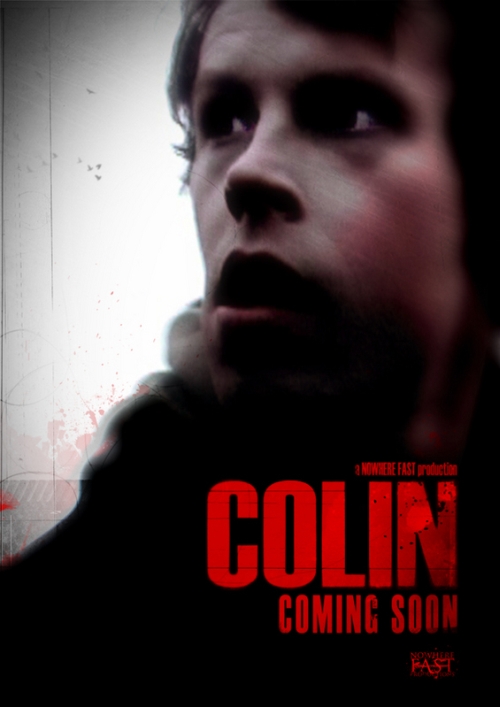
interview: Marc Price (2008)

When I watched Colin, the extraordinary debut feature by Marc Price, I knew that I had to find out more. Marc was kind enough to answer a few questions by e-mail in October 2008.


How closely does the finished version of Colin come to your original ideas/plans/hopes for the movie?
“It’s pretty much the film we set out to make. Instead of chasing a budget I decided to make the film without funding and never use money (or lack thereof) as an excuse not to have sequences like the house siege or street skirmish. I also didn’t want to make the mistake of throwing away bucket-loads of my own miniscule income so we put a lot of focus on delivering visceral action using the creativity and inventiveness of everyone involved.

“With actors like Alastair Kirton I had a lot of confidence that the characters would work. It was the end-of-the-world and action sequences that would need to be tackled in the right way.

“We never went into a scene involving special effects without knowing precisely how we were planning to shoot it. I had a pretty good idea about what we could achieve in-camera, in the edit or with sound design so there was still that sense of freedom to try things on the fly.

“One moment that didn’t work as written in the script was something planned for Colin’s first victim (played by Craig Russell). The initial idea was to position a low angle camera looking up to the roof of this tall building where we’d see Craig chased to a window ledge, fighting off a bunch of zombies. Deciding a speedy, high impact death is preferable to being eaten he jumps, lands in front of Colin but unfortunately survives the fall just long enough to experience Colin taking a bite out of his face... all in a single take!

“We got the bit where he landed to look pretty good but the rest of that stuff was never going to work unless we had an excellent CG guy (it would have been far too dangerous to have someone messing about on the brink of a tall building) so we had to let it go. I miss that we didn’t get it, but Colin’s first meal dropping in front of him still gets a wicked reaction.“


As there's virtually no dialogue, presumably you didn't have a conventional script - so what did you work from?
“The script was written as usual except this one relied a lot more on stage direction with only pockets of dialogue. It was important for at least Alastair to have a clear understanding of where the story was going so I needed a detailed structure with all nuances present for him to interpret. In retrospect, aside from Alastair I’m not entirely sure who would have wanted to read the full script!

“We certainly developed and added bits and pieces which is an amazing advantage if you’re editing the film whilst shooting it. I enjoy the process of working through a scene with the actors and I encouraged them to see the script as a reference point, not something writ in stone. For me it’s important to see an actor’s take on a scene and work from there to get to what I have in mind performance-wise. This was especially fun on the occasions where both Alastair and I had different ideas on how a scene should go. Rather than waste time arguing each other’s point it was efficient to shoot a take so Al could show me what he had in mind and he’d always trust me enough to push a performance in directions he may not have necessarily been comfortable with at first. Most of the time the end result (usually somewhere between my idea and his) was best.

“It’s good to have that variety. It helps to improve the film, when editing a scene, if you can find the one take where a line or glance is given particular focus and ultimately changes the whole dynamic of a sequence. It’s part of the fun when exploring and interpreting page to screen. That freedom comes from my insecurity as a writer, I guess.”


Where did you find your cast and crew and in particular how did you select your lead actor?
“The cast were either friends or friends of friends. We’ve got a good mix of professional actors and people who were just giving it a go. The idea was to put everyone at ease and not treat any one person differently to the other and what we ended up with was a very down to earth, relaxed set which brought out the best performances.

“With Alastair he was really my first choice. We’d worked together on a short film where we got along and I felt Alastair had the commitment required to make a zero budget movie about the end of the world. He’d also let me spit fake blood in his face, which I thought was pretty cool for a LAMDA trained actor!

“Alastair has a good sense of humour and an incredible amount of patience which is essential when making a film this small. I don’t think it would have been possible without a reliable friend playing Colin and I was incredibly lucky Alastair put so much faith in the project.”

How familiar were you with the zombie genre before you made this?
“I always worry that this is where I should select a few rare zombie classics to impress a few of the more hardcore zombie fans, but I can’t bring myself to do it. I hold Romero’s Dead movies closest to my heart. The majority of my zombie knowledge is from film and a few comic books.

“I’m attracted to the allegorical nature of the genre and I’m hoping there’s a lot for people to get out of Colin if they care to read into it. We looked into the sociological aspects of human behaviour and Steinbeck’s In Dubious Battle was a great model for analysing the loss of individuality once that individual is absorbed into a large group operating with a single-minded, sometimes brutal, determination.

“Obviously Bub is a big influence on Colin but we looked outside the zombie genre and more at babies or young children who have a sort of confused inquisitiveness. That seemed appropriate for the character. I also looked at King Kong (‘33, 2005 and even ‘76 which I quite like!) .I love the idea of an aggressive, dangerous character that can still hold an audience’s sympathy.

“We do reference a few of the Romero films, but that sort of thing has become a bit too commonplace in low budget zombie movies so we tried to keep it either extremely subtle or reference some of Romero’s non-zombie films. There’s a nod to The Crazies that I’m pretty happy about, I don’t know if anyone’s spotted it yet!”

The one thing that I didn't like, as per my review, was all the shaky handheld camera-work: why did you decide to use that stylistic technique?
“Early in the writing I felt the world, at its most simple, was split in two: zombie world and human world. I wanted a camera style that reflected those separate viewpoints. For the human characters the world is coming to an end. Humanity is overrun by something illogical and it’s happening so fast that we don’t have time to adapt or understand why, so I wanted handheld camera work to express that sense of panic.

“For the creatures there’s less urgency so the camera style was significantly calmer. As the story progresses I think these two viewpoints become more complex than ‘zombie bad/human good’. I wanted the camerawork to adapt with that progression to the point where it either dictates the dominant force in the sequence or reflects the most potent perspective.”

How has Colin been received by audiences and critics and what are the current plans for distribution?
“We’ve had a couple of screenings and so far it’s gone incredibly well. We were the opening film for Sci-Fi London’s Zombie All-Nighter and we picked up Special Jury Prize at the Revenant Festival in Seattle this month. We have had a small bit of interest from distributors, but nothing too exciting. I sent a large amount of screeners out so I guess they’re either still sitting on someone’s desk or have been thrown in the bin!

“The critical response has surprised me the most. It’s been much more positive than I’d expect for what is essentially another low-budget zombie movie. I think the worst crime a film can commit is to be disrespectful to its audience, to not take the subject matter seriously and to talk down to anyone who would give up time to watch the film. I genuinely want to have made a good, visceral, meaningful film that an audience can respond to in the same way as I would when watching a film like this.”

website: www.nowherefast.tv

Interview originally posted 24th October 2008

[Addendum: After this, everything went crazy when Colin was branded as 'the £45 zombie film'. So one year later, on the eve of its theatrical/DVD release, I interviewed Marc again.]

Saturday, 10 January 2015

interview: George Romero

This is the 800th post on my blog, so I've dug something special out of the archive. This is a phone interview that I did with the legendary George Romero in February 1997 to tie in with the VHS release of the 'Directors' Cut' of Dawn of the Dead. The interview ran in SFX but as always I had to edit it down to fit. This is the never-before-seen full transcript.


What's in the director's cut, why is it right now and not before?
"Complicated question. What is being released now is literally the first cut that we made, the first thing that we ever printed. And we did it to try to attract distribution. In other words, we did it basically completely independently. We shot the film, cut it, scored it. And Dario Argento at the time had the right to make his own cut on the picture; that was just part of the original deal. So he was off doing his cut and he was also going to go and record music from this group Goblin. And we were each of us allowed to choose. If I wanted to use the Goblin - great. If I didn't want to, I didn't have to. So we had three or four of the Goblin cuts, which is all that was recorded at the time, and I put three or four little cuts of it in this version and the rest of it in here is library stuff.

"Basically, what's on this version is everything that we thought was executed successfully enough to stand a chance of getting in the film. It was basically a cut that I felt was a little long here and there. Frankly, I've lost track. Even when we were doing the commentary I don't remember which of the scenes were cut out. It was mostly shaving: little bits here and there. They let us release the film here at, I don't know, about two hours seven minutes or something like that. I don't know what this runs. But it's mostly just little shaves here and there, and a few of the scenes, like one of the scenes when Fran and Stephen are having dinner, it's a little longer now. It's mostly like that. I think there were a few of the effects scenes that were particularly scrappy that we wound up taking out.

"There's nothing sensational in here - this isn't The Gorier Stuff because that was all in the original! At least, in the American version. I know in the UK there was some cutting or some censorship or whatever. We actually showed this to a couple of audiences, we rented a couple of theatres in New York and invited distributors to come and watch the screenings in an attempt to attract distributors. We put a little ad in the paper and said: 'We're going to show Dawn of the Dead, sequel to Night of the Living Dead.' We had packed houses both times and we just watched and decided what would make a better film. It was really just the process of editing it that brought it down.

"There were no requests by censors because United Film released it unrated here in the United States, so we didn't have to deal with that. And they didn't put any pressures on us, other than to say that they'd like it to be a little shorter. But really, to say that, I think this version plays a little long here and there. And it's mostly just 'take a breath out there', 'take this out here'. A lot of it is just that. There's nothing really new in this version that the gore fans are going to think 'W-o-o-ow!!!' So to that extent, I don't know whether it's going to disappoint or what. That's the difference."

Night of the Living Dead was very different to other 1960s horror films such as Hammer horror pictures. Were you dissatisfied with the gothic horrors of the time?
"Yes, I guess there was a real movement. It wasn't just us; it was Tobe Hooper and all those I Spit On Your Grave movies. There was a sort of subculture. And there were comic books and so forth that were going back to the more nitty-gritty, more EC kind of horror that's neither gothic nor sex-dependent nor spectacle or whatever else you want to call it. It's just the roots kind of horror. I don't want to say Twilight Zone but I don't know what exactly to relate it to in film or on TV. But yeah, we were just trying to do that. It was also all we could do within the confines of the budget. But we were perfectly happy with it because we thought it was going back to the roots somehow."


Did you expect NOTLD to be a big hit or just a small start in feature films?

"That's exactly what we thought. We thought it would be picked up and it would go out to neighbourhood theatres and drive-in theatres. There were probably hundreds of little horror films that were being made on a hundred grand, two hundred grand - even by the smaller studios out there - that were in the drive-ins every weekend here. That's what we thought. We thought: 'We'll make it for a hundred; we'll get back five ... and then we'll make five more!' That's really all we expected. Then all of a sudden people started to talk about it and write about it.

"Actually it went out and on that circuit it was pretty successful and it did return about $500,000. And that's the only money that it ever returned, because in its whole afterlife and so forth, people stopped reporting; we wound up in courts with them; there was a copyright dispute. It was just terrible - although from what I understand a very typical - young film-maker's experience. Getting knocked off, and all that. But atypical to the extent that it went out and it came back to life like the zombies. It had this incredible afterlife in France, and once that happened of course, people here had to start looking at it. And it was invited into the Museum of Modern Art and so forth. I'm sitting there going, 'My God!!!'


"I think it's a combination of circumstances. I don't think it's sterling film-making. We were just feeling our way and we were restricted so much budgetarily and so forth that I think it has a kind of naive integrity. And I think some of the choices: like a couple of weeks into the shooting when we started to raise money, we talked about reshooting what we'd already done and starting over in 16mm and going colour. Because everyone was saying, 'Wow! You really should do it in colour.' And we decided to stay with black and white. I grew up with black and white films. When I was growing up, in those impressionable years, even the news was in black and white. So black and white has always been a bit more realistic to me than colour! The most effective blood image I've ever seen is Marlon Brando's face in On The Waterfront when he gets beaten up. There's something about black and white that, to me, just plays more realistically. And I also just happen to love the monochromatic."

I understand that you had to use chocolate sauce as blood because the fake blood wouldn't photograph properly in black and white.
"Yes, we wound up using chocolate sauce."

It makes it a whole lot less scary when you know that. What did you think of all the dodgy European zombie films that followed?
"What do I think? I don't know. I guess I've largely ignored them. I didn't like the Return of the Living Dead films. Most of that stuff happened, I think, more after Dawn. The real glut came after Dario's version came out. I didn't pay a heck of a lot of attention to them. If there were a couple of good ones I'd love to check them out. But I just never really paid a lot of attention to it."


How did you first get to meet Argento?
"They approached us. I knew his work. Through a guy named Alfredo Cuomo - he's now a TV producer in Italy - who had picked up my film The Crazies for distribution in Italy. He contacted us about whether or not I wanted to make a sequel to Night because Dario Argento was a big fan and was interested in providing some of the finance. At the time I had just decided that it would probably be a good idea. Two things happened: we knew the people that owned this shopping mall and I was actually talking to them about financing the film. They were showing me around the mall and they actually had this survival space there which was equipped with civil defence stuff and all that. I just said, 'Wow! That would be perfect.'

"I had also just gotten the idea - gotten the conceit, I guess - that gee, it would be nice to do one of these things for every decade and try to reflect the attitude of the times. Instead of doing a direct sequel and having the same characters, just sort of continue to show what's happening in the world, while this phenomenon is going on. And try to give each one a different personality which might reflect the socio-political attitudes of the times."

Does that mean that you might return to the series?
"I'd love to do a '90s one, actually! I really would love to do it. the problem is making a deal. There are so many people now with fingers in the pie - ownership, rights, one thing or another - that it's really very hard to put a deal together. So I don't know that it's ever going to happen. I'd love to. I've expressed my desire and willingness to all the players. But everyone wants 51%!"

I understand Day of the Dead was planned to have whole battalions of zombies, but had to be scaled down. How much of your original idea made it in there?
"Many of the concepts and the ideas and the discussions in it are basically the same as in the bigger film. It's just really the circumstances that scaled it down and just used the underground city. The other thing, it was all above ground, there were living quarters for most of the humans, and compounds with electrical fences and so forth. And they were in fact farming the zombies and trying to train them and keep them outside the compounds. so it's really just the scale of it that changed more than anything else. We just weren't able to raise the money. It was budgeted at about $7 million. And we were told that if you want to leave it unrated, you can't spend more than three. So I just went and rewrote it."

How dangerous is it releasing unrated films in America? It's not something we have in the UK.
"It's not an option here either! I don't know. Until Dawn, the only stuff that was coming out unrated was like Richard Pryor concert films, stand-up films. And films that were totally benign. Dawn was maybe the first - but if not, one of the first - that tried to do it. At that time, it did well. It didn't really have an effect. Because people weren't quite as up in arms as they are now. Even when Day came out, it didn't work as well.

"Because by that time, you were so restricted as to what you could do - not just the film industry but theatre owners and the press and television. So you can't advertise. In other words, it's considered an X-rated film. There are all sorts of external constrictions on advertising and distribution and so forth and exhibition. So it's really kind of a death-blow. Unless something is so inexpensive and is going to have a long life, like Night of the Living Dead say, and can play little theatres here and there and make its money back, it's pretty tough."

How have the changes in exhibition affected the way you make films? Drive-ins have largely gone, but now you've got TV rights and video rights and so on.
"That hasn't really affected anything, because most of the companies that are putting up money - certainly advance money - for that kind of stuff, are basically owned by big companies, and it's tough! The outlets haven't provided the film-maker with any freedom. they've just provided the studio or the producing entity with some insurance. It's very weird, because for example if you make a deal with a company that has a video arm that releases the film on video: in your contract, as far as the percentages or the back-end that you're supposed to get from video, you don't get the flack.


"You're dealing with one company, and you say okay, you're supposed to get 25%. And even though it's the same company releasing the video, the film financing group only gets 20% back from the video arm of that company, so now you're only getting 25% of 20%! You're just getting knocked off, basically. I keep saying that if any company could see its way to giving film-makers a fair shake, everyone would flock to their door. it's really, really very hard unless you're a big star and they know they're going to want you again next time."

Have you seen much of the stuff being made by young directors nowadays?
"I've not seen much of it, no. I've been disappointed so many times that I've given up on it. I don't know. There was a whole phase with Band, when there was Re-Animator and there was some good little things coming out there. I don't know; maybe some of that stuff is happening again on video. A guy named Bob Schnell - I saw a couple of films which he did which I thought were very nice."

Do you think something like NOTLD could get made nowadays?
"I'd say so, yes. We went back to Cannes last Spring for the first time in eight years, my wife and I and some other people that we're working with. I'm back in touch with some of the guys like Ben Barenholtz and people who are interested in doing little independent stuff. because I'd love to get back into it. I'm so frustrated with the Hollywood system. I've been in development for ... five years! Literally we're going into the sixth year of development on one project and it's just driving me nuts! So I'm thinking, within the genre I could become the genre's version of John Sayles. Which is: make my money writing and go out and make little films."

What is this thing that's been stuck in development hell?
"It's a ghost story that we've been trying to get made for years. It's been at MGM, now it's at Fox. And it's just at that budget level where they think it's star-dependent. So okay, you need to attract stars, so you have to rewrite for so-and-so. Or we have to rewrite so that we can attract someone. All the stuff that you read about in those little This is Hollywood books - really happens! Those meetings really happen. And then of course it's months between phases because you submit a draft, and everybody's too busy to respond. the producer on this film is Chris Columbus - we lost him for about six months because he was making Jingle All the Way!

"So you just get tired of spinning your wheel. I've got 14 screenplays and haven't shot a frame of film, except for a little thing that I did down in Florida - at a film school! Just very very frustrating. But thank God I get the gigs. You get the job to write it and by the time you've finished and have a draft that everybody likes, there's a whole new management team at the studio that doesn't like it! It's just unbelievable. If you're not on the A-list, particularly now with this blockbuster mentality. I think that's the thing. It's not only that there aren't small distributors any more, there's almost no such thing as a small film. That's why everyone is going to video; because if you make an $8 million film at a studio, they/re not going to care about it. They're not going to put it on the main release schedule, you're not going to get the good dates because they have those reserved for Independence Day or Twister or whatever else is coming up next. That's all anyone cares about out there. The twenty-or-so bankable stars are involved in those twenty projects, and everything else is the evening trade."

I saw you recently in a TV show about David Cronenberg. What are your thoughts about the 'moral panic' that films like Crash generate? Does it worry you?
"Er ... Yes. But it worries me more sociologically than it does in a career sense. It worries me more as a phenomenon. It's just like we're going back to racism, we're going back to militarism, we're turning into rednecks over here, man! So it worries me that way. It's just disheartening. But in a career sense, luckily I'm at this point where studios will continue to hire me. The stuff that I'm doing - anything that a studio hires you to do is not going to be on that borderline anyway. I have a couple of independent things that I've written that are on that edge. We're trying to get some finance. I don't know; I think we'll probably do it with a combination of European financing and independent financing. I'm not particularly worried that way."


You've done a couple of films based on works by Stephen King. What's he like as a subject to deal with?
"I used to think he was the greatest yarn-spinner in the world but that there was enough logic in his work that it was forgivable. It's very hard for me to talk about it because he's a good friend. But I think that he might be getting a bit self-indulgent. I shouldn't say that, actually. One night we had a combination and Steve said, 'How frustrating it is. I could sit down and I could pore over something and I could write it well. But I'll never get it published if I put it out under any name except mine. Really, I'm paid to write excrement!' I think he has many many underlying frustrations over the fact that he's become Stephen King the Phenom. As a result I think he winds up throwing some pies in the readers faces."

Somebody reckons you've got the rights to do a film version of The Stand.
"No, that's not true. They made that for television. But we did. It was my ex-partner Steve Rubinstein who made the TV series. When Steve and I first met, Stephen gave me, the very first night we met we were talking about Salem's Lot. Warner Brothers sent me up to Maine to talk to him because they wanted me to make Salem's Lot. Typical studio response: they saw Martin at Sundance and said, 'Gee! Vampires in a small town! This guy would be good for Salem's Lot.' So we did that dance for a while and the studio then decided that they weren't going to do it. They were going to let it go for television - that was the safest financial approach to take.


"But in the course of it they sent me up to Maine. My wife and I went up and we hung out with Steve. But then when we left he gave me a copy of The Stand and said, 'Let's make this movie some day.' He wrote that in there. And so years later we wound up getting together with Steve on a couple of other projects. And he did give us the rights. And he wrote a screenplay and I worked on it with him, and it was all very friendly. Except that at that time, Steve didn't want to go TV with it, which would have given him more running time. He also didn't want to soften it for television. He didn't want to trade off, to soften it for running time. He said he would rather do a film. He wanted to do a three-hour film.

"His script was geared as a three-hour script, it wasn't in any way softened. It was just very, very hard - heck no, it was impossible to get financing and it never happened. So then years later they decided to do it for TV. But I don't have the rights to any King material now. My partner still does. He keeps on cranking them out; he did Thinner. He just did a little film, a privately financed thing called Night Flier. Steve is now remaking The Shining. He's producing it himself - I guess he really didn't like that movie!"

Are there any books you would like to film?
"I've seen a couple. I always look into the rights, and they're either gone - one of them was The Relic. I went after that and they'd already been bought. Usually by the time that I see the stuff, there's either a prepublication deal or whatever. But I've seen a few things. There's a book called Earth Abides."

By George RR Martin.
"Yes. Those rights are gone, but I was actually talking to the producers. But I don't think I'll get it - I don't think I'll get the job. Every time I see something that takes my fancy I'll try to go after it. But the good stuff usually gets grabbed up before I ever get to see it."

As a director/screenwriter, do you prefer original work or adaptations?
"I prefer originals. I wrote the screenplay for Creepshow 2 which was an adaptation of Steve's. Which was hard for me because of the friendship and because of not wanting to step on anybody's ideas. Then I adapted a novel called Monkey Shines which was also tough because I get a little too
worried about: 'Well, what's this guy going to think? Whose is this anyway? Do I have the right to change it this radically?'"

Why did you feel the need to do an anthology TV series? What did Tales from the Darkside have that The Twilight Zone didn't?
"I don't know that it wasn't done. I mean, Twilight Zone was quite a while ago, and I thought that the reincarnations of it never worked. I didn't even think that Night Gallery worked very well. Outer Limits and Twilight Zone I guess are my faves, the original versions. At the time, everybody that was doing it was doing it without real affection. Amazing Stories I thought was just a blunder from top to bottom."

It wasn't amazing and it had no stories in it.
"And loving the genre, we were just approached by a group who said, 'What about if you did a TV series?' And I said, 'Hey, sure.' I liked it too, I thought it was very well-intentioned. I was not involved at all in production. My partner Richard at the time was leaning more towards television, and I thought if it's in syndication and if we have a considerable amount of freedom, which we wound up getting contractually, it would be fun to do this. Initially, we had a wonderful story editor called Tom Allen, who used to be a writer for The Voice, who unfortunately passed away. I think that the first batch of shows was the best and it went downhill from there.

"I wrote the pilot, and I think I wrote three or four of the other episodes, which was really fun. It was like short story writing. A couple of them were actually based on stories that were bought, but a couple of them were originals. I was able to take a couple of ideas that I had that I couldn't figure out how to make them weighty enough for a feature, and was able to bang them out and have fun with them. To me, that's what it was. And I think Tom and the production team and a couple of the young directors in the early couple of seasons, really did a human job with it. Basically it was Tom Allen that kept the stories on track and really had a story focus. I liked that. So it was fun. I feel pretty good about most of the Darkside."

Was Tales from the Dark Side: The Movie just stories that were left over from the TV series?
"I don't even know, frankly. The one that I wrote? Um, yes! Again, it was very frustrating for me. I should say that there's an underside to this. I wound up really angry over the way they decided to produce this. I wanted to do it in Pittsburgh, try to really just do a classier job with the whole thing. That's why I ended up not being at all involved in the production of it. By the time the second year came along, I was pretty frustrated with it. I didn't want the movie to happen; I was obligated to do it under my contract with the company. I'll say again: you never mind sitting and writing something - it's always like stroking yourself! That part of it's fine, but I wound up being unhappy with the whole situation. Not with the show. I really think that particularly the first twenty, or whatever that first batch was, were pretty good."

Was that series, like Creepshow, influenced by your interest in EC comics?
"I guess, yeah. I guess everything was. I just think that had we had a little more wherewithal - Tales from the Darkside came out and hit with Tales from the Crypt; that had the clout and a little more class - that we might have been more successful with it. And the same thing with Creepshow. Had they spent the extra 500 grand or whatever, and had we got one of the better artists instead of Jack Kamen, little frustrations like that."

Which of your movies are you completely happy with?
"The only one that I'm almost completely happy with is Martin. The only thing that bothers me is that there was a longer cut and I wanted it released in black and white. Unfortunately I made the typical mistake of believing the distributor when he said" 'You know what? What does it hurt to shoot a colour negative? And we can print in black and white and rebuild it with contrasts.' So we went ahead and did that. We had originally printed it in black and white and had a print of a cut that I thought was just much, much better. So I'm just slightly frustrated with it. Understand this was 275 grand and I think that the entire cast and crew combined numbered about 15 or 16 people. Yet, we were able to make, because everybody was pulling in the same direction, we really were pursuing the same goal. And it's the only film that I think I was able to make 85% of the shots that I actually wanted to make. That never happened again. So I really think the best sequence I've ever done is the sequence where he comes after a housewife and finds her with a guy and chases her round the house. It's the only sequence that I think really came out the way I had it in my head, the way I had it boarded, completely."

Why do things differ in production from the storyboards? Do you get a better idea, or are you constrained by time or money?
"All of the above! Wait a minute, you forgot: 'Here's the scene where Steve comes out of a door and I need him in the foreground of this shot. Oh shit, I didn't know he was here. I didn't bring his jacket. Well, can we wait ten minutes? No, we can't.' If you can imagine all the pieces that have to fall into place to make a shot, unless you're doing it like Martin and everything says: 'Well let's shoot something else instead.' Plus all the actors are there. 'Hey, let's do your shots instead.' And no-one cares, and you don't have call sheets.


"You never get that flexibility back until you're up at a hundred million bucks and you're James Cameron and you can say, 'Okay, if we can't do the shot now we'll do it next week.' That's really it. It's extraordinary that things even come out close. And the only times that they do is either on very small films or very very big films."

And you're trapped in the middle at the moment?
"Um, yes!"
Thursday, 8 January 2015

The Apostate: Call of the Revenant

Director: Andy Dodd
Writer: Andy Dodd
Producers: Andy Dodd, Phoenix Laine
Cast: James Bryhan, Terri Dwyer, Anthony Webster
Country: UK
Year of release: 2015
Reviewed from: online screener

An apostate is someone who renounces a particular religion or faith. There have been a number of films called The Aspostate including a Dennis Hopper picture from 2000 and a Russian sci-fi feature from 1987 (and an episode of Casualty). A revenant is anyone who returns from the dead (or a long absence). Richard Elfman directed a rather fun vampire picture called Revenant, starring Rod Steiger, Casper Van Dien, Udo Kier and Craig Ferguson, which I saw at Fantasporto in 1998 (although by the time it was released some idiot distributor had retitled it Modern Vampires).

One might assume that a film called The Apostate: Call of the Revenant was some sort of cheesy and/or pretentious religious horror flick - but one would be wrong. This actually turns out to be a powerful, disturbing, thoughtful and thought-provoking study of psychopathic behaviour. It’s not absolutely perfect, but it’s a belter of a film and definitely worth seeking out once it gets a proper release.

At the core of The Apostate are a brace of terrific performances: murder suspect Lance Cooper (James Bryhan: Lead Me to the Dark) and Detective Inspector Holly Andrews (Loose Women chatter Terri Dwyer, formerly of Hollyoaks and a local gal from just up the road in Syston), questioning Cooper in a featureless police station room. The film cuts between this interrogation and the events of four weeks previously when Cooper found himself, suffering memory loss, covered in blood and with a serious wound to one leg, trapped inside a small bathroom. For the first half of the film, we watch Cooper try desperately to escape and, when he finally does, try to make sense of his location and the other dead/dying people he finds there.

It’s a cracking, almost wordless solo performance from Bryhan who convinces utterly as the amnesiac victim of some brutal attacker. And if there are occasions when the viewer puzzles over choices not made – why doesn’t he use the metal pole he finds to help him hobble about? – these are excused by firstly the man’s confused, terrified state and secondly the revelations of the film’s second half.

We also cut to a couple of scenes which predate the incident. In one he searches for, and finds the body of, his young daughter. In the other, he is visited at home by an enigmatic figure with long hair and a broad-brimmed hat who describes himself as a ‘revenant’.

What we find in the second half, after a very nasty incident at about 44 minutes which forces us to rethink all that has gone before, is that Cooper is an unreliable narrator. And this is the film’s strength. Even after the credits roll, we are still unsure how much of what we saw was what actually happened, how much was what Cooper thinks happened, and how much was what Cooper told DI Andrews happened. To say more would be to spoil a film which while certainly not 'enjoyable' in any way, is nevertheless compelling and gripping and ultimately satisfying in its open-endedness.

Actually, if I have one criticism it's that a little more open-endedness would have been beneficient. The film wraps with a series of captions about each of the various characters which, honestly, aren't needed. This isn't Animal House. Let us debate who did what and why. (Also, being ultra-picky, I felt some of the text in these captions wasn't great, nor did I like the font.) That said, there is a final twist that works very well indeed.

And if I have one other criticism, it's back up at the start of the film. Yes, it's adroitly directed and Bryhan's performance is magnificent, but the story takes a lo-o-ong time to get going. What is covered in 40 minutes would work better in 30, making the shock the end of act one instead of the mid-point of act two.

But these are not deal-breakers, not major problems. They don't detract from the impact of the film. Bear in mind that I don't like violent horror movies so it's rare that I would watch something like this (I was kind of suckered in by the title...). To my surprise The Apostate proved to be a well-crafted film that more than repaid the time I spent watching, and indeed the time afterwards as I was left mulling over in my head precisely what had happened. That's the sort of effect that a good horror movie should create in its audience.

Also in the cast are Carol Cummings (who was in The Wrong Floor with me!), Bob Sanderson, Hannah Smart, Ella Childs (as the daughter), Anthony Webster (who was a beggar in The Hollow Crown) as the Revenant, and director-writer-DP-editor Andy Dodd. Alison McCabe (The Hunt for Gollum, Tales of the Supernatural) provided the excellent make-up.

The Apostate: Call of the Revenant had a premiere screening at the Telford Odeon in September 2014 but as of writing remains unreleased.

MJS rating: B+

Monday, 5 January 2015

interview: Ben Woodiwiss

This short email interview with Ben Woodiwiss was conducted in December 2014.


How did you hitch up with Simon Aitken on Blood + Roses, and how pleased are you with the film?
"I’ve known Simon for so long now that I might be remembering the details wrong, but I think we met when he was looking for a screenwriter back in… 2005 or 2006? Possibly earlier. He was looking to get a short film off the ground and we ended up working together on what would become The Monologue Triptych (2007). It was on the set of that when Simon told me that he was looking to do a feature, and asked if I would like to write it. We actually went through two completely different scripts before arriving at Blood + Roses, with a whole bunch of rewrites and honing, both set in a rural backdrop, but finally Simon went with project number 3 (Blood + Roses).

"I’m very pleased with Blood + Roses, I think it’s kind of interesting how everything for me has developed along a really identifiable path since The Monologue Triptych. I never would have expected this, as I honestly believed that I’d end up as a very different type of filmmaker. But I’ve kind of grown along this path of restrictive, rule-bound cinema. I like how exploratory Blood + Roses is along the lines of the female character being both the hero, and the victim, as well as the monster of the film. I feel like that’s something that Benny Loves Killing also covers, but in a different way, and it’s heartening for me to see a set of obsessions so strongly in place at this early stage of my career."


Benny Loves Killing clearly isn’t a horror film per se, but it seems to have a psychological horror sensibility. To what extent would you agree with that?
"100%. It became quite clear to me that although as a screenwriter I work in a number of genres, when working as a writer/director I became extremely uncomfortable about the idea of working within genre parameters. But I love cinema, and horror, so where does that take you? Well, it seems like it’s taken me to a place where I’m looking at what happens when horror starts to bleed into someone’s life. And I’m not talking about axe murderers on your way to work, I’m talking about a sneakier, more insidious bleeding of film conventions into the real world. So, to give one example, Benny starts to build herself up as both the murderous brunette and the innocent blonde: both of whom are hallmarks of horror, but it’s done in a way which is very much set in a cinematic real world, rather than something which is built on conventions.

"So, yeah, the horror conventions are there, but in a really underplayed sense. On top of that, the whole film is shot through with a palpable sense of paranoia and grime, as though the entire film were a projection of Benny’s warped mind; a mind warped, arguably, by the world of horror. So in that way, you could say that the entire film is the product of horror psychology sensibilities. I’d like to point out that I don’t think my mind has been warped by horror."


How did you find your lead actress?
"We put ads out on two web services, Mandy and another one (I forget), and held open auditions for a week. Pauline Cousty, our lead, turned up to the second day of auditions I believe, and it was a fascinating experience for me. I knew that the whole film hung on the actress playing Benny, and that this had to be someone with some serious chops, and when I saw Pauline’s resume, headshot, and reel I thought, ‘nope’, but when she walked in through the door to audition I thought, ‘Oh, it’s Benny’. It really cemented for me the fact that you absolutely, 100% cannot judge an actor based on headshots and showreels alone. You need them to be standing in front of you.

"A genuine hush came over the room when Pauline ran through the scenes. She’d clearly done a lot of work in reading between the lines of who the character was, she had multiple questions for us, and was just very clearly the best person for the role. We did have a small name ready to go with the lead, but in the end we decided that it was better to go with someone unknown and outstanding, than slightly famous and competent. From that point on I never regretted anything. Pauline was a real force in the film, willing to do all the horrible things we asked her to do: we froze her, deprived her of sleep, wouldn’t let her wash for weeks, kept her continually smoking and ingesting powdered sugar up her nose, and she came back at all of this with a smile and enthusiasm. There are very few people who can do that."


How has BLK been received so far by audiences and critics?
"This might sound disingenuous, but I‘ve been very surprised at how well it’s been received. The whole point of Benny Loves Killing is that it’s something that gets under your skin and nests there. It restricts what you can see, and dripfeeds you information in a way that it requires a viewer to really do some thinking about what they’re watching. So we expected it to be something of a slow burn, and that was true to a point. It certainly seemed to be the case in festivals, where often the prizes go to something crowd-pleasing or feel-good. BLK is neither of those things: it’s antagonistic, and thought-provoking, and it absolutely, positively does not want you to feel comfortable throughout.

"Initially I thought people were going to misunderstand the film when the reviews started coming in, but by and large that really hasn’t happened. People from all sorts of backgrounds seems to enjoy the film, and all of them have very personal interpretations of what is going on which work really well for me: horror fans and arthouse fans both respond well, which is something we kind of expected (although not completely, it’s always worth being prepared for surprises), but then all sorts of other film fans seem to get on board with it too. It’s been extremely heartening for me to see that the Look/Think Films team (which is a very small group of people) can go out and do something deeply difficult and personal, and people will get on board, and rise to the challenge the experience offers. It’s given me a lot of faith in people."


What are you working on next?
"At the moment I’m in post on a new short film, Look at Me Now. It’s my first foray into shooting with RAW, so that’s been interesting. It’s also a dialogue free piece. I’m a very big fan of silent cinema, and I wanted to do something that told a story without any expositional dialogue at all. Additionally, BLK has very much introduced me to the fact that I want to work on films which are in themselves an experience: something for the audience to go all the way through, rather than just being a story to tell, or a puzzle to unlock. Look at Me Now is a film about things which are universal: the body, pain, health, dying, etc. It’s a film about what it means to look back and forward at different points in your life when things were better or worse. We all do that. And hopefully it’ll be something that can mean something very, very personal indeed to everyone who sees it, but I’m also hoping that they’ll see different things inside both the film and themselves. I’m very excited to see how that film impacts on people."

Finally, what were you experiences working for Troma?
"Troma was an absolutely fantastic experience, one that I have pretty much nothing negative to say about. The great thing about Troma is that there is no nepotism there whatsoever: if you work hard, and well, then you do bigger and better things. If you slack off, then you’ll spend the rest of your time there photocopying papers or guarding a van. I worked hard, and got to work on casting, sound and camera as a result.

"It was the '90s. I got to be a key member of the crew on a 35mm feature film, shooting in upstate New York, and meeting a fantastic array of people from the genuine fringes of alternative entertainment. I spent one day looking after Taylor Mead, and for a Warhol nut like me, that’s like hanging out with <insert your hero here>. How can there be anything negative in any of this? I think I may have been something of a novelty factor for them: the English guy. But they all treated me in an extremely friendly way. Before going over there I read Lloyd’s books, and he exhibited a strong interest in Taoist philosophy regarding filmmaking, which was something I’d already got quite into. The Tao Te Ching seems to me to be the bible for independent filmmakers: understanding something like ‘the water in the stream flows around the rock, it does not attempt to flow through it’ might sound like common sense, but these are strong ideas when you’re trying to do something which is for all intents and purposes impossible. These are concepts which I genuinely believe will make someone a better filmmaker.

"Here’s a nice example of that in action: there’s a scene in Citizen Toxie where Toxie, Sarah and the gang are trying to think of a way to travel from the Amortville dimension to the Tromaville dimension. Lloyd was trying to think of ideas and my then girlfriend (who wasn’t part of the crew) came up with the idea of the whole cast posing in the position of The Thinker (the Rodin sculpture). Lloyd loved it, shot it, and it’s in the final cut of the film. That’s independent filmmaking for you right there. That’s flowing around the rock, not through it. Beautiful stuff."

website: cargocollective.com/lookthinkfilms

Thursday, 1 January 2015

A Date with Ghosts

Director: Jason MJ Brown
Writer: Jason MJ Brown
Producer: Jason MJ Brown
Cast: Jason MJ Brown, Sadie Kime, Deborah Carlin
Country: UK
Year of release: 2015
Reviewed from: screener
Website: Facebook page

What the heck did I just watch? A Date with Ghosts is so random, so inconsistent, so sparse in its narrative and characterisation, that it approaches a sort of transcendental abstractness. Throughout the film I had no idea who any of the characters were, where they were, what they were trying to do, how and why they were trying to do it, what was preventing them from achieving their goals, or even what time of day it was.

To call the film’s attitude to the passage of day and night ‘cavalier’ would be mild. Scenes which are apparently meant to be consecutive switch almost at random between bright daylight, pitch darkness and evening shade. Partly this stems from hopelessly over-ambitious attempts to shoot some stuff day-for-night (a technique which always looks rubbish, even when done by experienced professionals) but a lot of the day/night confusion seems to simply be a devil-may-care approach by director-writer-producer-editor-cinematographer Jason MJ Brown. A similarly reckless abandon characterises such relatively minor dichotomies as summer/winter and woodland which switches casually between deciduous and coniferous.

While I can’t say what A Date with Ghosts is actually about, I can say with some certainty what it’s not about, and that’s the brief synopsis used on Facebook, Amazon etc: “A group of friends descend upon an abandoned monastery looking for a good time - only to find that once they are inside, they have been trapped by unknown, paranormal forces and soon become hunted by a army [sic] of undead monks who have a taste for fresh human souls. Now, the group must harness the mysterious forces of the monastery to escape the clutches of the centuries-old spirits.”

There’s no group of friends, no-one is looking for a good time, and the ‘abandoned monastery’, referred to in the film as an 'abbey', is played by a variety of buildings inside and out including a ruin with English Heritage information boards on the wall and at least two quite attractive functioning churches (one stone, one wooden) which are clearly in regular use. The one thing that the synopsis does get right is the ‘undead monks’ as there are a number of ghostly beings shuffling around in some very creased habits, occasionally wielding a nasty-looking sword.

A young man and a young woman feature in the early scenes, which involve the rescue of another young woman from the abbey. Who are these people? Beats me. Not only do we never learn anything at all about any character in this film, in fact some of them never even reveal their names. The boyfriend is ‘Lee’ but I have no idea what the girls are called. On the IMDB, the characters are just credited as ‘Lead guy’ (played by JMJB himself) and ‘Lead girl’.

About 27 minutes into this 73 minute film, we are suddenly presented with a caption that says ‘Part 2’ and a diary entry from someone saying they are unable to ‘eascape’ [sic] from the monks. This plunges us into the tale of another young couple, a brother and sister whose names we never learn, hiding from the monks inside a cave. This has been lit with a selection of ornamental candles which we must assume these two were carrying with them when they visited the abbey/monastery/church. Maybe they had just been to Homebase. After a bit, they meet up with one of the girls from the first story.

Quite what is happening throughout the film is a mystery as we’re never given any hint of an actual plot beyond a throw-away line of dialogue about somebody or something trying to open a portal to Hell. There’s a lot of running around, and spooky shots of the ghost-monks (who seem to have variable levels of corporeality) and of course the constant distraction of location and time seeming to change on a whim.

The cast are credited with the (generally very poor) camera-work and this is very evident in the massive variability of the images, which also reflects the sporadic shooting schedule which ran for two years (2010-2012, at various locations around Nottinghamshire). To be fair, the sound recording and mix is pretty good, apart from disappearing completely in a few non-dialogue shots. Parts of the film are in black and white which I presume was deliberate but I don't know why.

I have no doubt that Jason Brown knew what he wanted to do when he set out to make A Date with Ghosts but what comes across is a group of people basically making things up as they go along, riffing on the vague idea of ‘ghost monks terrify young people in old abbey’. There is also a considerable amount of padding at the start. A prologue has a girl (possibly the one later rescued) creeping around outside a church before being grabbed by someone/thing. Then after some titles (probably the best part of the whole film) we watch the unnamed girlfriend drying her hair and applying make-up. And getting into her car. And driving down the high street…

In a park, she holds her phone up high to try and get a signal, then gets through to ‘Lee’ but says “the line is bad” so she’ll “come back” to him. I don’t know much about mobile phones but surely you can either get a signal or not. And how is she coming back to him when she hasn’t been with him since applying her lippy. We’re eight minutes in, more than ten per cent of the film, and basically nothing has happened yet.

Next thing we know Lee is in the car with her, telling her he saw an injured girl (was that the prologue?), so she goes to a phone box because her mobile isn’t working (to call the Police, I think). She is adamant that they must go back to see if the other girl is okay, but Lee is frightened so she assures him they don’t need to go back to exactly where he was before. WTF? Either you’re going back to help the girl or you’re not. It was at this point that I realised there was no help to be had in the sparse, possibly improvised dialogue. A Date with Ghosts was clearly shot without a proper script and I’m afraid that’s very obvious throughout. Yes, this is a debut feature shot for tuppence ha’penny but that’s not a reason or excuse to not have a story or characters, and doesn’t justify the constant inconsistencies visible on screen.

All the above notwithstanding, the film was picked up by Wild Eye Releasing and is scheduled for a US release in January 2015. So all credit to Jason for putting together a feature-length movie and finding a distributor. This is far from the worst film I've reviewed on this site and it is at least a sincere attempt at horror, not some cynical lampoon of the genre, for which I will give it considerable props. But... I would be lying if I said that A Date with Ghosts is either technically competent or narratively coherent.

Brown’s previous shorts were Dead Girl Walking (incorporated into the feature-length online anthology Creep Tales: The Movie) and City of Decay, and he has followed Date with a second horror feature, Dark Vale.

A final curious point to note: the sleeve image, which is not from this film, also crops up on Freakshow Cinema, a 12-picture box set from Mill Creek Entertainment (including BHR entries Idol of Evil, Tales of the Dead and Tuck Bushman and the Legend of Piddledown Dale) although I don’t think it’s from any of the films in that collection either.

MJS rating: C