In June 2017, Warren Dudley kindly answered some questions about his film Cage.
What are the practical pros and cons of shooting a film with one actor on one set?
"I have to say the best thing about working in one location and with one actor on screen is that you can shoot the whole movie in order. You NEVER get to do this usually. It makes telling the story so much easier because you can see it happening right in front of you. The downside I suppose is that you can all get a bit stir crazy after ten 12-hour days in a damp warehouse with just a cage in it - so you need to really get on with your crew... this was put to the test a few times!"
I’m assuming you wrote this with Lucy-Jane Quinlan in mind. What did she bring to the role and the film?
"I worked with Lucy on The Cutting Room and thought she was massively talented... and almost as importantly a right laugh. I didn’t audition anyone else for the role which probably goes against all the rules a bit but it just seemed right. Luckily for me her performance was incredible. To bring so much emotion to the part whilst also pulling off an immaculate US accent is quite an achievement. In short - Lucy-Jane Quinlan should be famous and it confuses me as to why she isn’t yet."
What did you learn on The Cutting Room that you were able to use when making Cage?
"Write to your budget. The budgets on both films were similar (about £20K) but with TCR we had multiple locations and a big cast so it gets spread a bit thin. Saying that I am still really proud of it – it still gets some nice reviews around the internet. With Cage I wanted to put all the money on screen. So between Lucas (DOP), Lucy, the talented crew and myself I think we succeeded in making something that looks like it has a bigger budget.
"One Amazon viewer, attempting to be rude, said – ‘If this is all that Hollywood can come up with we’re in trouble’... I took this as a massive compliment! Little did they know it was shot in rainy Newhaven in an old warehouse."
There are two endings on the DVD. Why did you decide on the ending you chose? (I will spoiler-protect your answer!)
"Lucas and I talked and debated for hours on which ending to use and went with the one we did just because we both felt the film may lose some of its impact if you suddenly introduced lots of other characters at the end. I think of all the people who have mentioned the endings it’s about 50/50 so I still don’t know if I made the right decision!"
What aspect of the film are you most proud of? What would you change if you could?
"I like to think that it stands up as a legitimate piece of film-making and not a well-meaning low budget effort. The twist at the start of the third act is something I am pleased with but has really split the audience – some thinking it’s a stroke of genius others informing me that it’s incredibly offensive... often in not such polite terms. I think it’s the former obviously!
"What would I change? I think if I could I would have gone for a metal cage. Once again, we toyed with it for ages but decided that the wood would be so much more beautiful on film... and it is. A lot of people (yourself included) have mentioned that she could have tried to escape with a bit more vigour so in hindsight I would have added a couple of scenes early on with Gracie attacking the cage..."
What are you working on now?
"I wrote a screenplay called The Bromley Boys which was made last year and stars Alan Davies and Martine McCutcheon. It’s about a young lad in the early '70s who supports the world’s worst football team. I’ve seen the film and it’s amazing – I really hope the footballing public agrees. I think they are hoping for a cinema release late in the year... very exciting.
"Personally, my next one will be another low budget horror called Prankz starring Betsy-Blue English – a film about a pair of YouTube pranksters who get in to all sorts of horror film trouble. We start filming in late August."
website: www.sixty6media.co.uk
Showing posts with label director. Show all posts
Showing posts with label director. Show all posts
Thursday, 29 June 2017

Sunday, 14 May 2017
interview: Mark J Howard
I reviewed Mark J Howard's debut feature Lock In, a tale of corporate coulrophobia, in 2014. Three years later, the film was released on DVD on both sides of the Atlantic as Clown Kill, so I took the opportunity to ask Mark for an interview and he provided these great, detailed answers.
What was the original inspiration for Lock In? How well do you think you achieved what you set out to do?
"We’d been renting a huge business suite in a modern office block at the foot of Pendle Hill (home of the infamous Pendle Witches in the 17th Century), to serve as production office and edit booths while we were working on a series of TV ads and other advertising films, and it was a bit creepy at night, to say the least. Pipes would expand and contract, floors creaked, dodgy electrics made the lights flicker and go out and the regular winds barrelling down Pendle Hill would howl around the corners of the building, which kind of puts you on edge when you’re in the building on your own. When you’ve been working at the office for 48 hours straight to meet a deadline, your mind doesn’t always think straight. Then, on the way out, the lift got stuck, and I hate lifts, almost as much as I dislike clowns, so the seeds were already starting to grow.
"The story developed over the next few months as we workshopped ideas with the already-cast actors. I think we achieved our goal by introducing a creepy new clown, and I was happy with the comedic chemistry with the security guards, but we dropped a major bollock and didn’t notice until we were in the edit. In the original script the clown breaks the fourth wall as he regularly addresses the audience between kills, which makes more sense once you’ve seen the end scene and know where the character of Jenny is at, but in the edit it suddenly looked like we were trying to rip off Funny Man, and not doing it very well. So, at the last minute I brought in my long-term collaborator, actor and comedian Peter Slater, we sat down at the editor and chopped things away, reduced or removed all of Charlie Boy’s one-liners and pieces to camera, heavily toned down Jenny’s drunken pub attack scene, and added more security guards stuff for balance. The end result is one huge compromise.
 "During filming one of the leads had serious personal issues going on, and she became difficult to nail down, so that brought a whole slew of new problems that had to be addressed during the shoot. We’d only budgeted for a 21 day shoot, and we managed to shoot it in exactly 21 days, but it was one nightmare after another. I’m happy with the finished film, but if luck and circumstance had been on our side on the day, it could have been so much better."
What aspect of the film do you think works best, and what aspect would you change if you could?
"The personality clashes between shop-steward Gobby Karen and John the Boss are my favourite performances in the film, Rachel was an absolute revelation, her sense of timing is better than any comedian I’ve ever worked with. She hit every beat, delivered every time, and that’s something I’ve never encountered before. If I could change anything I’d have found a way to reinstate some of the excised clown footage, Roy’s amazing in the role, and some of my favourite scenes are the ones we had to cut out. That’s usually the way though."
How did you assemble your cast, and what effect has Jessica Cunningham’s subsequent reality TV career had on awareness of your film?
"Apart from Rachel (who plays Gobby Karen) and Holly (Sally), the script was written personally for the actual actors who starred in the film. Rachel and Holly were late additions to the repertory company I’ve been building over the last 20 years; so I knew who would be playing what character as I wrote the script. We’d just come off a series of TV commercials with Jessica, and I’d had a big public row with her in a Costa, and I knew I’d found my feisty office worker that day.
"Two hours after Jessica was confirmed as an Apprentice contestant, my phone went absolutely crazy, as the press bombarded me with questions. All of the major tabloids had found out about her 'clown rape' past and wanted to know more. It was actually my very significant birthday that day and I was pissed up. My wife banned me from speaking to the press in case I got carried away or said something I might later regret, so I had to let Roy (Basnett) do the talking, and as a result we got some great sensationalist headlines in the national tabloids. I imagine some of her fans might be curious enough about the film to watch it, but other than that I doubt her rapid rise up the greasy celebrity pole would benefit the film.
"She’s been really busy these last few months with her fashion brand and new-found fame, so we haven’t managed to catch up on things, but before she hit the limelight we had a chat and she did agree to do the sequel. We had two huge fans of Jessica, who are also top-flight footballers from a famous northern club, make an offer to finance a sequel under the Enterprise Investment Scheme, but a week later the Inland Revenue started cracking down on footballers investing in fake films to offset their taxes, and they got cold feet. Got a great script out of it, though, featuring Charlie Boy’s Undead Army of Clowns. If this first film is well received, and if there’s a market there, the sequel might just happen."
What are your favourite slashers and/or clown horror movies?
"I was never a fan of the Halloween films (though I’m a big fan of the third one), but I loved the first couple of Friday the 13th’s. I abandoned that franchise when I went to see Part 3 in 3D on its initial release, and the projectionist got the lens assembly on wrong and completely ruined the presentation. Huge fan of European slashers, especially love Stage Fright and Amsterdamned, but don’t watch clown films. Like I say, clowns and lifts, not my bag. I don’t think I was abused by a clown as a child, but I think something must have happened to fuel my unease about them. The new adaptation of It looks fun, though, but Tim Curry’s a hard act to follow."
What have you been working on since finishing Lock In?
"Adverts and pop promos have been the bread and butter that keeps the wolf at bay, We’ve shot a big zombie film set in Liverpool, about a terrorist attack on Ellesmere Port petro-chemical plant, just at the moment they are destroying an experimental battlefield biological weapon developed by the Russians and seized in Syria. The resulting gas cloud threatens an extinction-level event as it slowly creeps across the UK in real time, turning the victims into blood-crazed zombies. The film is called Undead Air and will hopefully be ready by the end of the year. It’s quite heavy on visual fx, but I’ve a great team doing some amazing work.
"At the moment we’re just prepping our new docu-drama American Psychopath – the Ripper of Whitechapel, which is a period piece bringing a post-modern, fresh perspective on the Jack the Ripper case. We’re shooting this in 4K and Super 16, with the murders being covered by raw and grainy Super 8 on my trusty old Beaulieu, filming begins second week of May for three weeks. Because we’re still having to work on promo films for clients, our more narrative films tend to take forever to complete, but we’ve a delivery deadline for the Ripper film so it’s all hands on deck. Both films will feature the same cast and crew, with a few additions, that made Lock In."
Finally, can you tell me a bit about the super 8 films you used to make with Tony Luke?
"I miss Tony so much, and it doesn’t feel like fifteen months since we lost him. We got to know each other in the very early '80s. We were the same age, both at secondary school, both making animated super 8 monster movies, and we both contributed to Junior Filmworld, a magazine/newsletter for wannabe junior super 8 Spielbergs. Tony lived in the North East and I lived in Manchester, so hundreds of miles apart, but he used to ring regularly and we’d post our only prints of our latest films to evaluate each others work. We’d swap ideas, script notes, designs and special fx techniques we’d discovered, and generally encourage each other.
 "He found a supplier in the States who could provide T rex latex skins, all ready for you to insert an armature into, and he was off. His films always had more pazzaz than mine, my always came back with the note 'Sorry, your splices didn’t go through the projector too well'. Tony was my first animation collaborator, albeit long-distance, and somewhere I’ve got a box of photos of his animation creations, including his first Satannus puppet. I need to find it and pass it on to his sister Fran for the archive.
"When we premiered Lock In I spoke to Tony, he asked me if I’d be interested in directing a project he had in mind. I was busy, I said if he could postpone a few months I’d be able to discuss it further and commit. It never happened. A few months later Tony started with his back and neck pain, and he had to focus on getting better. I was sure he’d beat it again, he was a real fighter. It’s a weird thing when someone you’ve known since you were kids dies, makes you put things into perspective. Facebook hasn’t been the same since he left."
website: www.clownkill.com
What was the original inspiration for Lock In? How well do you think you achieved what you set out to do?
"We’d been renting a huge business suite in a modern office block at the foot of Pendle Hill (home of the infamous Pendle Witches in the 17th Century), to serve as production office and edit booths while we were working on a series of TV ads and other advertising films, and it was a bit creepy at night, to say the least. Pipes would expand and contract, floors creaked, dodgy electrics made the lights flicker and go out and the regular winds barrelling down Pendle Hill would howl around the corners of the building, which kind of puts you on edge when you’re in the building on your own. When you’ve been working at the office for 48 hours straight to meet a deadline, your mind doesn’t always think straight. Then, on the way out, the lift got stuck, and I hate lifts, almost as much as I dislike clowns, so the seeds were already starting to grow.
"The story developed over the next few months as we workshopped ideas with the already-cast actors. I think we achieved our goal by introducing a creepy new clown, and I was happy with the comedic chemistry with the security guards, but we dropped a major bollock and didn’t notice until we were in the edit. In the original script the clown breaks the fourth wall as he regularly addresses the audience between kills, which makes more sense once you’ve seen the end scene and know where the character of Jenny is at, but in the edit it suddenly looked like we were trying to rip off Funny Man, and not doing it very well. So, at the last minute I brought in my long-term collaborator, actor and comedian Peter Slater, we sat down at the editor and chopped things away, reduced or removed all of Charlie Boy’s one-liners and pieces to camera, heavily toned down Jenny’s drunken pub attack scene, and added more security guards stuff for balance. The end result is one huge compromise.

What aspect of the film do you think works best, and what aspect would you change if you could?
"The personality clashes between shop-steward Gobby Karen and John the Boss are my favourite performances in the film, Rachel was an absolute revelation, her sense of timing is better than any comedian I’ve ever worked with. She hit every beat, delivered every time, and that’s something I’ve never encountered before. If I could change anything I’d have found a way to reinstate some of the excised clown footage, Roy’s amazing in the role, and some of my favourite scenes are the ones we had to cut out. That’s usually the way though."
How did you assemble your cast, and what effect has Jessica Cunningham’s subsequent reality TV career had on awareness of your film?
"Apart from Rachel (who plays Gobby Karen) and Holly (Sally), the script was written personally for the actual actors who starred in the film. Rachel and Holly were late additions to the repertory company I’ve been building over the last 20 years; so I knew who would be playing what character as I wrote the script. We’d just come off a series of TV commercials with Jessica, and I’d had a big public row with her in a Costa, and I knew I’d found my feisty office worker that day.
"Two hours after Jessica was confirmed as an Apprentice contestant, my phone went absolutely crazy, as the press bombarded me with questions. All of the major tabloids had found out about her 'clown rape' past and wanted to know more. It was actually my very significant birthday that day and I was pissed up. My wife banned me from speaking to the press in case I got carried away or said something I might later regret, so I had to let Roy (Basnett) do the talking, and as a result we got some great sensationalist headlines in the national tabloids. I imagine some of her fans might be curious enough about the film to watch it, but other than that I doubt her rapid rise up the greasy celebrity pole would benefit the film.
"She’s been really busy these last few months with her fashion brand and new-found fame, so we haven’t managed to catch up on things, but before she hit the limelight we had a chat and she did agree to do the sequel. We had two huge fans of Jessica, who are also top-flight footballers from a famous northern club, make an offer to finance a sequel under the Enterprise Investment Scheme, but a week later the Inland Revenue started cracking down on footballers investing in fake films to offset their taxes, and they got cold feet. Got a great script out of it, though, featuring Charlie Boy’s Undead Army of Clowns. If this first film is well received, and if there’s a market there, the sequel might just happen."
What are your favourite slashers and/or clown horror movies?
"I was never a fan of the Halloween films (though I’m a big fan of the third one), but I loved the first couple of Friday the 13th’s. I abandoned that franchise when I went to see Part 3 in 3D on its initial release, and the projectionist got the lens assembly on wrong and completely ruined the presentation. Huge fan of European slashers, especially love Stage Fright and Amsterdamned, but don’t watch clown films. Like I say, clowns and lifts, not my bag. I don’t think I was abused by a clown as a child, but I think something must have happened to fuel my unease about them. The new adaptation of It looks fun, though, but Tim Curry’s a hard act to follow."
What have you been working on since finishing Lock In?
"Adverts and pop promos have been the bread and butter that keeps the wolf at bay, We’ve shot a big zombie film set in Liverpool, about a terrorist attack on Ellesmere Port petro-chemical plant, just at the moment they are destroying an experimental battlefield biological weapon developed by the Russians and seized in Syria. The resulting gas cloud threatens an extinction-level event as it slowly creeps across the UK in real time, turning the victims into blood-crazed zombies. The film is called Undead Air and will hopefully be ready by the end of the year. It’s quite heavy on visual fx, but I’ve a great team doing some amazing work.
"At the moment we’re just prepping our new docu-drama American Psychopath – the Ripper of Whitechapel, which is a period piece bringing a post-modern, fresh perspective on the Jack the Ripper case. We’re shooting this in 4K and Super 16, with the murders being covered by raw and grainy Super 8 on my trusty old Beaulieu, filming begins second week of May for three weeks. Because we’re still having to work on promo films for clients, our more narrative films tend to take forever to complete, but we’ve a delivery deadline for the Ripper film so it’s all hands on deck. Both films will feature the same cast and crew, with a few additions, that made Lock In."
Finally, can you tell me a bit about the super 8 films you used to make with Tony Luke?
"I miss Tony so much, and it doesn’t feel like fifteen months since we lost him. We got to know each other in the very early '80s. We were the same age, both at secondary school, both making animated super 8 monster movies, and we both contributed to Junior Filmworld, a magazine/newsletter for wannabe junior super 8 Spielbergs. Tony lived in the North East and I lived in Manchester, so hundreds of miles apart, but he used to ring regularly and we’d post our only prints of our latest films to evaluate each others work. We’d swap ideas, script notes, designs and special fx techniques we’d discovered, and generally encourage each other.

"When we premiered Lock In I spoke to Tony, he asked me if I’d be interested in directing a project he had in mind. I was busy, I said if he could postpone a few months I’d be able to discuss it further and commit. It never happened. A few months later Tony started with his back and neck pain, and he had to focus on getting better. I was sure he’d beat it again, he was a real fighter. It’s a weird thing when someone you’ve known since you were kids dies, makes you put things into perspective. Facebook hasn’t been the same since he left."
website: www.clownkill.com
Monday, 13 March 2017
interview: Grant McPhee
After I reviewed arty Scottish vampire chiller Night Kaleidoscope, director/producer Grant McPhee very kindly answered a few questions by email.
In what way do you consider Night Kaleidoscope to be ‘punk rock cinema’?
"It's more an attitude. We took the 'don't need permission' and DIY approach from punk, rather than the spikey haired three-chord version. And I think that's an attitude that every indie filmmaker should take. Just get out there and do it.
"Additionally, it was a pretty rocky production. I had fantastic production support. I like controlled chaos, so there is always a strong semblance of structure - just with an ability to improvise within that. Unfortunately everything that could go wrong went wrong and it became very much an adapt-to-survive approach. All very seat of your pants. There was no script as such. I was shooting a feature for a friend that finished on the Saturday, we filmed on the Monday and I went onto another feature the following Monday. Just picking up a camera and making it up - which you can tell in a fair few places! It's more an attitude of production - as the film is really a bit prog rock! You can achieve special things working this way, but it does not always work out and what you gain in places you lose in others."
 Why has it taken three years to be released?
“Due to the shear amount of other work I had on, the film just sat on the shelf. I just had no time to look at it, or even think about it until I could squeeze in one day in 2015 for a pickup. My day job was taking about 15 hours a day and I had a documentary to finish - we had a TV and large festival slot for that but had not actually finished the film, so every second was taken up. A few days without sleep.
"Without knowing what we had in the can we managed another pickup at the end of 2016, for what we assumed was needed. It was edited fairly sporadically from mid 2016 as our editor had to work on it in between jobs. This was the first time we really saw it, and realised we needed an extra couple of scenes. Again it went a bit 'fly by the seat of your pants' and I ended up covering my hotel room in tinfoil, getting Patrick, Jason and Kitty around and throwing blood all over the place. Not sure what the other guests made of that, but we had no complaints. So, although it was started a long time ago it was only put together very quickly towards the end.
"There was actually very little post production work done. Nearly all the images were made in camera. I just held a couple of pieces of glass at angles in front of the camera. One with food dye on it and the other to reflect or project images onto it. The only real bit of post was a shot of eyes turning white."
How satisfied are you with the way that the film turned out?
“In some respects it's amazing there is a film there. But really nobody outside of your friends or other filmmakers care how little time a film took to make, or how small the budget was. Films only stand on how good they are.
"The film is what I wanted to make; in that respect I'm happy. Overall I just wanted to try something different whether it was a failure or not. Some of it worked and some, well not as much. Mainly not having a story! I think you're certainly right about the repetition, though I was very keen on a visual art film with poetic flourishes. I just maybe put a bit too many in! But I'd rather have a film that got one star where we'd tried something that was different than three stars for something that's like every other film.
"I just have no interest to try and copy anyone, a style or a current genre. And if that means some people hate a film, I'm fine with that! I can see where the flaws are, but that's also something I'm happy with. it's a bit more human. People these days are not allowed to make mistakes and learn. Things are too neat and shiny. Rough edges can be good. I'm most satisfied with what I've learned. That's the way to progress. I'm not afraid of failure, what you learn from it is important to your next movie."
What exactly is a ‘Digital Imaging Technician’?
"Ha, a Digital Imaging Technician - also known as a DIT is a geeky guy who sits next to a DoP at a monitor and manipulates the image to suit the DP's intended look."
What is Tartan Features?
"Tartan Features is part of Year Zero Filmmaking. It's a bit like an indie record label where a collective of film-makers make micro budget feature films that share a certain vision. We've made about 13 so far - it's open to anyone in the world. It just happens to have started in Scotland but you don't have to be from there. We've had a few good successes. One film allowed the director to go on to have a well-funded next feature. At its heart it's just people who get up from their seats and make a film, help grow an industry and learn. Here's a link (click on the pictures for more info on each film) - www.yearzerofilmmaking.com/tartanfeatures"
What’s next for you?
"I'm a week away from shooting a new feature. This time something very different It has a story for starters. People do and say things without 15 minutes of trippy visuals (only five). We're taking two weeks to make it, the budget is more, we're paying everyone. We've got a great cast, script and crew, and I'm very excited. It's a little like Blood on Satan's Claw, Picnic at Hanging Rock and less Night Kaleidoscope. You'll definitely know it's one of my films though. I'll tell you all about it soon!"
In what way do you consider Night Kaleidoscope to be ‘punk rock cinema’?
"It's more an attitude. We took the 'don't need permission' and DIY approach from punk, rather than the spikey haired three-chord version. And I think that's an attitude that every indie filmmaker should take. Just get out there and do it.
"Additionally, it was a pretty rocky production. I had fantastic production support. I like controlled chaos, so there is always a strong semblance of structure - just with an ability to improvise within that. Unfortunately everything that could go wrong went wrong and it became very much an adapt-to-survive approach. All very seat of your pants. There was no script as such. I was shooting a feature for a friend that finished on the Saturday, we filmed on the Monday and I went onto another feature the following Monday. Just picking up a camera and making it up - which you can tell in a fair few places! It's more an attitude of production - as the film is really a bit prog rock! You can achieve special things working this way, but it does not always work out and what you gain in places you lose in others."

“Due to the shear amount of other work I had on, the film just sat on the shelf. I just had no time to look at it, or even think about it until I could squeeze in one day in 2015 for a pickup. My day job was taking about 15 hours a day and I had a documentary to finish - we had a TV and large festival slot for that but had not actually finished the film, so every second was taken up. A few days without sleep.
"Without knowing what we had in the can we managed another pickup at the end of 2016, for what we assumed was needed. It was edited fairly sporadically from mid 2016 as our editor had to work on it in between jobs. This was the first time we really saw it, and realised we needed an extra couple of scenes. Again it went a bit 'fly by the seat of your pants' and I ended up covering my hotel room in tinfoil, getting Patrick, Jason and Kitty around and throwing blood all over the place. Not sure what the other guests made of that, but we had no complaints. So, although it was started a long time ago it was only put together very quickly towards the end.
"There was actually very little post production work done. Nearly all the images were made in camera. I just held a couple of pieces of glass at angles in front of the camera. One with food dye on it and the other to reflect or project images onto it. The only real bit of post was a shot of eyes turning white."
How satisfied are you with the way that the film turned out?
“In some respects it's amazing there is a film there. But really nobody outside of your friends or other filmmakers care how little time a film took to make, or how small the budget was. Films only stand on how good they are.
"The film is what I wanted to make; in that respect I'm happy. Overall I just wanted to try something different whether it was a failure or not. Some of it worked and some, well not as much. Mainly not having a story! I think you're certainly right about the repetition, though I was very keen on a visual art film with poetic flourishes. I just maybe put a bit too many in! But I'd rather have a film that got one star where we'd tried something that was different than three stars for something that's like every other film.
"I just have no interest to try and copy anyone, a style or a current genre. And if that means some people hate a film, I'm fine with that! I can see where the flaws are, but that's also something I'm happy with. it's a bit more human. People these days are not allowed to make mistakes and learn. Things are too neat and shiny. Rough edges can be good. I'm most satisfied with what I've learned. That's the way to progress. I'm not afraid of failure, what you learn from it is important to your next movie."
What exactly is a ‘Digital Imaging Technician’?
"Ha, a Digital Imaging Technician - also known as a DIT is a geeky guy who sits next to a DoP at a monitor and manipulates the image to suit the DP's intended look."
What is Tartan Features?
"Tartan Features is part of Year Zero Filmmaking. It's a bit like an indie record label where a collective of film-makers make micro budget feature films that share a certain vision. We've made about 13 so far - it's open to anyone in the world. It just happens to have started in Scotland but you don't have to be from there. We've had a few good successes. One film allowed the director to go on to have a well-funded next feature. At its heart it's just people who get up from their seats and make a film, help grow an industry and learn. Here's a link (click on the pictures for more info on each film) - www.yearzerofilmmaking.com/tartanfeatures"
What’s next for you?
"I'm a week away from shooting a new feature. This time something very different It has a story for starters. People do and say things without 15 minutes of trippy visuals (only five). We're taking two weeks to make it, the budget is more, we're paying everyone. We've got a great cast, script and crew, and I'm very excited. It's a little like Blood on Satan's Claw, Picnic at Hanging Rock and less Night Kaleidoscope. You'll definitely know it's one of my films though. I'll tell you all about it soon!"
Thursday, 9 March 2017
interview: Joe Dante
In January I posted four questions to 100 Big Names to celebrate my website's 15th anniversary. A few weeks later, I received these answers by email from the always awesome Joe Dante..
Which technological or social development during your career has changed cinema the most?
"The movie business I got into in 1975 was completely different from the one we have now. We don't shoot on film anymore for the most part, and we don't even project on film apart from a few venues in big cities. Theatrical movies now tend toward expensive spectacles and tentpoles, with the mid-range movies of the previous era moving to cable. And socially, the majority of films are no longer seen in theaters which means the vital connection between film and the communal experience has been lost."
Which deceased film-maker or actor do you wish you could have worked with?
"Orson Welles."
What is the one question you’re fed up with answering in interviews?
"When are you going to make Gremlins 3?"
What would you rather be asked instead?
"Why doesn't Criterion put out The Second Civil War?"
Which technological or social development during your career has changed cinema the most?
"The movie business I got into in 1975 was completely different from the one we have now. We don't shoot on film anymore for the most part, and we don't even project on film apart from a few venues in big cities. Theatrical movies now tend toward expensive spectacles and tentpoles, with the mid-range movies of the previous era moving to cable. And socially, the majority of films are no longer seen in theaters which means the vital connection between film and the communal experience has been lost."
Which deceased film-maker or actor do you wish you could have worked with?
"Orson Welles."
What is the one question you’re fed up with answering in interviews?
"When are you going to make Gremlins 3?"
What would you rather be asked instead?
"Why doesn't Criterion put out The Second Civil War?"
Monday, 30 January 2017
interview: AD Calvo
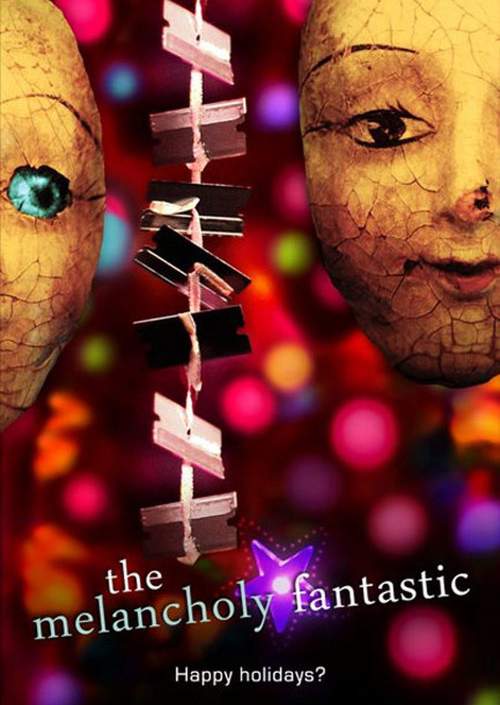
AD Calvo (aka Alejandro Daniel) directed thought-provoking small-town gothic character study Doll in the Dark (aka The Melancholy Fantastic). After I reviewed the film in January 2017 (released, in its second incarnation, by Safecracker Pictures), Alejandro kindly agreed to a short email interview.
What was your original intention when you made The Melancholy Fantastic and how well do you think the film achieved that?
"I set out to make a micro-budget gothic Christmas tale (as my sophomore feature), a psychological horror film that featured a strong female lead. I wanted it to be a film that would be full of beautiful cinematography, rich production design, but whose real strength would come from its performances. I feel the film achieved that on some levels, but the first cut was a stillbirth, and was never really seen under its original title. There were elements that weren't working. It gave me time to contemplate the film and find moments that I felt weren't helping the narrative and goals of my original concept.
"Emotionally I was inspired by Kierkegaard's rather cryptic Sickness Unto Death in which he states how we can become romantically attached to our suffering. The story grew out of that melancholy fantastic passage; a girl, unwilling to let go of her painful past, who instead creates a romantic imaginary world of her own."
How did you select your two lead actors?
"I wrote the story for Amy Crowdis, she hadn't really made any films up until then. She was a stand-in on my first feature (The Other Side of the Tracks) and I immediately felt the camera strongly gravitating to her. She was natural and carefree in front of the camera, and became a muse of sorts for my writing. I wrote another script for her first, a very dark and trippy adaptation of Snow White (long before the wave of dark fairytales, e.g. Snow White and the Huntsman, Blancanieves). My Snow White script turned out to be a bit too weird and more difficult to produce at a micro budget.
 "Robin Lord Taylor was very different from how I originally envisioned the character of Dukken - originally I saw him as a more stereotypical goth with dark hair and all (not unlike Penguin, I guess). Robin's audition was so unique and fresh and he made a bunch of different choices so he became the clear favorite for me and my casting director."
Why did you re-edit The Melancholy Fantastic into Doll in the Dark?
"As I said above, time gave me the ability to see it with fresh eyes, and the flaws that seeped into my first cut - I think this answered to me why the film struggled with festival programmers. I wanted to fix it. I felt there was something unique and special in the story and I wanted it to be seen. It was like a child of mine that had never left the house. I makes me really sad to think of that. I had lots of Gotham fans reaching out to me, wanting to see the movie. So in many ways, they gave me the energy to dust it off and finally get it out there. I feel lucky Safecracker believed in it as well."
What are the principal differences between the two versions?
"I made about 300 edits to the film, both in picture and sound. I'd say narratively, the biggest difference is in silencing much of the expositional (and philosophical) dialogue that was in the first cut. That and quieting down the doll, so that we only heard her whispers. In the first cut the doll spoke way too much and that was taking me out of the narrative and killing the sinister undertone. To be fair, we had little to no money when cutting the original version. I worked with an assistant editor who had never cut a feature on her own. Technically, she was very proficient but the film needed another set of fresh eyes and I didn't have them back then."
How do you feel your Argentinian background influences your films?
"There's a strong tendency towards spiritual magical realism in Latino culture, so I'd say mainly in that way."
What can you tell me about your latest movie Sweet, Sweet Lonely Girl?
"In many ways, Sweet, Sweet Lonely Girl (website here) is the sister to this film. I revisited the idea of a sad and lonely girl in a great big house. I tried to amplify the gothic horror/romance frequencies that I'm finding resonate the most in my writing. But I'm only seeing those with the passage of time."
website: www.goodnightfilm.com
What was your original intention when you made The Melancholy Fantastic and how well do you think the film achieved that?
"I set out to make a micro-budget gothic Christmas tale (as my sophomore feature), a psychological horror film that featured a strong female lead. I wanted it to be a film that would be full of beautiful cinematography, rich production design, but whose real strength would come from its performances. I feel the film achieved that on some levels, but the first cut was a stillbirth, and was never really seen under its original title. There were elements that weren't working. It gave me time to contemplate the film and find moments that I felt weren't helping the narrative and goals of my original concept.
"Emotionally I was inspired by Kierkegaard's rather cryptic Sickness Unto Death in which he states how we can become romantically attached to our suffering. The story grew out of that melancholy fantastic passage; a girl, unwilling to let go of her painful past, who instead creates a romantic imaginary world of her own."
How did you select your two lead actors?
"I wrote the story for Amy Crowdis, she hadn't really made any films up until then. She was a stand-in on my first feature (The Other Side of the Tracks) and I immediately felt the camera strongly gravitating to her. She was natural and carefree in front of the camera, and became a muse of sorts for my writing. I wrote another script for her first, a very dark and trippy adaptation of Snow White (long before the wave of dark fairytales, e.g. Snow White and the Huntsman, Blancanieves). My Snow White script turned out to be a bit too weird and more difficult to produce at a micro budget.
 "Robin Lord Taylor was very different from how I originally envisioned the character of Dukken - originally I saw him as a more stereotypical goth with dark hair and all (not unlike Penguin, I guess). Robin's audition was so unique and fresh and he made a bunch of different choices so he became the clear favorite for me and my casting director."
Why did you re-edit The Melancholy Fantastic into Doll in the Dark?
"As I said above, time gave me the ability to see it with fresh eyes, and the flaws that seeped into my first cut - I think this answered to me why the film struggled with festival programmers. I wanted to fix it. I felt there was something unique and special in the story and I wanted it to be seen. It was like a child of mine that had never left the house. I makes me really sad to think of that. I had lots of Gotham fans reaching out to me, wanting to see the movie. So in many ways, they gave me the energy to dust it off and finally get it out there. I feel lucky Safecracker believed in it as well."
What are the principal differences between the two versions?
"I made about 300 edits to the film, both in picture and sound. I'd say narratively, the biggest difference is in silencing much of the expositional (and philosophical) dialogue that was in the first cut. That and quieting down the doll, so that we only heard her whispers. In the first cut the doll spoke way too much and that was taking me out of the narrative and killing the sinister undertone. To be fair, we had little to no money when cutting the original version. I worked with an assistant editor who had never cut a feature on her own. Technically, she was very proficient but the film needed another set of fresh eyes and I didn't have them back then."
How do you feel your Argentinian background influences your films?
"There's a strong tendency towards spiritual magical realism in Latino culture, so I'd say mainly in that way."
What can you tell me about your latest movie Sweet, Sweet Lonely Girl?
"In many ways, Sweet, Sweet Lonely Girl (website here) is the sister to this film. I revisited the idea of a sad and lonely girl in a great big house. I tried to amplify the gothic horror/romance frequencies that I'm finding resonate the most in my writing. But I'm only seeing those with the passage of time."
website: www.goodnightfilm.com
Saturday, 24 September 2016
interview: Terry Jones
I'm not sure of the exact date of this interview, but it was done as part of my research for Hitchhiker: A Biography of Douglas Adams, so probably around 2002. Terry Jones very kindly allowed me to email him some questions about his memories of Douglas and returned these fascinating insights. I feel very lucky to have interviewed 33% of the Pythons - see also my Terry Gilliam interview.
When/how did you first meet Douglas?
“I first saw him on stage doing some sketches in a Cambridge Revue that had been up in Edinburgh. I thought the sketch was funnier than Douglas's performance but I remembered him because of his size. He then started writing with Graham and started coming to Python rehearsals and read-throughs during the last series in 1974-5 (or whenever it was). Douglas and I started going off to drink real ale together and became good friends.”
How would you describe Douglas' working relationship with Graham Chapman?
“Well I don't really know - I didn't really see them working together. But I owe it to Graham for bringing Douglas along otherwise I wouldn't have become a friend.”
Did you ever see/read any of Douglas' material for Footlights or the Adams-Smith-Adams revues?
“Yes. The first time I ever saw Douglas he was performing as sketch about (I think) a meeting of the Paranoid Society.”
During Douglas' 'wilderness years' between leaving Cambridge and the success of Hitchhiker, how much did you stay in touch? And did you discuss any possible collaborations?
“I can't remember talking about collaborating, but he and I used to drink quite a lot of beer together and Douglas was a regular dinner party guest down here in Camberwell.”
What was Douglas' ambition in those days, and what was his confidence like?
“Good question - not sure I’ve got an answer though. He seemed reasonably confident. But as far as I can remember (which isn’t very much - probably owing to the beer) we tended to talk about life in general and beer and that rather than careers. He seemed to enjoy working for Doctor Who and the radio stuff he was doing.”
What was your initial reaction on hearing about the idea of Hitchhiker, and on hearing the show itself?
“Well, one day Douglas asked me and Mike along to hear a radio show he'd just finished. So Mike and I went along to Broadcasting House and sat in a room while Douglas and his producer played The Hitchhiker’s Guide to the Galaxy. This was some time before it went out. I can remember we listened to about three shows and then couldn't really cope with any more. It was a bit too intense with Douglas and his producer watching our every move and waiting for us to laugh. I think I was a little critical of some of the performances. I know Mike and I both thought it was pretty funny - but we had absolutely no idea that it would become as successful as it did.”
You were one of the very first people ever cited as possible director of the Hitchhiker movie (ref. 1981 interview: "Then the whole thing reopened when Terry Jones said he'd like to think about making a film of Hitchhiker. But in the end Terry and I said, 'It'd be nice to do a film together, but let's just start from scratch and not make a Hitchhiker'."). What sort of discussions did you have with Douglas about the Hitchhiker movie, in those early days and over the ensuing years?
“Well, I think we hit on the basic problem of making a film out of Hitchhiker. That is that Arthur Dent doesn't really have much character and there really isn't a lot of character-development in the story. In fact there really isn't a story in terms of a ninety minute film. It's a wonderful wander through space with lots of interesting and funny and thought-provoking things happening – but not narrative exactly. No beginning middle and end - which I know I shouldn't be interested in as a Python, but they sort of count when it comes to ninety minutes in a cinema.”
How did you come to collaborate with Douglas on 'A Christmas Fairly Story' for the Comic Relief book? (And why has this never been reprinted?)
“I don’t know why it's never been reprinted. I think I wrote something and then Douglas improved on it - but I can't remember much about it.”
When I interviewed Douglas in June 1997 he had the idea of making the Hitchhiker film in IMAX, but only using parts of the screen to show normal sized figures, etc. Shortly afterwards, you used this idea in the short film you made for the London IMAX screen. Did the two of you discuss this at all or was it just coincidence?
“Ah - coincidence I think. This is the first I've heard of Douglas's IMAX thoughts.”
In all the 150 or so interviews with Douglas that I have on file, I can't find a single reference to Graham Chapman's passing. Douglas talked about working with Graham, but never even alluded to the tragic early death of his mentor. Can you recall how Graham's death affected Douglas, or offer any clues as to why he never mentioned it?
“No, I can't remember seeing Douglas around the time of Graham's death. Graham was a strange absent sort of figure. He was a lovely man but there was always a feeling that he wasn't really there. When we were filming you always felt Graham's spirit was somewhere else. For a some of the years his spirit was in the spirit (gin) and maybe that's where his soul was too. But when he came out of that he still seemed to be elsewhere much of the time. When I read some of the stuff in A Liar's Autobiography that he wrote about filming the Grail, for example, it seemed to me that Graham really hadn't understood what was going on at all - or how the films or the TV shows got made.”
 How did the success of Hitchhiker affect Douglas?
“I remember Douglas arriving late at a dinner party down here in Camberwell and saying how sorry he was but he'd been at his first book-signing - it was for the paperback of Hitchhiker and he'd signed a thousand books! He looked absolutely stunned. I think it was the first time he had any real indication of just how popular he was going to become. The worst effect success had on him was that it seemed to make it more and more difficult for him to write. He'd always had problems with writing, but the more they paid him up front, the less he felt he could possibly justify what they'd paid him.”
What about his burgeoning interest in computers?
“This did indeed become an obsession - I remember him showing me his first Apple - and it was almost as if we'd lost Douglas. He'd become a convert - a zealot - and somehow everything was related to the possibilities of the computer.”
Do you recall when he was researching and writing Last Chance to See?
“He loved doing that. He always said it was his best book and also the thing he'd mostenjoyed making.”
Douglas' legendary parties - what were they like?
“They got too grand for me. I enjoyed being with Douglas most when we used to go off for a beer together in the early days. There was a sense in which Douglas seemed to get stuck in star-worship. He seemed to become very impressed with the incredibly famous people he'd got to know - and that was a little disappointing, since it somehow diminished himself. When Douglas was narrating a Bill Gates party or whatever it was as if he'd lost himself amongst the stars. Odd really for the author of a Guide to the Galaxy.”
 What memories do you have of your Starship Titanic US signing tour with Douglas? (Is there any truth in the legend that the British edition was delayed because the publishers couldn't catch up with you to get the corrected proof back?)
“That might be true - rings a bell. I'd agreed to do the signing tour because I really hadn't had the chance to spend time with Douglas for - I don't know - ten or fifteen years. It was like returning to the early days of our friendship. We'd forgotten how well we got on together and what fun we had. I don’t think we stopped talking for the duration of the tour and we never ran out of subjects for discussion. It was a magic time and one of my very best recollections of Douglas.”
What was the Starship Titanic film treatment like on which you based your novel? Did you ever see the earlier (rejected) novel by Robert Sheckley?
“The treatment was about twenty pages. It had all the characters - or at least all the character names, and it had most of the plot. It was one of the most fun things I’ve ever had to write. Douglas asked me if I'd do it because he owed Simon & Schuster a book and they were going to publish the Robert Sheckley version with Douglas' name on it if he didn't come up with an alternative by 5th June. I'd read the treatment and made some comments on it – and Douglas rang up and asked if I'd be prepared to write the book. Well, there were then five weeks before 5th June. I loved the idea of just stopping everything else I was doing and concentrating on that. It was great fun to do because as far as I was concerned all the really hard work had been done. Douglas had the whole structure and world and ideas there - all I had to do was fill it in. It's like you imagine writing but like writing never is. Every time I got stuck I just had to refer back to the treatment and off I’d go again. In the end I finished it in three weeks. Douglas said well this is perfect - we must do more - he liked writing the outlines and I liked writing the details.”
Did you and Douglas have any plans for collaboration beyond Starship Titanic?
“So yes, there was some talk of doing more books. But I think the initial negative responses to the book put a damper on the idea. I personally blame the publishers. I think it was a stupid idea to call it ‘Douglas Adams's Starship Titanic a novel by Terry Jones.’ They were so anxious to push it as a Douglas Adams book that some of his fans felt they’d been cheated. If they simply put ‘Starship Titanic by Douglas Adams and Terry Jones’ there wouldn't have been the problem."
Finally, I have been told by someone else researching Douglas' life that John Cleese politely declined to be interviewed, saying he didn't really know Douglas that well. Which is odd, given that they worked together several times (Video Arts, Doctor Who, Starship Titanic). Can you offer me any insight into why John might feel this way?
“John I think didn’t have any opinion about Douglas - I suspect he never read the books - maybe he even didn’t like Douglas filling the vacant place he’d left working with Graham - I’ve only just thought of that and have no idea if it's true. Probably not, because John was very relieved not to be working with Graham.”
When/how did you first meet Douglas?
“I first saw him on stage doing some sketches in a Cambridge Revue that had been up in Edinburgh. I thought the sketch was funnier than Douglas's performance but I remembered him because of his size. He then started writing with Graham and started coming to Python rehearsals and read-throughs during the last series in 1974-5 (or whenever it was). Douglas and I started going off to drink real ale together and became good friends.”
How would you describe Douglas' working relationship with Graham Chapman?
“Well I don't really know - I didn't really see them working together. But I owe it to Graham for bringing Douglas along otherwise I wouldn't have become a friend.”
Did you ever see/read any of Douglas' material for Footlights or the Adams-Smith-Adams revues?
“Yes. The first time I ever saw Douglas he was performing as sketch about (I think) a meeting of the Paranoid Society.”
During Douglas' 'wilderness years' between leaving Cambridge and the success of Hitchhiker, how much did you stay in touch? And did you discuss any possible collaborations?
“I can't remember talking about collaborating, but he and I used to drink quite a lot of beer together and Douglas was a regular dinner party guest down here in Camberwell.”
What was Douglas' ambition in those days, and what was his confidence like?
“Good question - not sure I’ve got an answer though. He seemed reasonably confident. But as far as I can remember (which isn’t very much - probably owing to the beer) we tended to talk about life in general and beer and that rather than careers. He seemed to enjoy working for Doctor Who and the radio stuff he was doing.”
What was your initial reaction on hearing about the idea of Hitchhiker, and on hearing the show itself?
“Well, one day Douglas asked me and Mike along to hear a radio show he'd just finished. So Mike and I went along to Broadcasting House and sat in a room while Douglas and his producer played The Hitchhiker’s Guide to the Galaxy. This was some time before it went out. I can remember we listened to about three shows and then couldn't really cope with any more. It was a bit too intense with Douglas and his producer watching our every move and waiting for us to laugh. I think I was a little critical of some of the performances. I know Mike and I both thought it was pretty funny - but we had absolutely no idea that it would become as successful as it did.”
You were one of the very first people ever cited as possible director of the Hitchhiker movie (ref. 1981 interview: "Then the whole thing reopened when Terry Jones said he'd like to think about making a film of Hitchhiker. But in the end Terry and I said, 'It'd be nice to do a film together, but let's just start from scratch and not make a Hitchhiker'."). What sort of discussions did you have with Douglas about the Hitchhiker movie, in those early days and over the ensuing years?
“Well, I think we hit on the basic problem of making a film out of Hitchhiker. That is that Arthur Dent doesn't really have much character and there really isn't a lot of character-development in the story. In fact there really isn't a story in terms of a ninety minute film. It's a wonderful wander through space with lots of interesting and funny and thought-provoking things happening – but not narrative exactly. No beginning middle and end - which I know I shouldn't be interested in as a Python, but they sort of count when it comes to ninety minutes in a cinema.”
How did you come to collaborate with Douglas on 'A Christmas Fairly Story' for the Comic Relief book? (And why has this never been reprinted?)
“I don’t know why it's never been reprinted. I think I wrote something and then Douglas improved on it - but I can't remember much about it.”
When I interviewed Douglas in June 1997 he had the idea of making the Hitchhiker film in IMAX, but only using parts of the screen to show normal sized figures, etc. Shortly afterwards, you used this idea in the short film you made for the London IMAX screen. Did the two of you discuss this at all or was it just coincidence?
“Ah - coincidence I think. This is the first I've heard of Douglas's IMAX thoughts.”
In all the 150 or so interviews with Douglas that I have on file, I can't find a single reference to Graham Chapman's passing. Douglas talked about working with Graham, but never even alluded to the tragic early death of his mentor. Can you recall how Graham's death affected Douglas, or offer any clues as to why he never mentioned it?
“No, I can't remember seeing Douglas around the time of Graham's death. Graham was a strange absent sort of figure. He was a lovely man but there was always a feeling that he wasn't really there. When we were filming you always felt Graham's spirit was somewhere else. For a some of the years his spirit was in the spirit (gin) and maybe that's where his soul was too. But when he came out of that he still seemed to be elsewhere much of the time. When I read some of the stuff in A Liar's Autobiography that he wrote about filming the Grail, for example, it seemed to me that Graham really hadn't understood what was going on at all - or how the films or the TV shows got made.”
How did the success of Hitchhiker affect Douglas?“I remember Douglas arriving late at a dinner party down here in Camberwell and saying how sorry he was but he'd been at his first book-signing - it was for the paperback of Hitchhiker and he'd signed a thousand books! He looked absolutely stunned. I think it was the first time he had any real indication of just how popular he was going to become. The worst effect success had on him was that it seemed to make it more and more difficult for him to write. He'd always had problems with writing, but the more they paid him up front, the less he felt he could possibly justify what they'd paid him.”
What about his burgeoning interest in computers?
“This did indeed become an obsession - I remember him showing me his first Apple - and it was almost as if we'd lost Douglas. He'd become a convert - a zealot - and somehow everything was related to the possibilities of the computer.”
Do you recall when he was researching and writing Last Chance to See?
“He loved doing that. He always said it was his best book and also the thing he'd mostenjoyed making.”
Douglas' legendary parties - what were they like?
“They got too grand for me. I enjoyed being with Douglas most when we used to go off for a beer together in the early days. There was a sense in which Douglas seemed to get stuck in star-worship. He seemed to become very impressed with the incredibly famous people he'd got to know - and that was a little disappointing, since it somehow diminished himself. When Douglas was narrating a Bill Gates party or whatever it was as if he'd lost himself amongst the stars. Odd really for the author of a Guide to the Galaxy.”
 What memories do you have of your Starship Titanic US signing tour with Douglas? (Is there any truth in the legend that the British edition was delayed because the publishers couldn't catch up with you to get the corrected proof back?)
“That might be true - rings a bell. I'd agreed to do the signing tour because I really hadn't had the chance to spend time with Douglas for - I don't know - ten or fifteen years. It was like returning to the early days of our friendship. We'd forgotten how well we got on together and what fun we had. I don’t think we stopped talking for the duration of the tour and we never ran out of subjects for discussion. It was a magic time and one of my very best recollections of Douglas.”
What was the Starship Titanic film treatment like on which you based your novel? Did you ever see the earlier (rejected) novel by Robert Sheckley?
“The treatment was about twenty pages. It had all the characters - or at least all the character names, and it had most of the plot. It was one of the most fun things I’ve ever had to write. Douglas asked me if I'd do it because he owed Simon & Schuster a book and they were going to publish the Robert Sheckley version with Douglas' name on it if he didn't come up with an alternative by 5th June. I'd read the treatment and made some comments on it – and Douglas rang up and asked if I'd be prepared to write the book. Well, there were then five weeks before 5th June. I loved the idea of just stopping everything else I was doing and concentrating on that. It was great fun to do because as far as I was concerned all the really hard work had been done. Douglas had the whole structure and world and ideas there - all I had to do was fill it in. It's like you imagine writing but like writing never is. Every time I got stuck I just had to refer back to the treatment and off I’d go again. In the end I finished it in three weeks. Douglas said well this is perfect - we must do more - he liked writing the outlines and I liked writing the details.”
Did you and Douglas have any plans for collaboration beyond Starship Titanic?
“So yes, there was some talk of doing more books. But I think the initial negative responses to the book put a damper on the idea. I personally blame the publishers. I think it was a stupid idea to call it ‘Douglas Adams's Starship Titanic a novel by Terry Jones.’ They were so anxious to push it as a Douglas Adams book that some of his fans felt they’d been cheated. If they simply put ‘Starship Titanic by Douglas Adams and Terry Jones’ there wouldn't have been the problem."
Finally, I have been told by someone else researching Douglas' life that John Cleese politely declined to be interviewed, saying he didn't really know Douglas that well. Which is odd, given that they worked together several times (Video Arts, Doctor Who, Starship Titanic). Can you offer me any insight into why John might feel this way?
“John I think didn’t have any opinion about Douglas - I suspect he never read the books - maybe he even didn’t like Douglas filling the vacant place he’d left working with Graham - I’ve only just thought of that and have no idea if it's true. Probably not, because John was very relieved not to be working with Graham.”
Tuesday, 5 July 2016
interview: Mark Redfield
After I saw Mark Redfield’s superb version of Dr Jekyll and Mr Hyde at Manchester in 2002 I knew that I had to find out more about this film and the people behind it. Mark kindly obliged with this phone interview in January 2003 and subsequently asked me to write some insert notes for the DVD release of the film, which I was delighted to do, incorporating some of the quotes from this chat.
Can you give me some background on Redfield Arts?
"Basically I decided to stop messing around with the theatre here on the East Coast and get down to the serious business of trying to make some movies. So I found some space in Baltimore where I have an edit suite and a scene shop and a place to store costumes and that kind of thing. I have some stage space; I found a warehouse. And I decided to concentrate on that. I started Redfield Arts about four years ago and got the space about three years ago. It took about a year to a year and a half and that’s when we started to bear down on Jekyll and Hyde.
“Now we’re selling Jekyll and Hyde, we’re in post-production with a drama called Cold Harbor about four brothers coming to grips with the suicide of their father, and a kids’ fantasy film called The Sorcerer of Stonehenge School. That’s in post-production, and hopefully that will be finished in May or June. We’re doing effects and editing, and we’re developing the next couple of projects for 2003 now that we’re in the new year."
Why did you start with Jekyll and Hyde?
"I’m not really sure, in some ways. We did it as a play about ten or eleven years ago. My producer and writing partner, Stuart Voytilla, he’s based in San Diego; when he was here in Baltimore and we were working together, we were doing a number of things. I had a couple of theatre companies, one of which was called New Century Theatre. We did a gamut of things: we did Clifford Onett’s Golden Boy, we did some Ionesco, we did some Shakespeare, we did The Tempest, The Front Page. We did a typical American rep kind of thing where you just do a little bit of everything-in-the-world theatre. It was sort of an actor-manager company, much like Redfield Arts is now: I’m out there raising the money and spending the money and I’m also the actor-director, so some things in some ways haven’t really changed.
“So I said: you know, it would be kind of fun to do something where I could show off, something I could sink my teeth into. We thought about it and said: no-one’s done a Jekyll and Hyde for a while. People would want to come and see it because people are going to ask, ‘How are they going to do that?’ It’s like Ben Hur. If you do Ben Hur, you’d better have a chariot race on stage and people are going to ask, ‘How are they going to do that?’ In some stage productions they’ll cast two actors - which is always kind of a cheat. So I thought: let’s do this because we could have a lot of fun with it.
“We wrote this play, we adapted it, and created a lot of new stuff on our own. I sort of stole some ideas from what I had read about an Orson Welles production, where the set was primarily black velvet - so you didn’t have to have a lot of scenery. You let the audience’s imagination work and that way we can more very cinematically through a number of scenes. We can be in alleys, we can be in the hospital, we can be in Jekyll’s house. So the initial adaptation of the play was in some ways cinematic. Then when we got around to turning it into a movie, we threw the play out in a lot of ways because it wasn’t working. We invented new material but kept the spirit of the thing and kept the thrust of Stevenson and the play - then it became this whole new animal.
“There was all kinds of new invention that we put into it because we could. I felt we could have some fun with Jekyll and Hyde and I wanted to keep doing fantasy pictures; maybe that was the other reason to do the film. I looked around and said, ‘Even though there’s a hundred Jekyll and Hydes, including The Nutty Professor, there really isn’t one right now on video or television.’ This is no scientific polling, but I would turn on the cable stations here and you would always get the ‘32 Fredric March or the ‘41 Spencer Tracy. I would go to the local blockbuster and you would have all the recent Draculas and Frankensteins. There really isn’t a Jekyll and Hyde out there so maybe we could take a cheeky attempt to get one out on the shelves and have people see it.
“Then there was the other thing that we had experienced. People in the beginning, when we were raising the money: ‘Why do you want to do Jekyll and Hyde? It’s been done.’ Then I would ask them: ‘Do you know the story?’ and people would say, ‘Well... he turns into this bad guy, doesn’t he?’ So they really didn’t know it. Of course the fans did, but by and large people really didn’t know it. So I said let’s take the risk, on such a low budget, and let’s try to do something. So that’s how Jekyll and Hyde came about."
What impressed me was that, apart from the last half-hour, your script is the first version to be filmed like the book.
"We really think it’s in the spirit of Stevenson. It may not exactly be the letter of the law. There are no women in Stevenson, there’s a lot of other invention woven through - and of course we made everybody younger which typically you do anyway. But that struck me as true too. There are recent adaptations - that I don’t want to help publicise! - in the last couple of years. There’s one with one of the Baldwin brothers that is a modern retelling where he and his wife go to Hong Kong and she is somehow murdered. This is all based on a synopsis I read somewhere. He goes to this old Chinese gentleman and gets this mystery drug and somehow he starts to take it, I don’t know what happens in this thing. And it’s called Dr Jekyll and Mr Hyde! So there are a lot of versions. And as much as I love Cushing and Lee, I, Monster doesn’t quite do it in some ways.
 “So we really tried to stay with the spirit of Stevenson, using Utterson as the detective, and that fed into some other things. People say ‘I know the story’; well, they know a lot of stories. They know James Bond’s going to win. It’s always the ‘how’ - how are you going to get there? If the themes that you can withdraw from something still excite you, then it’s worth hearing it again. So hopefully we have done something that is entertaining. And what seems to be sometimes so obvious is to look at the original source material and there are things that people are missing. You hear this about Frankenstein! There are wonderful things in the Kenneth Branagh Frankenstein - and then there’s wonderful things that are still missing. I’m finding that out: we’re researching now a project now - I don’t want to get into too much detail - a project about Captain Nemo. And there are marvellous things in Jules Verne! Great as the Disney 20,000 Leagues Under the Sea is, and there are wonderful things in the Harryhausen Mysterious Island - but they’re miles away from who Nemo really is."
Apart from anything else, he’s Indian.
"Absolutely, which is a fascinating thing. I’ve just discovered that there is a French television version from the 1970s with Omar Shariff, very hard to find. But anyway it’s one of many projects that we’re very far from, we’re not anywhere near production. But I am definitely staying in fantasy. Two out of the three projects that we’re talking about tend to be fantasy/horror orientated. Not so much science fiction, I don’t know why, but they tend to be towards horror or fantasy. Maybe I find more leeway there to talk about people and find stories that I like. You tend to do things that you liked as a kid. You tend to come around to that.
“The reality is, I think, and this is kind of self-conscious in some ways too, is that I’m really in love with the Hammer pictures. And that I think was a very, very obvious conscious influence. Hammer, because of their budgets, are very compact. They’re very rich and they’re dense in their design. The Universal pictures had height! I think the screen was squarer. From Frankenstein to even the lesser-budgeted ones, they had height to the sets. Whereas what you get in the Hammers - or the Corman Poe pictures maybe - is you get a bit of density. That art direction - maybe those were heavy influences."
Given that your background was theatre, how did you assemble film-making people?
"For me, the eye has always been on movies, from the beginning of time that I can remember. I fell in love with movies, I wanted to make movies. I’m old enough just to remember having super-8 film, playing with animation and stop-motion as a teenager. like a lot of people I knew that I wanted to do that, even from childhood when I was playing and my first acting classes that I had when I was a kid. But the theatre was accessible. You could walk in the door, in the town that you lived in - here in Baltimore for instance. You could get involved and then, my God, you’ve got everything. You just go crazy.
“So very early I was acting, very early I was into design, very early into directing. But all along it was ‘but I want to be making films.’ And there have been some false starts over the years: projects that I think are still good scripts that I tried to raise money for. It’s difficult, just incredibly difficult to raise private money when you haven’t done anything. You have some good theatre credits behind you but people look at you and they somehow can’t make the imaginative leap. It takes a little bit of time. So in some ways the film-maker in me was always there. It’s just that I also love the theatre. It was easier and cheaper to get into. By the time I got round to producing my own plays it was certainly a lot less expensive than producing anything on any kind of film. So it took me a little while and there were a couple of false starts along the way."
Where did you find the investment for Jekyll and Hyde?
"It’s still what I’m doing in some ways, although I am talking now, pitching some much larger budgeted scripts - as a matter of fact just a couple of days ago - to producers who are attached to larger, familiar Hollywood companies. I had some meetings in New York. So it has slowly cracked the door open, to be able to talk to some people. But basically I just went to rich people, I kept knocking on doors until somebody sat down long enough to say, ‘I think you’ve got something and I’ll take a risk with you. I’ll get involved.’ In some ways, maybe compared to some other film-makers, we were a little luckier there because it really didn’t take so long.
 “We had the original Jekyll and Hyde investor pull out a month before shooting began. And this was devastating because when you’re working on such a tight budget, we planned it, like my theatre background, I just planned everything. The company had a little bit of money and the first stuff that was shot was the stuff in the Carew house. I had a little bit of money and I said: ‘If we delay we’re going to lose the momentum. We’re going to lose the actors that we’ve put together here at this stage, and we’ve booked the locations.’ We shot some of it in a museum and I said, ‘We’re going to lose this.’
“So I had a little bit of money and I found the investor that came through within a matter of three weeks. So the first investor took the better part of a year to find, talking to many people - and it was one person, interestingly enough, too. Some movies you have many people putting money in. But I’ve been lucky in the pictures so far that we have found people to come on board. So we found a guy, Terry Woods, who’s the executive producer, who said, ‘I see something great here.’ We had shot for a week actually! Because I had just enough money to begin shooting that August. We were shooting the location stuff because in Baltimore here on the East Coast we have a heat situation where it can get kind of brutal, and I wanted to make sure that we got the location stuff done first before we moved into the sets in the studio. Then we were very lucky, because within three weeks of meeting with Terry he said, ‘I’m in with you’ - and then we were able to do it."
Did you shoot on DV?
"It is a digital picture. Most of everything that we have right now is digital. That helped us a great deal with the budget. Cold Harbor, the drama, was shot on film, so things are kind of a mix right now. What we’re planning for 2003, the horror pictures are primarily digital."
Where has Jekyll and Hyde been shown, apart from Manchester?
"We completed the picture - and this is fascinating - and we sent a rough to Gil. He responded relatively quickly - and I don’t know why that surprised, whether it was politeness or he liked it. From the moment the sound mix and the film was finally completed, it was a matter of weeks before the Manchester festival. So we got that finished just in time because he liked it and accepted it. So Manchester was first.
“Then a few weeks later - it seems that everything has been happening in four-week increments since then - it was shown in Los Angeles at another festival called Shriekfest where it also won. It won two awards there, including something they did for me called the Shriekfest Award for my hyphenate status as an actor/producer/director. They had also - and I didn’t know this until a week before Shriekfest - accepted another film that I played the lead in, a science fiction picture called Despiser which a fellow named Philip Cook made. That’ll be on video sometime in the Spring. There’s no date for that either. He went ahead and signed a contract for American and European distribution. I don’t know what else he’s got at this point but I know sometime in the Spring it’ll be out. There is no date yet for Jekyll.
“Then we did our premiere. We missed a deadline. There’s this new thing, the New York City Horror Festival, that some folks are doing. They started as film-makers. It’s funny, we missed the deadline but they e-mailed us on the day of the deadline to tell us we didn’t make the deadline, so I’m not sure what that was about. Then in November we had our Maryland premiere here in Baltimore. Everybody of course had been hearing about things and wanting to see it. Other than that, we have sneaked it at a couple of horror conventions on the East Coast and we’re continually being asked: would you show it? So we’re probably not going to do any more festivals at this point, we’re just going to wait and see what the release date on television and video will be - which will be sometime this year."
So have you got video distribution sorted out?
"We are now sorting that out. Actually just before Christmas we were presented with three offers so we’re seeing what happens now between now and February. There’s the AFM in February. Now that the holidays are over and people are getting back to business and can look at the film, we’re giving it some more time, seeing which might be the best company to go with. But how this thing works: there might be five different contracts for all the territories in the world as we work on this throughout the year."
I guess that Maryland is not a hotbed of film-making activity.
"It is and it isn’t. The internet and digital are the great levellers. Where, ten years ago, if you took a stick and threw it five miles you could hit another film-maker, well gosh, you could drop it outside your door now and there’s someone who is thinking about picking up a digital camera and doing something. There is so much going on everywhere. So there are more people working in Maryland right now - and I think that’s the same everywhere. There are friends of friends who are talking about things everywhere.
“One of the things that we do to help pay the rent at the studio is design and build props and sets for commercials or for other films or special events. There’s the whole thing of a corporation wanting to do some sort of theme party. But there are a lot of film-makers nowadays; nobody you’ve heard of yet, some of them just like me. Maybe they’re coming up and coming out and we’re just getting to know people. Obviously if you go to New York, two and half hours from me, it’s much fiercer and there’s a lot of people up there. But I’m very close to DC, only thirty minutes from DC. So all of a sudden, exponentially, you’ve got people trying to do independent film there. So it’s interesting how it has sort of exploded, certainly in the last five years.
“And in distribution, in the film world, digital has become accepted. It’s because of Lucas pushing and the fact that Rodriguez on the higher-end Sony 24fps video did Spy Kids 2, technically on video. Distributors are coming round to it. I think the festivals were the ones who tipped that over because there was a time just recently when they didn’t want to project anything on video, you had to have a print. That’s all gone, that’s all changed. So I think once the cue starts to come from the distributors and the festivals, all of a sudden people are empowered and they’re saying: ‘I’m going to make a film.’ I’m just seeing a lot more people. I’m getting calls from film-makers, saying: ‘What advice can you give me? I’ve been reading about you. What’s going on?’
“Hotbed, I don’t know - but there are more than I thought would have been in Maryland. And of course Blair Witch sort of comes out of Maryland. I think that also empowered a lot of people who maybe could put the equivalent of $5,000-$10,000 together. That might make a good demo but believe me, a lot of the films - and I’m sure you see a good number of them, and this is not trying to be cheeky because I do know where Jekyll lives on the scale - but I’m seeing a lot of terrible stuff. Because five or ten thousand dollars doesn’t really do anything. Everybody has such great ideas. Or they’re making a zombie picture which they think is manageable and it really isn’t!"
The crucial thing in any Jekyll and Hyde film is the make-up. Where did you get yours?
"I had tried to get a production off the ground called Conjuring Aurora which is in production. It’s a comedy about a guy, played by me, who’s a magician who dreams of the big time. He dreams of the Vegas thing, the television thing, the Lance Burton thing - but he’s doing children’s parties and he lives in his van. He’s at the lowest end of his tether and through a series of circumstances, helping a friend out, he runs into a woman who dumps an eleven-year-old girl on him, who claims to be his daughter. Well, this shocks him no end. And they spend the film trying to find Lucy, the mother, and are they really father and daughter?
“I had thought of this a few years ago. I had a little girl who played Tiny Tim to my Scrooge, and her mother was my attorney at that point! And this kid was fabulous, just charming. This brewed and I came up with a little story. She has since graduated from college. So I thought about it. I saw another little girl, watching a piece of theatre a few years ago, and that kind of reminded me of the story. Then along came The Sorcerer of Stonehenge School. To make a long story short, there is a sequence at the end of the script when my character is supposed to jump 40 years into the future. So I hunted around and I found Robert Yoho.
“Years ago we didn’t do Conjuring Aurora. We shot the bulk of the stuff with the little girl back in August, then when the leaves turn green again we’ll complete the picture - because I needed to get the stuff with her before she started to physically, bodily change too much. Pre-teenagers tend to suddenly shoot up! That’s when I first met Bob. I looked at his portfolio and I said, ‘I’m going to need to do a really successful age here. We’re going into Dick Smith territory here.’ This is a comedy drama where I want them to believe the characters.
“Well, when I originally set the film up of course we didn’t make it, but I had met Bob, and Bob stayed in the back of my mind. He was the first person I called and he said, ‘Of course I’m going to do it!’ On stage, I didn’t really do anything, I just changed the vocal and the physical and mussed my hair up. I had a dentist make a set of teeth and that also helped impede my speech to a degree. I played with a lot of rolling my Rs and melodramatic things with Hyde. So we got talking about him.
“The first thing that went out the window, the first thing we agreed on, Bob and myself, was to get away from the primitive primate idea. Remember that for a number of years you couldn’t see the Fredric March version. When we were growing up it was the big mystery: why did they take it off the market. But everybody saw the photographs in Famous Monsters of the ape-like make-up. That’s the first thing out the window - we just don’t even go there. Then I think in talking about him, the key for me in some ways - and it doesn’t come up too obviously - is not the idea that he drinks the potion. Like the Tweety and Sylvester, where Tweety drinks the potion and becomes this other Tweety. I think the idea is that Jekyll drinks the potion and drops his mask. That’s what’s underneath. So we said: why don’t we think of a satyr, think of the Devil, and think of the Joker? Think of the medieval image of a grinning devil. And there’s one idea of taking that to its conclusion that didn’t fully get realised. In hindsight, when you’ve lived with a picture, you say, ‘Oh, there are all these little things I would have liked to have done.’ One, for instance: in setting it in 1900 and pulling in some of the modern technology, I really, really wanted, in hindsight, to put a 1900 automobile in Jekyll’s laboratory.”
What was the make-up idea that didn’t get realised?
“Some of the sketches actually have these bony horn things that have broken through the skin. It looks like a big zit on his forehead. But if you look carefully that’s actually starting to happen; there’s this white breakthrough on the other side as the ridge begins to build up. So we pulled back and that’s as far as we got. Stage three. Because some of the sketches have this kind of horn coming out. Perhaps I was a little nervous about that. In such a rapid conclusion, in the dark, people might say: ‘What the hell is that? Is that a piece of banana stuck on his head?’ I was really worried that we wouldn’t know what it was without him suddenly getting cloven hooves or something. We pulled that back but that’s really the idea; it’s his psychological side, it’s dropping that mask and then fantasising that. Well, if it went to its extreme, he’d have horns. It’s very, very subtle. The prosthetics just help pull his face. Even when he’s grimacing I’m trying to do it while physically staying grinning, but the prosthetics help that.”
interview originally posted 4th June 2005
Can you give me some background on Redfield Arts?
"Basically I decided to stop messing around with the theatre here on the East Coast and get down to the serious business of trying to make some movies. So I found some space in Baltimore where I have an edit suite and a scene shop and a place to store costumes and that kind of thing. I have some stage space; I found a warehouse. And I decided to concentrate on that. I started Redfield Arts about four years ago and got the space about three years ago. It took about a year to a year and a half and that’s when we started to bear down on Jekyll and Hyde.
“Now we’re selling Jekyll and Hyde, we’re in post-production with a drama called Cold Harbor about four brothers coming to grips with the suicide of their father, and a kids’ fantasy film called The Sorcerer of Stonehenge School. That’s in post-production, and hopefully that will be finished in May or June. We’re doing effects and editing, and we’re developing the next couple of projects for 2003 now that we’re in the new year."
Why did you start with Jekyll and Hyde?
"I’m not really sure, in some ways. We did it as a play about ten or eleven years ago. My producer and writing partner, Stuart Voytilla, he’s based in San Diego; when he was here in Baltimore and we were working together, we were doing a number of things. I had a couple of theatre companies, one of which was called New Century Theatre. We did a gamut of things: we did Clifford Onett’s Golden Boy, we did some Ionesco, we did some Shakespeare, we did The Tempest, The Front Page. We did a typical American rep kind of thing where you just do a little bit of everything-in-the-world theatre. It was sort of an actor-manager company, much like Redfield Arts is now: I’m out there raising the money and spending the money and I’m also the actor-director, so some things in some ways haven’t really changed.
“So I said: you know, it would be kind of fun to do something where I could show off, something I could sink my teeth into. We thought about it and said: no-one’s done a Jekyll and Hyde for a while. People would want to come and see it because people are going to ask, ‘How are they going to do that?’ It’s like Ben Hur. If you do Ben Hur, you’d better have a chariot race on stage and people are going to ask, ‘How are they going to do that?’ In some stage productions they’ll cast two actors - which is always kind of a cheat. So I thought: let’s do this because we could have a lot of fun with it.
“We wrote this play, we adapted it, and created a lot of new stuff on our own. I sort of stole some ideas from what I had read about an Orson Welles production, where the set was primarily black velvet - so you didn’t have to have a lot of scenery. You let the audience’s imagination work and that way we can more very cinematically through a number of scenes. We can be in alleys, we can be in the hospital, we can be in Jekyll’s house. So the initial adaptation of the play was in some ways cinematic. Then when we got around to turning it into a movie, we threw the play out in a lot of ways because it wasn’t working. We invented new material but kept the spirit of the thing and kept the thrust of Stevenson and the play - then it became this whole new animal.
“There was all kinds of new invention that we put into it because we could. I felt we could have some fun with Jekyll and Hyde and I wanted to keep doing fantasy pictures; maybe that was the other reason to do the film. I looked around and said, ‘Even though there’s a hundred Jekyll and Hydes, including The Nutty Professor, there really isn’t one right now on video or television.’ This is no scientific polling, but I would turn on the cable stations here and you would always get the ‘32 Fredric March or the ‘41 Spencer Tracy. I would go to the local blockbuster and you would have all the recent Draculas and Frankensteins. There really isn’t a Jekyll and Hyde out there so maybe we could take a cheeky attempt to get one out on the shelves and have people see it.
“Then there was the other thing that we had experienced. People in the beginning, when we were raising the money: ‘Why do you want to do Jekyll and Hyde? It’s been done.’ Then I would ask them: ‘Do you know the story?’ and people would say, ‘Well... he turns into this bad guy, doesn’t he?’ So they really didn’t know it. Of course the fans did, but by and large people really didn’t know it. So I said let’s take the risk, on such a low budget, and let’s try to do something. So that’s how Jekyll and Hyde came about."
What impressed me was that, apart from the last half-hour, your script is the first version to be filmed like the book.
"We really think it’s in the spirit of Stevenson. It may not exactly be the letter of the law. There are no women in Stevenson, there’s a lot of other invention woven through - and of course we made everybody younger which typically you do anyway. But that struck me as true too. There are recent adaptations - that I don’t want to help publicise! - in the last couple of years. There’s one with one of the Baldwin brothers that is a modern retelling where he and his wife go to Hong Kong and she is somehow murdered. This is all based on a synopsis I read somewhere. He goes to this old Chinese gentleman and gets this mystery drug and somehow he starts to take it, I don’t know what happens in this thing. And it’s called Dr Jekyll and Mr Hyde! So there are a lot of versions. And as much as I love Cushing and Lee, I, Monster doesn’t quite do it in some ways.
 “So we really tried to stay with the spirit of Stevenson, using Utterson as the detective, and that fed into some other things. People say ‘I know the story’; well, they know a lot of stories. They know James Bond’s going to win. It’s always the ‘how’ - how are you going to get there? If the themes that you can withdraw from something still excite you, then it’s worth hearing it again. So hopefully we have done something that is entertaining. And what seems to be sometimes so obvious is to look at the original source material and there are things that people are missing. You hear this about Frankenstein! There are wonderful things in the Kenneth Branagh Frankenstein - and then there’s wonderful things that are still missing. I’m finding that out: we’re researching now a project now - I don’t want to get into too much detail - a project about Captain Nemo. And there are marvellous things in Jules Verne! Great as the Disney 20,000 Leagues Under the Sea is, and there are wonderful things in the Harryhausen Mysterious Island - but they’re miles away from who Nemo really is."
Apart from anything else, he’s Indian.
"Absolutely, which is a fascinating thing. I’ve just discovered that there is a French television version from the 1970s with Omar Shariff, very hard to find. But anyway it’s one of many projects that we’re very far from, we’re not anywhere near production. But I am definitely staying in fantasy. Two out of the three projects that we’re talking about tend to be fantasy/horror orientated. Not so much science fiction, I don’t know why, but they tend to be towards horror or fantasy. Maybe I find more leeway there to talk about people and find stories that I like. You tend to do things that you liked as a kid. You tend to come around to that.
“The reality is, I think, and this is kind of self-conscious in some ways too, is that I’m really in love with the Hammer pictures. And that I think was a very, very obvious conscious influence. Hammer, because of their budgets, are very compact. They’re very rich and they’re dense in their design. The Universal pictures had height! I think the screen was squarer. From Frankenstein to even the lesser-budgeted ones, they had height to the sets. Whereas what you get in the Hammers - or the Corman Poe pictures maybe - is you get a bit of density. That art direction - maybe those were heavy influences."
Given that your background was theatre, how did you assemble film-making people?
"For me, the eye has always been on movies, from the beginning of time that I can remember. I fell in love with movies, I wanted to make movies. I’m old enough just to remember having super-8 film, playing with animation and stop-motion as a teenager. like a lot of people I knew that I wanted to do that, even from childhood when I was playing and my first acting classes that I had when I was a kid. But the theatre was accessible. You could walk in the door, in the town that you lived in - here in Baltimore for instance. You could get involved and then, my God, you’ve got everything. You just go crazy.
“So very early I was acting, very early I was into design, very early into directing. But all along it was ‘but I want to be making films.’ And there have been some false starts over the years: projects that I think are still good scripts that I tried to raise money for. It’s difficult, just incredibly difficult to raise private money when you haven’t done anything. You have some good theatre credits behind you but people look at you and they somehow can’t make the imaginative leap. It takes a little bit of time. So in some ways the film-maker in me was always there. It’s just that I also love the theatre. It was easier and cheaper to get into. By the time I got round to producing my own plays it was certainly a lot less expensive than producing anything on any kind of film. So it took me a little while and there were a couple of false starts along the way."
Where did you find the investment for Jekyll and Hyde?
"It’s still what I’m doing in some ways, although I am talking now, pitching some much larger budgeted scripts - as a matter of fact just a couple of days ago - to producers who are attached to larger, familiar Hollywood companies. I had some meetings in New York. So it has slowly cracked the door open, to be able to talk to some people. But basically I just went to rich people, I kept knocking on doors until somebody sat down long enough to say, ‘I think you’ve got something and I’ll take a risk with you. I’ll get involved.’ In some ways, maybe compared to some other film-makers, we were a little luckier there because it really didn’t take so long.
 “We had the original Jekyll and Hyde investor pull out a month before shooting began. And this was devastating because when you’re working on such a tight budget, we planned it, like my theatre background, I just planned everything. The company had a little bit of money and the first stuff that was shot was the stuff in the Carew house. I had a little bit of money and I said: ‘If we delay we’re going to lose the momentum. We’re going to lose the actors that we’ve put together here at this stage, and we’ve booked the locations.’ We shot some of it in a museum and I said, ‘We’re going to lose this.’
“So I had a little bit of money and I found the investor that came through within a matter of three weeks. So the first investor took the better part of a year to find, talking to many people - and it was one person, interestingly enough, too. Some movies you have many people putting money in. But I’ve been lucky in the pictures so far that we have found people to come on board. So we found a guy, Terry Woods, who’s the executive producer, who said, ‘I see something great here.’ We had shot for a week actually! Because I had just enough money to begin shooting that August. We were shooting the location stuff because in Baltimore here on the East Coast we have a heat situation where it can get kind of brutal, and I wanted to make sure that we got the location stuff done first before we moved into the sets in the studio. Then we were very lucky, because within three weeks of meeting with Terry he said, ‘I’m in with you’ - and then we were able to do it."
Did you shoot on DV?
"It is a digital picture. Most of everything that we have right now is digital. That helped us a great deal with the budget. Cold Harbor, the drama, was shot on film, so things are kind of a mix right now. What we’re planning for 2003, the horror pictures are primarily digital."
Where has Jekyll and Hyde been shown, apart from Manchester?
"We completed the picture - and this is fascinating - and we sent a rough to Gil. He responded relatively quickly - and I don’t know why that surprised, whether it was politeness or he liked it. From the moment the sound mix and the film was finally completed, it was a matter of weeks before the Manchester festival. So we got that finished just in time because he liked it and accepted it. So Manchester was first.
“Then a few weeks later - it seems that everything has been happening in four-week increments since then - it was shown in Los Angeles at another festival called Shriekfest where it also won. It won two awards there, including something they did for me called the Shriekfest Award for my hyphenate status as an actor/producer/director. They had also - and I didn’t know this until a week before Shriekfest - accepted another film that I played the lead in, a science fiction picture called Despiser which a fellow named Philip Cook made. That’ll be on video sometime in the Spring. There’s no date for that either. He went ahead and signed a contract for American and European distribution. I don’t know what else he’s got at this point but I know sometime in the Spring it’ll be out. There is no date yet for Jekyll.
“Then we did our premiere. We missed a deadline. There’s this new thing, the New York City Horror Festival, that some folks are doing. They started as film-makers. It’s funny, we missed the deadline but they e-mailed us on the day of the deadline to tell us we didn’t make the deadline, so I’m not sure what that was about. Then in November we had our Maryland premiere here in Baltimore. Everybody of course had been hearing about things and wanting to see it. Other than that, we have sneaked it at a couple of horror conventions on the East Coast and we’re continually being asked: would you show it? So we’re probably not going to do any more festivals at this point, we’re just going to wait and see what the release date on television and video will be - which will be sometime this year."
So have you got video distribution sorted out?
"We are now sorting that out. Actually just before Christmas we were presented with three offers so we’re seeing what happens now between now and February. There’s the AFM in February. Now that the holidays are over and people are getting back to business and can look at the film, we’re giving it some more time, seeing which might be the best company to go with. But how this thing works: there might be five different contracts for all the territories in the world as we work on this throughout the year."
I guess that Maryland is not a hotbed of film-making activity.
"It is and it isn’t. The internet and digital are the great levellers. Where, ten years ago, if you took a stick and threw it five miles you could hit another film-maker, well gosh, you could drop it outside your door now and there’s someone who is thinking about picking up a digital camera and doing something. There is so much going on everywhere. So there are more people working in Maryland right now - and I think that’s the same everywhere. There are friends of friends who are talking about things everywhere.
“One of the things that we do to help pay the rent at the studio is design and build props and sets for commercials or for other films or special events. There’s the whole thing of a corporation wanting to do some sort of theme party. But there are a lot of film-makers nowadays; nobody you’ve heard of yet, some of them just like me. Maybe they’re coming up and coming out and we’re just getting to know people. Obviously if you go to New York, two and half hours from me, it’s much fiercer and there’s a lot of people up there. But I’m very close to DC, only thirty minutes from DC. So all of a sudden, exponentially, you’ve got people trying to do independent film there. So it’s interesting how it has sort of exploded, certainly in the last five years.
“And in distribution, in the film world, digital has become accepted. It’s because of Lucas pushing and the fact that Rodriguez on the higher-end Sony 24fps video did Spy Kids 2, technically on video. Distributors are coming round to it. I think the festivals were the ones who tipped that over because there was a time just recently when they didn’t want to project anything on video, you had to have a print. That’s all gone, that’s all changed. So I think once the cue starts to come from the distributors and the festivals, all of a sudden people are empowered and they’re saying: ‘I’m going to make a film.’ I’m just seeing a lot more people. I’m getting calls from film-makers, saying: ‘What advice can you give me? I’ve been reading about you. What’s going on?’
“Hotbed, I don’t know - but there are more than I thought would have been in Maryland. And of course Blair Witch sort of comes out of Maryland. I think that also empowered a lot of people who maybe could put the equivalent of $5,000-$10,000 together. That might make a good demo but believe me, a lot of the films - and I’m sure you see a good number of them, and this is not trying to be cheeky because I do know where Jekyll lives on the scale - but I’m seeing a lot of terrible stuff. Because five or ten thousand dollars doesn’t really do anything. Everybody has such great ideas. Or they’re making a zombie picture which they think is manageable and it really isn’t!"
The crucial thing in any Jekyll and Hyde film is the make-up. Where did you get yours?
"I had tried to get a production off the ground called Conjuring Aurora which is in production. It’s a comedy about a guy, played by me, who’s a magician who dreams of the big time. He dreams of the Vegas thing, the television thing, the Lance Burton thing - but he’s doing children’s parties and he lives in his van. He’s at the lowest end of his tether and through a series of circumstances, helping a friend out, he runs into a woman who dumps an eleven-year-old girl on him, who claims to be his daughter. Well, this shocks him no end. And they spend the film trying to find Lucy, the mother, and are they really father and daughter?
“I had thought of this a few years ago. I had a little girl who played Tiny Tim to my Scrooge, and her mother was my attorney at that point! And this kid was fabulous, just charming. This brewed and I came up with a little story. She has since graduated from college. So I thought about it. I saw another little girl, watching a piece of theatre a few years ago, and that kind of reminded me of the story. Then along came The Sorcerer of Stonehenge School. To make a long story short, there is a sequence at the end of the script when my character is supposed to jump 40 years into the future. So I hunted around and I found Robert Yoho.
“Years ago we didn’t do Conjuring Aurora. We shot the bulk of the stuff with the little girl back in August, then when the leaves turn green again we’ll complete the picture - because I needed to get the stuff with her before she started to physically, bodily change too much. Pre-teenagers tend to suddenly shoot up! That’s when I first met Bob. I looked at his portfolio and I said, ‘I’m going to need to do a really successful age here. We’re going into Dick Smith territory here.’ This is a comedy drama where I want them to believe the characters.
“Well, when I originally set the film up of course we didn’t make it, but I had met Bob, and Bob stayed in the back of my mind. He was the first person I called and he said, ‘Of course I’m going to do it!’ On stage, I didn’t really do anything, I just changed the vocal and the physical and mussed my hair up. I had a dentist make a set of teeth and that also helped impede my speech to a degree. I played with a lot of rolling my Rs and melodramatic things with Hyde. So we got talking about him.
“The first thing that went out the window, the first thing we agreed on, Bob and myself, was to get away from the primitive primate idea. Remember that for a number of years you couldn’t see the Fredric March version. When we were growing up it was the big mystery: why did they take it off the market. But everybody saw the photographs in Famous Monsters of the ape-like make-up. That’s the first thing out the window - we just don’t even go there. Then I think in talking about him, the key for me in some ways - and it doesn’t come up too obviously - is not the idea that he drinks the potion. Like the Tweety and Sylvester, where Tweety drinks the potion and becomes this other Tweety. I think the idea is that Jekyll drinks the potion and drops his mask. That’s what’s underneath. So we said: why don’t we think of a satyr, think of the Devil, and think of the Joker? Think of the medieval image of a grinning devil. And there’s one idea of taking that to its conclusion that didn’t fully get realised. In hindsight, when you’ve lived with a picture, you say, ‘Oh, there are all these little things I would have liked to have done.’ One, for instance: in setting it in 1900 and pulling in some of the modern technology, I really, really wanted, in hindsight, to put a 1900 automobile in Jekyll’s laboratory.”
What was the make-up idea that didn’t get realised?
“Some of the sketches actually have these bony horn things that have broken through the skin. It looks like a big zit on his forehead. But if you look carefully that’s actually starting to happen; there’s this white breakthrough on the other side as the ridge begins to build up. So we pulled back and that’s as far as we got. Stage three. Because some of the sketches have this kind of horn coming out. Perhaps I was a little nervous about that. In such a rapid conclusion, in the dark, people might say: ‘What the hell is that? Is that a piece of banana stuck on his head?’ I was really worried that we wouldn’t know what it was without him suddenly getting cloven hooves or something. We pulled that back but that’s really the idea; it’s his psychological side, it’s dropping that mask and then fantasising that. Well, if it went to its extreme, he’d have horns. It’s very, very subtle. The prosthetics just help pull his face. Even when he’s grimacing I’m trying to do it while physically staying grinning, but the prosthetics help that.”
interview originally posted 4th June 2005
Sunday, 26 June 2016
interview: Catherine C Pirotta
After reviewing Catherine Pirotta’s feature Dreamkiller in July 2010, I e-mailed her some questions which she kindly answered for me.
How did you hook up with veteran writer Clyde Ware, and were there any problems in working with someone who has been writing for the screen since before you were born?
“I believe that stories and dialogues read more real when the team behind is mixed. Usually you can tell when a script was written by a woman alone as its male characters don’t quite act/react 100 per cent like a man would, and the same happens when a man tries to write the character of a woman. But when a man and a woman write it together, most of the time both sides are covered in a realistic way. The same applies when young and older work together, and it is only for the best of the story and script. In Dreamkiller we had a younger character (Nick) and an older character (Dr Stalberg) working together on a team.
“Collaborating with someone as experienced as Clyde was definitely a great learning experience and I was fortunate to have Clyde to guide me through various traps that lie in the path of first time directors. I was introduced to Clyde Ware through Dario Deak who was at the time under contract with Delaware Pictures. I had met Dario a year before though a common friend Nick Rish, the lead actor of my very first short film Adopting Change. Nick also plays Detective Barret in Dreamkiller.”
What was your original conception of Dreamkiller and how closely does the finished film match what you set out to make?
“The title Dreamkiller was conceived to carry a double meaning, the obvious being the person or an entity that kills within a dream or a dream-like state. But the second and more concealed meaning derives from the question of ‘What kills our dreams?’
“How many of us wanted to do and dreamed of doing something only to be discouraged by others, even those closest to us? And they are only acting out on their own ‘fears’, the ultimate Dreamkiller. Regardless of people, what actually kills our dreams is ‘fear’ because it paralyses the initiative or creates discouragement, which leads to quitting. And that gradually leads to regret and ultimately death of human spirit. Fear is the core of Dreamkiller the movie and it ultimately carries the title. That is the story that we were set out to make and in that aspect, I feel very accomplished.
"But the original screenplay was much more elaborate and convoluted and it was difficult to ultimately make sense of it in the movie. Our original cut was over three hours long and we contemplated on making a mini-series of it (I’m kidding, though actually we are currently in active development of Dreamkiller - The Series). There are elements that had to be cut out, partially or entirely to make sense of the complex story and still fit it in an under-two-hours cut. Originally each patient had his/her own back story about their fear, there was a fifth patient whose story had to be cut out completely, also Nick’s sister Natalia had a whole subplot story, and the mother issue and relation of it with Stalberg was more developed. But in the process, I had to decide what was more important, and in this case it was to resolve the mystery/case at the expense of other, less important ones.”
How did you assemble your cast and crew?
“Dario was under contract with Delaware Pictures at the time, and was an element from the very beginning. For rest of the cast, some parts I gave to actors I had worked in the past in my short films, others we held auditions, the conventional way.
“As for the crew, I had worked with the DP John O’Shaughnessy before on one of my shorts (5 Minutes) and we got along well so that was taken care of. Then I had a few friends, former classmates that came on board because they believed in the project and in me. Our crew was small, less than ten. I can say that our cast by far outnumbered our crew.”
What aspect of the film are you most proud of and which bit would you change if you had the chance?
“I am most proud of the movie’s originality, unpredictability and the fact that no-one I have ever encountered that has seen it, was bored with it. Many have liked, disliked, loved, outright hated or liked and disliked certain aspects of it, but no one that has given it a chance had been bored or walked out on it to my knowledge, and I have seen many. Anyone that had seen it through the first 15 minutes or so had to see it through the end.
“At this day and age of remake after remake, sequel after sequel, rarely do we get to see something original. And I think I understand why, original is the hardest and the riskiest thing to do. But where are we going to wind up if we just keep doing what’s been done? Some of the most appealing and attractive words when it comes to movie projects to me are: ‘It’s never been done before.’ Most business people shy away from it. How will they know that it will work if it was never done before? Would we ever have aeroplanes if the Wright Brothers felt the same? The fact is, they did feel the same, but they did it anyway. They were scared and did it anyway.
“What would I change if I had the chance? Aside from bringing up production value in various locations such as Ninex laboratories etc., I would have liked to have been able to explore the detective Annette’s fear further. Her fear is ‘trust’, particularly in a relationship. A common fear of so many people who have been betrayed or burned one way or another. Without giving away the ending I’ll try to explain: I wanted her in the final scene (when she finds Nick with a gun) to be confronted face to face with overcoming her fear and hates to trust Nick, despite all elements that were pointing at him she needed to decide to trust him or not. And see the consequences of her not trusting and letting her fear have control over her. But the scene didn’t quite work basically due to rewrite in post (by editing) and so it is more simple, the way that you saw it.”
How has the film been received by audiences and critics?
“The film was very well received by audiences. We held over 16 weeks in release, and people kept coming even though we had no marketing budget. I believe that majority of people were able to relate on some level primarily due to their own fears and the ones that responded most passionately were persons that actually identified and directly related to their fears.
“We held Q&A sessions some weekends and people just would keeping talking about their fears. Sometimes the time was up and we had to move to the lobby because the next show was starting. Many people even wrote to us about it later.
“The film offers no fancy answers other than what most of us already know, that the only true way to defeat fear (worst of all enemies) is to be brave. To face it squarely and act in spite of it. Yet so few of us are aware of this fact and rarely act out on it. I belong to this group myself but I’m trying hard to ‘do it anyway’ and I hope by bringing it up to others I will become more accountable and strong to practice it.
“With critics we had mixed reviews. The very first reviews were great, stating that ‘this was the great beginning of several film careers’ etc., but then we got some bad ones, primarily focusing on our budgetary constraints and subjective feelings toward specific aspects of the movie. Sometimes there were personal issues, I guess we hit some nerve; and sometimes perhaps due to our perceived commercial genre or even title, they wouldn’t let themselves see more past that. A movie like Jurassic Park could be seen as a simple kid movie about dinosaurs destroying a place, or as an exploration (in an entertaining way) of how man likes to play God, and the potential effects of that. It depends on how much you want to see in it, you can let yourself go there or not. For me Dreamkiller was an attempt to do both, say something but also be entertaining. Not just pure commercial or pure artistic.”
What are your future plans?
“I’m working with Delaware Pictures on a whole slate of projects, some five completed screenplays and three more in active development. I’ll mention my two favourites, for the sake of time.
“Ry is a fantasy/action/adventure adapted from the ancient Balkan folk tales where the hero goes on a quest to get a special sword, the only one that can defeat the tyrant who enslaved his village. Every trial on the quest is a lesson and a metaphor. I was attracted to it for its (once again) two sided quality. The movie promotes the basic character ethic and moral values while at the same time being entertaining and fun. Like the original Star Wars. And there are issues and aspects of this story that have never been done before on film.
“The other one is an adaptation of a book we acquired in turnaround from Disney (Buena Vista) titled Old Man in a Baseball Cap. A true story of an American bombardier who was shot down over enemy occupied territory during WWII and rescued by Yugoslavian partisans. He was assigned to a tough woman (freedom fighter) to guide him to safety for 31 days on foot. During this journey they experience many adventures and of course inevitably fall in love. They learn both about love and about war, hence the title of the screenplay, In Love and War. Aside from conventional aspects of this story that are appealing I was particularly drawn to some more controversial aspects of it as it sheds a light on some not so well known or publicised facts regarding the only ‘Good War’ as we often refer to WWII.
"Aside from our film projects we are also in active development and talks about production of Dreamkiller - The Series (as per the suggestion of many studio and audience members). This was not set from the beginning but was brought up over and over so we decided it’s worth pursuing.”
website: WhatDoUFear.com
How did you hook up with veteran writer Clyde Ware, and were there any problems in working with someone who has been writing for the screen since before you were born?
“I believe that stories and dialogues read more real when the team behind is mixed. Usually you can tell when a script was written by a woman alone as its male characters don’t quite act/react 100 per cent like a man would, and the same happens when a man tries to write the character of a woman. But when a man and a woman write it together, most of the time both sides are covered in a realistic way. The same applies when young and older work together, and it is only for the best of the story and script. In Dreamkiller we had a younger character (Nick) and an older character (Dr Stalberg) working together on a team.
“Collaborating with someone as experienced as Clyde was definitely a great learning experience and I was fortunate to have Clyde to guide me through various traps that lie in the path of first time directors. I was introduced to Clyde Ware through Dario Deak who was at the time under contract with Delaware Pictures. I had met Dario a year before though a common friend Nick Rish, the lead actor of my very first short film Adopting Change. Nick also plays Detective Barret in Dreamkiller.”
What was your original conception of Dreamkiller and how closely does the finished film match what you set out to make?
“The title Dreamkiller was conceived to carry a double meaning, the obvious being the person or an entity that kills within a dream or a dream-like state. But the second and more concealed meaning derives from the question of ‘What kills our dreams?’
“How many of us wanted to do and dreamed of doing something only to be discouraged by others, even those closest to us? And they are only acting out on their own ‘fears’, the ultimate Dreamkiller. Regardless of people, what actually kills our dreams is ‘fear’ because it paralyses the initiative or creates discouragement, which leads to quitting. And that gradually leads to regret and ultimately death of human spirit. Fear is the core of Dreamkiller the movie and it ultimately carries the title. That is the story that we were set out to make and in that aspect, I feel very accomplished.
"But the original screenplay was much more elaborate and convoluted and it was difficult to ultimately make sense of it in the movie. Our original cut was over three hours long and we contemplated on making a mini-series of it (I’m kidding, though actually we are currently in active development of Dreamkiller - The Series). There are elements that had to be cut out, partially or entirely to make sense of the complex story and still fit it in an under-two-hours cut. Originally each patient had his/her own back story about their fear, there was a fifth patient whose story had to be cut out completely, also Nick’s sister Natalia had a whole subplot story, and the mother issue and relation of it with Stalberg was more developed. But in the process, I had to decide what was more important, and in this case it was to resolve the mystery/case at the expense of other, less important ones.”
How did you assemble your cast and crew?
“Dario was under contract with Delaware Pictures at the time, and was an element from the very beginning. For rest of the cast, some parts I gave to actors I had worked in the past in my short films, others we held auditions, the conventional way.
“As for the crew, I had worked with the DP John O’Shaughnessy before on one of my shorts (5 Minutes) and we got along well so that was taken care of. Then I had a few friends, former classmates that came on board because they believed in the project and in me. Our crew was small, less than ten. I can say that our cast by far outnumbered our crew.”
What aspect of the film are you most proud of and which bit would you change if you had the chance?
“I am most proud of the movie’s originality, unpredictability and the fact that no-one I have ever encountered that has seen it, was bored with it. Many have liked, disliked, loved, outright hated or liked and disliked certain aspects of it, but no one that has given it a chance had been bored or walked out on it to my knowledge, and I have seen many. Anyone that had seen it through the first 15 minutes or so had to see it through the end.
“At this day and age of remake after remake, sequel after sequel, rarely do we get to see something original. And I think I understand why, original is the hardest and the riskiest thing to do. But where are we going to wind up if we just keep doing what’s been done? Some of the most appealing and attractive words when it comes to movie projects to me are: ‘It’s never been done before.’ Most business people shy away from it. How will they know that it will work if it was never done before? Would we ever have aeroplanes if the Wright Brothers felt the same? The fact is, they did feel the same, but they did it anyway. They were scared and did it anyway.
“What would I change if I had the chance? Aside from bringing up production value in various locations such as Ninex laboratories etc., I would have liked to have been able to explore the detective Annette’s fear further. Her fear is ‘trust’, particularly in a relationship. A common fear of so many people who have been betrayed or burned one way or another. Without giving away the ending I’ll try to explain: I wanted her in the final scene (when she finds Nick with a gun) to be confronted face to face with overcoming her fear and hates to trust Nick, despite all elements that were pointing at him she needed to decide to trust him or not. And see the consequences of her not trusting and letting her fear have control over her. But the scene didn’t quite work basically due to rewrite in post (by editing) and so it is more simple, the way that you saw it.”
How has the film been received by audiences and critics?
“The film was very well received by audiences. We held over 16 weeks in release, and people kept coming even though we had no marketing budget. I believe that majority of people were able to relate on some level primarily due to their own fears and the ones that responded most passionately were persons that actually identified and directly related to their fears.
“We held Q&A sessions some weekends and people just would keeping talking about their fears. Sometimes the time was up and we had to move to the lobby because the next show was starting. Many people even wrote to us about it later.
“The film offers no fancy answers other than what most of us already know, that the only true way to defeat fear (worst of all enemies) is to be brave. To face it squarely and act in spite of it. Yet so few of us are aware of this fact and rarely act out on it. I belong to this group myself but I’m trying hard to ‘do it anyway’ and I hope by bringing it up to others I will become more accountable and strong to practice it.
“With critics we had mixed reviews. The very first reviews were great, stating that ‘this was the great beginning of several film careers’ etc., but then we got some bad ones, primarily focusing on our budgetary constraints and subjective feelings toward specific aspects of the movie. Sometimes there were personal issues, I guess we hit some nerve; and sometimes perhaps due to our perceived commercial genre or even title, they wouldn’t let themselves see more past that. A movie like Jurassic Park could be seen as a simple kid movie about dinosaurs destroying a place, or as an exploration (in an entertaining way) of how man likes to play God, and the potential effects of that. It depends on how much you want to see in it, you can let yourself go there or not. For me Dreamkiller was an attempt to do both, say something but also be entertaining. Not just pure commercial or pure artistic.”
What are your future plans?
“I’m working with Delaware Pictures on a whole slate of projects, some five completed screenplays and three more in active development. I’ll mention my two favourites, for the sake of time.
“Ry is a fantasy/action/adventure adapted from the ancient Balkan folk tales where the hero goes on a quest to get a special sword, the only one that can defeat the tyrant who enslaved his village. Every trial on the quest is a lesson and a metaphor. I was attracted to it for its (once again) two sided quality. The movie promotes the basic character ethic and moral values while at the same time being entertaining and fun. Like the original Star Wars. And there are issues and aspects of this story that have never been done before on film.
“The other one is an adaptation of a book we acquired in turnaround from Disney (Buena Vista) titled Old Man in a Baseball Cap. A true story of an American bombardier who was shot down over enemy occupied territory during WWII and rescued by Yugoslavian partisans. He was assigned to a tough woman (freedom fighter) to guide him to safety for 31 days on foot. During this journey they experience many adventures and of course inevitably fall in love. They learn both about love and about war, hence the title of the screenplay, In Love and War. Aside from conventional aspects of this story that are appealing I was particularly drawn to some more controversial aspects of it as it sheds a light on some not so well known or publicised facts regarding the only ‘Good War’ as we often refer to WWII.
"Aside from our film projects we are also in active development and talks about production of Dreamkiller - The Series (as per the suggestion of many studio and audience members). This was not set from the beginning but was brought up over and over so we decided it’s worth pursuing.”
website: WhatDoUFear.com
Thursday, 16 June 2016
interview: Francois Reumont
Francois Reumont directed the excellent short horror film Dans la Nuit (aka At Night) which played Leicester as support to David Cronenberg’s Spider in March 2003. This e-mail mini-interview was done a couple of weeks later.
How did you raise the funds to make this film? Did you have any assistance from any national or European funds?
“As it says on the last line of the French language credits, ‘this film has been made without any kind of support’ - which is true. This is a statement I wanted to spread, especially for those who love fantasy movies and who are desperately seeking money every year to make their own films. Maybe to give them hope, and to show that this is possible, and that you don’t always have to wait for money from French institutions to shoot your own project.
“Of course I tried to raise money from every one of these people like the CNC (National Centre for Cinema) or the different French regions, but no one was interested in the script. As I knew more or less how things were going to go (French commissions are always reluctant to deal with true genre movies) I decided first to shoot the film on my own money, which meant 10 years of savings, and professional relations with the movie industry (working as a DP). The final budget of the film was around 22,500 Euros.”
How has a short French film made its way to Leicester? This is very unusual.
“Because of the connections I made in festivals around Europe in 2002. To cut a long story short, I met a British TV producer (Howard Martin, who makes the TV show outThere) at the Malmo Fantastic Film Festival. He liked the film very much, and after a couple of days watching films and drinking beers together with the other guests, he suggested that I send a tape to Alan Alderson-Smith at Leicester Phoenix Arts for his short film program. Alan sent me his agreement, and the copy was sent to the UK for a week in March 2003.”
[outThere is a late-night show on Channel 5 which features clips of extraordinary movies available on VHS and DVD in the UK. It was presented by 'Eden' for one series and then by Emily Booth from series two. I had the pleasure of meeting producer Howard Martin at Phoenix Arts when an episode of outThere was shown as support to the UK premiere of Ghosts of Mars at the first Far Out Film Festival in 2001. - MJS]
Was your cinematography work on other films just a step to directing? Which do you prefer and why?
“As a matter of fact I don’t really believe in all the classifications people use in the movie/commercials/TV industry. I like to think myself as a movie-maker, exactly at the same level as a production designer, an actor or a producer. Of course you don’t use the same skill doing all these different jobs, but at the end you converge towards the same goal: telling an audiovisual story. So that’s why I still work as a DP, and I keep enjoying it, exactly as an actor/director can go back to acting in someone else’s film.
“For me, working as a DP was just one way of getting experience over a lot of critical fields in terms of movie-making: learning how to use a camera of course, and how to frame or to light a set, but also keeping as close as possible to the acting experience, and even how to get the best from the smallest budget. I must assume for example that working as a DP on more than 30 short films since I left school in 1991 has been a huge help in terms of production managing, and knowing how to control your expenses. Something that I used a lot on my own film, since I was spending my own money!”
I spotted some thanks in the end credits: J Carpenter, PK Dick, a few others - how have these men influenced you?
“Yes, I wanted to put a little ‘coup de chapeau’ (tip of the hat) on the end credit to these guys because they are surely one of the main influences in that particular script. First Stephen King - for the general mood of the story, and the character of the mum (the model was Cathy Bates in Misery, so that’s the reason her first name is in the movie). Then John Carpenter - when he works on the King theme on his masterpiece In the Mouth of Madness. The accident scene is definitely an homage to this film. Stanley Kubrick - for the ‘Bring a blanket-bring a blanket...’ book, another nod to King’s The Shining, and of course Philip K Dick for the multiple levels of reality, and altered perceptions of it, which lead us to all the nightmarish structure of the film (Ubik).”
What do you think of David Cronenberg's Spider?
“I saw it in Cannes last year, and I was very happy with it. It was one of the best films I saw there, along with Roman Polanski’s The Pianist and Gaspar Noe’s Irreversible (a Death Wish movie told in reverse). I was very glad and honoured to be presented as support to this film in Leicester, as Cronenberg is one of my favourite directors. What’s more, I just had the pleasure of conducting a very long interview about Spider with Peter Suschistky, Cronenberg’s British cinematographer, last September for a French magazine that I write for, Le Technicien du Film.”
What will your next film be?
“Bonne question! I don’t know yet, but some French producers saw Dans la Nuit and asked me for a feature treatment on the basis of the same atmosphere. I’m actually working on it with my fellow scriptwriter. (I’m not the mythical French ‘auteur’; being director and screenwriter can work for the best but more often for the worst...) And so that’s why things take time. I never really learned movie-making from a writing angle, I work much more on the visual side of it, as I was explaining in the first answer. I would have liked so much to find a good, ready made horror/thriller script, but screenwriters are so difficult to find round here...!”
website: http://francoisreumont.com
interview originally published before November 2004
How did you raise the funds to make this film? Did you have any assistance from any national or European funds?
“As it says on the last line of the French language credits, ‘this film has been made without any kind of support’ - which is true. This is a statement I wanted to spread, especially for those who love fantasy movies and who are desperately seeking money every year to make their own films. Maybe to give them hope, and to show that this is possible, and that you don’t always have to wait for money from French institutions to shoot your own project.
“Of course I tried to raise money from every one of these people like the CNC (National Centre for Cinema) or the different French regions, but no one was interested in the script. As I knew more or less how things were going to go (French commissions are always reluctant to deal with true genre movies) I decided first to shoot the film on my own money, which meant 10 years of savings, and professional relations with the movie industry (working as a DP). The final budget of the film was around 22,500 Euros.”
How has a short French film made its way to Leicester? This is very unusual.
“Because of the connections I made in festivals around Europe in 2002. To cut a long story short, I met a British TV producer (Howard Martin, who makes the TV show outThere) at the Malmo Fantastic Film Festival. He liked the film very much, and after a couple of days watching films and drinking beers together with the other guests, he suggested that I send a tape to Alan Alderson-Smith at Leicester Phoenix Arts for his short film program. Alan sent me his agreement, and the copy was sent to the UK for a week in March 2003.”
[outThere is a late-night show on Channel 5 which features clips of extraordinary movies available on VHS and DVD in the UK. It was presented by 'Eden' for one series and then by Emily Booth from series two. I had the pleasure of meeting producer Howard Martin at Phoenix Arts when an episode of outThere was shown as support to the UK premiere of Ghosts of Mars at the first Far Out Film Festival in 2001. - MJS]
Was your cinematography work on other films just a step to directing? Which do you prefer and why?
“As a matter of fact I don’t really believe in all the classifications people use in the movie/commercials/TV industry. I like to think myself as a movie-maker, exactly at the same level as a production designer, an actor or a producer. Of course you don’t use the same skill doing all these different jobs, but at the end you converge towards the same goal: telling an audiovisual story. So that’s why I still work as a DP, and I keep enjoying it, exactly as an actor/director can go back to acting in someone else’s film.
“For me, working as a DP was just one way of getting experience over a lot of critical fields in terms of movie-making: learning how to use a camera of course, and how to frame or to light a set, but also keeping as close as possible to the acting experience, and even how to get the best from the smallest budget. I must assume for example that working as a DP on more than 30 short films since I left school in 1991 has been a huge help in terms of production managing, and knowing how to control your expenses. Something that I used a lot on my own film, since I was spending my own money!”
I spotted some thanks in the end credits: J Carpenter, PK Dick, a few others - how have these men influenced you?
“Yes, I wanted to put a little ‘coup de chapeau’ (tip of the hat) on the end credit to these guys because they are surely one of the main influences in that particular script. First Stephen King - for the general mood of the story, and the character of the mum (the model was Cathy Bates in Misery, so that’s the reason her first name is in the movie). Then John Carpenter - when he works on the King theme on his masterpiece In the Mouth of Madness. The accident scene is definitely an homage to this film. Stanley Kubrick - for the ‘Bring a blanket-bring a blanket...’ book, another nod to King’s The Shining, and of course Philip K Dick for the multiple levels of reality, and altered perceptions of it, which lead us to all the nightmarish structure of the film (Ubik).”
What do you think of David Cronenberg's Spider?
“I saw it in Cannes last year, and I was very happy with it. It was one of the best films I saw there, along with Roman Polanski’s The Pianist and Gaspar Noe’s Irreversible (a Death Wish movie told in reverse). I was very glad and honoured to be presented as support to this film in Leicester, as Cronenberg is one of my favourite directors. What’s more, I just had the pleasure of conducting a very long interview about Spider with Peter Suschistky, Cronenberg’s British cinematographer, last September for a French magazine that I write for, Le Technicien du Film.”
What will your next film be?
“Bonne question! I don’t know yet, but some French producers saw Dans la Nuit and asked me for a feature treatment on the basis of the same atmosphere. I’m actually working on it with my fellow scriptwriter. (I’m not the mythical French ‘auteur’; being director and screenwriter can work for the best but more often for the worst...) And so that’s why things take time. I never really learned movie-making from a writing angle, I work much more on the visual side of it, as I was explaining in the first answer. I would have liked so much to find a good, ready made horror/thriller script, but screenwriters are so difficult to find round here...!”
website: http://francoisreumont.com
interview originally published before November 2004
Sunday, 12 June 2016
interview: Christopher Douglas-Olen Ray
Christopher Douglas-Olen Ray, son of Fred Olen Ray, gave me this e-mail interview in February 2007 after I reviewed his short film Time of My Life.
What circumstances led to the production of Time of My Life?
“Well, it actually was the most affordable short I could come up with. For a first time director I just wanted to see if I was able, ‘cause I am willing.”
What did you set out to achieve with this film and how well do you think you managed it?
“Wanted to show others what I could do. For a budget of 3K I feel like I accomplished exactly what I set out to do.”
What have you learned over the years from your dad and/or from working on his films?
“Patience. Lots of it. The willingness to adapt and overcome problems as they arise. But the key thing is to try and keep the cast and crew as happy as possible.”
What are the advantages and disadvantages of the ‘Olen Ray’ name, and any perceptions that might go with it, in trying to make it in the film business?
“Well that’s a good one. I have been asked recently if there was any relation. I guess the person I was meeting with was a fan of my dad’s. So I spent the next half hour talking about him. When I sit down and think about it there really isn’t any downside to it. He has been doing this for so long that people assume I have picked up something along the way.”
Why is now the right time for you to start making your own films?
“Well I have been trying to do something for the last two years. Just wasn’t happening. As a family, myself and my wife Robyn, we decided I needed some sort of reel to show. It wasn’t a matter of why now but why didn’t I do this sooner. I work for the government as an editor/photographer, so I travel a lot. That still is an issue but I am working it out.”
Now you’ve got my money, what are you going to do with it?
“We are working on a script now called Shadow of a Doubt. Don’t want to talk too much about it. As it stands right now we have raised a little over 2K. We are hoping to have raised enough money some time by this summer to start pre. We will see...”
website: http://deinstitutionalizedfilms.com
Interview originally posted 4th February 2007
What circumstances led to the production of Time of My Life?
“Well, it actually was the most affordable short I could come up with. For a first time director I just wanted to see if I was able, ‘cause I am willing.”
What did you set out to achieve with this film and how well do you think you managed it?
“Wanted to show others what I could do. For a budget of 3K I feel like I accomplished exactly what I set out to do.”
What have you learned over the years from your dad and/or from working on his films?
“Patience. Lots of it. The willingness to adapt and overcome problems as they arise. But the key thing is to try and keep the cast and crew as happy as possible.”
What are the advantages and disadvantages of the ‘Olen Ray’ name, and any perceptions that might go with it, in trying to make it in the film business?
“Well that’s a good one. I have been asked recently if there was any relation. I guess the person I was meeting with was a fan of my dad’s. So I spent the next half hour talking about him. When I sit down and think about it there really isn’t any downside to it. He has been doing this for so long that people assume I have picked up something along the way.”
Why is now the right time for you to start making your own films?
“Well I have been trying to do something for the last two years. Just wasn’t happening. As a family, myself and my wife Robyn, we decided I needed some sort of reel to show. It wasn’t a matter of why now but why didn’t I do this sooner. I work for the government as an editor/photographer, so I travel a lot. That still is an issue but I am working it out.”
Now you’ve got my money, what are you going to do with it?
“We are working on a script now called Shadow of a Doubt. Don’t want to talk too much about it. As it stands right now we have raised a little over 2K. We are hoping to have raised enough money some time by this summer to start pre. We will see...”
website: http://deinstitutionalizedfilms.com
Interview originally posted 4th February 2007
Tuesday, 7 June 2016
interview: Robert Pratten (2006)
In June 2006, two years after our first interview, Robert Pratten sent me some photos of preparations for his second film, MindFlesh (adapted from the Buddhist horror novel White Light by William Scheinman). He also kindly answered some e-mail questions about the project.
What made you want to film this book and have closely have you followed it? (Presumably you have moved the story from San Francisco to London...)
“I met Bill (the author) in Phoenix at the World Horror Convention in 2004. I read a couple of his short stories and they were brilliant. I asked for more and liked them and when Bill told me he was working on a novel I said I wanted to be the first to read it! So, around November or December 2004 when I got Bill’s novel White Light, I just couldn't put it down and I called him to option it straight away. Since then I've been working on the adaptation to the screen, moving the story from San Fran to London - which was easy - and translating the characters' thinking and internal dialogue to visual images and actions - which was hard!
“Then, at Cannes 2005, a producer and I pitched the project to Thai production companies to get the film made out in Bangkok. We struck lucky and on July 7th, while the bombs were going off in London, I was in Bangkok discussing how we were going to shoot the film there - having rewritten the script and set it in Thailand. By November 2005 it became clear that, although we had half the money from Thailand, the other half from the US wasn't going to come through and I decided I would shoot in London again! So it's been a long process but I have to say quite an enjoyable and exciting one.”
What exactly is ‘Buddhist horror’?
“Well, I could say ‘anything horrific written by a Buddhist’ which sounds like I'm being a smartarse but I mean it's a horror film or novel by someone with a different world view - a Buddhist point of view. There are various Buddhist views expressed in the film but I guess the key one is the idea that our minds create our own reality and that a single thought can change our environment. Bill is actually a bona fide practising Buddhist who, among other things, teaches meditation to prisoners in San Francisco. I'd like to be a Buddhist but I'm just not disciplined enough!”
What cast/crew names can you give me at this stage?
”The lead male role hasn't been cast yet but we do have our goddess - a French actress called Carole Derrien - and Chris Fairbank (Alien3, The Bunker) will play a character called Verdain who's a rather nasty parapsychologist. On the crew side, I'm delighted to have Patrick Jackson (London Voodoo) on cinematography, Arban Severin (Steven Severin's missus) composing and, of course, Sangeet Prabhaker as our prosthetics wizard!”
 With the monster, why have you gone for a good old-fashioned suit instead of the CGI that one might expect?
“However much money you spend on CGI, the monsters still look like CGI monsters. With prosthetics I can get a monster that better integrates with the photography but also with the action. Inside the suit is an actress called Charlotte Milchard who is absolutely fantastic. It's still early stages - there's about another three weeks of work on the suit - but Sangeet and his team (Satinder Chumber, Andy Fordham and James Adams) have crafted a work of art. It's been very rewarding discussing the character and backstory of the creature and seeing how Sangeet has interpreted that into his sculpture.”
What did you learn from London Voodoo that you are able to apply to this project?
“Well, everything really - none of that experience is lost. What's different about MindFlesh is that it's very effects heavy including stuff shot against green screen so technically that's interesting and challenging in equal measure.”
When do you expect to start shooting and when might we expect to see the finished film?
“First day of photography is October 2nd 2006 but I'm aiming for a January 2008 release date. It'll take about a year in post-production - probably about six months just rendering the effects!”
website: www.conducttr.com
interview originally posted 23rd June 2006


What made you want to film this book and have closely have you followed it? (Presumably you have moved the story from San Francisco to London...)
“I met Bill (the author) in Phoenix at the World Horror Convention in 2004. I read a couple of his short stories and they were brilliant. I asked for more and liked them and when Bill told me he was working on a novel I said I wanted to be the first to read it! So, around November or December 2004 when I got Bill’s novel White Light, I just couldn't put it down and I called him to option it straight away. Since then I've been working on the adaptation to the screen, moving the story from San Fran to London - which was easy - and translating the characters' thinking and internal dialogue to visual images and actions - which was hard!
“Then, at Cannes 2005, a producer and I pitched the project to Thai production companies to get the film made out in Bangkok. We struck lucky and on July 7th, while the bombs were going off in London, I was in Bangkok discussing how we were going to shoot the film there - having rewritten the script and set it in Thailand. By November 2005 it became clear that, although we had half the money from Thailand, the other half from the US wasn't going to come through and I decided I would shoot in London again! So it's been a long process but I have to say quite an enjoyable and exciting one.”
What exactly is ‘Buddhist horror’?
“Well, I could say ‘anything horrific written by a Buddhist’ which sounds like I'm being a smartarse but I mean it's a horror film or novel by someone with a different world view - a Buddhist point of view. There are various Buddhist views expressed in the film but I guess the key one is the idea that our minds create our own reality and that a single thought can change our environment. Bill is actually a bona fide practising Buddhist who, among other things, teaches meditation to prisoners in San Francisco. I'd like to be a Buddhist but I'm just not disciplined enough!”
What cast/crew names can you give me at this stage?
”The lead male role hasn't been cast yet but we do have our goddess - a French actress called Carole Derrien - and Chris Fairbank (Alien3, The Bunker) will play a character called Verdain who's a rather nasty parapsychologist. On the crew side, I'm delighted to have Patrick Jackson (London Voodoo) on cinematography, Arban Severin (Steven Severin's missus) composing and, of course, Sangeet Prabhaker as our prosthetics wizard!”

“However much money you spend on CGI, the monsters still look like CGI monsters. With prosthetics I can get a monster that better integrates with the photography but also with the action. Inside the suit is an actress called Charlotte Milchard who is absolutely fantastic. It's still early stages - there's about another three weeks of work on the suit - but Sangeet and his team (Satinder Chumber, Andy Fordham and James Adams) have crafted a work of art. It's been very rewarding discussing the character and backstory of the creature and seeing how Sangeet has interpreted that into his sculpture.”
What did you learn from London Voodoo that you are able to apply to this project?
“Well, everything really - none of that experience is lost. What's different about MindFlesh is that it's very effects heavy including stuff shot against green screen so technically that's interesting and challenging in equal measure.”
When do you expect to start shooting and when might we expect to see the finished film?
“First day of photography is October 2nd 2006 but I'm aiming for a January 2008 release date. It'll take about a year in post-production - probably about six months just rendering the effects!”
website: www.conducttr.com
interview originally posted 23rd June 2006
Behind the scene on Mindflesh
interview: Robert Pratten (2004)
Robert Pratten wrote, directed and produced one of the best British horror films of recent years, London Voodoo. I spoke with him by phone on 16th April 2004; part of this interview appeared in Fangoria but most of it has not been seen before. (Two years later, I interviewed Rob again as he prepared his second feature, MindFlesh.)
Where did the original idea for London Voodoo come from?
"I think the original idea came from the murders in the Thames. They dragged up a young boy’s body who was the victim of a ritualistic killing. That got me interested in investigating bit more. As I looked into voodoo, which people were saying it was first off, I found not the religion that’s often shown in films as being nasty and evil, but a religion that provides comfort to a lot of people. And I thought, maybe I can take a look at this and do something different with it."
Were you looking for a subject for a horror film at the time?
"Yes, I wanted to make a horror film."
Something that you could do without a lot of effects and make-up?
"Yes, exactly. I was thinking in terms of the development of the genre, and some of the earliest films I like are by Roman Polanski like Rosemary’s Baby. If you look at it, the genre went through the slasher period of the 1980s and then we were getting these comedy parodies and so on. So I thought: where do I go? I don’t want to keep making stuff more and more violent, so why don’t I go back and try and do something that looks back, with a bit of suspense and intrigue, rather than have all the gore and violence right in your face."
Is there a bit of a Val Lewton influence there?
"I don’t know. We went travelling. We went to Miami, to New Orleans obviously and to Cuba. What we found in Cuba and Miami particularly was Santaria, which is a kind of offshoot of voodoo. People have integrated it as part of their lives. I thought, well, this is the voodoo that I want to show; not the voodoo of The Serpent and the Rainbow. I didn’t want to do that kind of thing because it was set in London and I couldn’t have people rushing around cutting the heads off chickens. I needed to find a new way in. I tried to find the spiritual side of voodoo, rather than the shock tactic of voodoo."
 How long did you spend researching voodoo before you wrote the script?
"It went on in conjunction to be honest. It started off with just the few bits I knew, with a little bit of web research. Then I continued to write it as we went travelling and investigated, and in the first draft of the script, which was probably after about three or four months, one of the people who reviewed the script said, ‘It reads like a voodoo handbook’! So I had to cut back a bit on the voodoo and stick more with the plot and the main characters. So in total it took about nine months to finish the script and sixteen drafts."
The people with knowledge of voodoo that you spoke to, what did they think about their beliefs being the basis for a horror movie? Were they a bit cautious?
"Oh yes! Absolutely, because as a group they feel much maligned. Every voodoo film that comes out shows them as these evil types. When we got talking, we actually interviewed a white voodoo priest called Ross Hagen. He’s quite well-known in voodoo circles! In fact he’s the only properly initiated voodoo priest in Britain and he’s been very supportive of the project. In fact on the DVD there’s a twenty-minute interview with him. We went to interview him, the documentary unit, and then we’ve intercut his interview with bits from the film. In the film we don’t really explain the voodoo as such, we just get on with the story. then if you look at this interview, the significance of some of the things they do is revealed in that. He’s been quite supportive, particularly because we are showing it to be a religion that gives people comfort in their lives."
Where did you get your funding?
"It’s financed privately. We mortgaged our house to provide the bulk of it. My wife is a chartered accountant and she’s quite well connected with different people. We put together the script and a selection of the short films I’ve made as a package, then we went and got that. Once we had Steven Severin on board things moved a lot faster because he was somebody outside our circle of friends that had faith in the project. To be honest, it really gathered momentum from that moment on."
How did you get Steve Severin on board?
"I used to be a punk before I went into corporate life, so I’ve always been a Siouxsie fan. I was listening to the Join Hands album; there’s a track on there called ‘Icons’ with pounding drums and I was listening to that as I was writing the script. I thought, what about Steven Severin - this is right up his street, if you look at the different themes which are explored in Siouxsie and the Banshees’ music. So I e-mailed him via his website, just a four-line thing saying, ‘I’m doing this film about love and sacrifice and it involves voodoo in London.’ It was a long while because they were touring at the time, but he got back to me - I was amazed he even responded. I’d forgotten about it and got on with the script. He said, ‘Oh yes, I might be interested. Send me the script.’ So I sent him the script and he got back to me and said, ‘It’s refreshingly clear of all the usual clichés. I’m interested - let’s meet up.’ Then when we met up we found we both liked the films of Nicolas Roeg and David Lynch so we had stuff to talk about. Then what we did: in the film there’s a couple of montage sequences and Steven wrote the music before we did any filming on those. Then I was able to listen to that and think of different images before we went into filming, so it’s been quite a collaborative thing in that regard."
Where did you find your cast and crew?
"The crew is mainly friends of mine from film school and other people we’ve worked with on short films together. The cast, some of the supporting roles like Roy Hollett who plays one of the builders, Steve Halloran who plays the boss, they were the best actors from the short films that I’ve made. But the leads - Doug, Sara, Vonda - we auditioned them. We went through the Spotlight casting directory, looking for people with film experience and then had them in for an audition."
What sort of short films had you done?
"A mix really, because I was at the London Film School for two years so I’ve made seven in total. Three at the film school as part of the curriculum and then another four afterwards on DV or super-16. They’re a mix, they’re not really out and out horror films but there’s a couple there that look at spirituality, life and death and suchlike. But nothing that you could stick on the DVD! I treated those really as training exercises because when I gave up work, I gave it up to make a feature film. I knew that was what I was getting into so I just tried to make as many films as possible and explore different things each time I made one."
Did you shoot the feature on DV or film?
"We shot on super-16 then all our rushes were telecine-ed and put in the computer at home here. What we did was we edited in Avid Xpress DV and we output the cut film onto DVD and VHS in order to do the test screenings. Then we output the EDL, the edit decision list, the negative was cut and that was scanned at high def into a computer in Switzerland, professionally graded and then printed back to 35mm. So now what you see doesn’t resemble DV, now it looks like we definitely shot on film, thank goodness."
There’s a lot of night-time stuff where the cinematography is crucial.
"Exactly. It looks really nice now and we’ve got a Dolby digital surround track - so when the bass comes in, you really feel it! It’s a different experience in the theatre!"
There’s a British horror film revival. Do you feel part of that?
"Yes, I do. I think it’s good to be part of that. I’ve already started writing my next one and that’s going to be a British horror. I think it’s good and I hope that the revival continues."
Did you want this to be a distinctly British film?
"Yes, I did. I’m from London obviously and I think one of the ways that film-makers make their films original is by drawing on things from their past experience. Sometimes I think people try to be original but their stuff is so quirky, so original that no-one can relate to it. So I think just drawing on your own personal experience, that makes it original enough - to have stuff in there that audiences can relate to and yet still use the genre framework. Bodies in the basement, possession - they’re things that followers of horror films look forward to seeing and they want to see how you’ve done it different this time. So that’s what I tried to mix in."
What reaction have you had from screenings?
"It’s been really good. The best thing we did was a test screening back in September. There was 160 people, mainly horror fans with a mixture of goths and Swedes thrown in as well. They anonymously filled out questionnaires and we asked them about the pacing, which scenes they liked, and so on. We cut about another five to seven minutes from the film, mainly from the start of the film, before we committed to the final edit. And that helped no end! The last screening we did was in Phoenix at the World Horror Convention last weekend and people were coming up and shaking my hand going, ‘Outstanding!’ We’ve mainly showed it in the States and they really like it."
Is that because it’s so British?
"I think it’s partly that. We thought that the reaction would be good because 28 Days Later had done so well. But the reaction we’re getting is not so much because it’s British but because it’s - to quote one reviewer - ‘going back to the glory days.’ People in Phoenix, what they said they liked is that it credits the viewer with some intelligence. That’s what they really like about it; somebody taking their genre seriously and not tongue-in-cheek with a little wink at the camera: ‘Of course this is all nonsense.’ That’s really the type of film I wanted to make. I wanted to make a serious film, although there’s light-hearted moments in it, but I wanted to try to be as realistic as possible - like the Polanski ones."
 You’ve got this deal with Heretic. What other deals have you got?
"No-one else as yet. We started the screenings in America then we’re spiralling out. We’ve had a good reaction in the UK but we’ve not signed with anyone yet. We’re still talking with different people. And the same is true with international sales. Bearing in mind that we only printed the 35mm at the end of January so it’s literally hot off the press."
What’s your next film?
"I don’t want to say too much about the plot yet because I know from before that when you’re developing the idea it changes quite a lot. But it’s definitely a horror movie with a little bit of science fiction, and it’s set in England again; not London but the green belt somewhere. At the moment I’ve done about 90% of the script - but it’s the other 10% which takes 90% of the work. What happens is you find a lot of half-baked ideas; some get thrown out and some get baked through fully!"
website: www.conducttr.com
interview originally posted 9th August 2005
Where did the original idea for London Voodoo come from?
"I think the original idea came from the murders in the Thames. They dragged up a young boy’s body who was the victim of a ritualistic killing. That got me interested in investigating bit more. As I looked into voodoo, which people were saying it was first off, I found not the religion that’s often shown in films as being nasty and evil, but a religion that provides comfort to a lot of people. And I thought, maybe I can take a look at this and do something different with it."
Were you looking for a subject for a horror film at the time?
"Yes, I wanted to make a horror film."
Something that you could do without a lot of effects and make-up?
"Yes, exactly. I was thinking in terms of the development of the genre, and some of the earliest films I like are by Roman Polanski like Rosemary’s Baby. If you look at it, the genre went through the slasher period of the 1980s and then we were getting these comedy parodies and so on. So I thought: where do I go? I don’t want to keep making stuff more and more violent, so why don’t I go back and try and do something that looks back, with a bit of suspense and intrigue, rather than have all the gore and violence right in your face."
Is there a bit of a Val Lewton influence there?
"I don’t know. We went travelling. We went to Miami, to New Orleans obviously and to Cuba. What we found in Cuba and Miami particularly was Santaria, which is a kind of offshoot of voodoo. People have integrated it as part of their lives. I thought, well, this is the voodoo that I want to show; not the voodoo of The Serpent and the Rainbow. I didn’t want to do that kind of thing because it was set in London and I couldn’t have people rushing around cutting the heads off chickens. I needed to find a new way in. I tried to find the spiritual side of voodoo, rather than the shock tactic of voodoo."
 How long did you spend researching voodoo before you wrote the script?
"It went on in conjunction to be honest. It started off with just the few bits I knew, with a little bit of web research. Then I continued to write it as we went travelling and investigated, and in the first draft of the script, which was probably after about three or four months, one of the people who reviewed the script said, ‘It reads like a voodoo handbook’! So I had to cut back a bit on the voodoo and stick more with the plot and the main characters. So in total it took about nine months to finish the script and sixteen drafts."
The people with knowledge of voodoo that you spoke to, what did they think about their beliefs being the basis for a horror movie? Were they a bit cautious?
"Oh yes! Absolutely, because as a group they feel much maligned. Every voodoo film that comes out shows them as these evil types. When we got talking, we actually interviewed a white voodoo priest called Ross Hagen. He’s quite well-known in voodoo circles! In fact he’s the only properly initiated voodoo priest in Britain and he’s been very supportive of the project. In fact on the DVD there’s a twenty-minute interview with him. We went to interview him, the documentary unit, and then we’ve intercut his interview with bits from the film. In the film we don’t really explain the voodoo as such, we just get on with the story. then if you look at this interview, the significance of some of the things they do is revealed in that. He’s been quite supportive, particularly because we are showing it to be a religion that gives people comfort in their lives."
Where did you get your funding?
"It’s financed privately. We mortgaged our house to provide the bulk of it. My wife is a chartered accountant and she’s quite well connected with different people. We put together the script and a selection of the short films I’ve made as a package, then we went and got that. Once we had Steven Severin on board things moved a lot faster because he was somebody outside our circle of friends that had faith in the project. To be honest, it really gathered momentum from that moment on."
How did you get Steve Severin on board?
"I used to be a punk before I went into corporate life, so I’ve always been a Siouxsie fan. I was listening to the Join Hands album; there’s a track on there called ‘Icons’ with pounding drums and I was listening to that as I was writing the script. I thought, what about Steven Severin - this is right up his street, if you look at the different themes which are explored in Siouxsie and the Banshees’ music. So I e-mailed him via his website, just a four-line thing saying, ‘I’m doing this film about love and sacrifice and it involves voodoo in London.’ It was a long while because they were touring at the time, but he got back to me - I was amazed he even responded. I’d forgotten about it and got on with the script. He said, ‘Oh yes, I might be interested. Send me the script.’ So I sent him the script and he got back to me and said, ‘It’s refreshingly clear of all the usual clichés. I’m interested - let’s meet up.’ Then when we met up we found we both liked the films of Nicolas Roeg and David Lynch so we had stuff to talk about. Then what we did: in the film there’s a couple of montage sequences and Steven wrote the music before we did any filming on those. Then I was able to listen to that and think of different images before we went into filming, so it’s been quite a collaborative thing in that regard."
Where did you find your cast and crew?
"The crew is mainly friends of mine from film school and other people we’ve worked with on short films together. The cast, some of the supporting roles like Roy Hollett who plays one of the builders, Steve Halloran who plays the boss, they were the best actors from the short films that I’ve made. But the leads - Doug, Sara, Vonda - we auditioned them. We went through the Spotlight casting directory, looking for people with film experience and then had them in for an audition."
What sort of short films had you done?
"A mix really, because I was at the London Film School for two years so I’ve made seven in total. Three at the film school as part of the curriculum and then another four afterwards on DV or super-16. They’re a mix, they’re not really out and out horror films but there’s a couple there that look at spirituality, life and death and suchlike. But nothing that you could stick on the DVD! I treated those really as training exercises because when I gave up work, I gave it up to make a feature film. I knew that was what I was getting into so I just tried to make as many films as possible and explore different things each time I made one."
Did you shoot the feature on DV or film?
"We shot on super-16 then all our rushes were telecine-ed and put in the computer at home here. What we did was we edited in Avid Xpress DV and we output the cut film onto DVD and VHS in order to do the test screenings. Then we output the EDL, the edit decision list, the negative was cut and that was scanned at high def into a computer in Switzerland, professionally graded and then printed back to 35mm. So now what you see doesn’t resemble DV, now it looks like we definitely shot on film, thank goodness."
There’s a lot of night-time stuff where the cinematography is crucial.
"Exactly. It looks really nice now and we’ve got a Dolby digital surround track - so when the bass comes in, you really feel it! It’s a different experience in the theatre!"
There’s a British horror film revival. Do you feel part of that?
"Yes, I do. I think it’s good to be part of that. I’ve already started writing my next one and that’s going to be a British horror. I think it’s good and I hope that the revival continues."
Did you want this to be a distinctly British film?
"Yes, I did. I’m from London obviously and I think one of the ways that film-makers make their films original is by drawing on things from their past experience. Sometimes I think people try to be original but their stuff is so quirky, so original that no-one can relate to it. So I think just drawing on your own personal experience, that makes it original enough - to have stuff in there that audiences can relate to and yet still use the genre framework. Bodies in the basement, possession - they’re things that followers of horror films look forward to seeing and they want to see how you’ve done it different this time. So that’s what I tried to mix in."
What reaction have you had from screenings?
"It’s been really good. The best thing we did was a test screening back in September. There was 160 people, mainly horror fans with a mixture of goths and Swedes thrown in as well. They anonymously filled out questionnaires and we asked them about the pacing, which scenes they liked, and so on. We cut about another five to seven minutes from the film, mainly from the start of the film, before we committed to the final edit. And that helped no end! The last screening we did was in Phoenix at the World Horror Convention last weekend and people were coming up and shaking my hand going, ‘Outstanding!’ We’ve mainly showed it in the States and they really like it."
Is that because it’s so British?
"I think it’s partly that. We thought that the reaction would be good because 28 Days Later had done so well. But the reaction we’re getting is not so much because it’s British but because it’s - to quote one reviewer - ‘going back to the glory days.’ People in Phoenix, what they said they liked is that it credits the viewer with some intelligence. That’s what they really like about it; somebody taking their genre seriously and not tongue-in-cheek with a little wink at the camera: ‘Of course this is all nonsense.’ That’s really the type of film I wanted to make. I wanted to make a serious film, although there’s light-hearted moments in it, but I wanted to try to be as realistic as possible - like the Polanski ones."

"No-one else as yet. We started the screenings in America then we’re spiralling out. We’ve had a good reaction in the UK but we’ve not signed with anyone yet. We’re still talking with different people. And the same is true with international sales. Bearing in mind that we only printed the 35mm at the end of January so it’s literally hot off the press."
What’s your next film?
"I don’t want to say too much about the plot yet because I know from before that when you’re developing the idea it changes quite a lot. But it’s definitely a horror movie with a little bit of science fiction, and it’s set in England again; not London but the green belt somewhere. At the moment I’ve done about 90% of the script - but it’s the other 10% which takes 90% of the work. What happens is you find a lot of half-baked ideas; some get thrown out and some get baked through fully!"
website: www.conducttr.com
interview originally posted 9th August 2005
Subscribe to:
Posts (Atom)