Showing posts with label animator. Show all posts

Monday, 28 March 2016

interview: Tony Luke (2003)

This second interview with my old mate Tony Luke was conducted by email in June 2003, presumably for SFX. I’m posting it here now, along with our previous interview, as a tribute to Tony, a true Maverick and  good pal, who passed away last month.


How much of a connection is there between the movie of Dominator, the Comic Afternoon version of Dominator, and the original Metal Hammer version of Dominator? 


“Apart from Dominator himself, and the various designs he's been portrayed in, the rock aspect has always been a mainstay... The Metal Hammer version was very much a jokey thing, as it was very difficult to tell an ongoing story in half a page every two weeks, so we were well pleased when Kodansha offered us a chunk of Comic Afternoon to play around with every month - in colour! For the Japanese version, we made a lot of punk references in the script and the art - there's a lot of Clash and Sex Pistols on the karaoke machines out there - and introduced the other three demons: Extricator, Decimator and Lady Violator. The tone was semi-serious, but was offset by the comedy provided by Extricator and Decimator. A couple of those characters’ manga sequences were adapted verbatim for the movie.”

How long has it taken you, from initial idea to finished film, to make the Dominator movie? 
“It became viable for us to make Dominator ourselves when the prices of computers and software came crashing down at the end of the ‘90s… until then, we’d looked at doing a stop-motion version in the Archangel Thunderbird style, but I didn’t fancy going through the stress of having to deal with a lot of weirdo freelance model-makers again, and thus CGI became the obvious vehicle. The Sci-Fi Channel approved co-production in summer 2000, Alan delivered the following November, which was followed by the storyboarding and character construction, and we began actual production in November 2001, with completion in April 2003. Renga Media’s hardware expanded exponentially to cope with the vast amount of raw data the project produced… Upon completion, we discovered that Dominator was actually the UK’s first-ever full-length CGI animated feature… not bad for a start-up company.”

Give me some technical info on what hardware and software you used to make this all-CGI feature.
“Renga’s an all-Mac setup, though we do use PCs from time to time if the occasion demands; that’s simply because the Mac has a more stable OS than Windoze, and the hardware’s far less likely to cause problems. Indeed, most technical problems we encounter we fix ourselves… When we began Dominator, we had to use packages like Poser and Bryce simply because our lack of funds dictated that we use the cheaper packages (Maya still cost about £10k when we started production, though it’s now down to a fraction of that…). We pushed those packages to their limits, and beyond. Indeed, we made a deal about how lack of funds shouldn’t stop anyone from getting started – there’s always a way, even if you are on a low budget. Editing and post was done on Macs running Aftereffects and Final Cut Pro, top packages that have seen a lot of Hollywood exposure lately. In the end, we were running two edit suites and a rack of other Macs networked into a render farm. We’ll be doubling our capacity for the next film.”

What sort of collaborative structure exists between you, Doug Bradley, Alan Grant and Yasushi Nirasawa? 
“Renga Media was set up to look after and protect the projects we four have developed together, although we’re now taking on outside projects, like music videos. After Kodansha ran Dominator, Alan and I were approached by numerous Hollywood outfits to buy the rights, but these deals always involved the transfer of all rights, including moral, to the company in question; if we’d gone down that route, we might as well have consigned Dominator to the bin for all the return we would have seen. So we waited until the technology was cheap enough to allow us to do it ourselves.

"In 1998, we gave Nirasawa-san a one-third share of our copyright in return for his character revamps. A wonderful guy, he’ll be back for Dominator 2… As far as Dominator’s concerned, the rights belong to myself, Alan and Nirasawa-san, with Renga (co-owned by myself and business entrepeneur Jim Brathwaite) licensed to handle and explore the property… Doug acted as co-producer on the movie, and is also a shareholder in Renga; he’s been an invaluable asset to everything we’ve set out to do, and deserves far more recognition than he currently receives. We’ll be doing a lot with him in the future.”

How did you go about gathering your eclectic voice cast? 
“It was paramount that we had some ‘name’ artists as well as a cast capable of delivering the dialogue in as natural a way possible… no dodgy Hanna-Barbera voices here! Dani Filth became involved as we’d approached Cradle of Filth way back in early 2000 to use their music on the movie, and we wanted an established rock star to portray Dominator himself. Dani played him somewhere between Lobo and Zodiac Mindwarp. Cradle went on to supply ther track ‘Carrion’ for the title sequence, and we’ve now got a really good ongoing relationship with them. They’re destined for great things. Doug was involved in Dominator right from the start, when it became apparent that it was beyond our then means to make further Archangel Thunderbirds without losing all the rights and creative control, and he suggested Ingrid Pitt to play Lady Violator in her demonic form. Ingrid’s a great laugh and, like Doug, a real professional.

"Alex Cox I knew from when we’d co-presented BBC2’s Godzilla documentary, and he jumped at the chance to play the villainous Tory minister Bishop. He’s got an amazing voice, he really should do more animated work. Sci-Fi’s Seera came on board as Hellkatt after I asked her whilst she was interviewing me for her show. Robert Rankin lives around the corner, and after hearing him give a reading, I asked him to do the narration – we had a lot of fun doing that session, even if he does think he sounds like a pervert. Liza Goddard’s a distant relative, so it was relatively easy to get her involved – she’d done a voice for a short 8mm movie I made 20 years ago whilst at college. How things change.

"The most fun we had was recording Mark and Lard – they’d agreed to do Extricator and Decimator very early on, and I wanted an established comedy duo for those characters. Somehow, two pissed-up Mancunian demons trashing southerners really works in the animation medium. The session itself was hysterical. Doug handled the direction, as he did on most of the other sessions, but we found that they were at their best when they were just being themselves and ad-libbing like crazy… we ended up with quality comedy there. In the future, I’d like to get Robert Powell in to play the voice of God – after playing Jesus, there’s only one up you can go from there, I guess – and some more American voice artists. I’d also like a couple of name Japanese actors to be involved in Dominator 2, and we’re in active talks with… ah, you’ll find out in due course!”

Where next for Renga Media? 
“We’ve got a fair bit on – a video for soundtrack contributors Digitalis, an ad for US horror convention HorrorFind in August this year featuring Doug, an animated series for cable called Goffz (think The Mission living in South Park), and Dominator 2 later this year. We’ll also be doing a 10-minute animated crossover with a DC Comics character, which will be available for download only. We’re also going into merchandising with Dominator T-shirts, with more to come. We’ve only just begun…“

Sadly, there was no Dominator 2 – and now there never will be. Tony continued to work on other projects but eventually his long-term health problems overcame him and he left us on 18th February 2016. RIP Tony, thanks for everything.

interview: Tony Luke (1996)

I first met Tony Luke in the early 1980s when we were both very active members of ZZ9 Plural Z Alpha, the Hitchhiker’s Guide to the Galaxy Appreciation Society. By 1996 I was working on SFX and able to do this big interview with Tony about his comics work.  A few years later we did a second interview about the film version of Dominator. After that I lost touch with Tony. I knew he’d had a lot of health problems over the years. Nevertheless it came as a great shock when I learned that he had passed away on 18th February 2016, aged just 49. A short version of this interview was published in SFX, but here’s the full transcript.


When did you first become interested in comics? 
“What kind of question is that?”

Okay. Comics/science fiction. 
“I was one of these horrifically nerdy kids in school who was into the films of Ray Harryhausen at the age of about eight. By the age of nine I knew every lighting cameraman who worked on all his films. Not very popular, as it were. I've just always enjoyed stuff that was a bit different, but that goes way beyond comics. I couldn't get hold of many comics when I was a kid because my dad wouldn't let me read them. It was a bit of everything: movies, books, anything that would stretch my imagination.“

When did you start creating your own stuff? 
“I got hold a little 8mm camera when I was a kid and started making stop-motion films and stuff. By the time I hit my mid-teens, when I left school, I was making loads of very, very cheap remakes of Ultraman movies and stuff. The weird thing was I kept on getting called up to go on programmes like Mad About and Blue Peter, where I got introduced to Peter Duncan - him out of Flash Gordon.”

Were these films using models? 
“Yeah, I built the whole shebang. I built stop-motion foam rubber models. And straight from that I went to do a degree in film and TV in Manchester, where a few things happened. At the same time 2000AD had come out and that inspired me. While I was at college it became very much a choice of what I wanted to do. Was I going to work in film and TV or was I going to work in comics, or something inbetween? So I went for something inbetween! I'm a bit fuzzy on my early years. I was a nerd, I admit it. I was horrible. I never, ever, ever owned an anorak.“

The earliest stuff of yours I remember seeing was the old Nemesis the Warlock photostories in 2000AD. 
“Let me get this sorted out once and for all. It was done as a piss-take of all the photo-love stories that were predominant at the time in girls' comics. We thought, 'We'll have a laugh and do one in 2000AD to annoy the purist fans'.”

That was an editorial decision? 
“Oh yes. Done to annoy the purist fans who had popped up by then who were being very precious about the characters. So we thought since 2000AD was supposed to be a subversive comic - certainly at the time it was a fairly subversive publication - we thought we'd do this and annoy everybody.”


Which you succeeded in doing. 

“Indeed. What we didn't realise was how many purists were out there! Looking back, it was really, really funny. I look on something being a success as to whether you get a reaction out of somebody, and what I find really funny now is that people say it was great. And I know it was a load of old rubbish at the time.”

You did those with Pat Mills. How did you get to know him? 
“I rang him up when I was doing a film for my college entrance exam, and he gave me a lot of help. Years later, I did a 15-minute stop-motion animated version of Nemesis the Warlock which had a bit of money in it and got shown on BBC2 in '88. That went down well; I had a lot of nice feedback from that. It was done in a weird, ‘Trapdoor-y’ type style. I did a lot of work with Pat and had a very, very good time working with him. I think he's a cracking writer, one of Britain's best, and I think his stuff deserves a far bigger audience.”

Around that time you were becoming quite notorious... 
“I knew you were going to use that word.”

Okay: infamous? In certain sections of fandom. 
“The people I knew in fandom at the time, some of them have gone on do very good things. My friends and I were involved in this because we made a lot of good contacts, made a lot of good friends through it, which was absolutely fine. But we also encountered a very, very unpleasant side of it which was this snobbery that dictated that if you are a fan then you must be a fan and how dare you become professional? Shocking! Shouldn't be done! We thought, 'Bollocks to this!' and went off and did our own thing. Ten Grand was a zine that my friends did that I did some artwork for about ten years ago, and they've gone on to do great things: TV series and stuff. But we just didn't like the snobbery side of it so we got out pretty much as quickly as we got in.”

Do you think your early work on fanzines was useful in furthering your career? 
“I've never had a problem with anybody telling me what they think of what I do. But I would say this: if someone's going to offer criticism, then let it be constructive. If somebody doesn't like it outright, then that's absolutely fine. But if somebody says, 'I didn't like it because you weren't using the right materials or the right tools,' then, well, get lost, really. It's what I do and that's it, and I'm not going to make any apologies for it.”

Have you ever had a proper job? 
“Yes, I worked in Odyssey 7 in Manchester for a while.”

That's not a proper job! That's a science fiction job! 
“I cleaned out toilets in the East End for a while for a company when I moved down to London, just to get some money. And while I was doing that I was thinking, 'I'm going to get out of this job as soon as possible and I'm never going to go back to it again.' Some of the graffiti in the ladies' bogs is absolutely disgusting. While I was doing that I dreamt up the whole thing of Dominator - the original version of Dominator, which ran in Metal Hammer magazine for about six months. Every two weeks, a little half-page thing. Just a little joke strip, with guest appearances by Zodiac Mindwarp.”


How did you approach Metal Hammer? 

“I just sent some stuff in. Originally it was going to be in Kerrang! but I fell out with the editor and gave it to Metal Hammer instead. It ran its course, and by then I'd moved down to Brighton where - how can I put it? - I lost track of life for a couple of years. Basically, sex, drugs and rock'n'roll. In that order. I just thought about what I wanted to do. In '89 Alan Grant called me up and said, 'Marvel Comics are going to bring out a US/Japanese co-production comic and they've tendered it out to different writers. As you know a lot about Japanese stuff, do you want to give it a go?' I'd grown up watching Japanese monster movies and I'd seen a lot of Japanese animation on the continent like Mazinga and Captain Harlock. So I was well acquainted with Japanese pop culture, so we put this proposal together called Psychonauts for Marvel's Epic imprint.

“We got a very good artist called Motofumi Kobayashi who did the first two books then took a break to do the comic version of the Gulf War. And then he did the sequel! I'd love to see it! It's probably what Stormin' Norman would like to have done but didn't get a chance to do. When I was about six years old I saw a Godzilla movie. To a six-year-old, all the effects looked extremely convincing. So I'd always enjoyed all that stuff and I saw a lot of stuff on the continent on TV. Psychonauts came out three years late. We had this bit with genetically engineered dinosaurs running around all over the place. Unfortunately it came out right in the middle of Jurassic Park and everyone thought we'd ripped it off, which was rather embarrassing. But the seeds had been sown and I had some discussions with the Japanese.”

As I understand it, you are the first westerner to become successful in Japanese comics. 
“I wouldn't say the first westerner. What I can say was that Psychonauts was the very, very first ever joint co-production between a western and an eastern publisher. It came out simultaneously in America and Japan. It was the very first one created exclusively for the Japanese and Americans. Alan and I wrote that together. I went on to write a few Judge Dredds and Judge Andersons for 2000AD and the Judge Dredd Megazine with him after that. Then Dominator came along. What happened was that the original version finished in Metal Hammer and at the back end of 1990, Tundra Publications wanted to do a version of it. So for about a year and a half that was on their slate. For one reason or another it didn't happen, so it went to Kodansha instead. Kodansha are one of the three biggest publishers in Japan. They sell millions of comics every week, magazines, coffee table books - they're a big publishing house.”

How had they come across your work? 
“I extricated myself from the sheer crap that my life had become in '91 and went to America for a bit to just get away from it all and see what else life had to offer. While I was out there I was going out with a biker chick; I fell off the back of a bike, banged my head and got inspired. As a result of that, I very cheekily asked a friend I was staying with, who worked at Tundra, if I could join them in San Diego for the comic convention there. So I went over there - it was brilliant. I secretly stayed in the Presidential Suite for six nights without anyone realising I was there. While I was there, I saw as many publishers as I possibly could, one of whom was Kodansha, who had a stall there. I showed them my portfolio and they immediately said, 'Can you do something for us?' So when Dominator became available after they took it away from Tundra they went with it immediately and commissioned a year's worth of monthly episodes in colour, with Alan writing it. The full name of the publication is Manga Frontier Comic Afternoon, which is 1,000 pages long for about £4 each month. There's loads of stuff in it. There's some great artists in there, many of whom I'd been inspired by in the first place, so suddenly finding my stuff in the same place as them was great.”

Do you produce it in English and they translate the speech bubbles? 
“Yes, I did all the artwork right-to-left in Japanese format. Alan did the script, then I indicated where I wanted each speech balloon to go and they translated it over there in Tokyo. I have a very good relationship with Kodansha and I haven't got any complaints at all. They're about the best publishing company I've ever worked for.”


Did they go for it because it was a British-Japanese amalgam? Did they like the British or the Japanese aspects? 
“Dominator was always partly inspired by Japanese stuff in the first place, but they were at the time actively starting to look for different art styles. The style I was doing things in at the time - which was cut-and-paste montage - they really liked that because they'd never seen anything like it. Almost every publisher we took it to in the west said, 'No, this won't work. No-one will go for this style. No-one's interested.' One publisher in particular, who I won't mention by name, said, 'No, the Japanese will hate this.' So when Kodansha suddenly snapped it up for a year, we went out and got very drunk. I think in particular it was the art style, because that is completely different”

Explain this style. 
“I photo-reference everything, then retrace, redraw everything back onto the page.”

So is it a drawing or a photograph? 
“Some of the more illustrative pieces use photographs all montaged up, which I do now on the Apple Mac. Originally I was just sticking bits together with photocopies and glue. The Judge Anderson strips I did were retraced from photo-reference but I was using the same style I applied to Dominator on Anderson and I don't think it worked quite as well as it could have done. Now what I do is reference everything up. What a lot of people don't realise is that almost every artist working uses reference. It's just some people are more obvious than others. I do a lot of work with Glen Fabry and he uses reference all the time. Glen uses a Mac as well, with a poser program to put a humanoid structure into a particular pose which he then paints back down onto the board.”

What is the actual story of Dominator? 
“Dominator is the reincarnation of a Scottish warlord from 2,000 years ago who ends up on Earth, having escaped from Hell after 2,000 years, and is pursued by three of Hell's best agents: Violator, Decimator and Extricator. He's got problems because Violator's his ex-squeeze from Hell and she's none too pleased when he starts getting it together with a reporter from the XNN news channel, who also happens to be a reincarnation of his dead wife from ancient Scottish days. We were having a slight dig at Highlander while we were doing this, but for the most part Alan wrote a wonderful script with his trademark lunatic humour, which interestingly enough, translated very well into Japanese. British humour and Japanese humour are actually very, very similar, which comes as a surprise to most people. There are a great many similarities. We wound up Dominator after a year, having felt at the time that we'd told as much as we could, and I'm now working on something completely different.”

So Dominator's come to a finish now? 
“For the time being, yes. He's going to come back again.”


What about this crossover? 

“Comic Morning is the weekly sister publication which has well over a million readers each week. There's a character in there called Sioshi and they suggested a crossover between Dominator and Sioshi: 'Do what?' Sioshi is a very traditional manga-styled character. He's got his own TV series in Japan and it's the eighth highest rated programme in Japan. So we thought ,'Yeah, let's do a crossover. Let's have a laugh.' So we did this one-off story, which got over a million readers.”

Who wrote that? 
“Alan wrote the story, sent it in, it was approved by Kodansha, then I went off and submitted the pencils, Kodansha approved it, and I did the final artwork. I had about a week to do it in. I used all of the Sioshi artist's references to get as close a match to the character as possible. So we had this thing where two characters from two completely different universes and art-styles are running around the place, slugging it out in the middle of Tokyo.”

Was this successful? Do you get reviews of these sort of things? 
“I haven't seen any reviews, but everyone I've met who's read Dominator really enjoyed it and said when is it coming back. Now there's the film prospect coming along.”

Whose idea was it to do a film? 
“Since the character came along... I got the idea for the character from looking at some old kabuki dancers who had very long hair with masks, and that's where the original design came from. I'd always seen Dominator as having a natural progression to the film or video medium. When the series started in Japan, over the year it ran, I had a number of calls from various film companies and production companies, but none of them seemed particularly keen on dealing with Kodansha who were joint copyright-holders of the property, which was a little annoying. Eventually Spice Factory said, 'We'd like to get the rights to this.' I'd been doing some script work for them on an aborted Doctor Who game. I said, 'Well, if you're happy to go to Kodansha and talk about it, then fine.' They have done, and kudos to them for doing it, because if things work out it should be rather a nice, tasty little film appearing on the screen in about two or three years’ time.”

Any ideas on cast or crew? 
“None at all at the moment. I've got a dream cast, but I'm not really going to say anything other than I think Famke Janssen would make a nice Violator.”


What's the new comic thing you're working on? 

“Sim-7 is starting later this year. It was supposed to be last year for two reasons. One, my editor and I decided to start everything all over again to take into account the second reason, which was that I just laid my hands on a Mac. So my art-style changed completely again, became a lot more refined. A lot of the rough edges that people criticised - possibly quite rightly - from the old cut-and-paste style were thereby eliminated, resulting in a much more seamless piece. I took time off to properly study photography, composition, illustration. What you're going to get is a series of eight illustrations each month: full colour, full page. Going back to the original manga from 200 years ago which were basically one-page illustrations: one panel, one page, one picture, with a caption at the bottom.

“The basic theme behind it is these twins come to Earth - Agony and Erotica - who are sent by the universal goddess to tempt and judge mankind. This they do and they affect the world in various peculiar ways. There's another character in there called King Hell who's basically the ruler of the Earth for Satan. It's ‘King Hell’, not ‘…king hell!’ I explained the other meaning of this to the Japanese who found it most amusing. That's going to start later on in the year in Comic Afternoon. I'm actually really pleased that it's taken a bit longer to get it going, because what I've found that I can do on the Mac completely blows away anything that I've done before.”

Has any of this Japanese stuff been reprinted in English? 
“Not at all. For various reasons, the western comics industry has spectacularly shot itself in the foot. The industry has imploded quite dramatically, and there's not nearly as much stuff coming out as there used to be. As a result, sadly, the more esoteric stuff is not nearly as available as it was four or five years ago. If Dominator does make it to the big screen, then yeah, we'll bring him back. Whether that's in a completely revamped form again for the western market or a reprint of the old version, I don't know. Probably both.”

What do you think of the recent explosion in popularity of manga and anime? 
“What I find bizarre is that distributors over here, and the TV networks, have been incredibly resistant to the art-style and stuff for years and years and years. There's still hardly anything on TV. But suddenly Akira becomes very, very successful, and there's this huge explosion. Personally, I think it's wonderful because it justifies everything I was going on about ten years ago. From another point of view, I wish it had happened ten years ago. What I find disappointing still, is that we're only getting 1% of the output of the Japanese manga and anime industry. There's an awful lot more stuff out there that would probably go down extremely well, be that in a published form or on TV. We're still lagging about 20 years behind the rest of Europe.”


How is your stuff regarded in Japan? 
“God knows! I had quite a few letters which I got translated, most of whom wanted the address of the model I had for Violator. I realised pretty early on that she was the most popular part of the str-p. We're going to have to change Violator's name for the film because, even though our Violator was created six years ago, Todd McFarlane's Spawn has a Violator character in there as well. As I'm quite a big Spawn fan, I don't want anybody getting confused between the two characters. Sim-7 I've got really high hopes for. It's what manga was, but updated. What they're calling it now is 'renga'; that's Kodansha's term for the full-page, speech balloon-less illustration style.”

Is anybody else doing it? 
“It's purely me. I'm writing, producing the entire thing.”

But is anybody else doing that style? 
“Oh, yeah, sure. In the last three years, a lot more western artists have started working over in Japan. I believe I was one of the first. Dominator, as far as I know, was the first original UK-produced comic strip to appear in Japan, specifically for the Japanese market. But they certainly had other people from the west working for them before we came on.”

With Dominator, did you have an overall plan? 
“The first five or six episodes we had pretty well planned out. We changed things around from episode six onwards because there were an awful lot of other things we wanted to get in, and we figured we'd pack as much as possible into the first run, and then see what we could do a couple of years later when we came back to it. So we had the first six planned out, then we had to write the other six very quickly. But I had a lot of fun doing it.”

If the Dominator film gets made... 
“If it happens, fantastic: I'll buy everyone a pint. If it doesn't happen, then at least I'll have had the experience of writing the script, because Spice Factory have asked Alan and I to write the first couple of drafts of the script. Which again is extremely nice because that's what the Japanese do. If there's an adaptation in Japan - animation from manga - they will get the original creator of the strip in to work on the animation version, as a rule. What's great is Spice Factory are actually following that; they're not getting someone else in to rewrite it who'll immediately change it completely around from what it originally was. If there's any changes in it, then Alan and I will instigate them, certainly at first.”


If the Dominator film happens, it's a smash hit, he becomes a world famous character and everybody wants Dominator pencil cases and Dominator thermos flasks: would you be happy or would you feel you'd sold out? Suppose it became as big as Teenage Mutant Ninja Turtles. 
“Given the Turtles' humble beginnings, and given that Eastman and Laird worked very hard to get those characters anywhere at all, I’d say they deserved all the success they got.”

But most people now consider the Turtles to be a crap kids cartoon and aren't even aware that there was a comic book. Suppose that happened to Dominator? 
“If I made a lot of money out of Dominator, I'd put it back into something; very likely a publishing company set up along the lines of a Japanese publishing company, which would do what I've experienced from Kodansha. Which is to have an active and exciting editorial team, actively encouraging fresh new talent to bring out exciting publications and instigate new projects because I don't think there's enough of that going on in Britain now.”

What is the state of comics in Britain now? 
“Pretty dire, isn't it? Lack of imagination and foresight. The whole adult graphic novel thing from the '80s was almost like the kiss of death. In far too short a space of time, certain PA people tried to con the general public that comics were - and always have been - this incredibly valid adult art form. The audience split up into different bits and it lost its mainstream footing. I think what we see as comics are going to completely change in the next ten years anyway. It's like it was 20 years ago. Something exciting and fresh will come along in the next couple of years in this country - I sincerely hope so - that will give the industry a good kick. But I don't know what that could be. Well, actually I do know what that could be, but I'm not saying.”


Where are you aiming at now? 
“I realised a long time ago that my future's pretty much with Japan, and Kodansha to a large degree, because they have a different attitude: that attitude I was talking about earlier of encouraging and working with the people who work for them, which is not overly practised on this side of the Pacific. I have a great affinity for Japanese culture, but then again if there was a better and more forward-thinking industry taking place in this country, I'd be just as happy to work for a UK company. Where do I see myself going? I guess primarily Kodansha for the foreseeable future. I have other series planned. I'm about to go off to Japan to discuss them with my editors. I've got something to come in after Sim-7 which takes me through '97, '98. In the middle of all that, I've been doing some work with Glen Fabry for Manga Mania. I've got a story out in the new Skin Tight Orbit collection which is rather rude, putting it mildly.”

Where do these commissions come from?
“Say the Manga Mania cover: that was, 'I'd like you and Glen to do a cover together.' So Glen painted a version of the character Armitage from Armitage III and I Mac-ed it up on my computer to print what you get.”

Do you think computers are useful? 
“For illustration on the whole, rather than just comics, I think they're a wonderful tool. But that's all they are - just a tool. What you put in is far, far more important than how good you are at messing around with it once you've got it in there. It's like an airbrush, it's just a tool. If you've got a good idea then you'll get it out whether that's with a pencil or with a Mac.”

Anything else you want to add? 
“Other stuff I did. I did a lot of pop videos that got shown on MTV: Wolfsbane, Christian Death, Creaming Jesus...”

Did you do it for anybody good? 
“Um, no.”

Did you direct those? 
“Pretty much made the entire thing single-handed. I stopped doing that because I got too many bands coming up to me going, 'Can you make a video for us for a hundred quid?' No.”


Did yours look like they were made for a hundred quid? 
“The Wolfsbane one cost about a thousand, and we fooled a record company executive into thinking it had cost 30,000. I kind of pixilated the band at the Marquee and got this incredibly manic, stroboscopic, epilepsy-inducing thing which actually got complaints from some people. It sent some epileptics completely round the bend when it was shown on TV.”

8Hz is not a good frequency to make your videos at. 
“Music is a big influence on what I do. I've always got something playing on the system when I'm working. So with that background as well, a lot of the imagery that I found when I was making videos I put into the work I do now.”

Are you starting to see people influenced by your work? 
“Yeah, I've met a couple of Japanese artists influenced by me! Which I find incredibly bizarre. I feel vindicated in a way.”

Vindicator! There's a good name! 
“We've got a list of about 150 of them.”

Ah no, sorry. That was a dodgy 1988 Canadian robot movie. 
“I'll take your word for it. I'll be the first to admit the style I work in tends to throw people here in Britain because they're used to a particular style of comic that's been published over the last fifty years or so over here. I'm grateful to the Japanese for letting me spread my wings over there. Because I've been able to experiment, which is what I've always been really interested in doing. People say, 'Why do you have to have your stuff look so life-like?' Because I'm interested in merging real life and fantasy. I like that style, that's my style. I'm not going to make any apologies for that. It's what I do and I want to make that as good as I possibly can. It's just my personal thing is to bring the characters that I work with into the real world as much as possible. So you look at something - and I think this'll be apparent in Sim-7 - I want to challenge the readers. I want to make them think, I want them to react. I want them to feel like they're involved in the illustration themselves. My editor certainly feels that the style I'm working in is very conducive to that, and that's really what I'm going for. I'm going to go for it until it's really refined; not so refined that it loses the craziness and vibrancy that got Kodansha's attention in the first place.”


Is there anything else you want to tell the world? 

“My wife models for all the female characters in my stories, including the quadruple-breasted whore.”

Ro, what's your opinion on modelling these thing? Do you have to dress up in the dodgy costumes?
Ro: “Oh yes.”

How do you feel about what ends up on the page?
Ro: “I was utterly horrified when I finally saw myself in print. I looked so awful - look at my cellulite!”

Tony: “I just want to point out that Ro works in the pathology lab of the local hospital. She comes back telling me all these stories of horrific organ transplants and bits of people in buckets, so she shouldn't criticise me so much for putting all that into my stories.”

But those have been removed by surgeons for medical reasons. Yours are just blown apart by aliens. 
Tony: “I've never blown anybody up.”

Ro: “You blew a great big hole in my stomach. You inserted a fanny into my abdomen.”

Whose fanny? 
Tony: “It was hers!”

Ro: “Was it? You bastard!”

Tony: “I'm going to change the tone of this completely. I've lived a strange life. I've had a very peculiar, up-and-down, sadly at times all too visible life. Shagged my way around half the world, got drunk in some very good bars in Mexico.”

You were going to talk about John Hurt. 
“I met John Hurt ten years ago. I was on Get Set. When I was on all these Saturday morning kids’ programmes when I was a nerdy teenager making rubber monster movies, I won this prize of the inaugural flight to Miami on Virgin Atlantic. I sat next to John Hurt when they were showing this film I'd made. I was 19 years old. He was pissed off his head, he turned to me and said, 'People like you should be running the British film industry. This is fucking great.' 'Thank you very much indeed.' Then he says, 'Are you going to get your leg over tonight?' and I went, 'I hadn't thought of that.' I realised that I was halfway across the Atlantic and I was still a virgin. So that night I finally managed to do something about it.”

Was that because of John Hurt? 
“No, it was because of one of the waitresses in the hotel. I can honestly say three good things have happened to me in my life: one, getting pissed on the plane over the Atlantic; two, falling off the back of a bike and seeing the road to, not Damascus but Tokyo; and thirdly actually getting married. Because everyone's got this ridiculous idea of me that I'm some complete animal. And sod it, sometimes I am. Alright, sometimes I'm a complete bastard and I make no apologies for it. I enjoy life, I enjoy what life's got to offer.”


Are you settled down and domesticated now? 

“I think I'm worse than ever. But I've met someone I can do that with at last.”

Ro: “I can eat vindaloos and you can't.”

Tony: “Yeah, I've actually met my match. What was good about that was the number of people who I've found out have been taking bets all these years, saying I never would get married. I collected an awful lot of money just before I got married. I think it's a great shame that in the country anybody who's got a passing interest in SF, fantasy or horror gets lampooned as an idiot. That's partly the fault of the general media, but I think it's also down to the large percentage of fandom who are in a strange way are actually happy to encourage this. I don't like it, and I wish it would change. I wish fandom would be more open to new people. All I can say is when I first dyed my hair black and turned up in a biker jacket, I was immediately criticised for being different. I thought, 'You bunch of bloody hypocrites.' They were all the people who said, 'It's great to be weird and different and strange,' but they couldn't handle anybody who in their eyes was, and I thought that was gross hypocrisy. That's why I got out of fandom.”

Tony Luke, 1970-2016. RIP, mate.

Tuesday, 24 November 2015

interview: Terry Gilliam

This is simply one of my favourite interviews that I have ever done. I spoke with Terry Gilliam over the phone in February 1996 as part of SFX's coverage of 12 Monkeys. He was an absolute joy to talk to: completely open and honest and very funny. If there's one person I'd interview again like a shot it's Terry Gilliam. This was posted here in November 2015 to celebrate Terry's 75th birthday. Lord Gilliam of Python, we salute you!


How and when was 12 Monkeys first pitched to you?
“We shot about a year ago, so it was about a year before that. It was smuggled to me by a guy at Universal who said I ought to read it because it was the kind of dangerous, interesting stuff that nobody else in their right mind would make.”

What made it stand out?
“It was very complex, very intelligent, very funny, very dark. As much as anything, the ending intrigued me, plus the idea of somebody seeing their own death was very poetic and interesting. I didn't immediately leap to do this film because I was working on a couple of my own projects, and also Tale of Two Cities. For a variety of reasons, these other projects all died, and Chuck Roven, the producer of 12 Monkeys, was a very tenacious guy who wouldn't let go. He kept dragging me off to meetings with David and Janet Peoples, and just kept pestering me until I had to say yes.”

Was the initial script very different to what ended up on screen?
“I don't think so. Obviously details are different and certain things are probably simplified, but it's basically that. It's those characters doing those things, saying most of those lines. As a film develops it always takes on a life of its own, and for me it was always a matter of keeping in touch with David and Jan to see that we weren't going astray from what they intended. They seemed to like what we were doing, so on we marched.”

How involved were you with casting the film?
“Totally. That's a key part of making a film. If you get the casting right, then your work is quite easy. That's what I do.”


What made you go for Bruce Willis and Brad Pitt?

“They were two quite separate problems, because we'd reached a point on the film where I was trying to do it more cheaply. I didn't want to get involved with big stars, because they tend to raise the price of things. The studio were rather nervous about the film because they thought it was too intelligent, too demanding, too complex, all those things. They insisted at one point that we have a star in the lead role. Well, I listened to their suggestions and walked away from the film for a few weeks, because I said, 'This is crazy.'

"Then I got a call from my agent saying that Bruce was very keen to do this thing, and I'd met him before, and liked him. So Chuck Roven and I set sail for New York and had an evening with Bruce, talking through what I felt the film should be, and my fear of superstars. How I wasn't interested in Bruce Willis, superstar, but Bruce Willis, actor intrigued me a lot. We got on and we all seemed to agree on what we were talking about doing here. So I said, 'Fine, Bruce is great.' So at that point the film was in motion and happening.

"The fact that Brad was very keen to get involved was totally separate and was basically the icing on the cake. He was very determined to be in the film. I wasn't certain whether he could pull it off. It was such a crucial part and it was so different from anything he'd tried before, I was understandably nervous. But he came to London and we had dinner and I really liked him. I thought he was incredibly determined and earnest. I thought, 'Now we're playing safe by having someone like Bruce in the film, let's play dangerous by having somebody like Brad in the film.' What I like when I make movies is trying to shift people's perceptions of the world, and part of the world is superstar actors, so if you can change people's view of what they are capable of, that's as interesting as anything else.”


Like having De Niro with his head in a bag.

“Yes. You take somebody that everybody thinks. 'Oh, he's that,' and then you shift it. I'm determined to continue to concentrate on doing this, because everybody gets very lazy and wants the world neatly packaged for them, and I don't like that.”

One name I was surprised to see was Simon Jones. I thought, 'My goodness, where's his hair gone?'
“Age comes to us all.”

Is that the first time you've worked with him since Meaning of Life?
“Was Meaning of Life after Brazil? I can't remember. He's in Brazil as the arresting officer at the beginning who sets the whole thing going by arresting Mr Bottle. Simon's married to a lady named Nancy Lewis who looks after Python in America.”

The same names do seem to crop up in the cast lists of your films.
“These people won't leave me alone. They keep bothering me, begging me! If I'm going to come round for dinner, I've got to at least return the favour somehow.”


On a lot of your films you have the same cinematographer, Roger Pratt. How much do you think he contributes to the look of your films?
“I find it very hard to separate me from Roger and vice versa. We just work very easily together. We talk about ideas and ideas just flow. He's a brilliant cameraman, and we're good friends, so we don't spend much time arguing theory or anything. We just go, 'Let's make that moody, and that should be light and beautiful,' and off Roger goes. It's really hard to know how it works. I really honestly don't know, I don't even think about it. We just go to work in the morning and make pictures, and Roger's brilliant. We always talk it through and we always have a plan of how we're going to light something, but it's all done fairly pragmatically. Roger's very fast as well, so I'm seldom waiting for him.

"What was interesting when we did Brazil was that he was playing around using warm and cold lights in the same shot, which people weren't really doing at the time. That created a very distinctive look. It actually became very much like German expressionist painting, using colours in those ways. That worked very well. On this one, we didn't do that the same way. You just look at the scene and think, 'We'll put a light over there and another one over there,' and do that. It's not much more theoretical than that. We both just happen to see things in a different way.”


How do you feel about the term 'Gilliam-esque'?
“I don't even know what that means!”

It's a 'look' that some films have, where you say, 'Oh, it's very Terry Gilliam.'
“I can only think that applies to wide-angle lenses, over-busy frames, tons of stuff in there. I suppose there's a quirkiness in my stuff; things I've taken so seriously that you can't find things to giggle at. I like the idea of making images that are so complex that people have to go and see a few times to get the full benefit.”

The last Gilliam-esque film I saw was The City of Lost Children. Have you seen that?
“Yes, I'm friends with Jeunet and Caro. I think they're great. Part of it is that we come from the same background. They come out of comic books as well. So they've got cartoonists' viewpoints when they look at things. I'm sure that's where the similarity comes from. I think the Coen brothers, in a strange way, have it as well. That's probably because they come from Minnesota, and that's where I come from as well, so it's obviously in the water there. I like pushing the limits of what you can do with lenses and how you frame shots. We went fairly crazy in 12 Monkeys with Dutch angles. Seldom is the camera actually level.

"But there's an intention behind that; it's not just because it's a silly thing to do. It's to try to disorient the audience in a sense as the characters are disoriented. Nothing is quite level, nothing is quite what it seems to be. In fact when it does go normal, to me those are the interesting shots, because suddenly, after all these strange angles, to go 'klunk!' and it's level and flat and it's reasonable. It always jumps off the screen when it happens, at least it does in my stuff.”


12 Monkeys
is based on a short film by Chris Marker called La Jetée.

“A lot of people are spending a lot of time on that one. The press releases didn't even include it, because it's inspired by it, rather than 'based upon'. What it's taken is the idea of somebody being sent back in time, somebody with a dream that turns out to be their own death, and finding a woman that he falls in love with. That's it. That's not anything to be sniffed at - those are all good and wonderful ideas - but I think that what David and Jan did was write something much more rich and complex. It's about many more things than La Jetée was.”

What did Chris Marker think of 12 Monkeys?
“He's in Paris. I've seen two faxes from him and he really likes it. His approach to the whole thing was that he wasn't interested in selling the rights but he was a big fan of David's writing. So he said, 'Here's La Jetée: if it's a starting point, an inspiration for you to go off and do something, then go and do it.' But nobody went out of their way to try and make a remake of something in any way.”

Have you been pleased with the response the film's had so far?
“No, it's disgraceful. People liked it. I hoped they'd hate it. I was making it just for me. No, it's great. Everybody is very pleased with the way it's going. What's nice is that it's actually got people discussing things. They argue. I keep getting report after report of people going to dinner parties and arguing over what that meant or what it didn't mean. Do five million people die or do they live? That's part of the intention, to get people talking again.”


Do you consider yourself an American film-maker or a British film-maker?
“I don't know. I'm a Gilliam-esque film-maker is what I am. It's kind of nice not being either one or the other.”

Do you find that your films are received differently in different parts of the world?
“They're probably liked most of all in France. I seem to be as popular as Jerry Lewis, which is terrifying. I think what it is; they're probably films about America but from an English perspective. I can't quite escape being American yet I've lived most of my life now in England. So I have this slightly skew perspective of things.”

Presumably this went quite smoothly. Did you have any worries that it might turn out like Brazil or Munchausen?
“Yes, those scars are still fairly visible. I'm very careful when I get involved in projects since those days. Both Fisher King and 12 Monkeys went exceedingly easily, and it's because I step very carefully into these little pools of piranhas. But the things I've been wanting to do seem to have required American money. Most of the other projects I've been working on seem to fall into that trap. There is a certain point in a budget where you can't get enough money from the rest of the world so you need to go eventually to Hollywood. It's quite interesting, because the last two, Hollywood came to me. And when they come to you then you can set the terms much more easily than when you go begging cap in hand.”

Looking over the stuff that the Pythons did together and since, it does seem that for six people you've got into an awful lot of trouble. It's almost like you're looking for trouble.
“No, it's just that we think we know what we're doing. And we want to make our own mistakes; we don't want to make somebody else's mistakes. That's where everybody goes wrong. Every time we get in a situation where we've done some work, however silly the work is, we're very serious about it. And if somebody starts fiddling with the work, then they're in for a fight! That's all that happens. What's interesting now is that, because of earlier fights and Brazil and all that, people are very wary around me. Those things have paid off in the long term, because people know I'm serious about what I do. The kind of people that come knocking on the door are much more intelligent, they've got more interesting projects, and they all know they've got to be serious about what they're doing. If we're going to work on something, it's got to be done for the right reasons. I don't like making films to please studio executives and marketing researchers.”

Although there is a bit of humour in 12 Monkeys, your films seem to have moved away from being actual comedies. Is this a conscious decision?
“No, I've just probably become old, bitter and twisted. It's just that these are the things that have intrigued me, that have come along at a certain point when I'm thinking about certain things, and are good expression of these ideas. Fisher King was pretty funny. All of them, no matter how humorous they are or aren't, there's a darkness in there that intrigues me. Brad's very funny in 12 Monkeys, and even Bruce has got some nice lines, but they usually come at very inappropriate and dangerous moments or disturbing moments. Of late I've been obsessed with death in one form or another, so that's why death seems to figure in the films.”


Everything you've done has some sort of fantasy aspect. Can you ever see yourself doing something completely realistic, or will there always be fantasy in there?
“I think it will always be an element because I think that's realistic - to have fantasy added to your life. I don't think the two things are separate, frankly. And I don't think I'll ever make naturalistic films either, because that doesn't really interest me. Naturalistic films give the impression that this is truth or reality and it's not. It's artifice as much as Ace Ventura is artifice.”

I found this quote where you said: "Oftentimes reality seems more fantastic than what is considered reality." But I can't help feeling if I was going round the world spending n million pounds making Baron Munchausen, my reality would be pretty fantastic. Do you think it's also true for the punter in the street?
“I think you make reality or fantasy what you want. It isn't about money. It's about choosing how you see the world. I was probably even more fantastically oriented when I was younger with no money, than I am now. I think I'm probably getting more realistic. It's always been the passport to a happy reasonable life, even if you've got nothing in your pocket. I thinking building the big sets of Munchausen is not reality at all; it's like a nightmare, that's what that is! All of that is very realistic. This whole idea of the director being the boy with the biggest toy and having the time of his life, it isn't really like that when I'm working on the films. I wish I could do something else because I'd never describe them as fun for me, it's always just hard work.”


Was it more fun when you started out on Holy Grail?
“Yes, it was more fun then because there was a gang of us, but the more you take on responsibilities for all of the stuff, it just becomes harder. This is not complaining about this, it's just a fact, just the way it is. Probably I make as few films as I have because when I finish one I tend to not want to make a film for a while. The whole thing is too painful. But then unfortunately I'm able to forget all the bad bits and I foolishly sign up for another one.”

Your scripts that have been published are full of doodles. Do you still draw on your scripts?
“Oh yes. What was interesting on 12 Monkeys is I actually didn't storyboard at all, for the first time. Normally when I'm storyboarding, ideas come out of the actual act of drawing. Your hand is drawing something and it's enjoying itself. The next thing I know, I've drawn something that I wasn't intending. So it's useful in that sense. Doodling is a way of letting part of my being express itself. Then I look at these things occasionally weeks later and say, 'Well, that's a good idea!' or, 'That's absolute shit. What was I thinking?' It's interesting; I find that working on a computer with a computer graphics program it doesn't happen in the same way. My hand has been trained over a long time to draw. It requires the feeling of paper and the smell of ink to get a lot of the sensory apparatus functioning at full bore.”


Do you still consider yourself an animator?

“Nope. That's another guy. When I was an animator, I didn't even consider myself an animator. I was just desperate to be a film director. It just happened to be the job that allowed me to do something that was close to making films.”

There are two really distinctive fantasy film directors in Hollywood - Tim Burton and Terry Gilliam - and you both came out of animation. Do you think that was an important part of your career?
“I think so, because I learned a lot doing it. It was an interesting means of expression. Once you start working in animation, and you become aware of single frames and what they mean, that's a very different approach than most directors have. Most directors don't realise the power of a single frame. I did a thing in 12 Monkeys, where we wanted Bruce to react to a thing but we didn't have it. So I just took another shot of him, looking away from something, and just reversed the shot. Now he looks to the bad guy and reacts accordingly.

"But it's partly being an animator that makes me think like that: 'There it is. All I need is that kind of movement. It doesn't matter whether it goes forward or backwards because I can make the film go any way I want it to go.' I do that a lot. I cut single frames out of things sometimes - it gives little kicks to things. Also with animation you have that freedom of doing almost anything you want, so that builds up a certain arrogance, a confidence or need to express yourself in certain ways. Fellini was a cartoonist, he was never an animator, but there's been a few people have come out of cartooning as well, not just animation.”


Some filmographies connect you with a 1970 Vincent Price movie, Cry of the Banshee.

“Aha! I did the title sequence. there were a lot of Brecht-Durer apocryphal beasts and monsters flying around the place. I can't remember. It was a long time ago, and I'm not even sure if I've got a copy of it. Samuel Z Arkoff was the man that knocked on the door.”

The other thing I don't have any information on is a 1974 short called The Miracle of Flight. What was that?
“That was around the time of Python. I was animating for Marty Feldman's show, something called The Marty Feldman Comedy Machine. I was commissioned to do a half-hour or twenty-five minutes of animation, and one of them was this short film that I did which is all about man's inability to fly. It turns up occasionally at short film festivals and cartoon festivals.”

Do you still keep in contact with the other Pythons?
“Yes, even the ones that are still alive.”


Now that the Beatles have reformed, do you have demo tapes of old Graham Chapman jokes lying around that you could record over and release?
“That's something we've actually jokingly talked about, but it would have to probably be a cut-out of Graham that we could operate from the back. I don't think we're as desperately in need of money as the Beatles are.”

And you could probably produce a better record than 'Free as a Bird'.
“Without much difficulty.”

Most Python films seem to be by one Python with one or two other Pythons in, but none of the team are in your last two films.
“It's purely because the last two have been in America and about Americans. There's no ulterior motive at work here.”

A lot of creative people, when asked what they're working on, don't like to give details until it's actually in production. Yet your name seems to be forever attached to different projects, most of which...
“...Don't happen! It proves the point of why you should never talk about such things.”


Why haven't you learned your lesson then?
“Well, I have now, as of this interview! I'll shut up about what I'm really doing now, because all these other things are projects that I was involved with or talked about being involved in. What often happens, you find, is that somebody like a producer releases this 'info' before anybody has signed or agreed definitely, and then you find yourself making one more film that you're not making.”

Can I throw a few titles at you and find out the truth behind these? In 1992 you were going to do a version of A Connecticut Yankee in King Arthur's Court.
“Yep, I worked on that as scriptwriter for about six months, then I got bored with it. But I was actually working and I think I got paid $12,000, so I made big money.”

Around the same time, you and Charles McKeown were working on Don Quixote.
“Yes, that's still in the works. The script marches on, but not to anybody's satisfaction yet.”

What about Watchmen?
“Ah, well that one, Joel Silver was trying to get me to do it. Again, I worked with Charles McKeown on that. We wrote a version of the script. Then Joel wasn't able to get the money together, so that died a death. However, I was contacted by the new owner of the rights in January this year, wanting to know if I was still interested. I think it's going to be impossible to make as a film, unless you make it a three and a half hour film, which most people aren't going to want.”


Another quote I found which surprised me was that when you were younger you were a big fan of the radio.
“Oh, yes.”

I bring this up because I know somebody at BBC Radio who is trying to get a radio series of Watchmen going.
“That's interesting. I actually think Watchmen would be great as a mini-series on television. Five or six hours, and you do it like the book so each character's got his own chapter.”

You haven't done any television for years.
“Not since Python. I'm not interested in it. I like the big screen.”

I was intrigued by your being a fan of radio because your stuff is very, very visual.
“But my theory is that radio is a great training ground for visualists, because you're only given aural information, so everything else you've got to invent. You've got to put costumes on them, you've got to put faces on them, you've got to do the shots. I'm sure that it was a great stretcher of imagination muscles when I was a kid. If you get the sound right and the voices right, it just conjures up whole worlds. Radio isn't alive and well the way it used to be, but at least in England it's still going.”

Let me throw a few more projects at you. The Minotaur; were you working on that with Michael Palin?
“At one point, yes, but not really seriously, but that's another project that's hung around, waiting for a decent script to be written of it. What I do with these things is I get excited about them, and I've worked it out in my head, and I get bored.”


Do you get bored easily?
“Well, certain stories, I become too familiar with them, and then I have to walk away from them. Quixote was one of those, and Minotaur's a bit like that too. I looked at it again the other day and thought, 'Hmm, this is a good story.' So maybe one ought to get to work on it.”

Were any of your completed films sitting around like this for a long while before being made?
“Brazil was hanging about for a few years, and then finally came together. I had actually been working on Brazil before Time Bandits, but I couldn't quite get it all working together. So I thought, 'What I'll do, rather than writing this difficult film, I'll do one that all the family can come to see' And that was Time Bandits.”

Time Bandits, Brazil and Munchausen are sometimes banded together as a trilogy. In what sense are they a trilogy?
“Well ... in the sense that I lied about that! I was referring to Munchausen as 'the fourth part of the trilogy'. But in the sense that they are all in some ways autobiographical: you've got a boy, you've got a young man, and you've got an old man. All dreamers of one sort or another; all getting swept up in dangerous adventures as a result of their imagination.”


Somebody told me you were attached to do Godzilla at one point.
“I heard this too. I've only heard about this in interviews, never in reality. I don't know where this came from, but obviously somebody wrote it in a paper or a magazine somewhere and then it's been repeated, but nobody's ever approached me about this.”

Another one that may just be wishful thinking: were you ever approached about the Hitch-Hiker's Guide movie?
“I know Douglas and this sort of comes and goes occasionally, but it's never gotten anything more than saying, 'It's an interesting idea, but...' We've never worked out a script or anything.”

The latest rumour is Time Bandits 2.
“There's a company that bought out Handmade Films and all of its properties, and they were talking to us about doing one. Charles McKeown and I have an idea what to do, but we're waiting to hear more from them. We haven't heard anything for a few months. I don't know what's happening. It's one I wouldn't direct. I'd work with Charles on the script and godfather it basically.”

Are you looking at moving towards more non-directorial projects?
“No, it's just that I don't want to do that one. There are others that I want to do.”

Are there any other projects?
“You missed Hunchback of Notre Dame which I turned down last week. Then there was Tale of Two Cities. That was the one I was working on just before 12 Monkeys.”


That's not a particularly fantastical one.

“No, I was moving into new territory. But it did have the hero dying at the end! That one I worked on for quite a long time. It was going to be starring Mel Gibson, and at the very last moment he decided he wanted to direct again, and he directed Braveheart. So we were then floundering, trying to find a replacement. We needed a big star and the studio started pissing around, and I said, 'Bye!'“

All the things you've done or been attached to tend to be very big projects. Do you ever want to go back to doing some very little thing on a low budget with a few actors and two sets?
“After Munchausen, my joke was that I wanted to do a film about a schizophrenic but only half his personality. That was my little film. Well, Fisher King was my little film. That was only four people.”

But even that had a dance sequence in Grand Central Station.
“Yes, I know. This is my nature; I can't really do little films. This thing sort of springs forth and demands attention. But I like big films. I think they're things I'm reasonably skilled at dealing with. I have both the eye and the mind to deal with them, so I'll play it. My attitude is I'll play it as long as somebody gives me the money to play it, and when that dries up we can think about little films. But at the moment I can get something off the ground of a reasonable scale.”


Do you think you would have been happy making films 30 or 40 years ago when there weren't the special effects available?
“I probably would have done it. Effects have always been there. It's always been possible to do anything you wanted to do. It's easier to do certain kinds of things now. What's impossible to do now is to make Cleopatra or Fall of the Roman Empire, when you've got 10,000 extras all doing things. You can lay out big lengths of Scottish armies, like in Braveheart, but you can't really do those big scenes any more because nobody can afford those numbers of real people. It just changes.”

Do you think you'd have been happier doing that?
“There was always a side of me that wanted to make an epic. because I grew up liking epics. I thought they were just great; to see thousands of people just pouring over the hillside. I suppose that came from living in a small, rural community, but now living in a city I suppose I'm less interested in large numbers of people.”

[This final section was a regular part of SFX interviews, in which interviewees were asked to sum up each of their various works. It was called 'Gilliam on Gilliam'. - MJS]

“I ought to preface all this. I don't watch my films, so this is from memory.”

I had to cheat a bit because you've done seven films and we needed eight, so to lay it out neatly I've had to include the Python TV series.
“So you can't squeeze in The Crimson Permanent Insurance? That's my film.”

That's nine, that's even better. But let's start with Python.
“It was great because there were no rules. We were just out to make each other laugh, and that's a rare thing, where there's nobody breathing down your neck, saying, 'You're offending these people,' or, 'We need a bigger audience,' or, 'We're not getting our market share.' There was none of that. It was just the freedom of being six people, working rather hard, doing what we thought was funny and going for it. That was great. For me, it was non-stop work, seven days a week, trying to produce the animations. There'd usually be one or two all-nighters a week, so I'd usually be brain-damaged. The freedom was also based on the fact that we had to produce so much stuff. It takes the onus off you; you don't have to be good all the time, you just have to be able to fill up the time slot.”


You and the other Terry co-directed Holy Grail.
“That was interesting again because it was two keen, desperate people trying to be film directors, having neither of us directed a feature-length film before, and learning on the job. We did it in less than five weeks for very little money. It was done basically because we were so naive; we didn't know we couldn't do it. What was interesting was how, as we worked on it, it became clear that Terry and I didn't share exactly the same voice all the time. So I tended to step back. I also didn't really like trying to direct all the others, because I was just this monosyllabic animator, and they couldn't understand why I needed them to stand in holes, so their heads didn't stick over the matte line. I got tired of that, and said, 'They wrote the stuff, they can do it.' But it was still pretty extraordinary that we pulled it off in as little time with as little money as had.”

Have you ever met the SF writer Iain Banks?
“No, I read his stuff though. I've never met Iain M Banks either.”

When he was 16 he was an extra in Holy Grail.
“All the students from Stirling and elsewhere were there. It was wonderful.”

The next one was Jabberwocky.
“That was a sort of silly arrogance on my part; there were three of us from Python involved in it, and it was medieval, and it was comic, and to think that it wouldn't be compared to Grail was very silly and naive. And it was, and found not to be 'as funny' but it wasn't intending to be 'as funny'. But I think what I'd discovered by Jabberwocky was how nice it was not to work in the group and to realise that actors would do what the director said. This was an extraordinary leap forward, unlike Holy Grail, where the actors did what they chose. The great thing was working with Max Wall and John Le Mesurier. We gathered together some great comics - Warren Mitchell, Harry H Corbett - a pretty good collection of British comics.”

The next one was Time Bandits.
“The great thing about Time Bandits wasn't the making of it but was the fact that it was a huge success in America. It was made 15 years ago or more; it made almost $50 million in America, which basically opened the door to all these other things like Brazil. Because that kind of success breeds opportunities to take advantage of studios, and I did. I remember sitting down and saying, 'I'll write a film for everybody, for all the family.' The thing was the knight coming out of the wardrobe.

"The interesting thing about Time Bandits was again a kind of pragmatic approach. I wanted the camera to be at a kid's point of view the whole time. I wanted to be down with the kid. I didn't think I could find a kid that would sustain the interest of the audience all the way through it. So what do you do? You surround the kid with a gang who are all the same height as he is. That's how the dwarf Time Bandits developed. I remember one weekend just madly scribbling these things down and worked out a story effectively. then went down and grabbed Mike and off we went. It was very easy. That was again a time when we wanted to do something and it just seemed to happen very quickly.”


The script is full of flattery about Sean Connery, hoping he would be in it. Was that genuine?
“No, that was just our way of trying to describe who we wanted, with no thought that Connery would do it. It was Dennis O'Brien who was running Handmade Films then who was a very literal kind of character. So there it said 'Sean Connery' in the script, so he met Sean Connery and he asked him. Luckily Sean's career was in the doldrums then, so he signed up. But it was the furthest thing from my mind that we'd get somebody like Connery to be in it.”

Brazil is certainly your most critically acclaimed film.
“That's the most cathartic film as well. It was just kidding around with stuff, clearing the shit out of my system. The original script and storyboards were twice as elaborate as what we finally did. There were a lot more dream sequences. It's the precursor of things like Munchausen where I can convince myself and other people that we can do things like this for tuppence, and of course we never can. So it's that constant battle. It was great fun doing Brazil because we didn't get lost in it, not sure exactly what you were doing and what effect it was going to have. But we knew it was going to be shocking people. It was kind of like cinematic rape that we were offering to the public. People were really so split over that film. So many people just hated it, and then others just thought it was the best thing since sliced bread.”


Do you think they hated it because they didn't understand it?
“Yes. They see this visual cacophony pouring down on them, attacking them all the time. It's a very attacking film; it's not a restful film. A lot of people just didn't get it. It's very interesting how they revise their views as time goes on. I remember the nicest thing was going to Paris the first time, because they were the first people who really saw it and the first interviews I gave about it. Journalists came in and said was I interested in poetry because Brazil's a totally poetic film. To be given those kind of descriptions of your work is great: 'I'm an artist at last!'“

A Jean Cocteau influence. How do you think your career might have developed if you hadn't won the battle to get it released with the proper ending?
“I have no idea. I don't know if it would make any difference, I'd still plough on and make films. But at least Brazil had gone out to the rest of the world as we intended, and the American battle was just because they were fucking around with my film. I said, 'Put your name on it, and I'll go out and promote the film, but as long as my name is on it, it goes out the way I made it.' Taking the studio on in that way, and actually winning, it's kept me in good stead. At the time, we didn't think we were going to win, we were just going to go down screaming and fighting and going to take as many people with us as possible - publicly!

"It was actually a fairly depressing time, to say the least, but I remember the LA critics voted it Best Picture, Best Screenplay and Best Direction, and that was announced on the night of the premiere of Out of Africa, which was Universal's big film that year. For that film to win nothing from the LA critics and for us to win all the top awards was just extraordinary. It was well worth doing. I don't know if I've got enough energy to do it again, but it was one of those battles I'm glad I did.”


Okay, Crimson Permanent Assurance.
“That was an idea I had. I remember bringing it up when we were talking about the film, and the others thought I was going to do it as an animated feature and I said, 'No, I want to do it as live action.' It was meant to be in the middle of the film, not in front of the film. I finished it, and I had my own crew and my own studio making this little thing that kept growing bigger and bigger and bigger. And when we put it in the middle of the film, the whole film just ground to a halt. It was such a different kind of pace, and everything about it was different. It was a different kind of world. I was under pressure from the others to cut it shorter and shorter and shorter.

"I kept trimming it down and finally reached a point where I thought, 'This is ridiculous. If it's any shorter it's not worth having it, period. Let's just pull it out of the film. We'll have it as a supporting short, and then it'll reappear in the middle of the film, which nobody has ever had done before, where the short attacks the feature film.' It was a chance to take basically a cartoon idea and render it in live action, because I've always wanted to do that. And again it was getting a chance for people who don't normally get this kind of work: for 80-year-old men to be buccaneers; as were dwarves in Time Bandits getting a chance to be adventure heroes.”

And then Munchausen was kind of expensive.
“The reality of Munchausen is that it wasn't expensive. It only cost about $40 million. But we only had 23 and a half to make it! So the problem wasn't profligate spending, it was a silly budget that the producer convinced everybody we could do it for. I had storyboarded the whole thing; the numbers of extras, cast, everything was there on paper if somebody wanted to seriously budget the film. But he went through four accountants, because each accountant he would bring on would say, 'It's going to cost 60 million.' So he was fired. Another would come in and say, 'It's gone down to 50 million,' - he was fired. Eventually he got one that said, 'It'll cost what you got, 23 and a half' - so he stayed on. He was fired later.

"I had blithely decided that I was going to believe the lies about how cheaply we could do it in Rome because I wanted to work in Rome, and so marched in there. The thing was that it was one thing for me to believe the lies, but for the completion guarantor, the insurance company and everybody else to believe them was what was really silly. These guys, their function is to understand budgets and know what you can get for your money. But it was truly a nightmare. Every day it just got worse because the production was a complete disaster and nothing was ready. Everything was constantly being delayed. With a twenty-week shoot, in the sixth week, all the money was gone. But nevertheless, it was the kind of adventure that I suppose, if you're going to try the complete spectrum of film experiences, everybody should have one of these.”

Fisher King.
“Fisher King was the work of a broken man basically.”

It was very much a departure for you.
“After Munchausen I was incredibly depressed, and this script arrived and I thought it was wonderful. it was simple, it was just four people, and it was a chance to prove to critics that I was interested in more than just the visuals of the film. Because I've always been interested in the acting and the characters, but people are so distracted by the look of my films, they don't seem to notice there's really good acting going on in front of the cameras. So this in many ways was a chance to get rid of the big visual pyrotechnics and just do something much simpler. The fact is it still looks pretty extraordinary. It was really nice just to work with actors as opposed to special effects technicians. Actors are really good fun. We'd rehearse for a couple of weeks and we really enjoyed.”

How would you sum up 12 Monkeys?
“It was actually closer in many ways to making Brazil, because I didn't know what I was doing half the time. It was one of those stories that was like the film itself. The director was the main character, wandering around, trying to make sense of a senseless world. Because we were getting lost in what scene we were doing, and where in the script that scene went, it was a very unnerving kind of experience. I actually didn't enjoy the work that much because we were all just exhausting ourselves trying to do something that was, from an actor's point of view, very different from what they've normally done. So most of my efforts were being concentrated on dealing with the actors. Taking actors and trying to make them do things that they don't normally do.”


Something we haven't covered is the Python CD-ROMs.
“Yes, in fact in the next room, the guys who did the first one are here with the second one.”

What's that like as a medium to work in?
“It's interesting because it's non-linear. That's nice, because a lot of my stuff is non-linear, especially the cartoons were. So it's fun to try and move and juggle things in different ways. On the other hand, you're usually in the hands of so many other people when you're doing it, because I still don't understand how the actual machinery works, just like I don't understand exactly how the machinery of a computer works, which I find very frustrating. For once I was in the hands of engineers and computer types who work out the problems in their own way. I've always in the past made sure I understood how the tools work before I did something. I find this a little more unnerving because I don't know how the tools really work."

website: terrygilliamweb.com
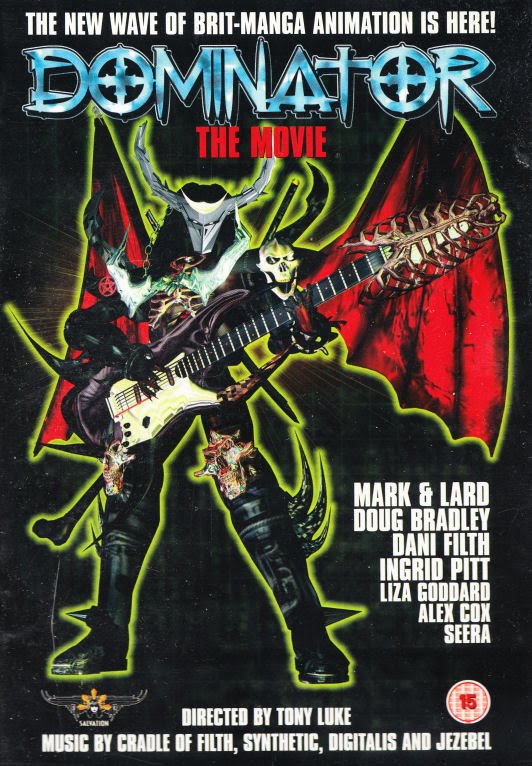
Friday, 23 August 2013

interview: Paul Gunson

Animator Paul Gunson contacted me when he spotted my review of the little known British animated feature film Beauty and the Beast produced by a company called Bevanfield. In February 2007, Paul very kindly responded to some e-mailed questions about his work on that film and other shows. He also found some character designs from Beauty and the Beast which he has very kindly allowed me to include here.


What sort of company was Bevanfield, from a business point of view and as somewhere to work?

“Bevanfield was, to say the least, an interesting place to work. I think that the best thing about it was the opportunity it gave every member of staff to try their hand at different things. Secretaries would become writers or producers of different projects, and people such as I would do everything graphic wise. The drawback to this is that there were no permanent senior members of staff to learn from, no-one with greater experience, so it was hard to gain good habits. This situation carried on for the life of the company.

“In addition, in the time when projects were shot onto film, no rushes were ever viewed before the final print was made, so errors crept through, unseen until the final product. In the case of Beauty and the Beast and Aladdin, the animation was post-synched, that is the mouth movements were ‘guessed’ by the director and the actors came in later, trying their best to match up.

“Several of the better character designs didn’t get through for various reasons. In one case, I found out that my design for the main villain in Beauty and the Beast bore more than a passing resemblance to our financier. The designs didn’t come out as well as we’d hoped. This was partly due to the vast range of abilities our outside animators had, the lack of line testing, and indeed our own inexperience. We aimed for Disney, but got King of the Hill instead!

“Budgets were tight, and in a way, this was a self perpetuating problem. Because there was no line tester, the quality and consistency of the animation would not be good. This in turn lead to Bevanfield getting projects with lower and lower budgets.

“After a couple of years, Bevanfield acquired computers, and slimmed down their staff. Drawn animation was still mostly done on the outside, and line tested only when traced onto the computers by hand. The computers helped a great deal as far as the quality of the image and the timing of the animation, although the actual quality of the drawing and lack of in-betweens couldn’t be improved without further members of staff.

“In the mid-’90s, Bevanfield undertook several adaptations of children’s books such as The Owl and the Pussycat and Handa’s Surprise for the BBC. These were very successful, because the animation was simple and so a lot of care could be taken replicating the water colour illustrations. They also made a wonderful infomercial about fire safety for the COI called Moonlighters about two aliens who find a human lighter and burn down their Moon city. We had a terrific animator called Peter Dodd, who put everything into his work, and as a result the finished product was excellent.

“As mentioned earlier, good employers were hard to find. Bevanfield had a good relationship with the BBC for quite a while, and two series were done while I was there. The big problem seemed to be that the lack of money spent on the series meant a huge amount of animation re-use. This was especially jarring when different animators’ work was inter-cut, and often the very good work in an episode was overshadowed by it.

“There were always plenty of bad employers - people who appeared when work was in short supply. They had never been involved in animation before and rarely paid on time. Towards the end, Bevanfield were forced to sell off the rights to previous animation to make good on the gap caused when payment was not made. These were the kinds of people who wanted to make cheap Disney knock-offs to coincide with their film releases, and ultimately they were the death of the company. “

Where/how did these films ever get released or shown? Did anybody ever watch them?
“None of the animation was intended for theatrical release, and I don’t know if anyone really thought of the feature length productions as anything other than a means to make a quick buck. I’ve seen them in pound shops and being given away free with the Daily Mail.

“Tim Forder directed two live action features, both of which had limited cinematic releases. The Mystery of Edwin Drood actually got a Royal Premiere, with Princess Anne turning up.”

What was The Magic Seven and why has it never been completed?
“The Magic Seven was an animated project, book-ended with live action, and had big ambitions to be a real force for change in the world. Many top name actors of the early ‘90s affiliated themselves with it.

“The focus of the story was the damage that humans are doing to the planet, and followed the story of Sean, an environmentally unconcerned teenager who gets sucked into a fantasy world. Here he met the Dreaded Deadlies, the personifications of six bad forms of behaviour: littering, wasting electricity, carbon pollution, not recycling, death through disease and weaponry.

“The voice cast was wonderful, but sadly the live action which had been completed years earlier was not well shot, and the script left a lot to be desired. Amazingly, actors such as Michael J Fox and Demi Moore were made to sport ridiculous accents so it was impossible to recognise them.

“We were still determined to do our best with the project, but shortage of staff and ultimately lack of payment caused the project, and our company to bite the dust.”

What is your own background in animation?
“I studied animation at Newport Film School, then spent the best part of a year at Dave Edwards Studio in Cardiff before moving to London. I boarded much of Crapston Villas for Spitting Image and one of Loose Moose’s award winning Pepsi commercials. In addition I’ve worked a lot doing concept drawings for quiz shows. Mostly I’ve been working as a storyboard artist, with occasional design jobs.”

What was Tiny Planets like to work on? [Tiny Planets was TF Simpson's favourite show when he was a baby - MJS]
“I worked on it through a recruitment agency, which took a huge chunk of my pay-cheque, so financially it was a bit of a disaster for me! Each board was supposed to take a week to do, although not one of the boarders I spoke with said they managed to get it done during that time. There were many brilliant people working there, in the pre-production department I worked in, and the animation side of things. Some went on to work for Pixar and ILM.

“In talks with some colleagues, I was told that Bing’s mouthless look was a little controversial. He originally had a mouth, but it was decided that he looked better without, although it caused many problems as far as storytelling. An extra character, Halley was added two thirds through the series to make the whole thing more understandable.

“The management side of it reminded me of Bevanfield at times. There was a sense of quite a lot of time and money being used for baffling reasons, and the marketing never really took off. After Tiny Planets, the company essentially stopped working and never crewed up fully again.”

What are you working on now/recently?
“In the last five years, I worked as the in-house storyboarder of Tiny Planets and as storyboard supervisor on the BBC show Gordon the Garden Gnome. I was also one of the layout artists on Yoko! Jakamoko! Toto! and The Secret Show. From August to November last year, I designed illustrations and storyboards for an animated presentation by the chef Heston Blumenthal.”

interview originally posted 4th February 2007